
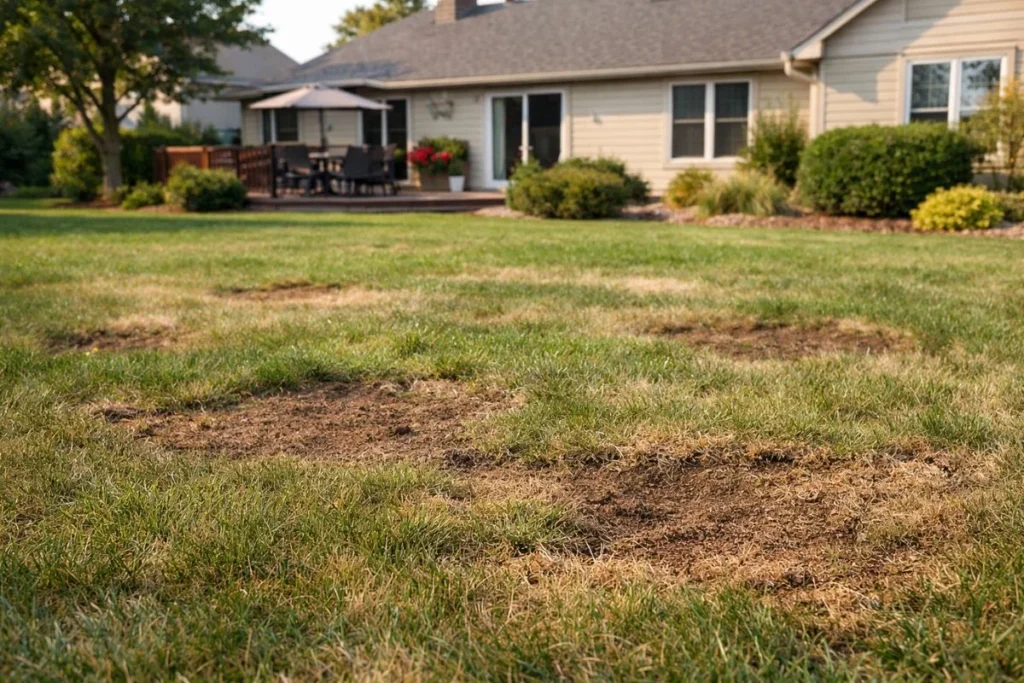
You walk outside and notice brown patches spreading across your lawn. A few days ago it looked fine. Now the grass feels weak, uneven, and dry. You water more, but nothing changes. Birds start pecking at the same spots. When you pull the grass gently, it lifts too easily. At that point, most homeowners feel confused and frustrated. Is it drought? Is it disease? Or is something eating the roots?
Thank you for reading this post, don't forget to subscribe!Over the years, I have seen many lawns where the real damage was happening below the surface. Grubs can destroy roots before you fully realize what is wrong. The signs are often subtle at first, then they become obvious. The key is knowing what to check and when to check it. In this guide, you will learn the clear signs of grubs on lawn, how to test properly, and how to make the right decision before spending money on treatment.
- Quick Answer
- What Are Lawn Grubs?
- Understanding the Grub Life Cycle (Why Timing Matters)
- 2-Second Check
- 8 Clear Signs of Grubs on Lawn
- How to Test Your Lawn for Grubs (Step-by-Step)
- How Many Grubs Are Too Many? (Action Guide)
- Grubs vs. Other Lawn Problems
- When Signs of Grubs Appear (By Region)
- Why Grubs Are Harmful
- What to Do If You See Signs of Grubs on Lawn
- Will Grass Recover After Grub Damage?
- How to Prevent Future Grub Problems
- Frequently Asked Questions About Signs of Grubs on Lawn
- Final Thoughts on Signs of Grubs on Lawn
Quick Answer
Common signs of grubs on lawn include brown patches, grass that pulls up easily like carpet, spongy soil, and birds digging in the same areas.
What Are Lawn Grubs?
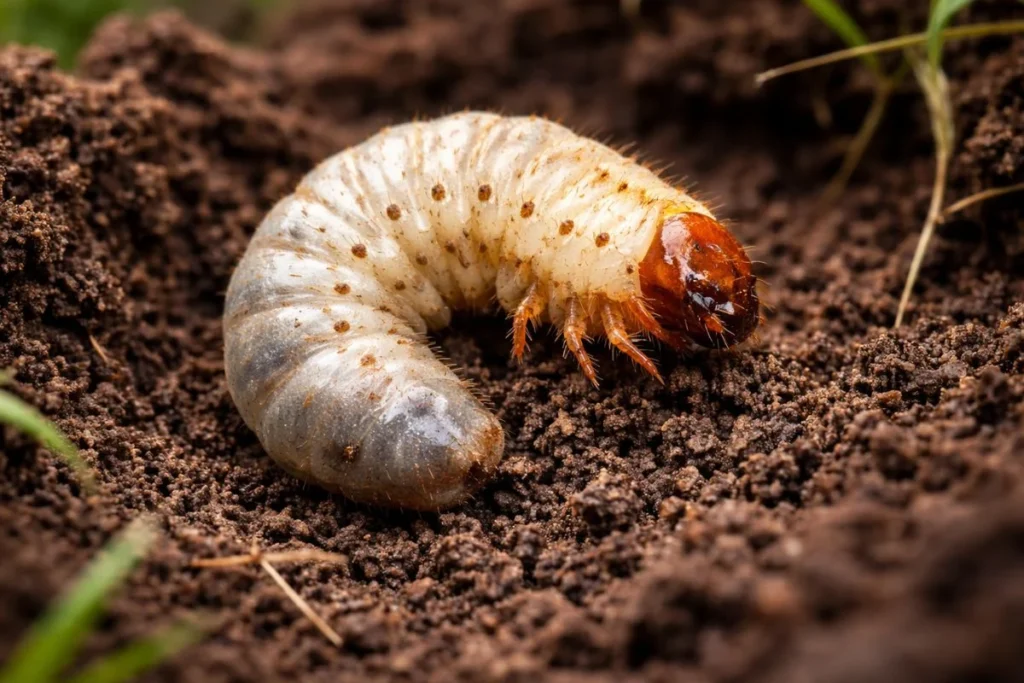
Lawn grubs are the larvae of beetles. Common types in the United States include:
- Japanese beetle
- June beetle
- European chafer
Adult beetles lay eggs in summer. The eggs hatch into white, C-shaped larvae. These larvae live in the top 1 to 4 inches of soil.
They feed on grassroots. As a result, the grass loses its anchor and begins to weaken.
Healthy lawns can tolerate small numbers of grubs. However, heavy feeding causes visible lawn grub damage.
Japanese beetle larvae are one of the most destructive species in many northern lawns, so if you suspect this type, read our guide on Japanese beetle grub control before choosing a treatment.
Understanding the Grub Life Cycle (Why Timing Matters)
Knowing the lifecycle helps you inspect at the right time.
- Late spring to early summer: Adult beetles lay eggs.
- Mid-summer: Eggs hatch into small grubs.
- Late summer to early fall: Feeding becomes aggressive. Most signs of grubs on lawn appear now.
- Late fall: Grubs move deeper into soil.
- Early spring: Surviving grubs feed again before becoming beetles.
Seasonal Grub Activity Timeline
| Season | What Grubs Are Doing |
|---|---|
| Late Spring | Beetles lay eggs in soil |
| Summer | Eggs hatch into young grubs |
| Late Summer | Heavy root feeding and visible damage |
| Fall | Grubs move deeper into soil |
| Early Spring | Light feeding before becoming beetles |
Because damage peaks in late summer, inspections during August and September are most effective in many U.S. regions.
2-Second Check
- Grass lifts easily from soil
- Brown patches that do not improve with watering
- Spongy or soft lawn feel
- Birds or animals digging
8 Clear Signs of Grubs on Lawn
1. Brown or Yellow Patches
Patches appear dry and uneven. Water does not fix them. The area may spread slowly.
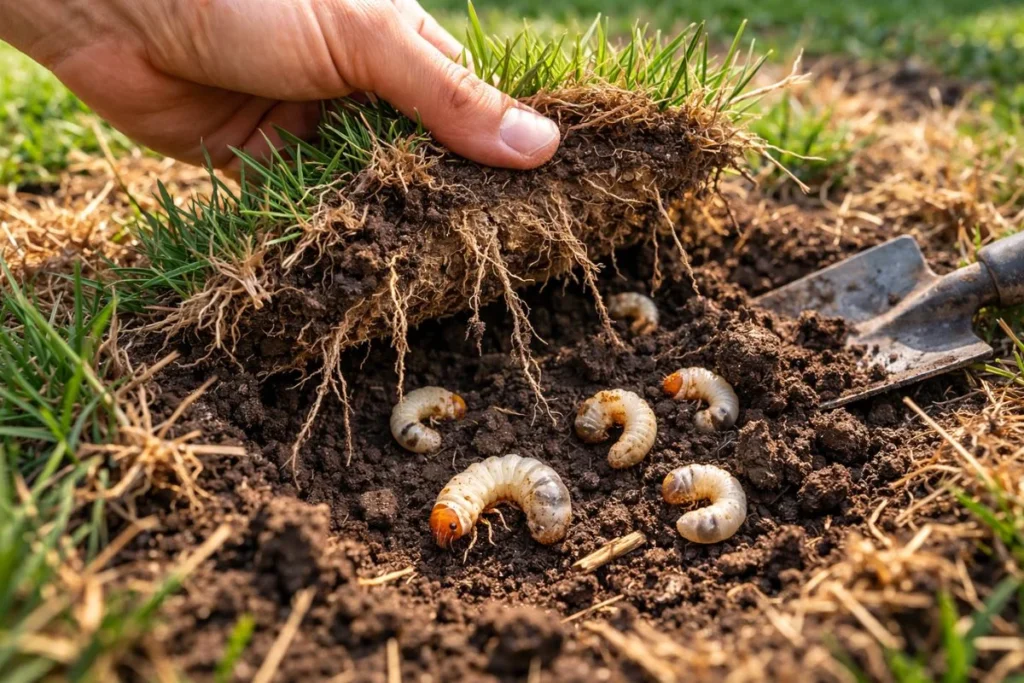
2. Grass Pulls Up Like a Carpet
Gently pull the grass. If it lifts easily with little root attached, roots are likely eaten.
If the grass stays rooted but blades look chewed or uneven, the issue may come from surface pests, so check this guide on sod webworm damage.
3. Spongy or Soft Lawn
The lawn may feel bouncy under your feet because roots no longer hold soil tightly.
4. Wilting Grass Despite Watering
If proper watering does not improve color, root loss may be the cause.
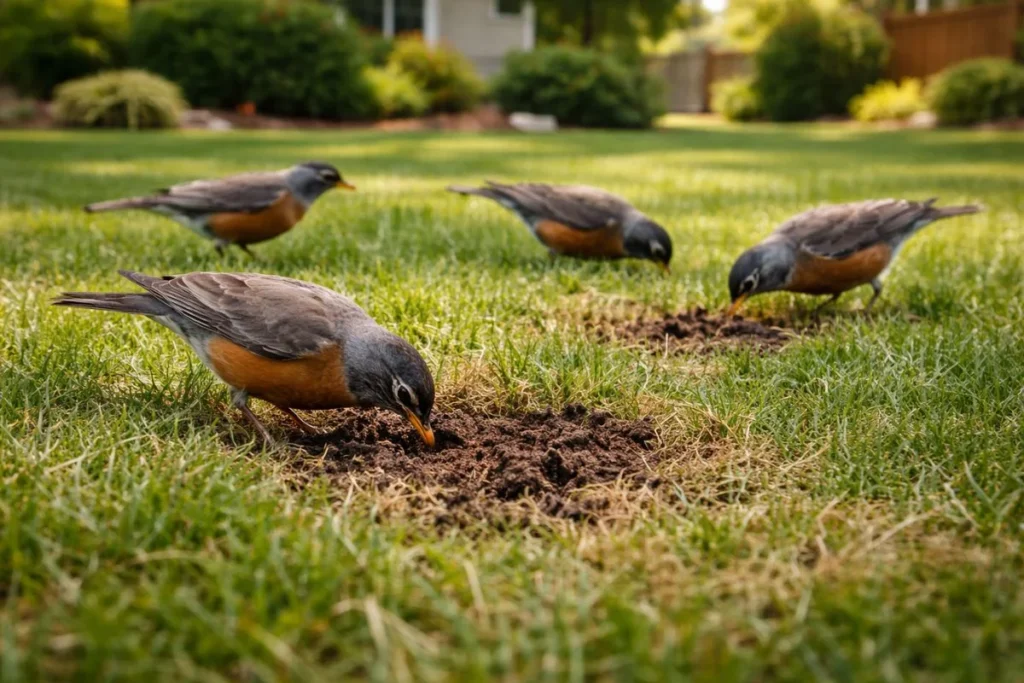
5. Increased Bird or Animal Activity
Birds pecking repeatedly in one area often search for grubs. Raccoons and skunks may dig at night.
6. Irregular Dead Areas
Grub damage creates uneven shapes, not clean circles.
7. Visible White C-Shaped Larvae
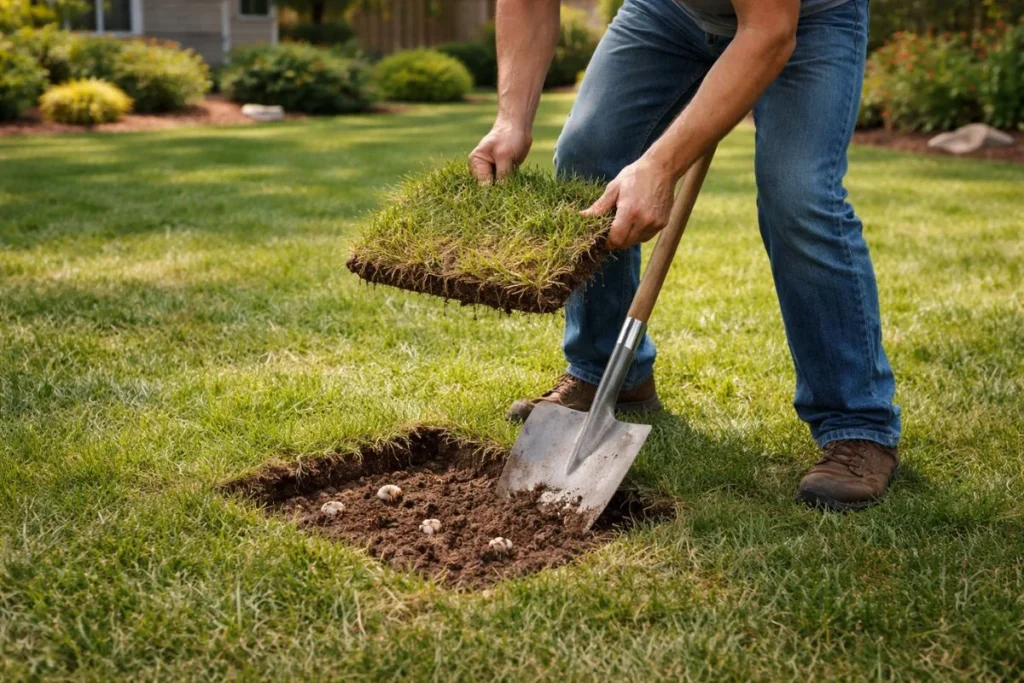
Dig a one-foot square section and check the top few inches of soil. White C-shaped grubs confirm infestation.
8. Thinning Before Browning
Early warning signs include slight thinning and weak turf before large brown patches form.
Quick Grub Damage Check
If your lawn has the following signs, you may have active grub damage:
- Brown patches that do not improve with watering
- Grass that lifts easily like carpet
- Spongy or loose turf
- Birds or animals digging in the same area
- More than 5 grubs per square foot
If several of these apply, inspect your soil to confirm.
How to Test Your Lawn for Grubs (Step-by-Step)
If you are unsure, test before treating.
- Choose a damaged area.
- Cut a 12-inch by 12-inch square.
- Lift turf carefully.
- Inspect soil 1 to 4 inches deep.
- Count the grubs.
Testing removes guesswork and prevents unnecessary treatment.
How Many Grubs Are Too Many? (Action Guide)
Some grubs are normal. Treatment is not always required.
Use this guide:
- 0–5 grubs per square foot: Lawn can usually tolerate this. Monitor only.
- 6–9 grubs per square foot: Watch closely, especially if lawn is stressed.
- 10 or more per square foot: Treatment is often recommended.
If your grub count reaches treatment level, you should decide when to treat for grubs to stop further damage.
Grub Count Action Guide
| Grubs Per Sq Ft | Lawn Condition | Recommended Action |
|---|---|---|
| 0–5 | Normal | Monitor only |
| 6–9 | Moderate risk | Recheck in 2–3 weeks |
| 10+ | High risk | Consider treatment |
Strong lawns resist minor grub populations better than weak lawns.
Grubs vs. Other Lawn Problems
Many homeowners mistake grub damage for other issues.
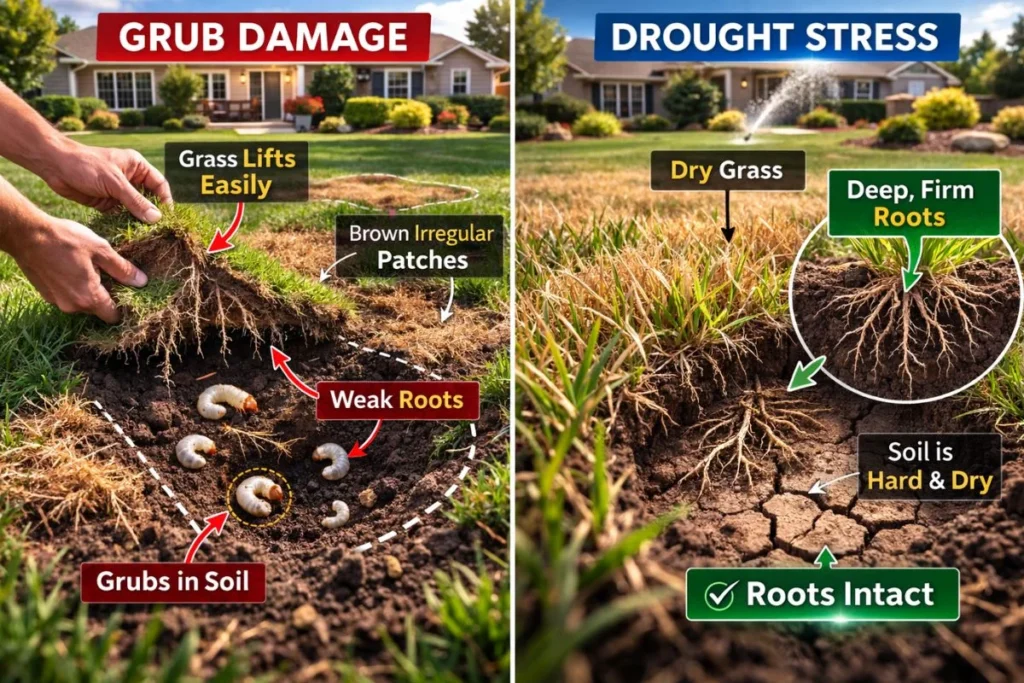
Grubs vs. Drought
- Drought: Grass stays firmly rooted.
- Grubs: Grass lifts easily.
Lawn Disease vs. Grubs
- Disease: You may see rings or fungal growth.
- Grubs: You find larvae under loose turf.
Grubs vs. Nutrient Deficiency
- Nutrient issues cause slow yellowing across larger areas.
- Grubs create patchy root failure.
In southern lawns like St. Augustinegrass, similar damage may come from insects feeding above the soil, so review chinch bugs treatment to confirm the cause.
Correct diagnosis saves money and prevents wrong treatment.
If roots are still strong but grass appears chewed or thinning fast, it may point to caterpillar activity, so see army worms lawn.
Grub Damage vs Drought Stress
| Symptom | Grub Damage | Drought Stress |
|---|---|---|
| Grass lifts easily | Yes | No |
| Soil condition | Loose | Hard and dry |
| Root health | Damaged | Intact |
| Water response | No improvement | Improves after deep watering |
When Signs of Grubs Appear (By Region)
Northern U.S. (Cool-Season Lawns)
Damage usually peaks in late summer through early fall.
Southern U.S. (Warm-Season Lawns)
Because warm weather lasts longer, feeding may begin earlier. Damage may appear mid-summer.
Regional timing matters for inspection and treatment decisions.
Why Grubs Are Harmful
Grubs eat roots, and this type of pest damage is a major cause of lawn problems that lead to dead or thinning grass:
- Grass cannot absorb water
- Turf becomes loose
- Weeds invade thin areas
- Large sections may die
Heavy infestations can destroy lawns within weeks.
Heavy pest activity below the soil can also attract other insects, and in some cases lead to problems like ants in lawn and house when colonies build in weakened areas.
What to Do If You See Signs of Grubs on Lawn
- Confirm with the square foot test.
- Count the grubs.
- Compare numbers to action thresholds.
- Treat only if needed.
- Reseed or repair thin areas.
After confirming grub activity, timing becomes important, so read when to apply grub treatment for best results before choosing any product.
Will Grass Recover After Grub Damage?
Recovery depends on severity.
- Mild damage: Grass often recovers with watering and care.
- Moderate damage: Overseeding helps.
- Severe damage: Reseeding or sod replacement may be required.
Healthy soil and proper care improve recovery speed.
How to Prevent Future Grub Problems
Prevention focuses on lawn strength and monitoring.
- Mow at proper height.
- Avoid excessive watering.
- Aerate compacted soil.
- Inspect lawn yearly during peak grub season.
Routine inspection reduces surprise damage.
Frequently Asked Questions About Signs of Grubs on Lawn
How deep do grubs live?
Most feed within the top 1 to 4 inches of soil.
Do grubs return every year?
Yes. Adult beetles lay eggs each year.
Can grub damage look like drought?
Yes. However, drought-damaged grass stays firmly rooted.
Should I treat if I only find three grubs?
Usually no. Low counts rarely cause major damage.
Key Takeaways
- Always confirm grub damage with a square-foot test
- Low grub numbers are normal and often do not require treatment
- Peak lawn damage usually appears in late summer
- Grass lifting easily is one of the strongest warning signs
- Treat based on grub count, not guesswork
Final Thoughts on Signs of Grubs on Lawn
From my experience inspecting lawns, the biggest mistake homeowners make is guessing. Brown patches alone do not confirm grub damage. The real proof is always in the soil. A simple square-foot test gives clear answers and prevents unnecessary treatments. Healthy lawns can tolerate small grub numbers, but high populations during peak season can cause serious root loss. If you take the time to inspect carefully and count what you find, you will make smarter decisions and protect your lawn long term. That is how you handle grub problems with confidence instead of trial and error.