 Skip to content
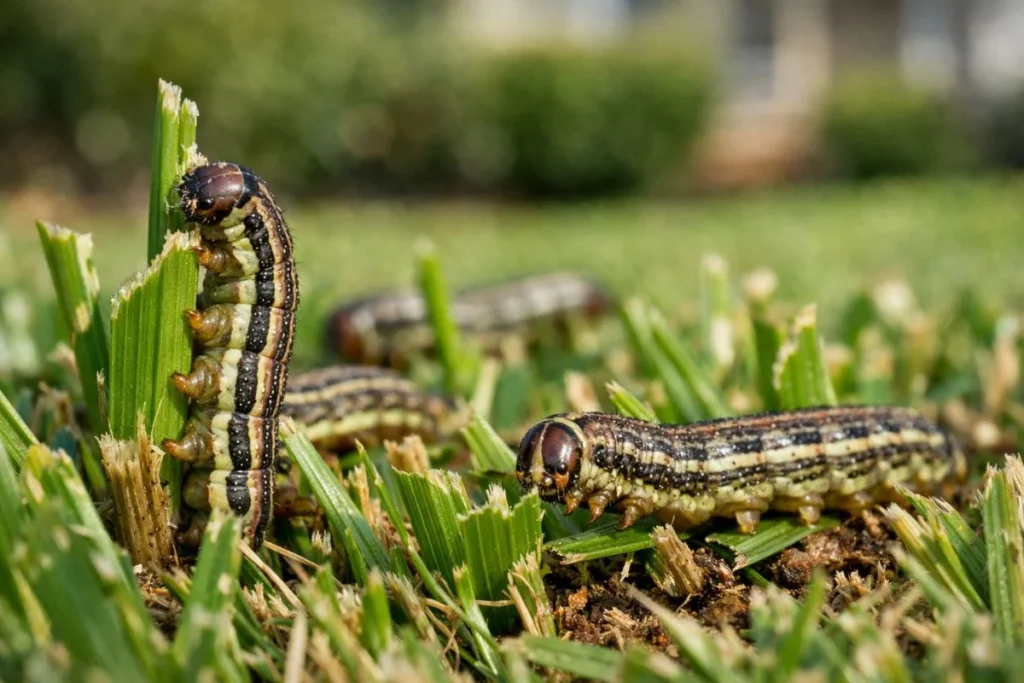
If you have ever walked outside and seen brown patches spreading across your lawn almost overnight, you know how stressful that feels. You water more. You check your sprinklers. You wonder if it is heat, fungus, or fertilizer burn. Then you notice grass blades missing and birds pecking at one area. In many cases, that sudden damage is caused by army worms in the lawn.
I have seen lawns go from green to badly chewed within days during late summer outbreaks. The damage looks alarming, but most of the time the lawn is not ruined. The key is early identification and acting at the right stage. In this guide, you will learn how to confirm army worms lawn damage, when treatment is truly needed, and how to help your grass recover the right way.
Quick Takeaway: What To Do If You Suspect Army Worms
- Inspect lawn during early morning or evening.
- Perform a soap flush test to confirm infestation.
- If you find 3–4 larvae per square foot, treatment is usually recommended.
- Treat small larvae for best results.
- After feeding stops, focus on lawn recovery steps.
What Are Army Worms?
Army worms are not worms. They are caterpillars. They are the larvae of moths.
The most common species attacking U.S. lawns is the fall armyworm (Spodoptera frugiperda).
They are called army worms because they move in large groups. As they feed, they spread across turf quickly.
Young larvae are light green. Older larvae grow up to 1.5 inches long. Many have stripes along the body. A clear upside-down Y shape is usually visible on the head.
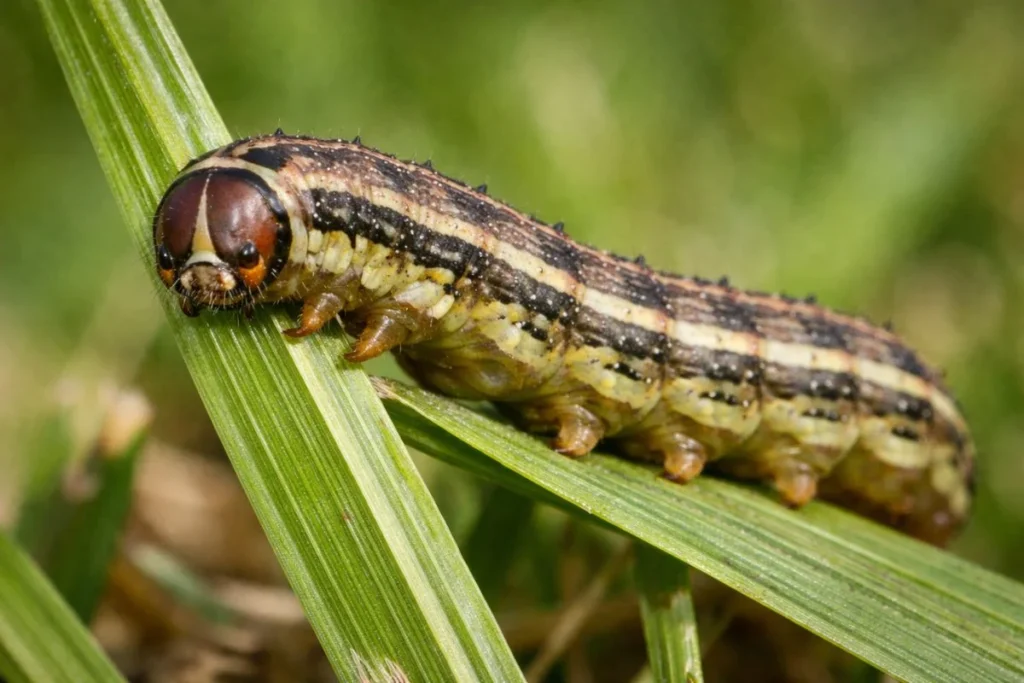
Scientific Name and Types of Armyworms
The fall armyworm (Spodoptera frugiperda) is the main lawn pest species.
There is also a true armyworm species. True armyworms are more common in crops like wheat and corn. Fall armyworms are the primary threat in residential turfgrass.
Correct identification prevents wasted treatment.
Army Worm Life Cycle in Lawns
Understanding the life cycle helps you time army worms lawn treatment properly.
There are four stages:
- Egg
- Larva (caterpillar)
- Pupa
- Adult moth
Eggs hatch within 2 to 7 days in warm weather.
Larvae feed for about 14 to 21 days. This is when lawn damage happens. After feeding, they burrow into soil to pupate. Adult moths then emerge and lay new eggs.
In southern states, several generations can occur in one year. Northern states usually experience fewer generations.
How Armyworms Spread Across the United States
Armyworms do not survive harsh northern winters. Each year, adult moths migrate north from southern states.
Migration begins in spring. Populations build through summer. Late summer and early fall outbreaks are common.
Warm temperatures and heavy rainfall often trigger sudden infestations.
States like Texas, Florida, Alabama, and Georgia face higher risk. However, Midwest and northern states can still experience outbreaks during warm years.
Most feeding happens at night and early morning.
Army Worm Lawn Risk Timeline (USA)
- Spring: Moths migrate north from southern states.
- Early Summer: Populations begin to build.
- Late Summer: Peak lawn damage season.
- Early Fall: Outbreaks common, especially after heavy rain.
Signs of Army Worm Damage in Lawn
Army worms lawn damage spreads quickly. Watch for:
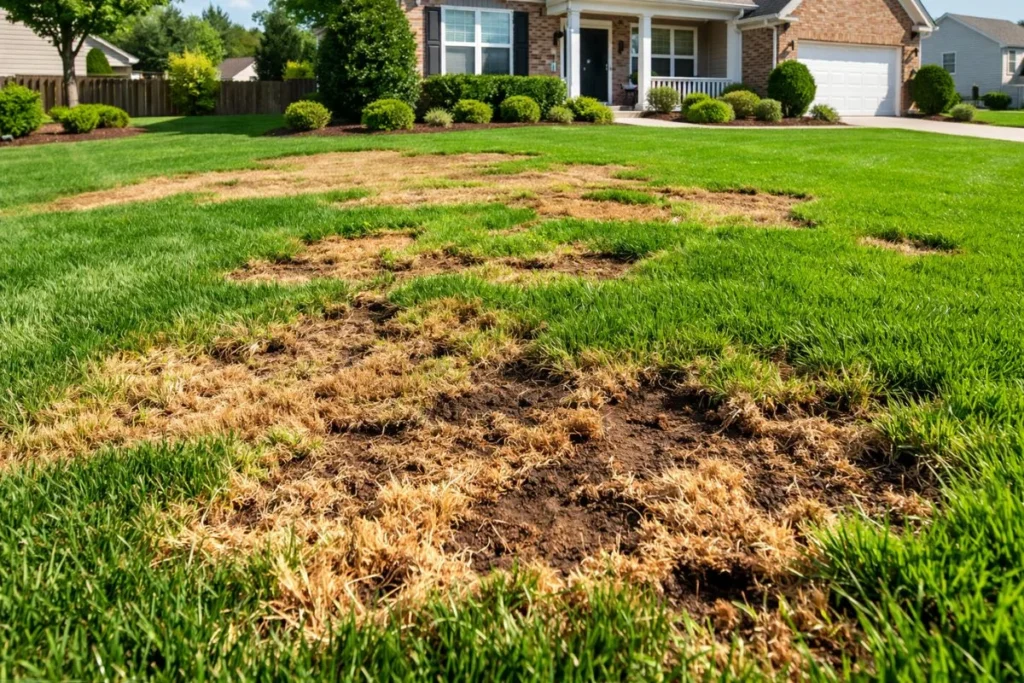
- Brown patches growing fast
- Grass blades chewed down
- Thin turf that looks scalped
- Birds feeding heavily in one area
Damage can look like drought. However, drought does not remove entire grass blades overnight.
If patches expand daily, suspect armyworms.
If the grass lifts easily from the soil or roots appear damaged instead of blades being chewed, the issue may be below-ground larvae. Review the complete guide on signs of grubs on lawn to rule out root-feeding pests before treating.
Early Instar vs Late Instar Damage
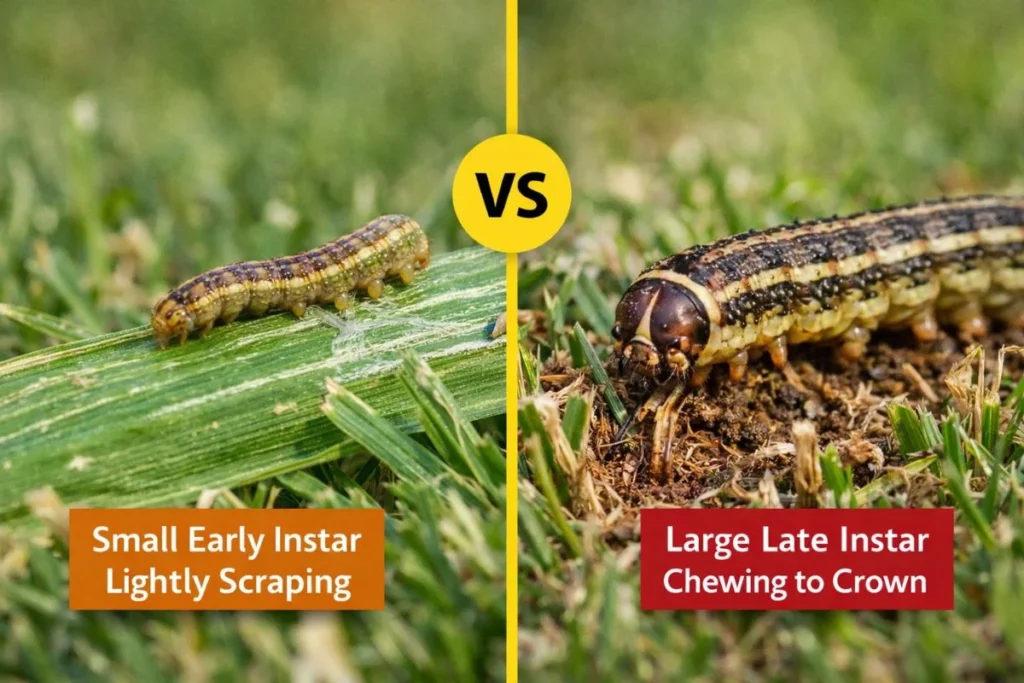
Armyworms grow through stages called instars.
Early instar larvae scrape leaf surfaces. Grass may look faded or thin.
Late instar larvae are larger and far more destructive. They chew entire blades to the crown. Severe infestations can destroy large lawn sections within days.
Treating during early instar stages improves results.
How to Confirm Army Worms in Your Lawn
Do not guess. Confirm before treating army worms in lawn areas.
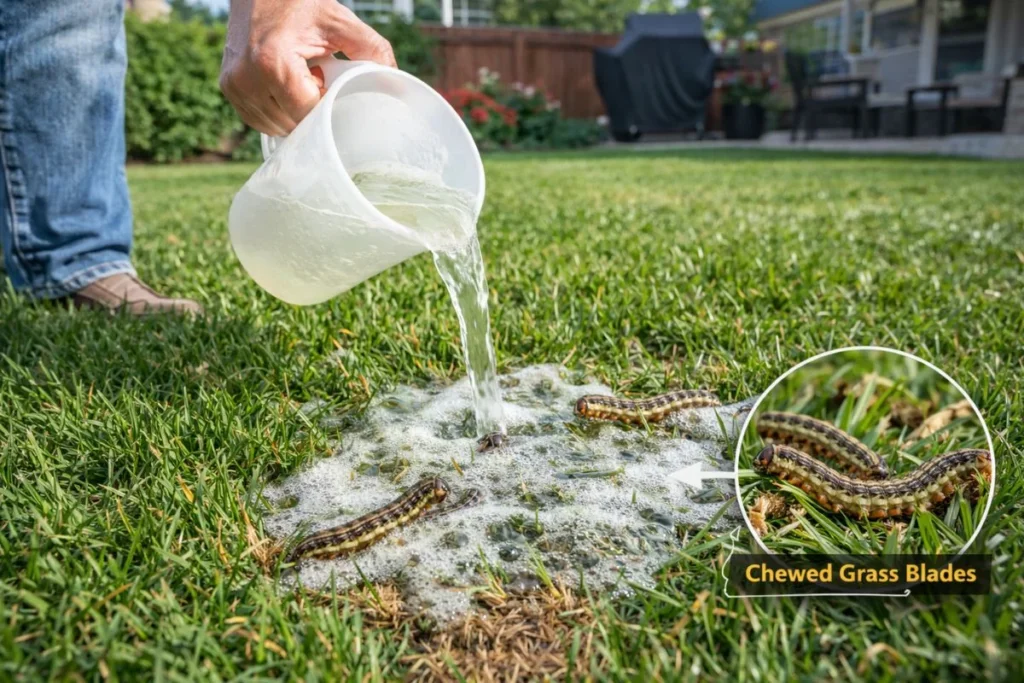
Use the soap flush test:
- Mix 1 to 2 tablespoons of dish soap in one gallon of water.
- Pour over one square yard of affected turf.
- Wait 5 to 10 minutes.
If armyworms are present, they will rise to the surface.
This simple test prevents unnecessary pesticide use.
Treatment Threshold: When Should You Act?
Army Worm Lawn Treatment Decision Guide
| Situation | Recommended Action |
|---|---|
| 1–2 small larvae, minor damage | Monitor and recheck in 2 days |
| 3–4 larvae per square foot with active feeding | Treat immediately |
| Large larvae, feeding almost complete | Monitor; treatment may have limited effect |
| Severe damage across large area | Treat and prepare lawn repair plan |
Treatment is usually recommended when:
- You find 3 to 4 larvae per square foot
- Larvae are small to medium size
- Active feeding damage is visible
If larvae are large and close to pupating, treatment may not provide much benefit. They will soon stop feeding.
Healthy lawns with minor damage may recover without treatment.
However, if brown areas expand quickly, act immediately.
How to Kill Army Worms in Lawn
Small larvae are easier to control.
Liquid Insecticides
Liquid products provide fast coverage and quick knockdown. Apply during early morning or evening when larvae are active.
Granular Insecticides
Granular products can work well when watered properly. They are convenient for many homeowners.
Organic Options
Bacillus thuringiensis (Bt) targets young caterpillars. It works best on small larvae. It is less effective on larger ones.
Choose treatment based on larval size, lawn size, and severity.
Should You Treat It Yourself or Call a Professional?
Many homeowners successfully treat army worms lawn problems themselves.
DIY treatment works well when:
- Lawn size is manageable
- Damage is caught early
- Larvae are still small
Consider professional help when:
- Large lawn areas are affected
- Damage is severe
- You are unsure about product selection
Making the right decision early prevents larger repair costs later.
Grass Types Most Affected by Armyworms
Armyworms feed on many turf types.
Warm-season grasses often affected:
- Bermudagrass
- St. Augustinegrass
- Zoysiagrass
Cool-season grasses that may be damaged:
- Kentucky bluegrass
- Tall fescue
- Perennial ryegrass
Warm-season lawns in southern climates face longer exposure due to extended warm periods.
Grass Type Susceptibility to Armyworms
| Grass Type | Risk Level | Recovery Ability |
|---|---|---|
| Bermudagrass | High | Fast recovery |
| St. Augustinegrass | High | Moderate recovery |
| Zoysiagrass | Moderate | Good recovery |
| Kentucky Bluegrass | Moderate | Slower recovery |
| Tall Fescue | Moderate | May require overseeding |
How to Repair Lawn After Army Worm Damage
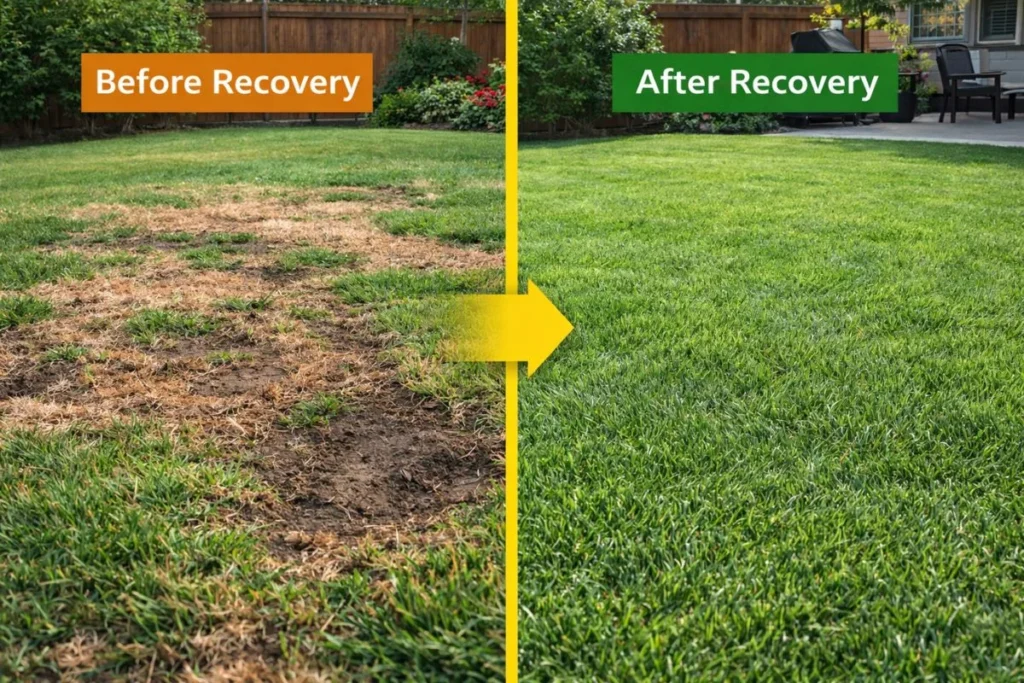
Once army worms in lawn areas are controlled, focus on recovery.
For warm-season grass:
- Light fertilization supports regrowth if roots remain healthy.
For cool-season grass:
- Overseeding may be required in damaged areas.
Repair steps:
- Rake dead grass
- Loosen soil lightly
- Overseed if needed
- Water consistently
Most lawns recover well if roots were not destroyed.
How to Prevent Army Worms in Lawn
Complete prevention is difficult because moths migrate yearly.
However, you can reduce risk:
- Mow at proper height
- Avoid overwatering
- Reduce heavy thatch
- Maintain balanced nutrition
- Monitor lawn during late summer
Regular scouting helps detect early infestations before serious damage begins.
Armyworms vs Sod Webworms
Armyworms:
- Move in groups
- Cause fast, wide damage
- Destroy turf quickly
Sod webworms:
- Feed individually
- Create smaller scattered patches
- Leave silk tunnels in thatch
Correct identification ensures correct control.
Frequently Asked Questions
Will my lawn recover from army worms?
Yes. If roots remain healthy, most lawns recover. Warm-season grasses recover faster.
How fast can army worms destroy a lawn?
Severe infestations can damage large areas within a few days.
What time of day do armyworms feed?
Mostly at night and early morning.
Do armyworms bite people or pets?
No. They feed only on grass.
Final Thoughts
Army worms lawn infestations can look severe and frightening at first, especially when damage spreads quickly. However, from experience, lawns recover well when the problem is confirmed early and treated at the right time. Small larvae are easier to control, and healthy roots allow grass to bounce back. Delayed action often leads to wider damage and more repair work. If you monitor your lawn during peak season, use thresholds before treating, and support recovery properly, your turf has a strong chance of staying healthy and resilient against future outbreaks.