 Skip to content
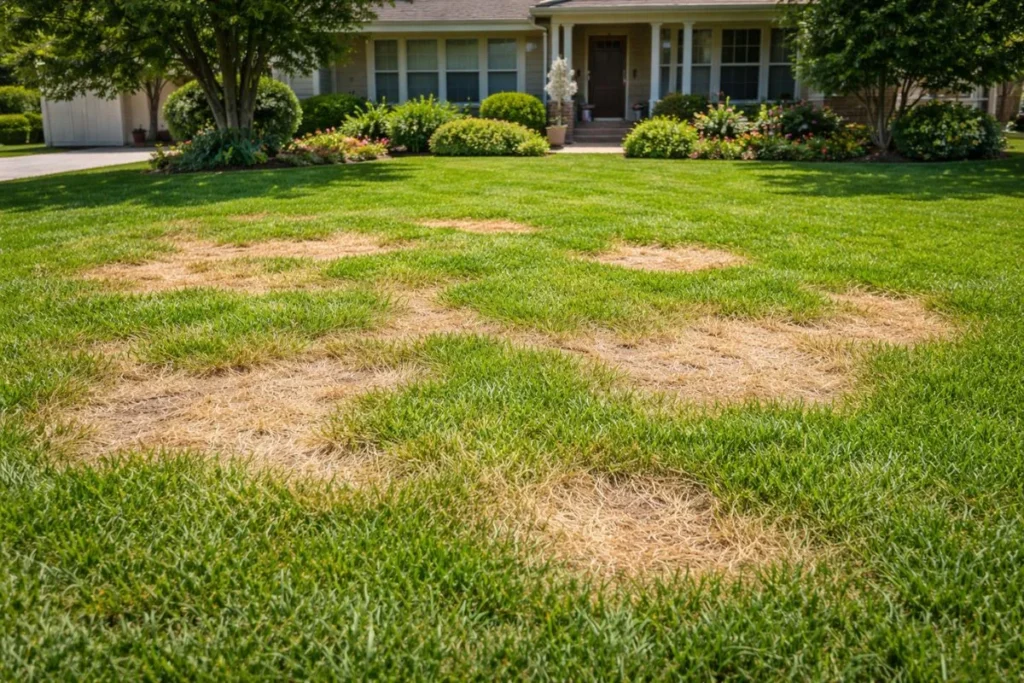
If you have ever stepped outside in the middle of summer and noticed brown patches spreading across your lawn, you know how frustrating it feels. You water more, adjust the sprinkler, and hope it turns green again. But the grass keeps getting worse. Many homeowners assume it is drought stress, and I have seen this mistake many times. In hot southern states, especially in St. Augustinegrass lawns, chinch bugs are often the real cause.
Over the years, I have seen small yellow spots turn into large dead areas within weeks because the problem was not identified early. Chinch bugs damage grass quickly during hot weather, and watering alone will not fix it. The good news is that chinch bugs treatment works when you confirm the infestation and act at the right time. This guide will walk you through how to identify the problem, treat it correctly, and protect your lawn from future damage.
- Brown Lawn in Summer? Drought or Chinch Bugs?
- What Are Chinch Bugs?
- What Do Chinch Bugs Look Like?
- Grass Types Most at Risk
- Damage
- How to Confirm Chinch Bugs (Soap Flush Test)
- When to Apply Chinch Bugs Treatment
- Step-by-Step Chinch Bugs Treatment Plan
- Cultural Control (Start Here)
- Why Thatch Makes It Worse
- Chemical Chinch Bugs Treatment
- Insecticide Resistance
- Natural and Lower-Toxic Options
- How to Repair Lawn After Chinch Bug Damage
- Prevention Plan for Next Season
- DIY vs Professional Treatment Cost
- When to Call a Professional
- Final Thoughts
Quick Chinch Bugs Treatment Summary
- Brown patches that do not improve after watering may be chinch bugs.
- Confirm infestation using the soap flush test.
- Treatment is recommended at 20–25 bugs per square foot.
- Spot treat early in late spring or early summer.
- Monitor weekly during hot months.
Brown Lawn in Summer? Drought or Chinch Bugs?
Many homeowners think their lawn just needs more water.
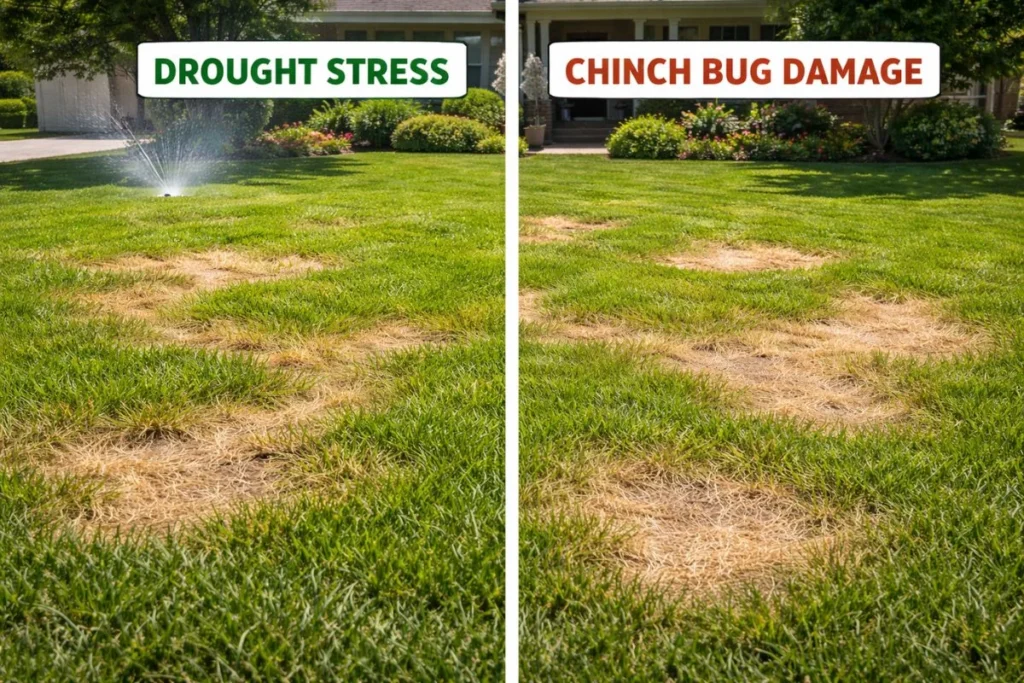
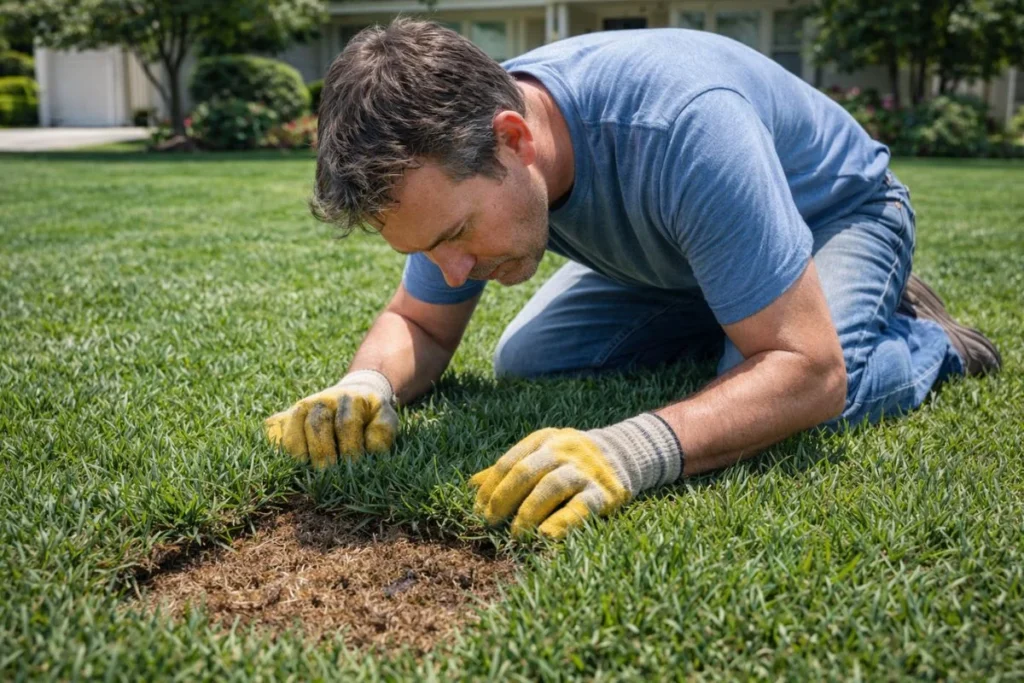
However, drought stress and chinch bug damage look similar.
Here is the difference:
- Drought-stressed grass improves after deep watering.
- Chinch bug damage does not recover after watering.
- Damage often starts in sunny areas.
- The edge between green and brown grass is where chinch bugs hide.
Before applying any treatment, confirm the cause.
If the grass lifts easily from the soil or animals are digging at night, the damage may be caused by root-feeding larvae instead. Review the full guide on signs of grubs on lawn to rule out grub damage before applying insecticide.
What Are Chinch Bugs?
Chinch bugs are small insects that feed on turfgrass.
They are most common in warm southern states.
They prefer hot, dry weather and stressed lawns.
Lawns with thick thatch are more likely to have infestations.
What Do Chinch Bugs Look Like?
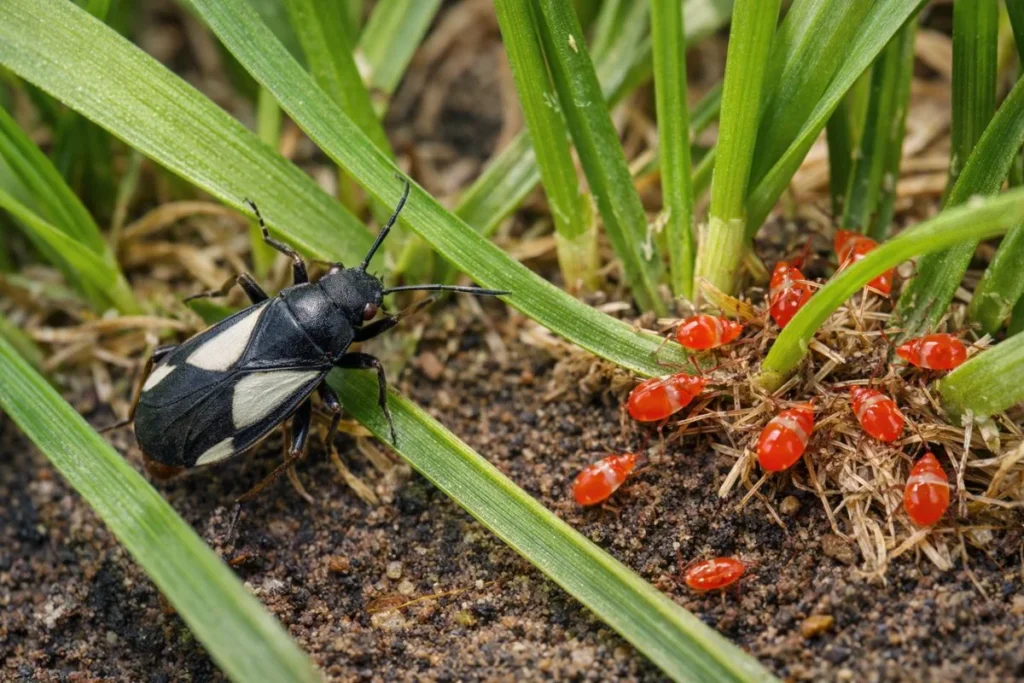
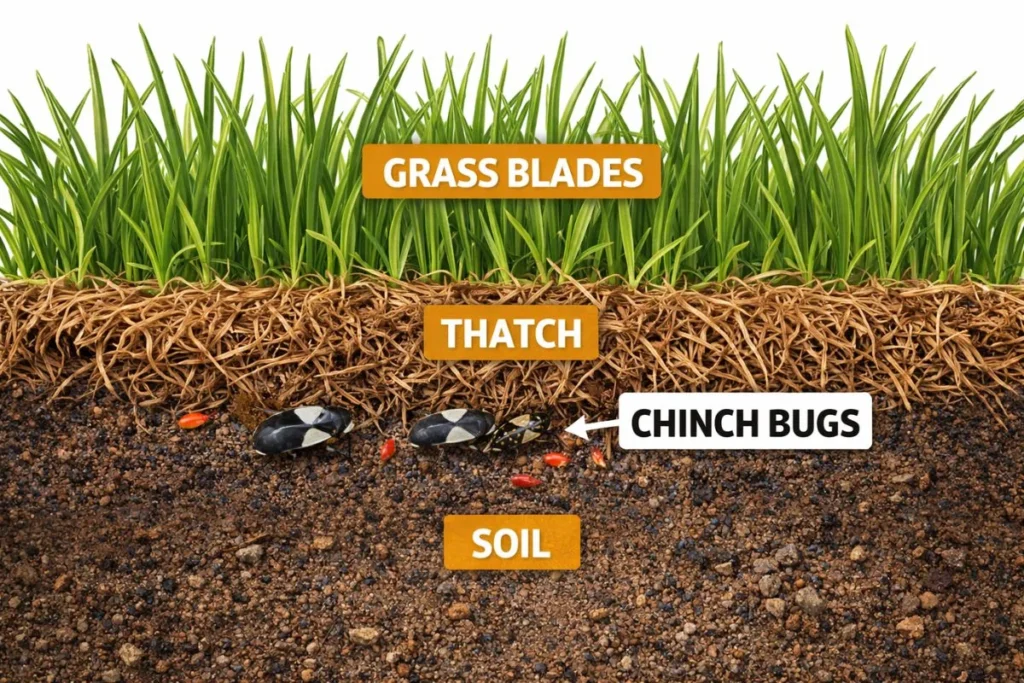
Adult chinch bugs are small and black.
They have white wings with a dark triangle shape.
Young chinch bugs, called nymphs, are red or orange with a white band across their body.
They hide near the soil surface and inside thatch.
Grass Types Most at Risk
Chinch bugs do not damage all grasses equally.
Most affected:
- St. Augustinegrass
- Zoysiagrass
- Bermudagrass (less common)
St. Augustinegrass is highly vulnerable in southern states like Florida and Texas.
Cool-season grasses are less commonly affected.
If you have St. Augustinegrass, inspect your lawn carefully during warm months.
Damage
Chinch bug damage starts as small yellow patches.
These patches turn brown and grow larger.
The grass will not recover after watering.
This damage often spreads during hot summer weather.
How to Confirm Chinch Bugs (Soap Flush Test)
Before starting chinch bugs treatment, confirm the infestation.
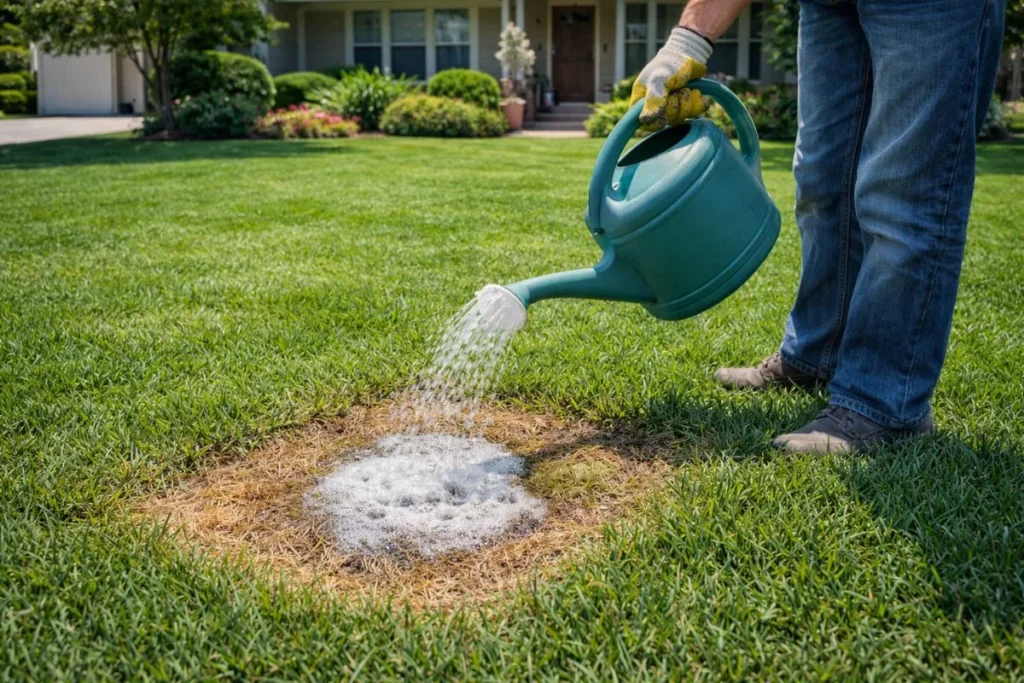
- Mix 2 tablespoons of dish soap in 1 gallon of water.
- Pour slowly over one square foot of grass.
- Wait 5 to 10 minutes.
Chinch bugs will crawl to the surface if present.
Treatment is often recommended when you find 20 to 25 chinch bugs per square foot.
Check several areas for accuracy.
Chinch Bug Treatment Decision Guide
| Situation | What To Do |
|---|---|
| Brown patches improve after watering | Likely drought, no insecticide needed |
| 5–10 chinch bugs per sq ft | Monitor closely and improve lawn care |
| 20–25 chinch bugs per sq ft | Spot treat affected areas |
| Damage covering most of lawn | Consider professional service |
When to Apply Chinch Bugs Treatment
Timing matters.
Southern states:
- Activity begins in April or May.
- Populations grow during summer.
Midwest and transition zones:
- Activity begins in late May or June.
- Damage peaks in summer heat.
Young nymphs are easier to control than adults.
Early season treatment gives better results.
Seasonal Monitoring Plan
| Month | What To Do |
|---|---|
| April–May (South) | Begin checking sunny lawn areas weekly |
| May–June | Perform soap test if yellowing appears |
| June–August | Monitor lawn weekly during heat |
| Fall | Repair damaged areas and reduce thatch |
Step-by-Step Chinch Bugs Treatment Plan
If you confirmed chinch bugs, follow this plan.
Day 1:
- Confirm infestation.
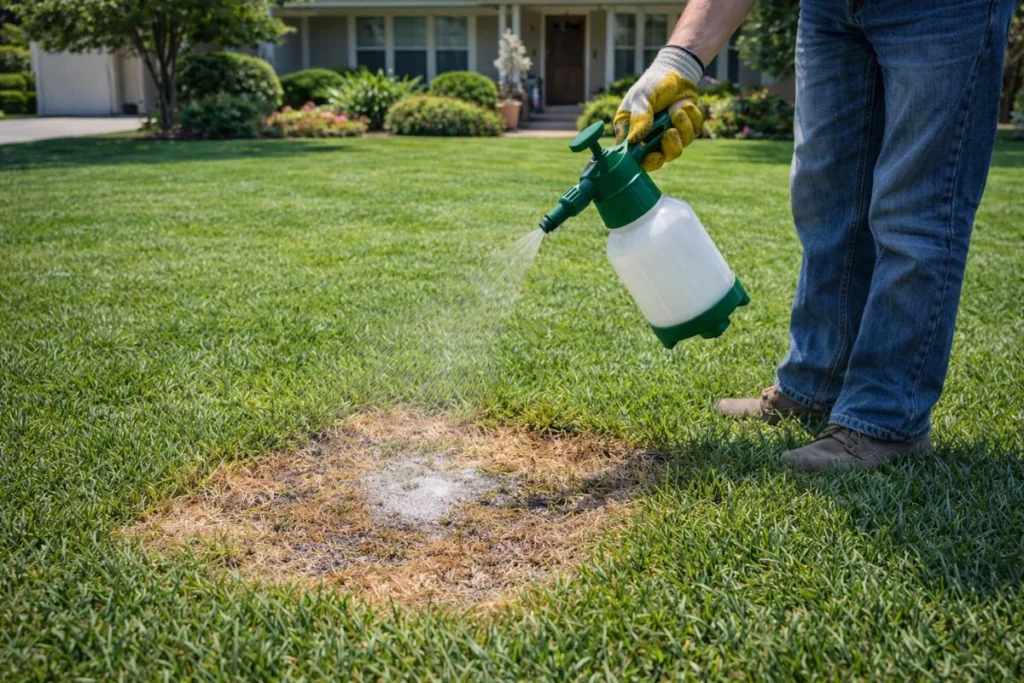
- Spot treat affected areas only.
Day 7:
- Recheck treated areas.
Day 10–14:
- Reapply only if chinch bugs are still active.
Avoid treating the entire lawn unless damage is widespread.
Cultural Control (Start Here)
Healthy lawns resist pests better.
- Water deeply but not daily.
- Raise mowing height during summer.
- Avoid heavy nitrogen fertilizer in extreme heat.
- Reduce thick thatch.
These steps reduce stress and improve treatment success.
Why Thatch Makes It Worse
Thatch is a layer of dead grass between soil and blades.
Chinch bugs live inside thick thatch.
Heavy thatch protects them from insecticides.
If thatch exceeds half an inch, dethatching can improve control.
Chemical Chinch Bugs Treatment
Use insecticides only when thresholds are reached.
Choose products labeled for chinch bugs.
Apply in late spring or early summer when nymphs are small.
Light watering after application helps move product into thatch.
Follow label directions carefully.
Insecticide Resistance
Repeated use of the same insecticide can reduce effectiveness.
In some regions, chinch bugs have developed resistance to certain pyrethroid products.
To reduce resistance risk:
- Rotate active ingredients.
- Avoid unnecessary repeat applications.
- Spot treat instead of blanket spraying.
Natural and Lower-Toxic Options
For small infestations, consider:
- Insecticidal soap
- Neem-based products
- Encouraging beneficial insects
These methods may require repeat applications.
They are often preferred by homeowners with pets or children.
How to Repair Lawn After Chinch Bug Damage
After treatment, dead grass may not recover.
Cool-season lawns:
- Rake out dead areas.
- Overseed thin spots.
- Keep soil moist until new growth appears.
St. Augustinegrass:
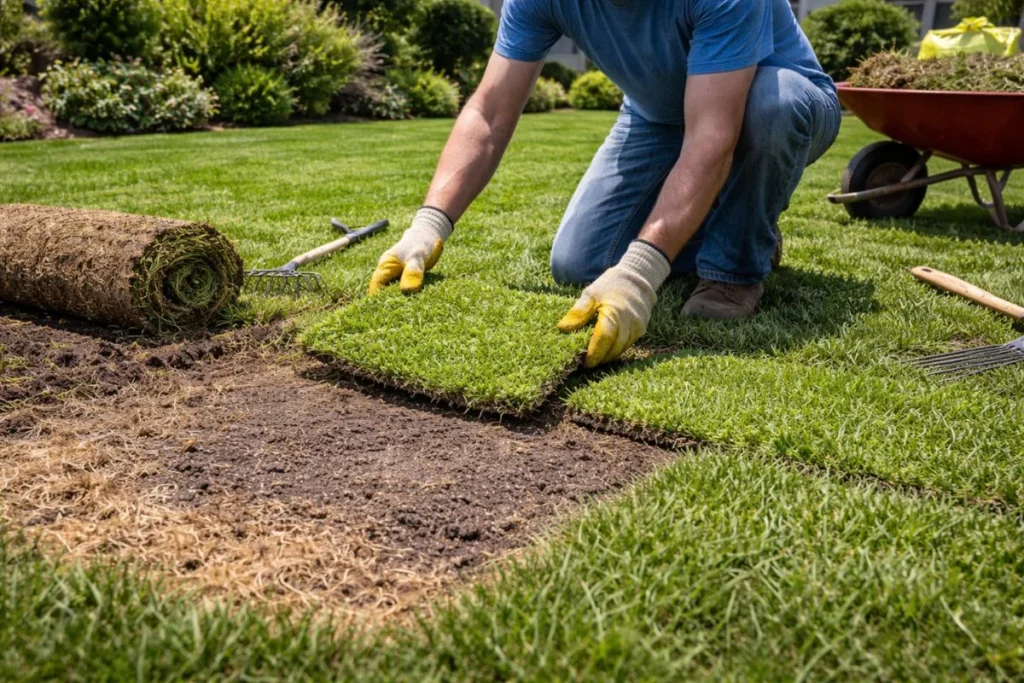
- Remove dead patches.
- Install fresh sod or plugs.
- Water regularly to support rooting.
Repairing damage early prevents weeds from taking over.
Prevention Plan for Next Season
If you had chinch bugs once, monitor closely next summer.
Early summer:
- Inspect sunny areas weekly.
- Check lawn edges for early yellowing.
Mid-summer:
- Maintain proper mowing height.
- Avoid overfertilizing.
Consider resistant grass varieties during lawn renovation if infestations repeat.
Prevention reduces long-term treatment costs.
DIY vs Professional Treatment Cost
Many homeowners ask whether to hire a service.
DIY treatment:
- Product cost usually ranges from $25–$80.
- Works well for small to moderate infestations.
Professional service:
- May cost $200–$600 depending on lawn size.
- Useful for severe or repeated infestations.
If damage spreads quickly or covers large areas, professional help may be worth it.
When to Call a Professional
Call a lawn care expert if:
- Damage continues after two treatments.
- Infestation covers most of the lawn.
- You are unsure about correct product choice.
Severe infestations can kill large areas of turf.
Common Chinch Bug Treatment Mistakes
- Treating without confirming infestation
- Spraying the entire lawn unnecessarily
- Reapplying insecticide too quickly
- Ignoring heavy thatch buildup
- Overwatering damaged grass
Final Thoughts
From experience, the lawns that recover best are the ones where the problem is confirmed early and treated properly. Chinch bugs treatment is effective when you use the right timing, apply products correctly, and improve lawn health at the same time. Most serious damage happens because homeowners wait too long or treat the wrong issue. If you monitor your lawn during hot months, check sunny areas first, and follow a clear treatment plan, you can stop chinch bugs before they destroy large sections of turf. With careful observation and consistent care, your lawn can stay healthy even during peak summer stress.