 Skip to content
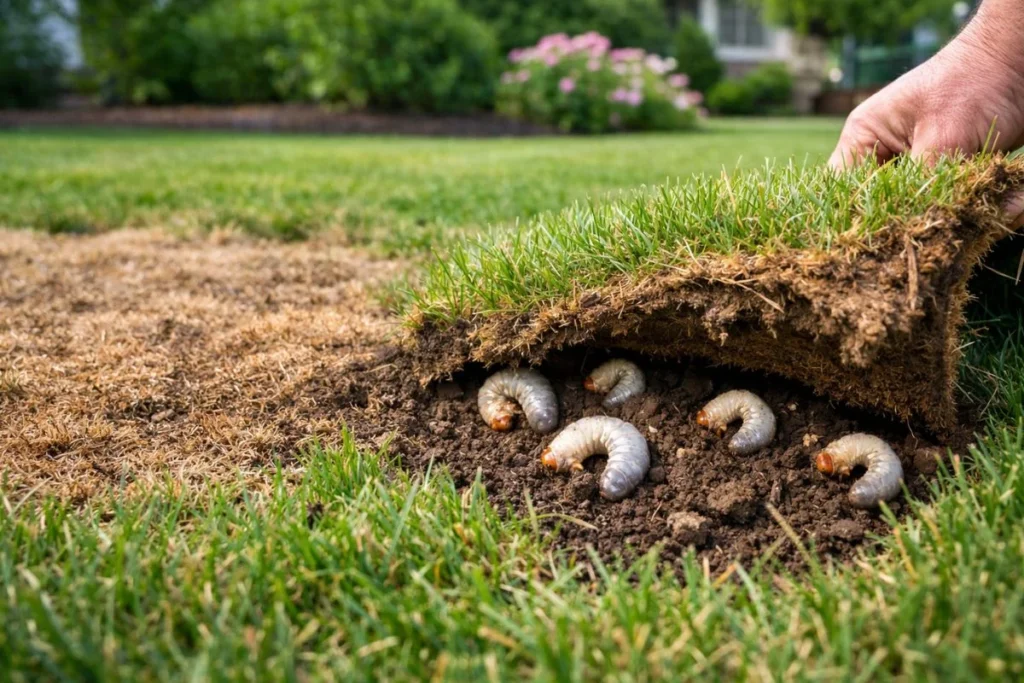
You step outside and notice brown patches spreading across your lawn. The grass feels loose under your feet. Birds keep pecking at the same spots. Maybe animals have started digging at night. You water more, thinking it is heat stress, but the damage keeps getting worse. This is the point where many homeowners feel confused and frustrated because the real problem is hiding below the soil.
In my experience working with lawn issues, this pattern almost always points to Japanese beetle grubs feeding on grass roots. The damage often shows up weeks after the feeding begins, which is why timing matters so much. I have seen lawns recover fully when treatment is applied at the right stage, and I have also seen money wasted when products are used without checking grub counts first. In this guide, I will walk you through how to confirm the problem, when to treat, and how to choose the right control method based on real lawn conditions.
What Are Japanese Beetles and Grubs?
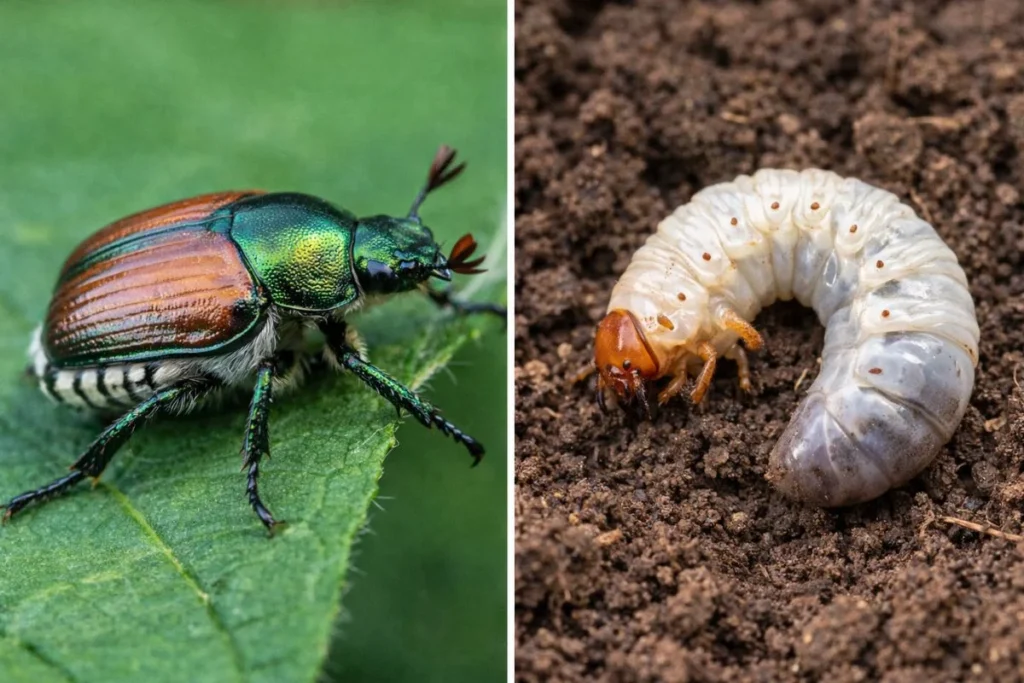
The Japanese beetle is a metallic green and copper beetle seen in summer.
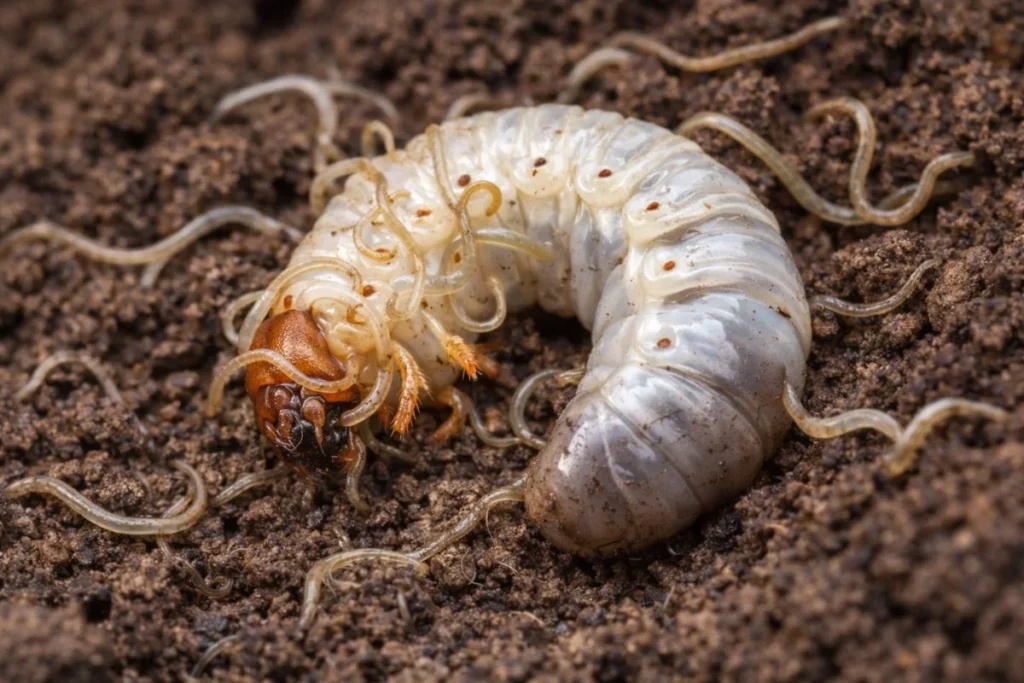
Grubs are the larval stage of this beetle. They live underground and feed on grass roots.
Adults damage leaves.
Grubs damage lawns.
Grub control stops the problem before adult beetles return next year.
Quick Signs You May Have a Grub Problem
- Brown patches that do not improve with watering
- Grass feels spongy under your feet
- Turf lifts easily like carpet
- Birds, skunks, or raccoons digging
Before you buy any product, confirm the problem.
If you want a complete breakdown of early and advanced damage symptoms, review the full guide on signs of grubs on lawn before deciding on treatment.
How to Confirm If You Really Need Treatment
This prevents wasting money.
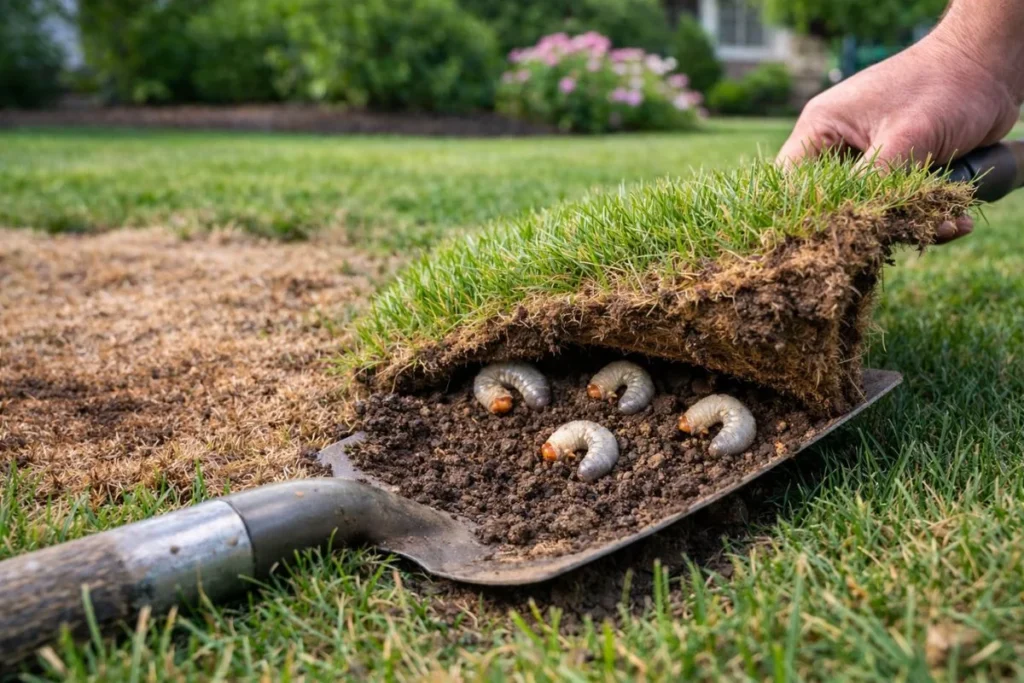
- Cut a 1-square-foot section of turf.
- Lift it carefully.
- Count the grubs in the top 2–3 inches of soil.
If you find:
- 8–10 grubs per square foot → treatment is usually needed.
- 6 grubs in stressed lawns → treatment may help.
- Fewer than 5 → lawn often recovers without chemicals.
This simple test protects your budget.
Quick Decision Guide: Should You Treat for Grubs?
| What You See | Grub Count | What To Do |
|---|---|---|
| Brown patches + animals digging | 8–10 per sq ft | Apply curative treatment |
| Brown patches but low grub count | 3–5 per sq ft | Improve watering and lawn care |
| No damage but past infestations | Not checked yet | Apply preventive in early summer |
| Healthy lawn | 0–3 per sq ft | No treatment needed |
Life Cycle of Japanese Beetles
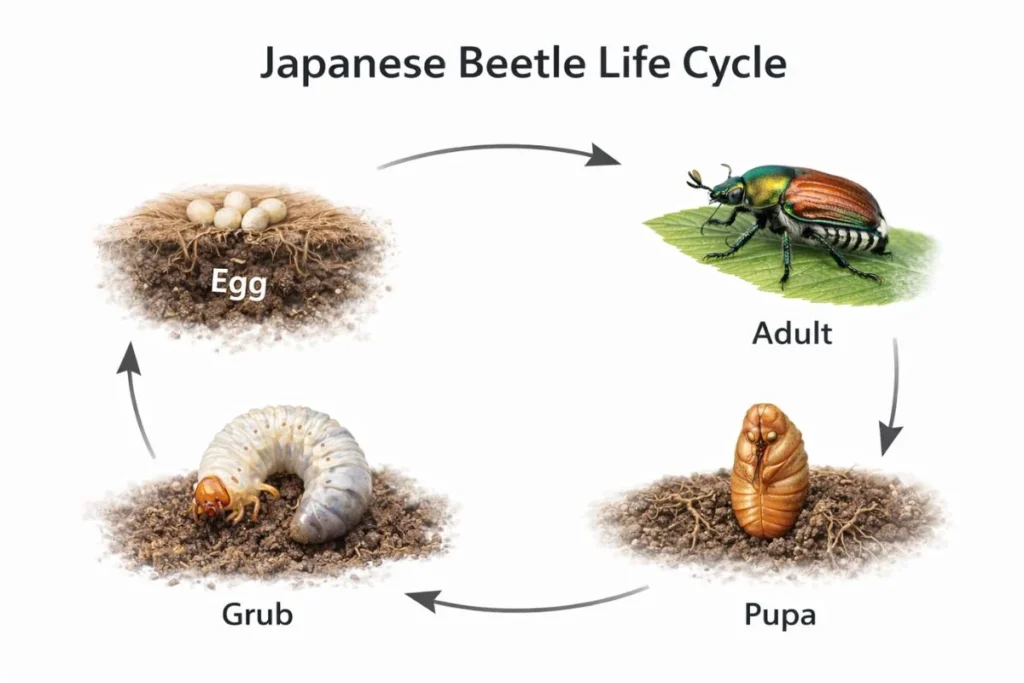
- Adults lay eggs in summer.
- Eggs hatch into small grubs.
- Grubs feed heavily in late summer and fall.
- They move deeper in winter.
- In spring, they return near the surface and feed briefly.
- They pupate and emerge as adults in early summer.
Grubs are easiest to kill when they are small and feeding near the surface.
Japanese Beetle Grub Control Methods
There are two main strategies: preventive and curative.
Understanding the difference helps you choose the right approach.
Preventive Grub Control (Before Heavy Damage)
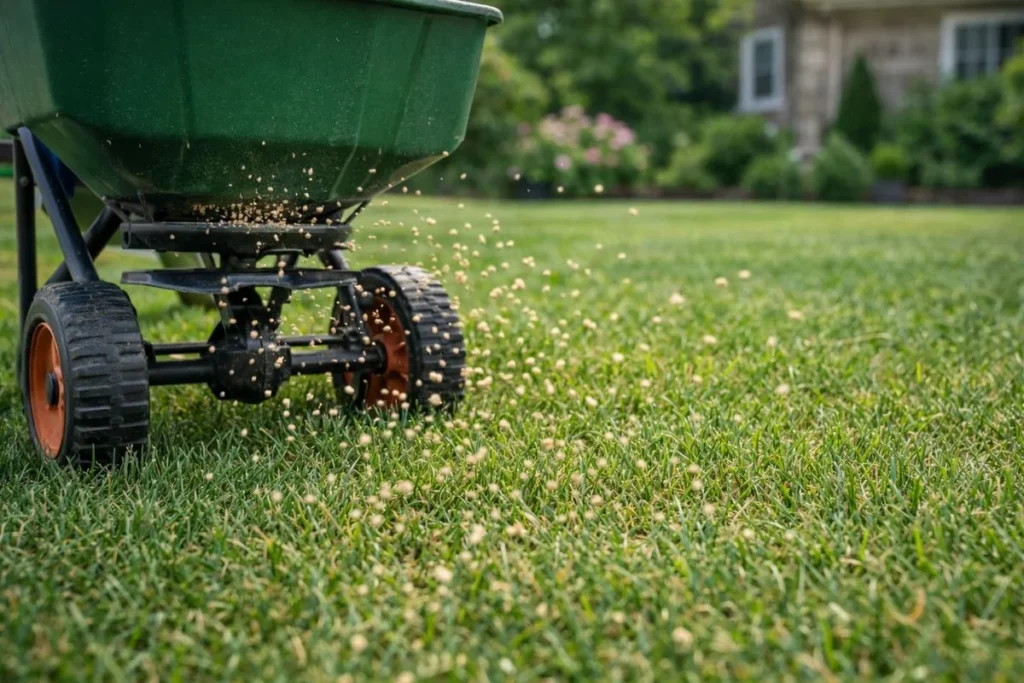
Preventive treatments stop young grubs early.
Best timing in many northern states:
June to early July, when soil reaches about 65°F at 2–3 inches deep.
Common preventive active ingredients:
- Chlorantraniliprole
- Imidacloprid
- Thiamethoxam
These products protect lawns before large populations develop.
Best for:
- Homeowners who see beetles every year
- Lawns with past infestations
Curative Grub Control (When Damage Is Visible)
Curative products kill grubs that are already feeding.
Best timing:
Late July through early September
Common curative ingredient:
- Trichlorfon
Curative treatments act faster but should only be used if grub counts confirm a problem.
Best for:
- Brown lawn patches
- High grub counts
- Active animal digging
Soil Temperature and Timing Guide
Timing matters more than brand choice.
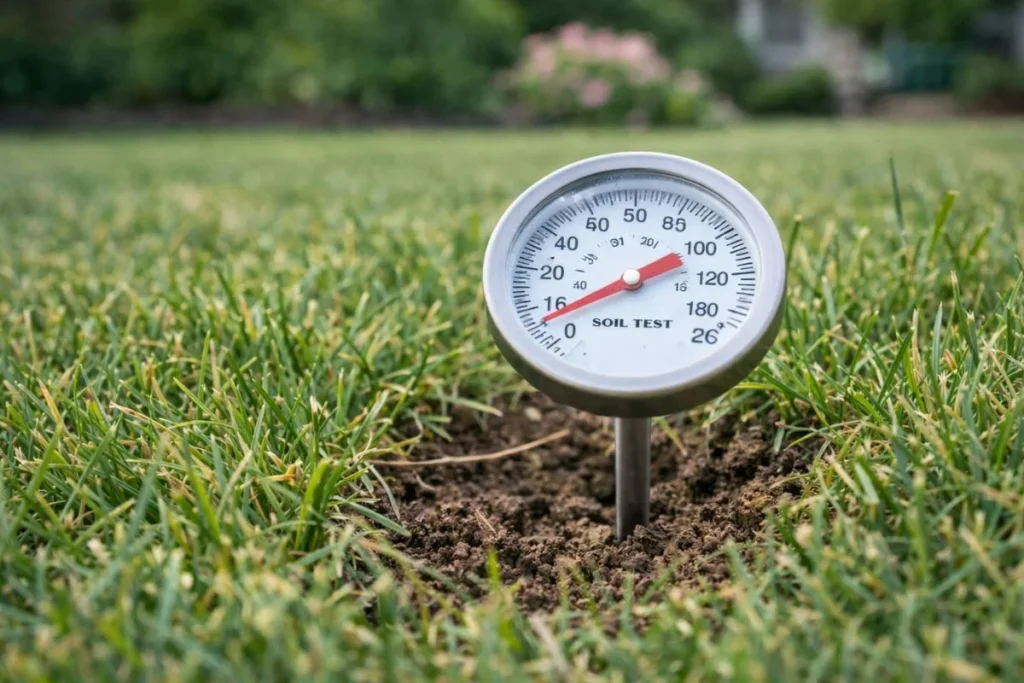
- Preventive products work best around 65°F soil temperature.
- Nematodes work best between 60°F and 85°F.
- Curative treatments work when grubs are near the surface.
Use a soil thermometer for accuracy.
Applying too early or too late reduces results.
Japanese Beetle Grub Control Timeline (Most U.S. Regions)
| Month | What Is Happening | Action |
|---|---|---|
| May–June | Adults emerging | Monitor beetles |
| June–July | Eggs being laid | Apply preventive if needed |
| July–August | Young grubs feeding | Best treatment window |
| September | Grubs growing larger | Late curative option |
| Spring | Large grubs feeding briefly | Usually avoid treatment |
Regional Timing Differences (United States)
Timing shifts by climate.
Northeast & Midwest
Late July and August are peak grub feeding months.
Southern States
Egg hatch may begin earlier. Preventive treatment may start in June.
Mountain & Cooler Regions
Development may shift slightly later into August.
Local climate affects success.
Natural vs Chemical Japanese Beetle Grub Control
Some homeowners prefer safer or long-term options.
Biological Options
- Beneficial nematodes
- Milky spore
Nematodes attack live grubs and need moist soil.
Milky spore targets Japanese beetle grubs only. It builds slowly and may take 1–3 years for strong control. It performs better in warmer climates.
Chemical Options
Chemical treatments act faster and are useful in heavy infestations.
For many homeowners, a preventive program each summer reduces the need for emergency treatments later.
Detailed Watering Instructions After Treatment
Watering is critical.
- Apply about ½ inch of water after insecticide.
- Do not overwater.
- For nematodes, keep soil moist for several days.
- Apply during cooler parts of the day.
Dry soil reduces effectiveness.
Is Japanese Beetle Grub Control Safe for Pets?
Most lawn products are safe once dry.
Follow label directions carefully.
Keep pets off treated areas until watering is complete and surfaces are dry.
Biological options may be preferred by pet owners.
Lawn Repair After Grub Damage
After treatment, help your lawn recover.
- Remove dead grass.
- Loosen compacted soil if needed.
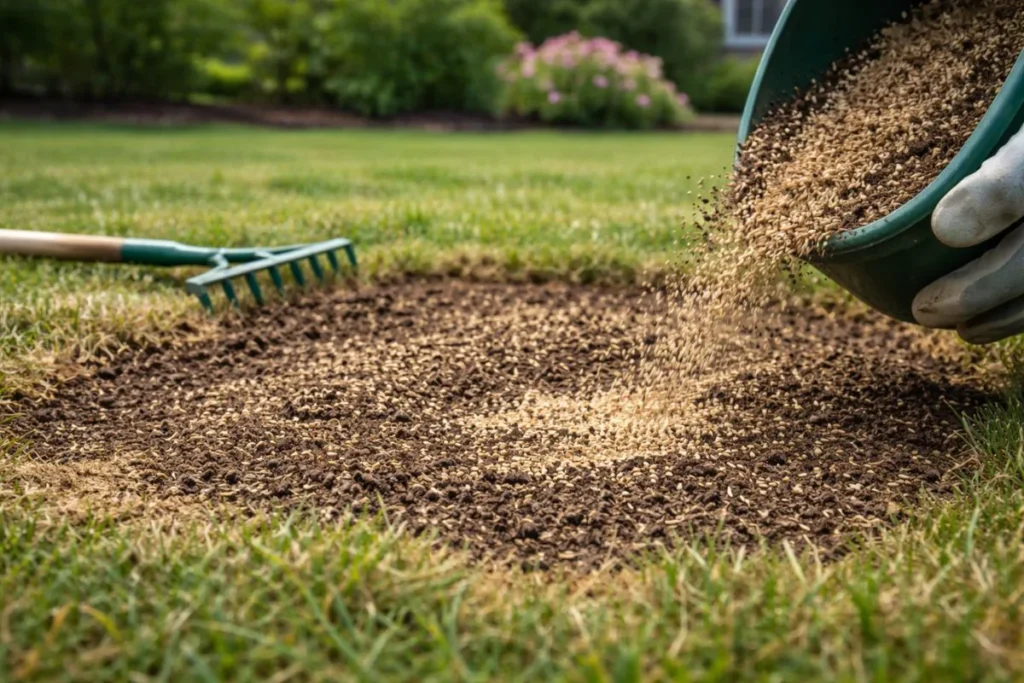
- Overseed damaged areas.
- Water consistently during germination.
- Apply light fertilizer if soil is weak.
Healthy roots reduce future damage.
Why Spring Treatment Often Fails
Spring control is usually less effective because:
- Grubs are larger and harder to kill.
- Feeding slows before pupation.
- They prepare to emerge as adults.
Late summer treatment gives better results.
Common Mistakes to Avoid
- Treating without counting grubs
- Applying at the wrong soil temperature
- Skipping post-application watering
- Placing beetle traps near garden beds
Small mistakes reduce success.
Simple Seasonal Action Plan
Early Summer
Monitor beetles. Plan preventive treatment if needed.
Mid to Late Summer
Inspect lawn. Apply preventive or curative treatment based on grub counts.
Fall
Repair damaged turf.
Spring
Inspect again. Treat only if numbers are high.
Key Takeaways
- Always confirm grub numbers before treatment.
- Late summer is the most effective control window.
- Soil temperature matters more than the product brand.
- Water properly after applying any treatment.
Final Thoughts
Japanese beetle grub control becomes simple once you focus on inspection, timing, and proper application. From years of observing lawn damage patterns, I can say that most failures happen because treatment is applied too early, too late, or without confirming grub numbers. When you check your lawn carefully, monitor soil temperature, and treat during late summer while grubs are small and active, results improve significantly. A healthy lawn can recover quickly with the right steps, and preventing next year’s beetle outbreak starts with smart decisions today.