 Skip to content
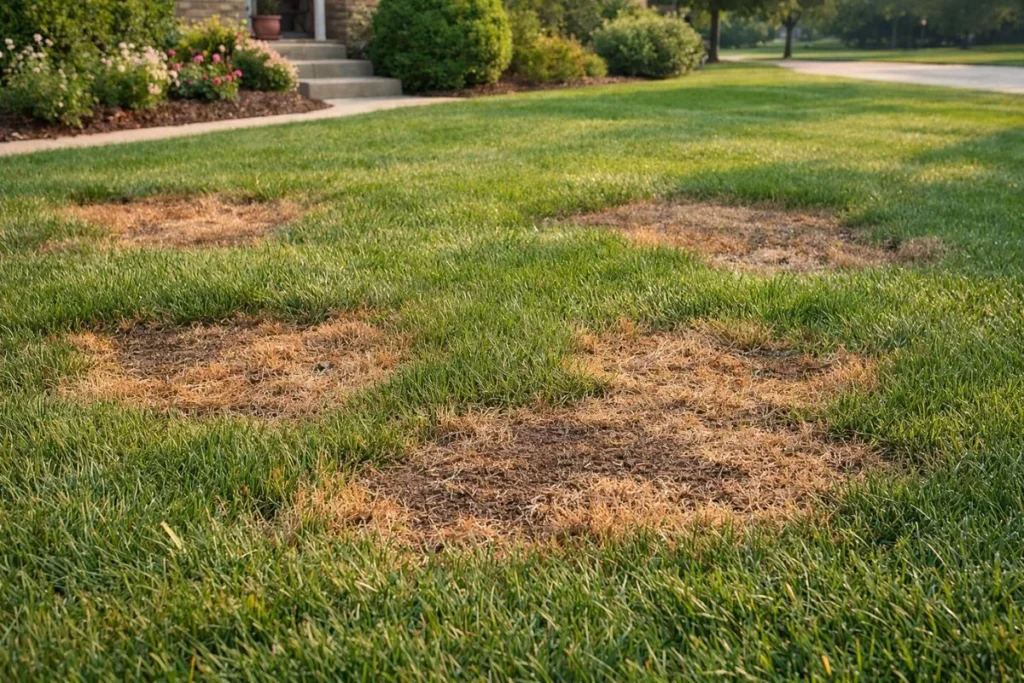
I have seen this pattern many times in residential lawns. The grass looks healthy in early summer. Then small brown patches begin to appear. Most homeowners assume it is heat stress, so they water more. The patches keep spreading. Grass blades look chewed at the edges. Birds start pecking at the lawn. At that point, frustration sets in because nothing seems to fix the problem.
In many of those cases, the real cause was sod webworm damage hiding in the thatch layer. I have inspected lawns where fertilizer, fungicide, and extra irrigation were applied before anyone checked for larvae. The damage continued because the pest was never confirmed. The difference between guessing and diagnosing correctly is huge. Once sod webworms are properly identified and treated at the right time, recovery is very realistic.
- Quick Diagnosis Checklist (Start Here)
- What Are Sod Webworms?
- Description of the Pest
- Susceptible Species
- Sod Webworm Life Cycle
- Regional Activity Timing in the United States
- How Fast Does Sod Webworm Damage Spread?
- Damage
- How to Tell Sod Webworm Damage from Other Lawn Problems
- Monitoring and Treatment Decisions
- When to Check for Moths
- Management Strategy Based on Severity
- Cultural Control
- Biological Control Options
- Chemical Control Options
- Are Treatments Safe for Kids and Pets?
- Lawn Recovery After Sod Webworm Damage
- Prevention Tips
- Frequently Asked Questions
- conclusion
Quick Action Takeaway
- Check for ragged or notched grass blades.
- Look for small tan moths flying at dusk.
- Perform a soap flush test in 3–5 damaged spots.
- Count larvae and calculate the average.
- Treat only if numbers reach damaging levels.
- Start recovery steps after feeding stops.
Quick Diagnosis Checklist (Start Here)
If you see brown patches, ask these questions:
- Are grass blades ragged or notched?
- Do small tan moths fly up at dusk?
- Are birds pecking at the lawn?
- Does watering fail to improve the area?
If yes, perform the soap flush test before applying any treatment.
What Are Sod Webworms?
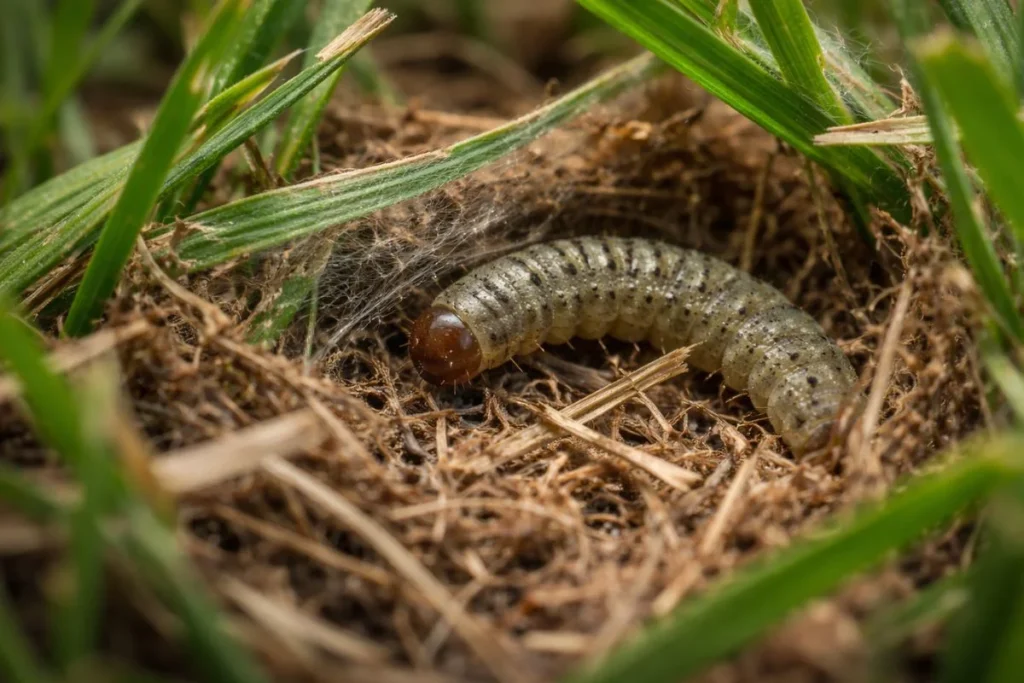
Sod webworms are the larval stage of small lawn moths. The adult moth does not damage grass. The caterpillar does.
Larvae live in the thatch layer during the day. They feed at night on grass blades. That night feeding causes most sod webworm damage.
Description of the Pest
Sod webworm larvae are small caterpillars:
- Gray, brown, or green
- About ½ to ¾ inch long
- Smooth with small dark spots
They create silk tunnels in the thatch. These tunnels protect them from heat and predators.
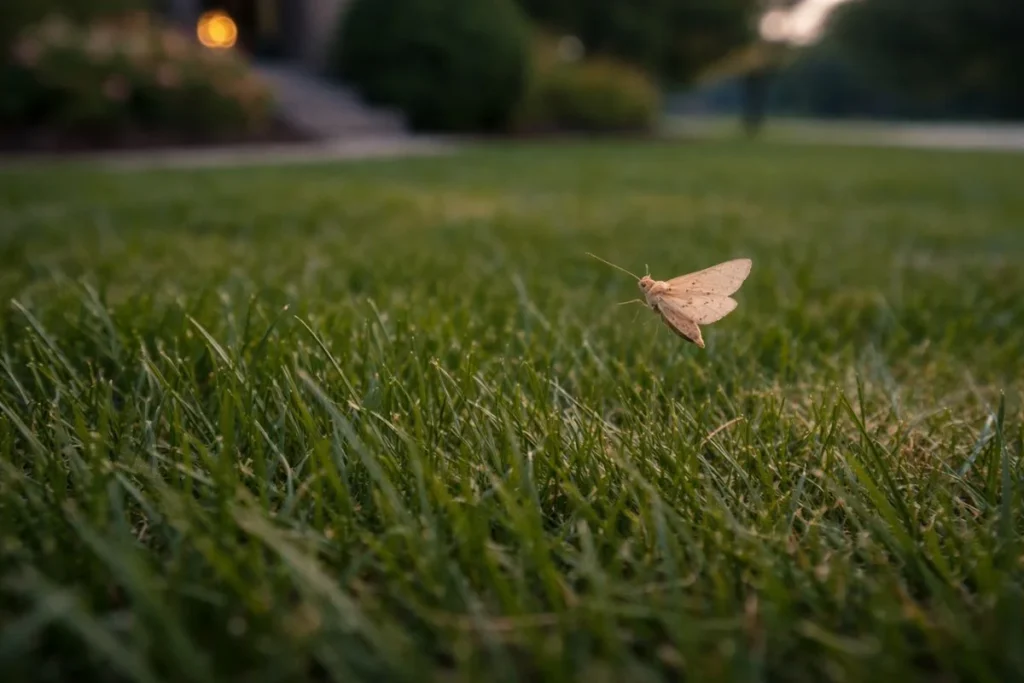
The adult moth is light tan or brown. It rests with wings folded tightly along the body.
Susceptible Species
Most turfgrasses can suffer sod webworm damage.
Cool-season grasses:
- Kentucky bluegrass
- Perennial ryegrass
- Fine fescue
Warm-season grasses:
- Bermuda grass
- Zoysia
- St. Augustine
Thin or stressed lawns are more vulnerable.
Sod Webworm Life Cycle
- Adult moth lays eggs on grass blades.
- Eggs hatch in 7 to 10 days.
- Larvae feed for several weeks.
- Pupation occurs in the thatch or upper soil.
- Adults emerge and repeat the cycle.
There may be 2 to 4 generations per year.
Northern states usually have fewer generations. Southern states may experience overlapping generations, which increases damage risk.
Regional Activity Timing in the United States
Northern States:
- Active mid-summer to early fall
- Peak damage in August and September
Southern States:
- Active late spring through fall
Warm or tropical climates:
- Multiple generations
- Activity may continue most of the warm season
Monitoring is more important in warm regions.
Seasonal Activity Overview
| Region | Peak Activity Period |
|---|---|
| Northern U.S. | August – September |
| Southern U.S. | June – October |
| Warm/Tropical Areas | Most of the warm season |
How Fast Does Sod Webworm Damage Spread?
Damage can expand within weeks during active feeding.
Small patches may grow larger quickly if larvae are numerous.
Early detection prevents major turf loss.
Damage
Common signs:
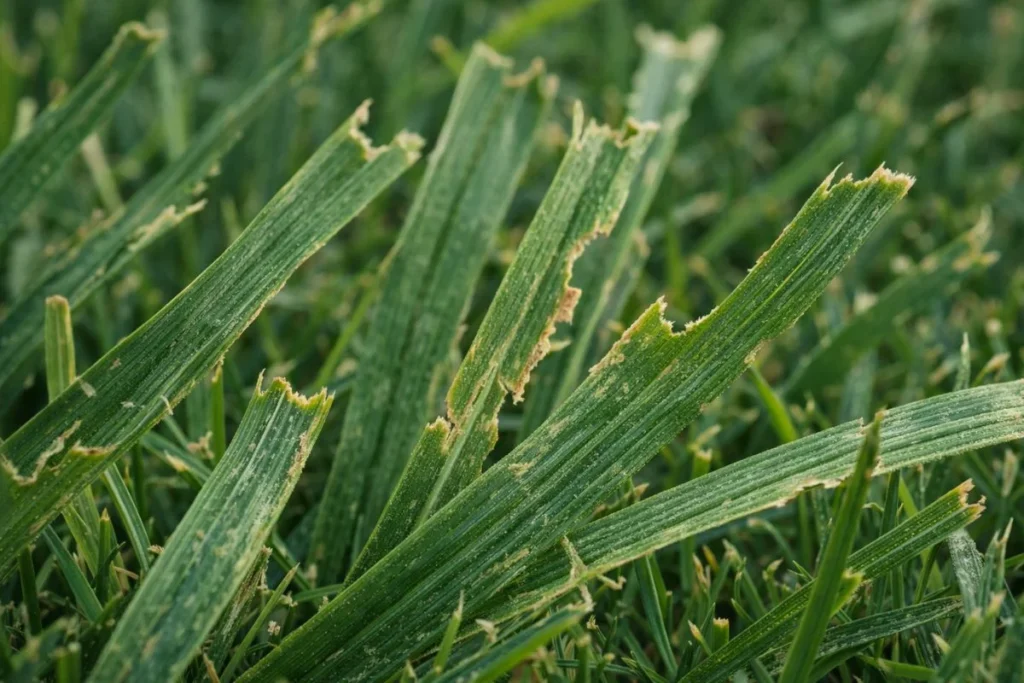
- Notched or ragged grass blades
- Brown patches that grow over time
- Thinning turf
- Silk webbing in thatch
- Birds feeding on lawn
Roots usually remain intact.
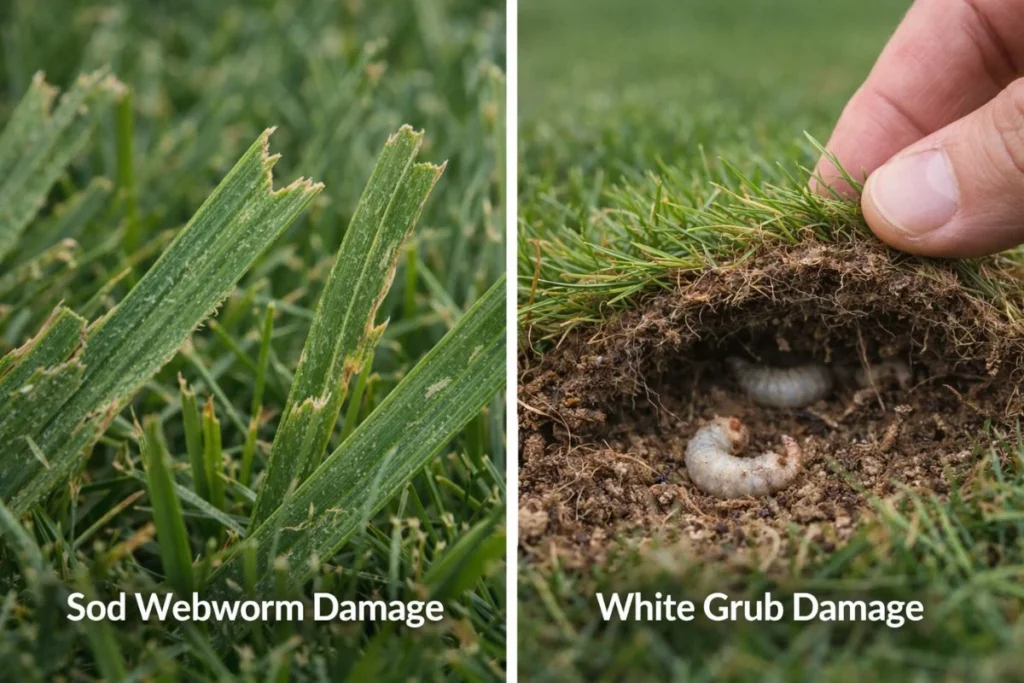
Unlike grub damage, sod webworm damage does not make turf lift easily.
Watering does not restore damaged blades.
How to Tell Sod Webworm Damage from Other Lawn Problems
Sod Webworm Damage:
- Chewed blade edges
- Brown patches
- Firm roots
- Larvae found with soap flush
White Grubs:
- Spongy turf
- Grass pulls up easily
- Root damage
Chinch Bugs:
- Yellowing in hot areas
- No notched blades
Drought:
- Grass improves after watering
- No larvae present
If turf feels spongy and lifts easily from the soil, the issue may be root-feeding larvae instead of blade-feeding caterpillars. Review the complete guide on signs of grubs on lawn to confirm underground damage before applying treatment.
Lawn Damage Comparison Guide
| Symptom | Sod Webworms | White Grubs | Chinch Bugs | Drought |
|---|---|---|---|---|
| Notched grass blades | Yes | Rare | No | No |
| Roots damaged | No | Yes | No | No |
| Turf lifts easily | No | Yes | No | No |
| Improves after watering | No | No | No | Yes |
| Larvae visible with soap test | Yes | No | No | No |
Monitoring and Treatment Decisions
Never treat before confirming larvae.
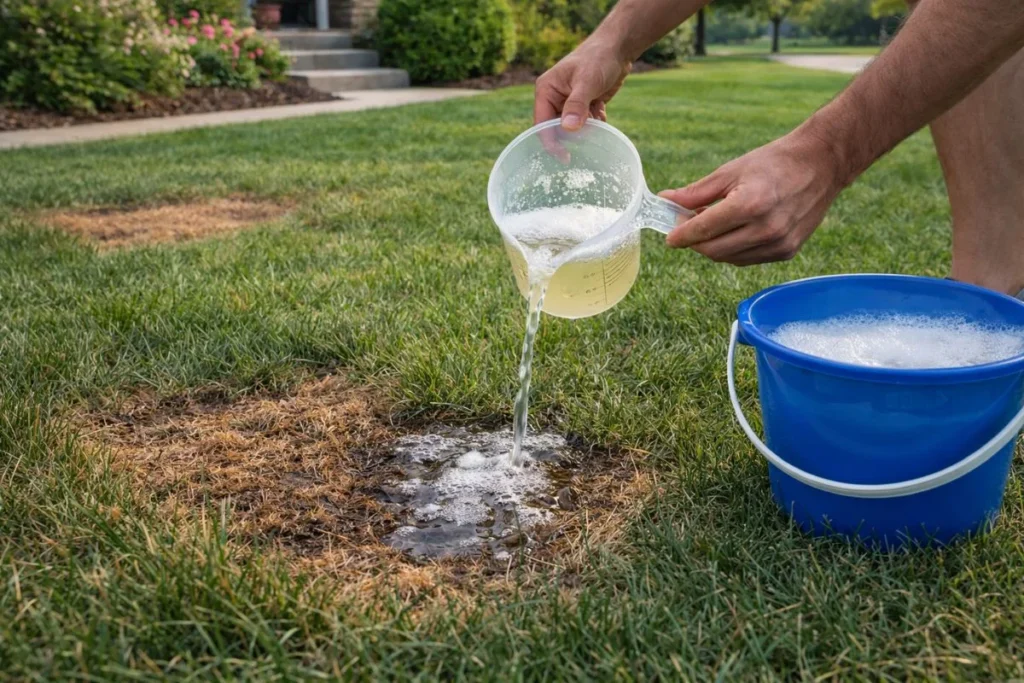
Soap Flush Test
- Mix 1–2 tablespoons liquid dish soap in 1 gallon of water.
- Pour over 1 square yard.
- Wait 5–10 minutes.
- Count larvae.
Test 3–5 damaged areas.
Calculate the average count.
General treatment guidance:
- 2–6 larvae per square foot may justify action.
- Thick lawns tolerate low numbers.
- Stressed turf may require treatment sooner.
Treatment Decision Guide
| Larvae Count (per sq ft) | Lawn Condition | Recommended Action |
|---|---|---|
| 0–2 | Healthy, thick turf | Monitor only |
| 2–4 | Healthy lawn | Monitor closely |
| 4–6 | Thin or stressed lawn | Consider treatment |
| 6+ | Any lawn condition | Treat promptly |
When to Check for Moths
Moths fly low over grass at dusk.
Heavy moth activity means larvae may be feeding nearby.
Monitor closely during peak months.
Management Strategy Based on Severity
Mild Damage
- Improve mowing height
- Water properly
- Monitor weekly
Moderate Damage
- Confirm counts
- Consider biological treatment
Severe Damage
- Confirm high larvae counts
- Apply labeled insecticide
- Plan recovery steps
Cultural Control
- Mow at proper height
- Water deeply, not daily
- Reduce thatch
- Avoid heavy late-summer nitrogen
Mowing Height Guidelines
Cool-season:
- 3–3.5 inches
Warm-season:
- 1.5–2.5 inches
Biological Control Options
Bacillus thuringiensis (Bt)
- Best for small larvae
- Works when larvae are actively feeding
Beneficial nematodes
- Effective in moist soil
- Require correct application timing
Biological options may need repeat applications.
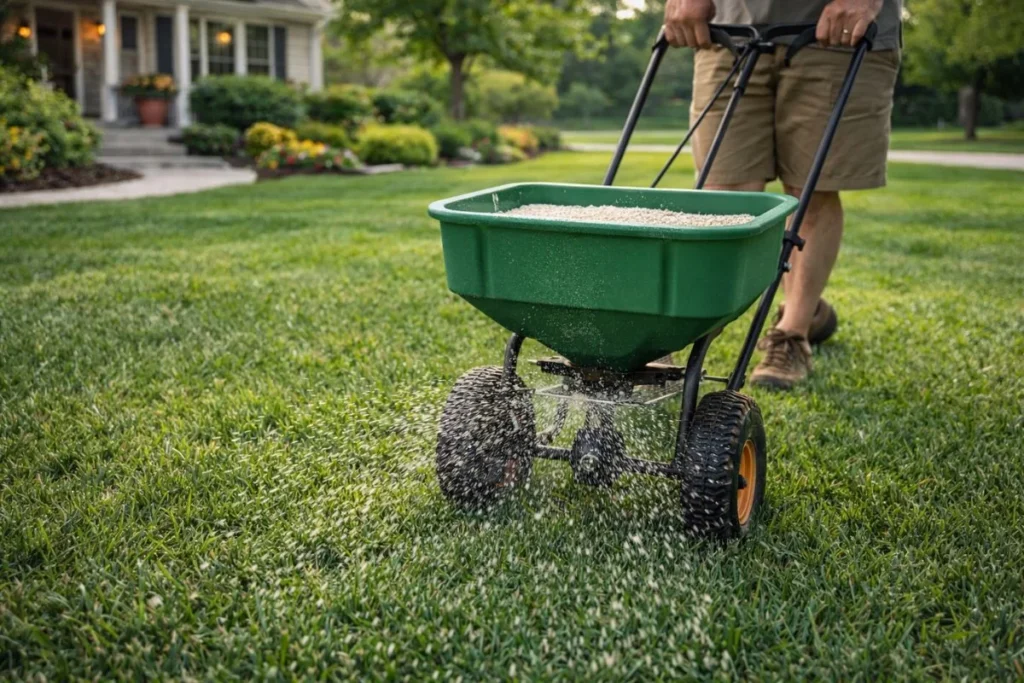
Chemical Control Options
Common active ingredients:
- Bifenthrin
- Cyfluthrin
- Carbaryl
- Spinosad
Apply in late afternoon or evening.
Follow label instructions carefully.
Are Treatments Safe for Kids and Pets?
Most labeled lawn insecticides are safe once dry.
Always:
- Follow re-entry instructions
- Keep pets off treated lawn until label allows
- Store products safely
If concerned, consider biological options first.
Lawn Recovery After Sod Webworm Damage
- Remove debris.
- Lightly rake thin areas.
- Overseed if needed.
- Water consistently.
- Fertilize after feeding stops.
Recovery speed depends on grass type and damage level.
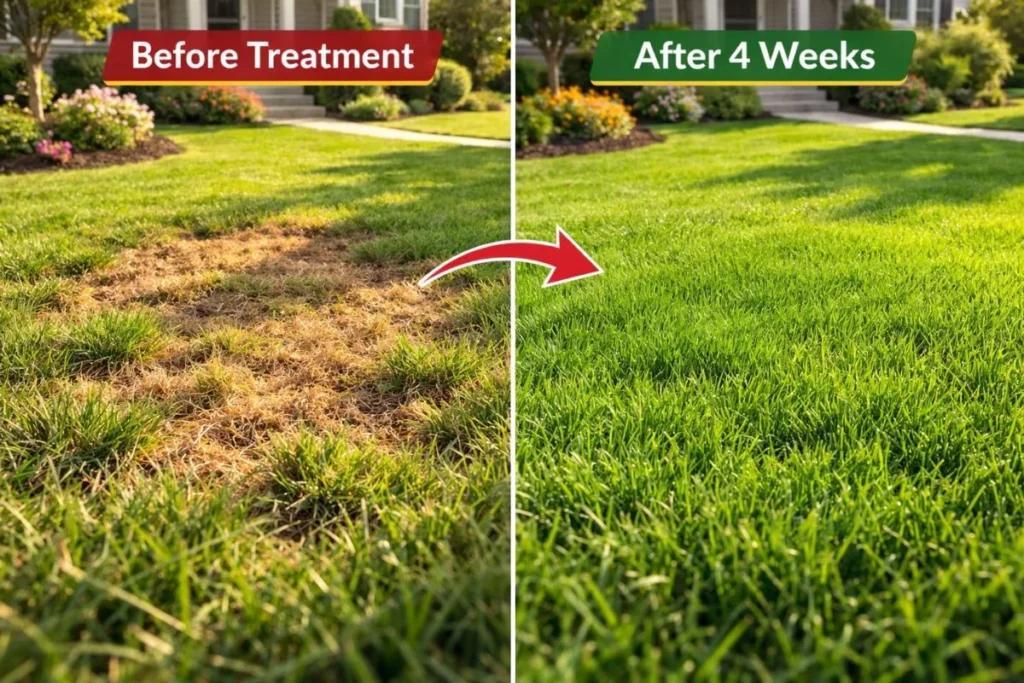
Lawn Recovery Timeline
- Week 1: Feeding stops after treatment or natural decline.
- Week 2–3: New grass growth begins in thin areas.
- Week 3–6: Lawn thickens with proper watering and mowing.
- After 6 Weeks: Overseed thin spots if needed.
Prevention Tips
- Maintain mowing height.
- Reduce thatch buildup.
- Inspect lawn during peak season.
- Perform soap flush test early.
- Monitor during dusk moth flights.
Healthy lawns resist heavy sod webworm damage.
Frequently Asked Questions
Can sod webworms kill my lawn?
They rarely kill roots, but severe feeding can destroy large turf sections.
How fast does damage spread?
It can expand within weeks during peak feeding.
When is damage worst?
Late summer in northern states. Longer season in southern states.
Do birds control sod webworms?
Birds help but rarely eliminate infestations.
conclusion
Sod webworm damage can look serious, but in most lawns it is manageable with the right approach. From field observations and extension-based guidance, the pattern is clear: confirm the larvae first, measure the population, and treat only when numbers justify action. Healthy turf can tolerate light feeding, but heavy infestations require timely response. I have seen lawns that looked beyond repair bounce back once feeding stopped and proper recovery steps were followed. Careful monitoring, correct timing, and strong lawn maintenance make the difference between ongoing damage and full recovery.