 Skip to content
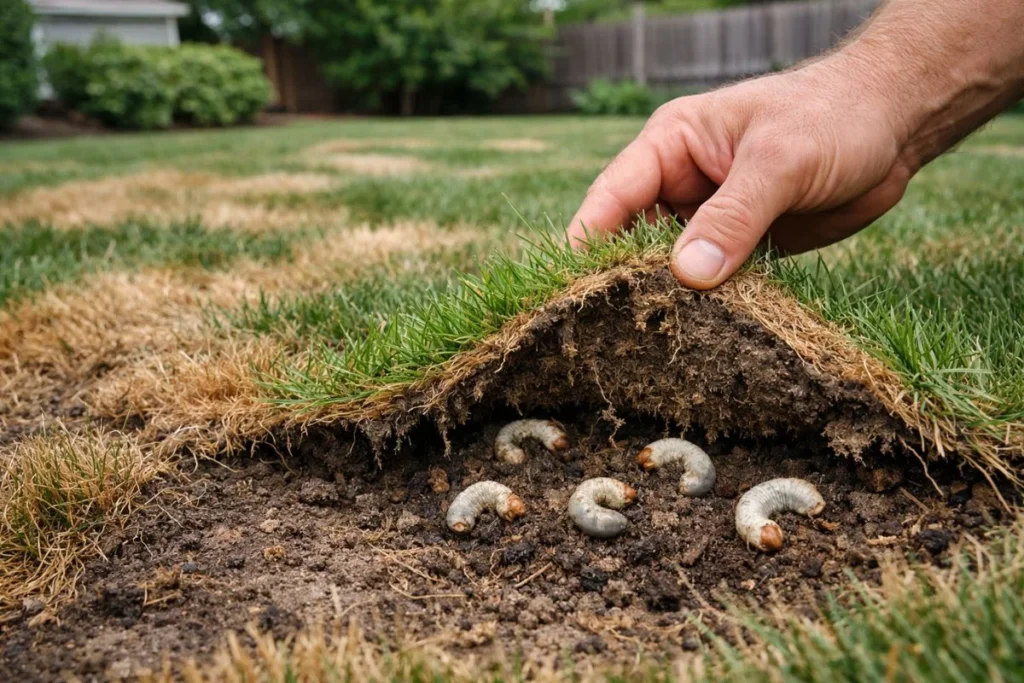
You water your lawn. You fertilize it. Everything looks healthy in spring. Then late summer comes and brown patches start to appear. The grass feels soft under your feet. You grab a handful and it lifts up like loose carpet. Now you are unsure. Is it drought? Is it disease? Or did you miss the right time to treat for grubs? Brown patches caused by grubs are often confused with fungal disease. If you are unsure whether the damage is from insects or infection, review our guide on lawn fungus identification before choosing a treatment plan. Many homeowners make the same mistake. They either apply treatment too early in spring or wait until the damage is already severe.
From years of studying lawn pest cycles and watching how grub infestations develop across different U.S. regions, I have seen one clear pattern. Most lawn damage is not caused by weak products. It is caused by poor timing. Grub control works when it matches the life cycle of the pest. If you understand when to treat for grubs, you protect your roots before they are destroyed. This guide explains the timing clearly so you can act with confidence instead of guessing.
- Quick Answer: Best Time to Treat for Grubs
- What Are Lawn Grubs?
- Why Timing Matters for Grub Treatment
- The Grub Life Cycle Explained
- Soil Temperature and Grub Activity
- Best Time to Treat for Grubs by Region
- Month-by-Month Grub Treatment Guide
- How to Check for Grubs Before Treating
- Signs You May Need Grub Treatment
- Preventive vs Curative Grub Control
- Common Active Ingredients Used in Grub Control
- Natural Grub Treatment Options
- Long-Term Grub Management Strategies
- Safety Tips When Applying Grub Treatment
- Common Mistakes to Avoid
- When Not to Treat for Grubs
- Frequently Asked Questions About When to Treat for Grubs
- Final Thoughts on When to Treat for Grubs
Quick Takeaway: When to Treat for Grubs
- Preventive treatment: Early to mid-summer
- Curative treatment: Late summer
- Do not treat: Winter or very early spring
- Confirm infestation: 5–10 grubs per square foot before applying
- Soil temperature: Around 55–60°F signals hatch timing
Quick Answer: Best Time to Treat for Grubs
- Best preventive window: Early to mid-summer
- Best curative window: Late summer to early fall
- Do not treat in winter
- Spring treatment is usually weak
Now let’s break it down properly.
What Are Lawn Grubs?
Grubs are white, C-shaped beetle larvae. They live in soil and feed on grass roots.
The most common types in the United States are:
Japanese Beetle Grubs
- Very common in the Midwest and Northeast
- Eggs laid in early summer
- Heavy feeding in late summer
June Beetle (May Beetle) Grubs
- Larger grubs
- Some species stay in soil for up to three years
- Can cause damage across seasons
European Chafer Grubs
- Common in northern states
- Feed earlier in summer
- Can cause fast lawn damage
Different species hatch at slightly different times. That is why timing can shift by region.
Why Timing Matters for Grub Treatment
Grubs are easiest to kill when they are young and small.
Once they grow:
- They eat more roots
- They move deeper in soil
- They become harder to kill
Correct timing improves results and reduces waste.
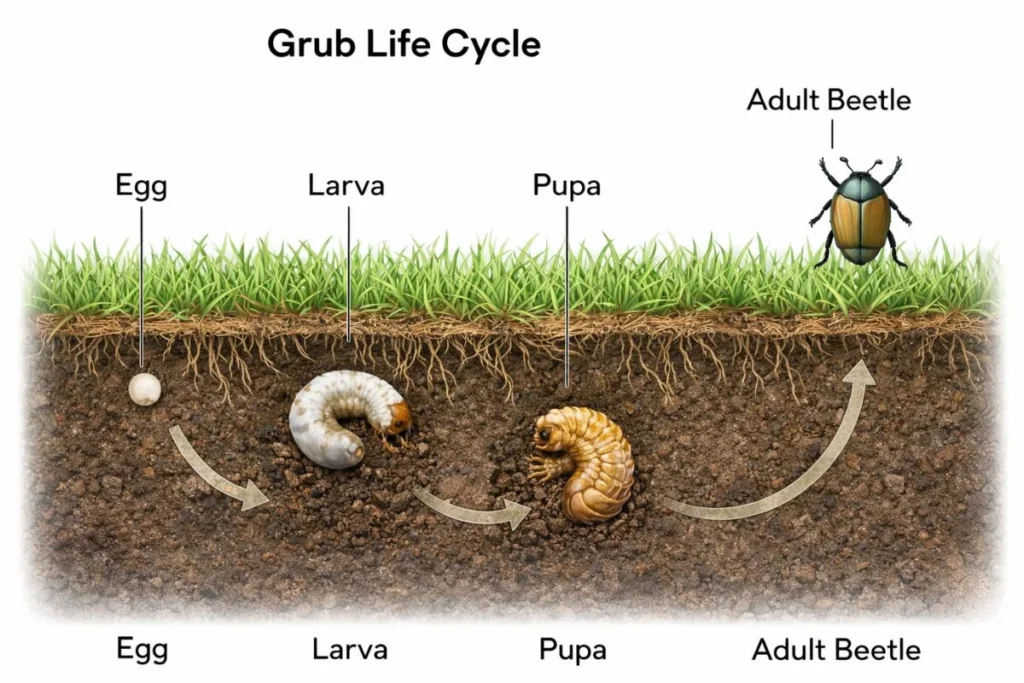
The Grub Life Cycle Explained
Understanding the cycle helps you treat at the right time.
Late Spring to Early Summer
- Adult beetles lay eggs in soil.
Mid to Late Summer
- Eggs hatch.
- Young grubs begin feeding.
- This is the best preventive window.
Fall
- Grubs grow larger.
- Lawn damage becomes visible.
- Curative products may still work.
Winter
- Grubs move deeper in soil.
- Treatment does not work well.
Soil Temperature and Grub Activity
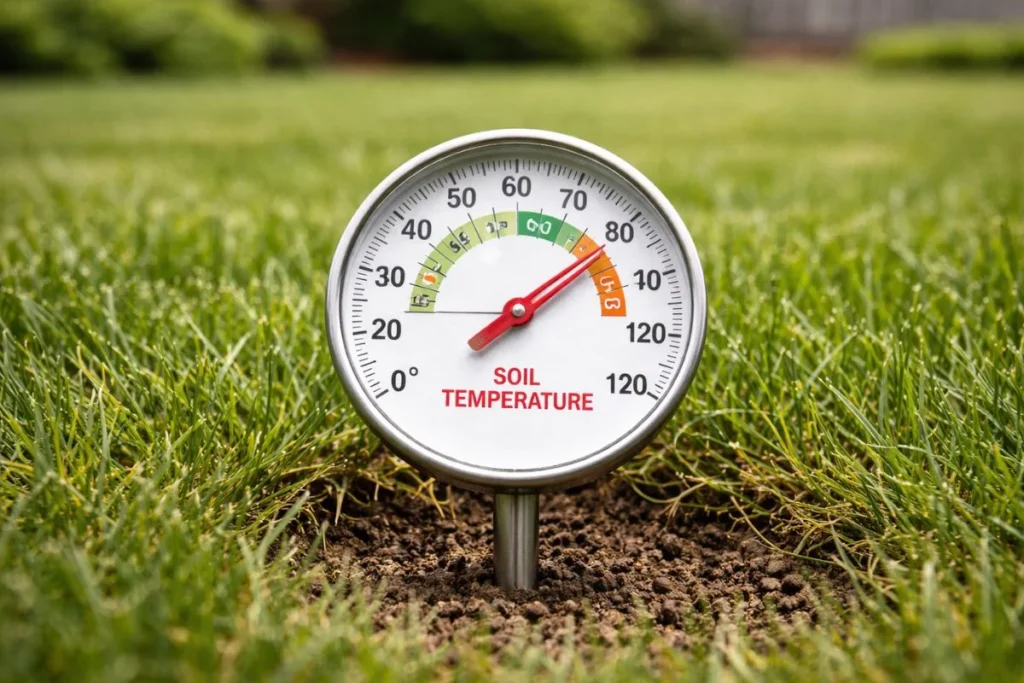
Calendar dates can vary by state. Soil temperature gives better guidance.
- Eggs usually hatch when soil stays around 55–60°F
- Warm southern states reach this earlier
- Northern states reach this later
Using a simple soil thermometer can improve timing accuracy.
Best Time to Treat for Grubs by Region
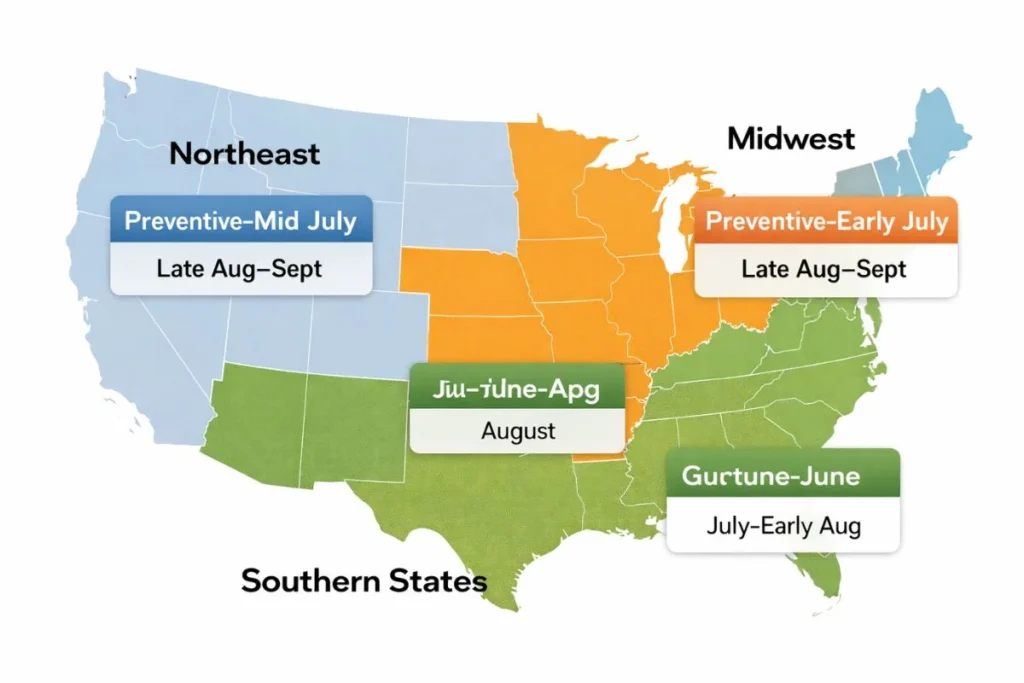
Northern States (Northeast, Upper Midwest)
- Preventive: Late June to mid-July
- Curative: Late August to September
Midwest / Transition Zone
- Preventive: Mid-June to early July
- Curative: August
Southern States
- Preventive: May to June
- Curative: July to early August
Adjust based on soil temperature and beetle activity.
U.S. Regional Grub Treatment Guide
| Region | Preventive Window | Curative Window |
|---|---|---|
| Northeast | Late June–Mid July | Late August–September |
| Midwest | Mid June–Early July | August |
| Southern States | May–June | July–Early August |
Month-by-Month Grub Treatment Guide
April–May
- Monitor lawn
- No treatment unless heavy past history
June–July
- Apply preventive treatment
August–September
- Apply curative treatment if needed
- Repair damaged areas
October–March
- No effective treatment window
Grub Treatment Timing Chart (U.S.)
| Season | Grub Stage | What To Do |
|---|---|---|
| Spring | Large overwintered grubs | Usually no treatment |
| Early Summer | Eggs being laid | Prepare for preventive treatment |
| Mid-Summer | Young grubs hatch | Apply preventive treatment |
| Late Summer | Active feeding grubs | Apply curative if needed |
| Fall | Large grubs | Curative may work early |
| Winter | Deep in soil | Do not treat |
How to Check for Grubs Before Treating
Do not treat without confirming.
Follow these steps:
- Cut a 1-foot by 1-foot square of turf.
- Lift it gently.
- Look in the top 2–3 inches of soil.
- Count the grubs.
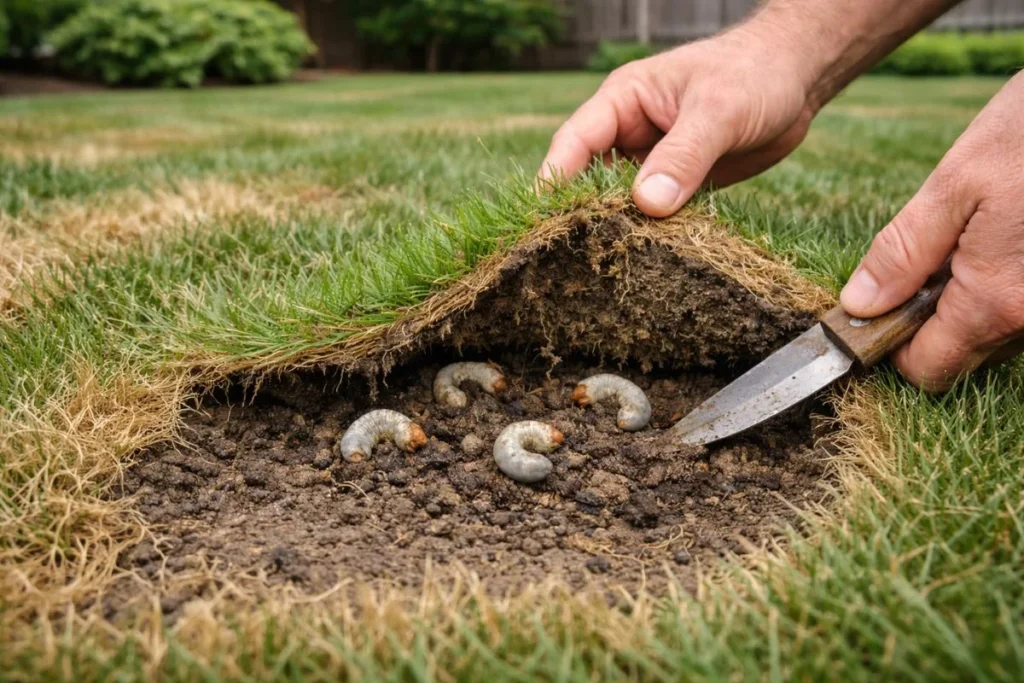
Treatment threshold:
- 5–10 grubs per square foot = treatment recommended
- Fewer than 5 = usually no treatment needed
Actively dying turf may justify treatment even slightly below this number.
If you are unsure what grub damage looks like above the soil, review the full list of signs of grubs on lawn so you can confirm the problem before applying treatment.
Signs You May Need Grub Treatment
- Brown patches that do not recover with watering
- Spongy grass
- Turf that lifts easily
- Birds or animals digging
- Irregular dead areas in late summer
Always confirm before applying products.
Preventive vs Curative Grub Control
Preventive Grub Control
- Applied early summer
- Targets newly hatched grubs
- Long-lasting protection
- Best for lawns with past grub history
Curative Grub Control
- Applied when damage appears
- Targets larger feeding grubs
- Works best in late summer
Choosing the wrong type at the wrong time reduces effectiveness.
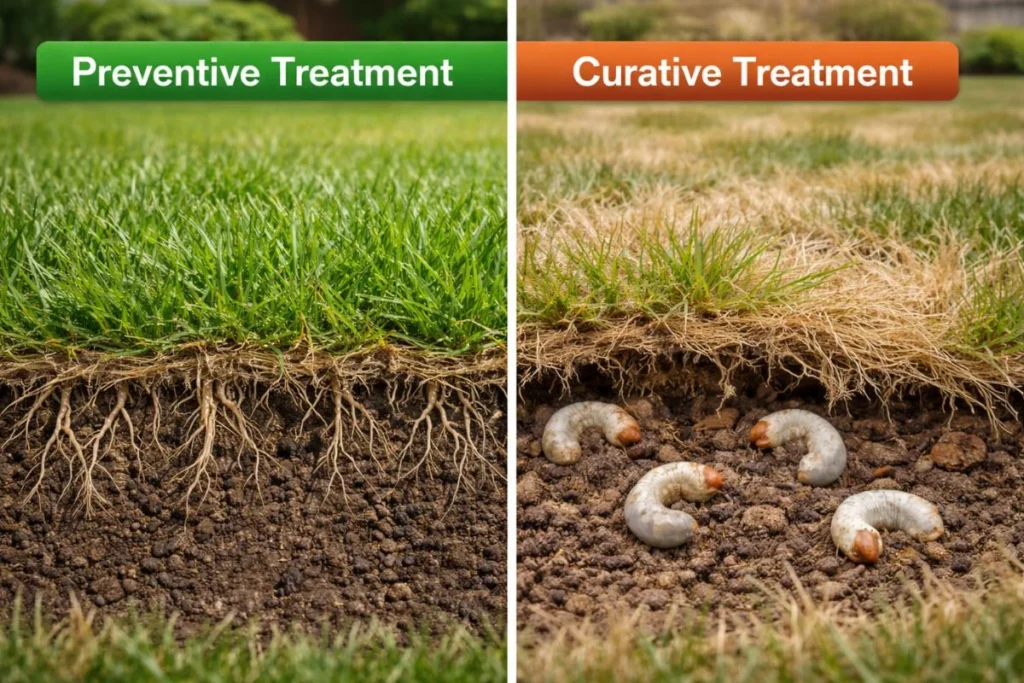
Preventive vs Curative Grub Treatment Comparison
| Feature | Preventive | Curative |
|---|---|---|
| Best Timing | Early to mid-summer | Late summer |
| Targets | Young grubs | Large feeding grubs |
| Success Rate | High | Moderate |
| Best For | Lawns with past grub issues | Active infestations |
Common Active Ingredients Used in Grub Control
Preventive Ingredients
- Imidacloprid
- Chlorantraniliprole
Best for young grubs.
Curative Ingredients
- Carbaryl
- Trichlorfon
Best for active, feeding grubs.
Always follow label directions.
Natural Grub Treatment Options
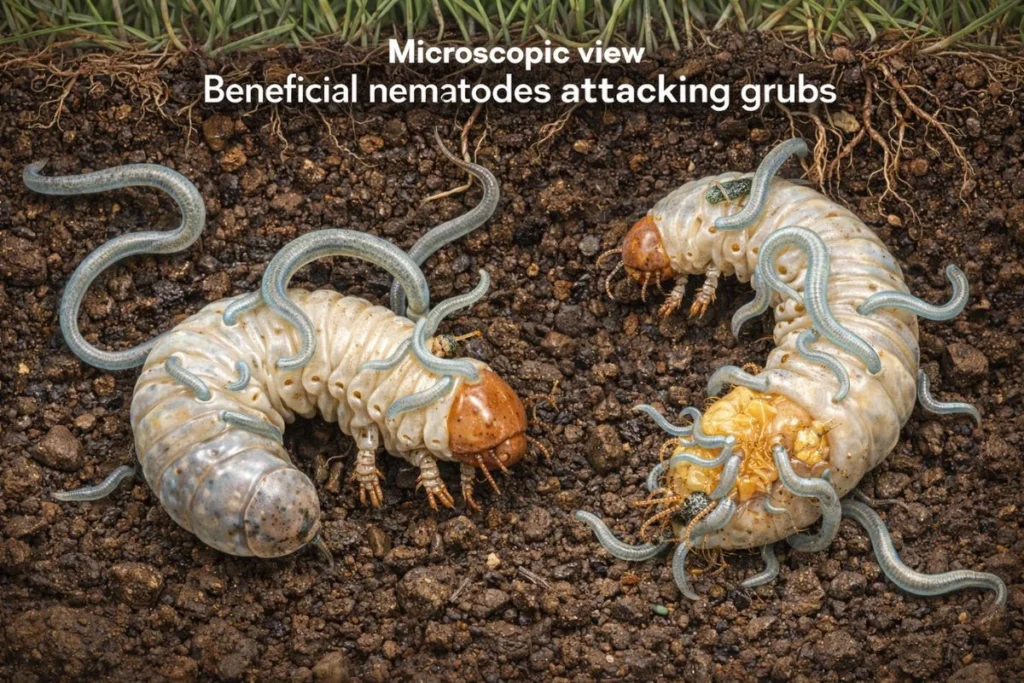
Beneficial Nematodes
- Apply in late summer
- Soil must remain moist
- Work best on small grubs
Milky Spore
- Targets Japanese beetle grubs
- Builds slowly over time
- Long-term solution
Natural options require proper timing to work well.
Long-Term Grub Management Strategies
Healthy lawns tolerate small grub numbers.
Improve lawn strength by:
- Mowing at proper height
- Avoiding overwatering
- Aerating compacted soil
- Reducing heavy thatch
- Fertilizing correctly
Strong roots reduce visible damage.
Safety Tips When Applying Grub Treatment
- Wear gloves
- Keep kids and pets off treated lawn until dry
- Water products in if label says so
- Avoid applying before heavy rain
- Store products safely
Proper use improves results and reduces risk.
Common Mistakes to Avoid
- Treating too early in spring
- Treating in winter
- Not checking soil first
- Using preventive products too late
- Ignoring soil temperature
Correct timing is the key.
When Not to Treat for Grubs
You may not need treatment if:
- Grub count is below threshold
- Lawn is healthy and growing strong
- Damage is from drought, not pests
Treat only when necessary.
Frequently Asked Questions About When to Treat for Grubs
Can I treat for grubs in spring?
Spring treatment is usually less effective because grubs are larger.
Is fall too late?
Early fall can still work. Late fall is usually too late.
Should I treat every year?
Only if your lawn has a history of heavy grub damage.
Final Thoughts on When to Treat for Grubs
Grub control becomes simple once you focus on timing instead of reacting to damage. In my experience working with lawn treatment schedules and seasonal pest patterns, the biggest failures happen when applications are made too early or too late. Early to mid-summer is the safest preventive window for most U.S. lawns, while late summer offers a second chance if grubs are already feeding. Always confirm their presence and consider soil temperature before treating. When you follow the grub life cycle instead of guessing, you protect your lawn, avoid wasted money, and make smarter decisions backed by proven lawn care principles.