
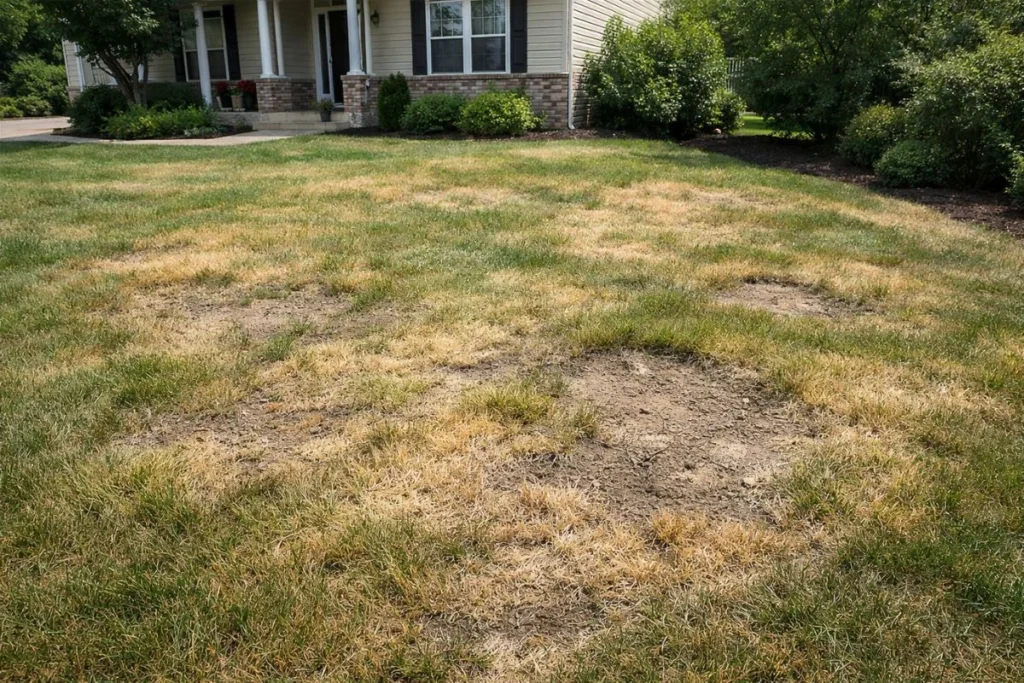
Many homeowners face the same problem. You seed the lawn, water it well, and apply fertilizer on time. Still, the grass looks weak. Yellow patches show up. Growth stays uneven. I have seen people repeat this cycle for years, spending money and getting little in return. The frustration usually comes from fixing the surface while the real issue sits below it.
Thank you for reading this post, don't forget to subscribe!From hands-on lawn work and soil testing, one issue shows up again and again. The pH level for grass is often out of range. When soil pH is wrong, roots cannot absorb nutrients, no matter how good the fertilizer is. Once pH is corrected, lawns often respond fast and in a visible way. This guide focuses on that exact problem and explains how to fix it using clear, proven steps. To understand how soil structure affects water movement and root growth, it helps to learn what compact soil actually is and why it causes lawn problems.
- Quick Answer – Ideal PH Level for Grass
- What Is Soil pH?
- Why pH Level for Grass Matters
- Best pH Level for Grass
- Where Grass Fits on the pH Scale
- Effects of Wrong pH on Lawn Health
- Factors That Change Lawn pH
- How to Test Lawn Soil pH
- Soil pH Can Vary Across One Lawn
- Fertilizer and Soil pH
- How to Fix Soil pH
- How Long Does It Take to Fix Lawn pH?
- Regional Soil pH Trends in the United States
- How pH Affects Nutrient Availability
- Seasonal pH Care for Lawns
- Signs Your Lawn Has pH Problems
- Common pH Mistakes
- Simple Lawn pH Checklist
- Frequently Asked Questions About PH Level for Grass
- Quick Summary:
- Final Thoughts
Key Takeaways
- Most lawns grow best at a pH between 6.0 and 7.0
- Fertilizer may fail if soil pH is out of range
- Always test soil before adding lime or sulfur
- Soil pH can differ across one lawn
- Slow pH changes protect grass roots
Quick Answer – Ideal PH Level for Grass
Most lawns grow best between 6.0 and 7.0. Below 6 → soil too acidic Above 7 → soil too alkaline Best growth happens near neutral range.What Is Soil pH?

Soil pH shows how acidic or alkaline the soil is.
The scale runs from 0 to 14.
- 7 is neutral
- Below 7 is acidic
- Above 7 is alkaline
Most lawn grasses grow best in slightly acidic soil.
Why pH Level for Grass Matters
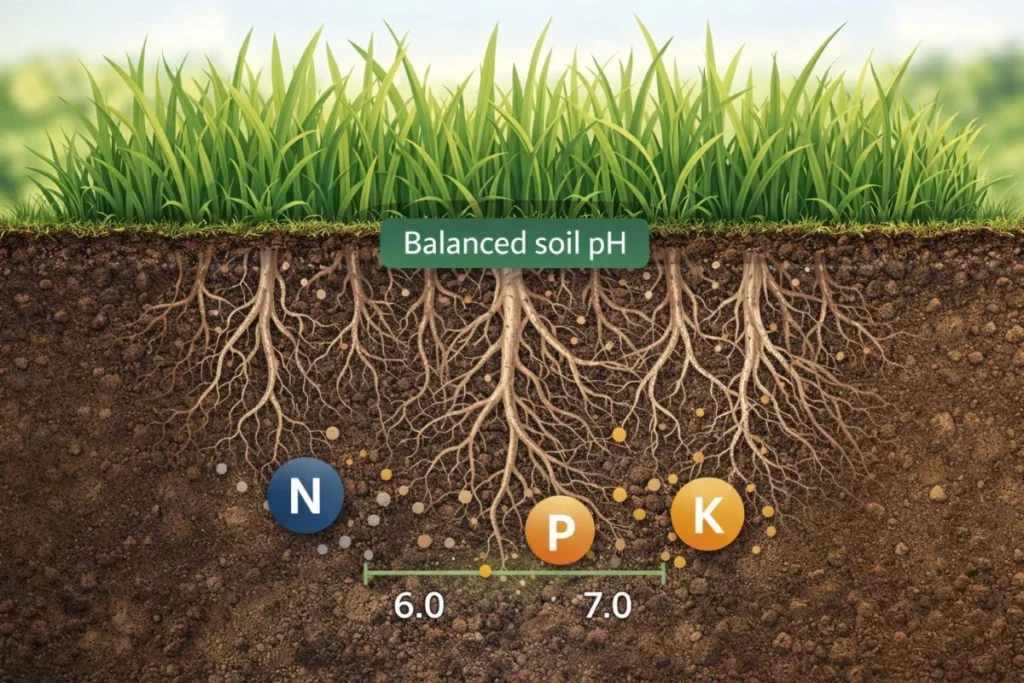
Grass roots take nutrients from the soil.
Soil pH controls how easily this happens.
If pH is wrong:
- Nutrients stay locked in soil
- Roots stay weak
- Growth slows
- Fertilizer gives poor results
Correct pH helps grass use nutrients properly.
Best pH Level for Grass
Most lawn grasses grow best between 6.0 and 7.0.
This range supports steady growth and strong roots.
pH Range by Grass Type
- Bermuda grass: 6.0 to 7.0
- Zoysia grass: 6.0 to 7.0
- St. Augustine grass: 6.0 to 6.5
- Tall fescue: 6.5 to 7.5
- Centipede grass: 5.0 to 6.0
Some sources list a slightly wider range for tall fescue depending on soil type and climate conditions.
Grass type matters. Using the wrong target range can slow growth.

| Grass Type | Season Type | Ideal pH Range |
|---|---|---|
| Bermuda | Warm-season | 6.0 – 7.0 |
| Zoysia | Warm-season | 6.0 – 7.0 |
| St. Augustine | Warm-season | 6.0 – 6.5 |
| Tall Fescue | Cool-season | 6.5 – 7.5 |
| Centipede | Warm-season | 5.0 – 6.0 |
Where Grass Fits on the pH Scale
The pH scale runs from 0 to 14.
Grass does poorly at the extreme ends.
- Below 5.0: roots weaken
- Around 7.0: steady growth
- Above 7.8: nutrients block
That is why most lawns stay healthiest near the middle.
Effects of Wrong pH on Lawn Health
Low pH (Too Acidic)
- Yellow grass
- Weak roots
- Moss growth
- Poor fertilizer results
High pH (Too Alkaline)
- Pale grass
- Iron stays unavailable
- Thin growth
These signs often confuse homeowners.
Soil testing gives clear answers.
| Lawn Problem | Likely pH Issue | What to Do |
|---|---|---|
| Yellow grass | Soil too acidic | Test soil and apply lime if needed |
| Pale grass | Soil too alkaline | Lower pH with sulfur or compost |
| Fertilizer not working | pH imbalance | Fix pH before adding more fertilizer |
| Moss growth | Acidic soil | Raise pH slowly over time |
If water sits on the lawn or drains slowly, the issue may be drainage rather than pH. Learn how to fix lawn drainage problems before adjusting soil chemistry.
Factors That Change Lawn pH
Soil pH changes over time due to:
- Rainfall
- Fertilizer use
- Soil type
- Organic matter breakdown
Clay soil tends to hold amendments longer, while sandy soil can change pH more quickly.
Changes are slow. Testing once a year helps catch problems early.
How to Test Lawn Soil pH
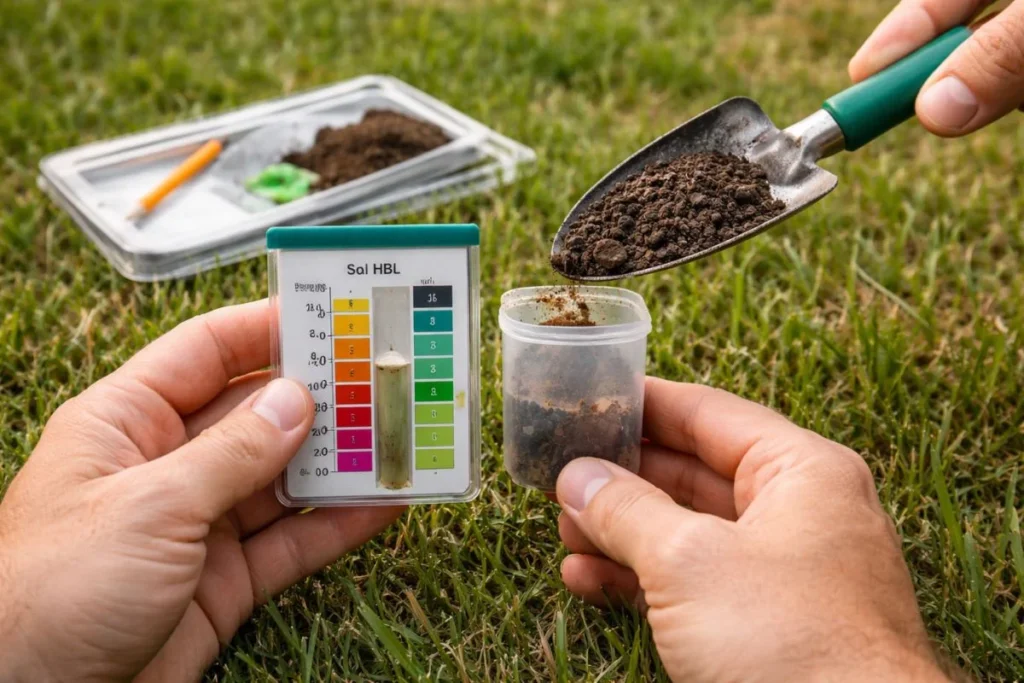
DIY Soil Testing
- Collect soil from 4 to 6 areas
- Dig 4 to 6 inches deep
- Mix samples and test
Professional Soil Testing
- More accurate
- Shows nutrient levels
- Helpful for problem lawns
Test soil in spring or fall.
For more accurate results, using a proper soil test kit helps measure both pH and nutrient levels before making any changes.
Soil pH Can Vary Across One Lawn
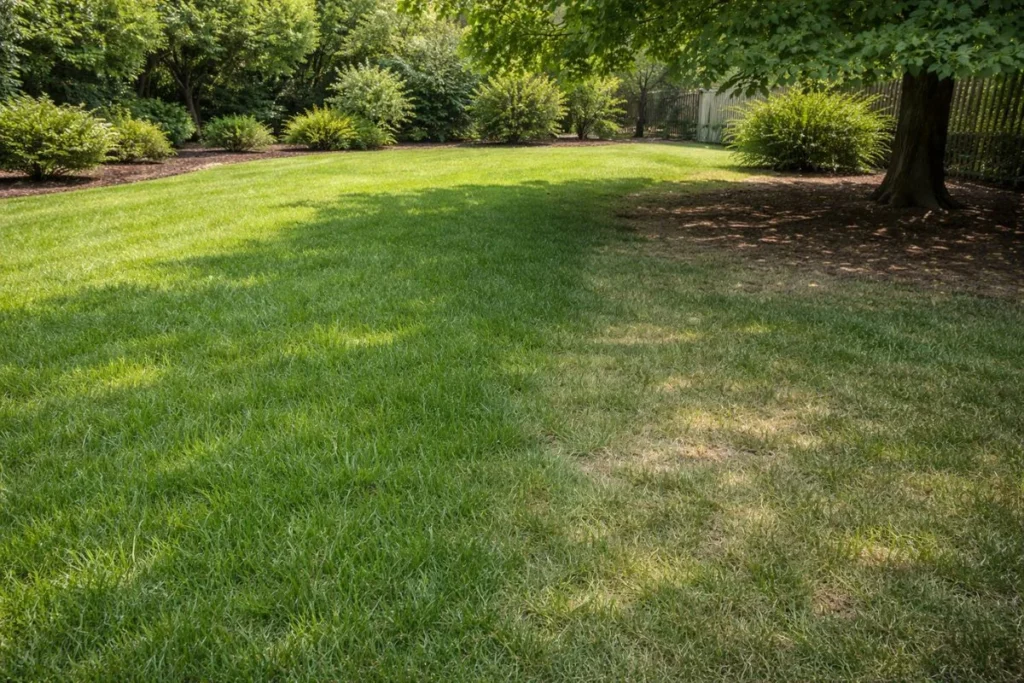
Soil pH is not always the same everywhere.
Some areas may be:
- Shady
- Sunny
- Wet
- Dry
Each area may need different care.
Testing several spots prevents guessing.
Poor water movement in some areas can also affect soil balance, especially if drainage issues are present in the lawn.
Fertilizer and Soil pH
Some fertilizers lower soil pH over time.
This is common with nitrogen products.
If fertilizer stops working:
- pH may be the real issue
- Testing saves money
Always test before adding more products.
How to Fix Soil pH
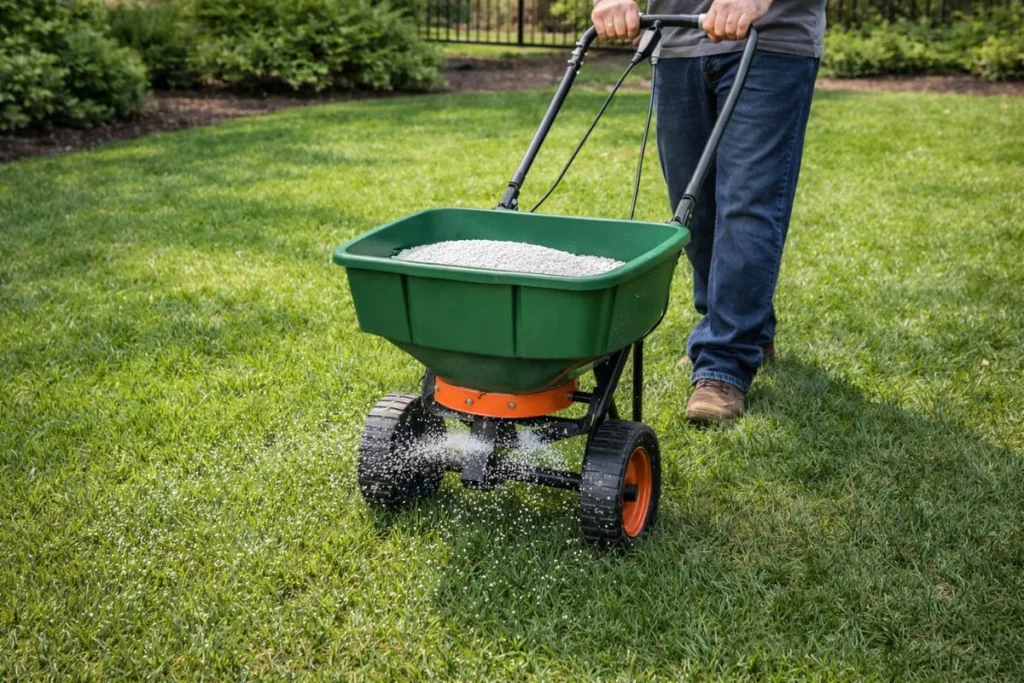
Raising Low pH (Acidic Soil)
Use lime.
- Apply in fall
- Spread evenly
- Water after application
Results take time.
Lowering High pH (Alkaline Soil)
Use sulfur or organic compost.
- Apply small amounts
- Water well
- Retest after several weeks
Never apply without testing first.
Before You Fix Soil pH
- Identify your grass type
- Test soil in several areas
- Check recent fertilizer use
- Avoid adding products without test results
How Long Does It Take to Fix Lawn pH?
Soil pH changes slowly.
- Lime: weeks to months
- Sulfur: 4 to 8 weeks
- Organic materials: gradual
Retesting prevents overcorrection.
Simple pH Correction Timeline
- Week 0: Test soil
- Week 1: Apply lime or sulfur
- Week 4–8: Retest soil
- Next season: Check grass response
Regional Soil pH Trends in the United States
Climate affects soil pH.
- Rainy regions often have acidic soil
- Dry regions often have alkaline soil
- Sandy soil shifts faster
These are general patterns.
Local testing gives the best result.
How pH Affects Nutrient Availability
Soil pH controls nutrient access.
When pH is off:
- Iron stays locked
- Phosphorus becomes hard to use
- Nitrogen efficiency drops
Grass may look weak even after feeding.
Balanced pH lets nutrients work properly.
Seasonal pH Care for Lawns
- Spring: test soil
- Fall: correct pH
- Winter: allow soil to rest
Slow changes protect grass roots.
Signs Your Lawn Has pH Problems
Common signs include:
- Yellow or pale grass
- Thin growth
- Fast weed spread
- Fertilizer failure
These signs often point to soil issues.
Common pH Mistakes
- Skipping soil tests
- Adding lime every year without testing
- Using too much sulfur
- Expecting quick results
Small steps work best.
Simple Lawn pH Checklist
- Know your grass type
- Test soil once a year
- Adjust pH only if needed
- Retest after changes
Applying lime every year without testing can push soil too alkaline and create new nutrient problems.
Small steps work best.
Frequently Asked Questions About PH Level for Grass
What is the ideal pH level for grass?
Most lawn grasses grow best between 6.0 and 7.0. This range allows nutrients to stay available for roots.
How often should I test lawn pH?
Testing once a year is enough for most lawns. Test again after major soil changes or heavy fertilizer use.
How long does lime take to work?
Lime can take several weeks to a few months to fully adjust soil pH. Retest before adding more.
Can fertilizer change soil pH?
Yes. Some nitrogen fertilizers slowly lower soil pH over time.
Can soil pH vary across one lawn?
Yes. Sunny, shady, wet, and dry areas can have slightly different pH levels. Always test multiple spots.
Quick Summary:
Ideal pH for most lawns is between 6.0 and 7.0 Wrong pH blocks nutrients even if fertilizer is applied Testing soil is the first step before any fix Small adjustments over time give the best resultsFinal Thoughts
Healthy lawns are built from the soil up. In real lawn care work, the biggest improvements often happen after soil pH is corrected using proper lime treatment. See how to apply lime to fix acidic soil safely. Not after adding more products. Grass color improves, growth becomes even, and fertilizer finally starts to do its job. The key is testing first and making small changes over time. The right pH level for grass comes from patience, simple checks, and steady care. When soil stays balanced, the lawn becomes much easier to manage.