 Skip to content
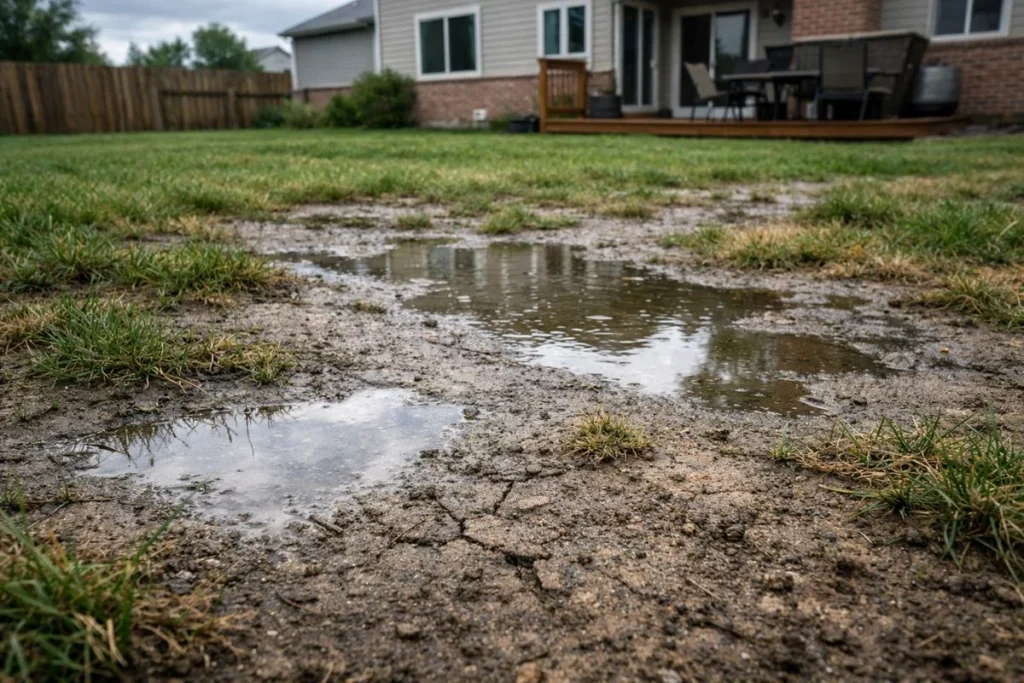
Have you ever tried to push a shovel into your lawn and felt it stop almost right away? Or noticed puddles after rain while your grass still looks weak and thin? I have seen many homeowners face this same problem. Most think the issue is water, seed, or fertilizer. But very often, the real problem sits below the surface.
From years of observing lawns and gardens, one issue shows up again and again. The soil has been pressed too tight over time. Foot traffic, machines, or even construction work slowly change how soil behaves. Once soil becomes compacted, roots struggle, water acts strangely, and plants never grow the way they should. Knowing what compact soil is helps remove the guesswork and explains why effort alone is not fixing the problem.
- Compact soil has very little space for air and water.
- It often causes poor drainage and weak root growth.
- Foot traffic, wet soil, and heavy equipment are common causes.
- Simple tests can help confirm if soil is compacted.
- What Is Soil Compaction?
- Quick Facts About Compact Soil
- What Causes Soil to Become Compacted?
- How to Tell If Soil Is Compacted
- Why Pore Space Matters in Soil
- How Soil Compaction Affects Plants
- Consequences of Compact Soil
- Surface vs Deep Soil Compaction
- Does Compact Soil Fix Itself?
- Soil Type and Compaction Comparison
- Strategies for Reducing Soil Compaction
- Common Myths About Soil Compaction
- Soil Testing for Severe Compaction
- Final Thoughts
What Is Soil Compaction?
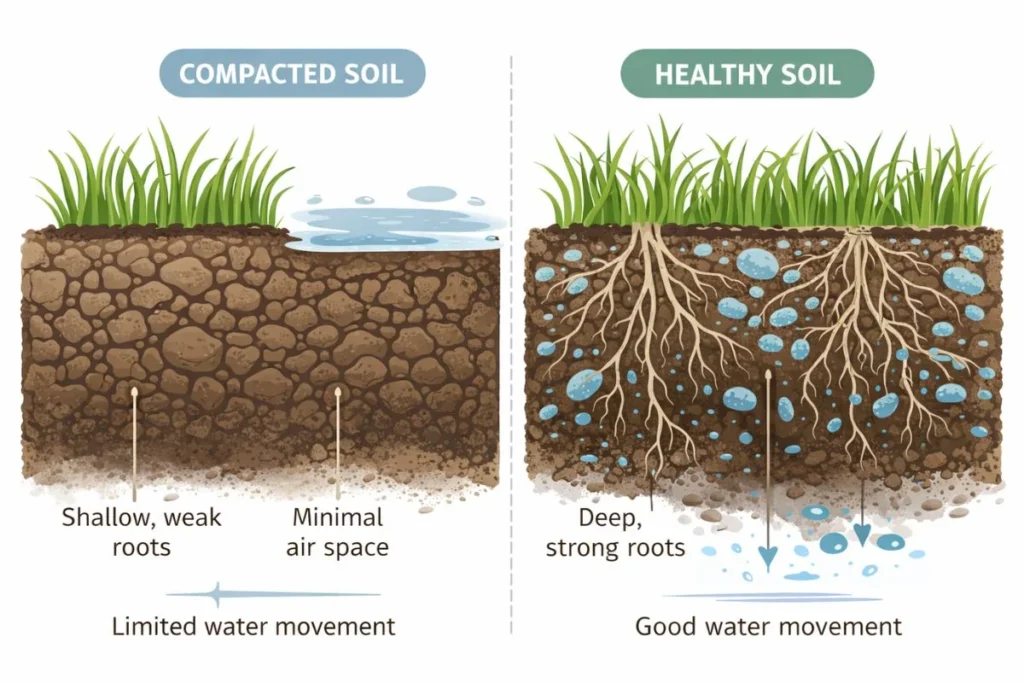
| Feature | Compacted Soil | Healthy Soil |
|---|---|---|
| Soil feel | Hard and dense | Loose and crumbly |
| Water movement | Pools or runs off | Soaks in evenly |
| Root growth | Shallow and weak | Deep and strong |
| Air movement | Limited airflow | Good airflow |
| Plant health | Poor growth | Healthy growth |
Soil compaction happens when pressure is applied to soil.
This pressure pushes soil particles closer together.
As a result:
- Air pockets disappear
- Water drains slowly
- Roots stay shallow
Healthy soil feels loose and crumbly.
Compacted soil feels hard and dense.
If soil feels very hard when dry and sticky when wet, it is likely compacted.
Quick Facts About Compact Soil
- Compact soil has less air and water space
- Roots grow shorter and weaker
- Water often pools on the surface
- Grass and plants grow poorly
- Compaction can last for years if untreated
- Many soil problems start with compaction
What Causes Soil to Become Compacted?
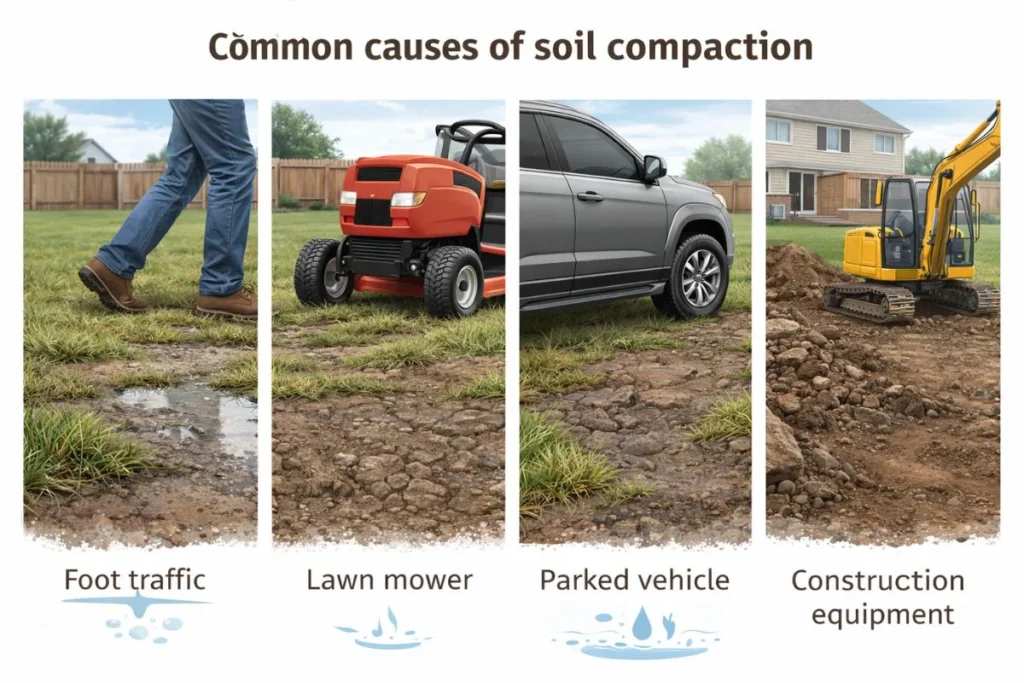
Several everyday activities press soil down over time.
Common causes include:
- Foot traffic on the same path
- Vehicles driving or parking on soil
- Lawn mowers and heavy tools
- Working soil when it is wet
- Construction activity
- Repeated foot traffic from pets
Wet soil compacts faster than dry soil.
Clay soil also compacts more easily than sandy soil.
This is why new lawns and post-construction yards often struggle.
How to Tell If Soil Is Compacted
You do not need special tools to check.
Visible signs:
- Water puddles after rain
- Bare or thin grass
- Slow plant growth
- Soil cracks when dry
Simple tests:
- Push a screwdriver into the ground
- If it stops quickly, soil is compacted
- Try digging with a shovel
- Hard digging means poor soil structure
If roots spread sideways instead of growing down, compaction is likely.
These checks help DIY users confirm the issue before trying fixes.
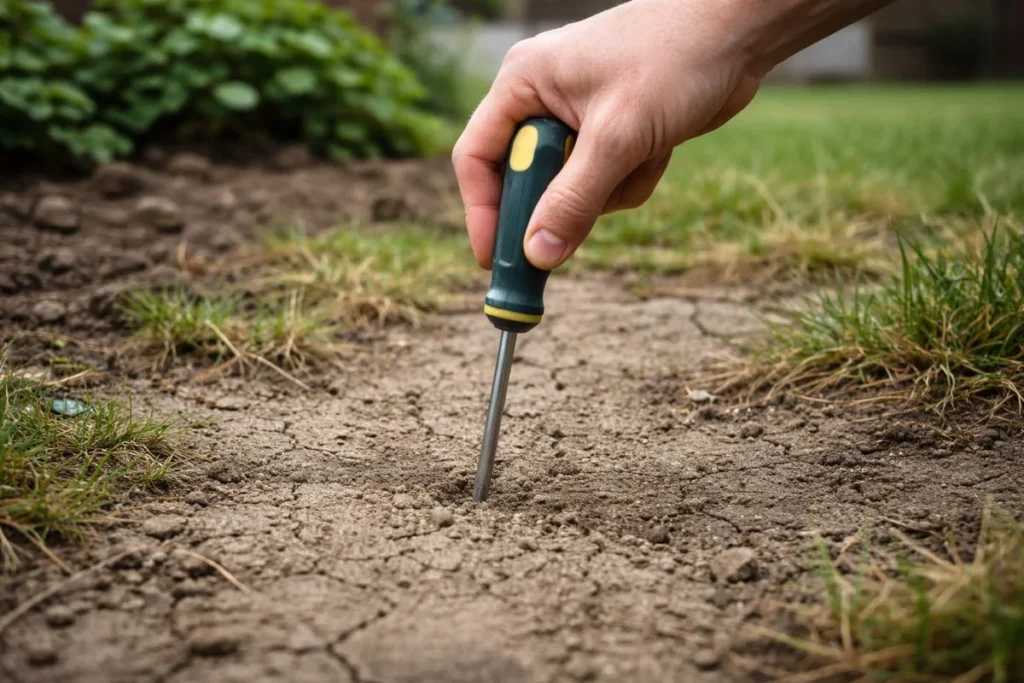
- Water sits on the surface after rain
- Soil feels hard and difficult to dig
- Grass grows thin or uneven
- Roots spread sideways instead of growing deep
Why Pore Space Matters in Soil
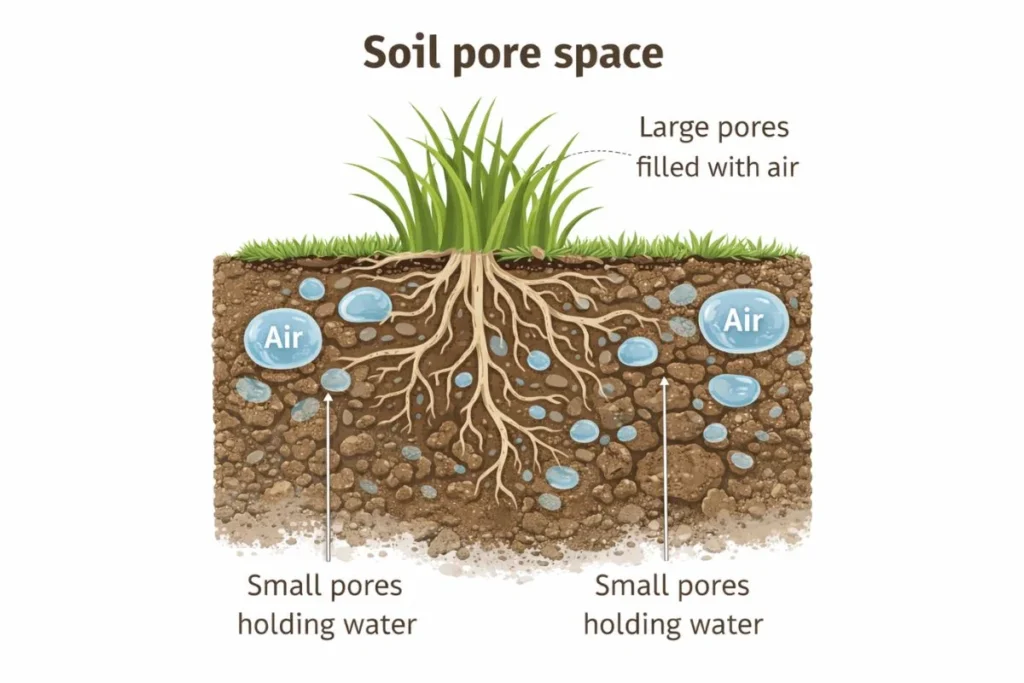
Healthy soil has tiny spaces between particles.
These spaces are called pores.
Large pores hold air.
Small pores hold water.
Plant roots need both to survive.
When soil becomes compacted, these pores collapse.
Air cannot move well.
Water cannot soak in evenly.
This explains why soil can look wet on top but stay dry below.
Roots struggle in this environment.
In clay-heavy lawns, pore collapse is sometimes caused by soil chemistry rather than pressure alone. Learn when calcium-based amendments help in our guide on gypsum for lawn.
How Soil Compaction Affects Plants
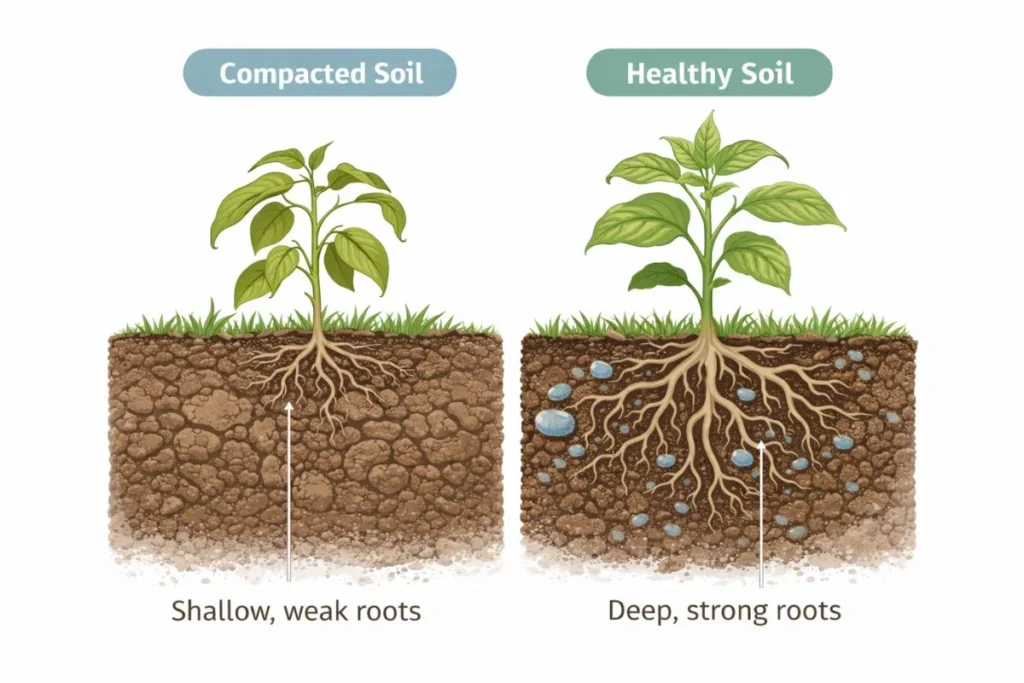
Compacted soil limits root growth.
Roots cannot push through hard layers.
This leads to:
- Weak plants
- Yellow leaves
- Poor nutrient uptake
- Stress during heat or drought
Water may run off instead of soaking in.
This wastes water and increases erosion.
When water cannot soak in and keeps pooling on the surface, drainage fixes may be needed. See practical options in our guide on lawn drainage solutions.
Consequences of Compact Soil
Over time, compact soil causes long-term damage.
- Less healthy soil life
- Poor drainage
- Reduced plant lifespan
- Increased runoff and erosion
These effects often appear slowly, which makes compaction easy to miss.
Surface vs Deep Soil Compaction
Soil compaction does not always stay near the surface.
Some compaction affects only the top few inches of soil. This is called surface compaction.
In other cases, pressure creates a dense layer deeper below the root zone. This is called deep compaction.
Surface compaction can often improve with aeration.
Deep compaction may require repeated treatment or professional help.
If grass does not improve after aeration, deeper compaction may be the reason.
Does Compact Soil Fix Itself?
Light compaction may improve slowly over time, especially in areas with freeze and thaw cycles.
However, deep or repeated compaction rarely fixes itself without action.
Adding organic matter and reducing traffic can help soil recover.
Continued pressure from walking or heavy equipment will keep soil compacted.
Soil improves with care, not neglect.
Soil Type and Compaction Comparison
Different soil types respond to pressure in different ways.
| Soil Type | Compacts Easily? | Notes |
|---|---|---|
| Clay | Yes | Holds water and compacts quickly when wet |
| Loam | Moderate | Balanced structure but still affected by traffic |
| Sand | Less | Drains well but can compact under heavy weight |
Knowing your soil type helps explain why compaction happens.
Strategies for Reducing Soil Compaction
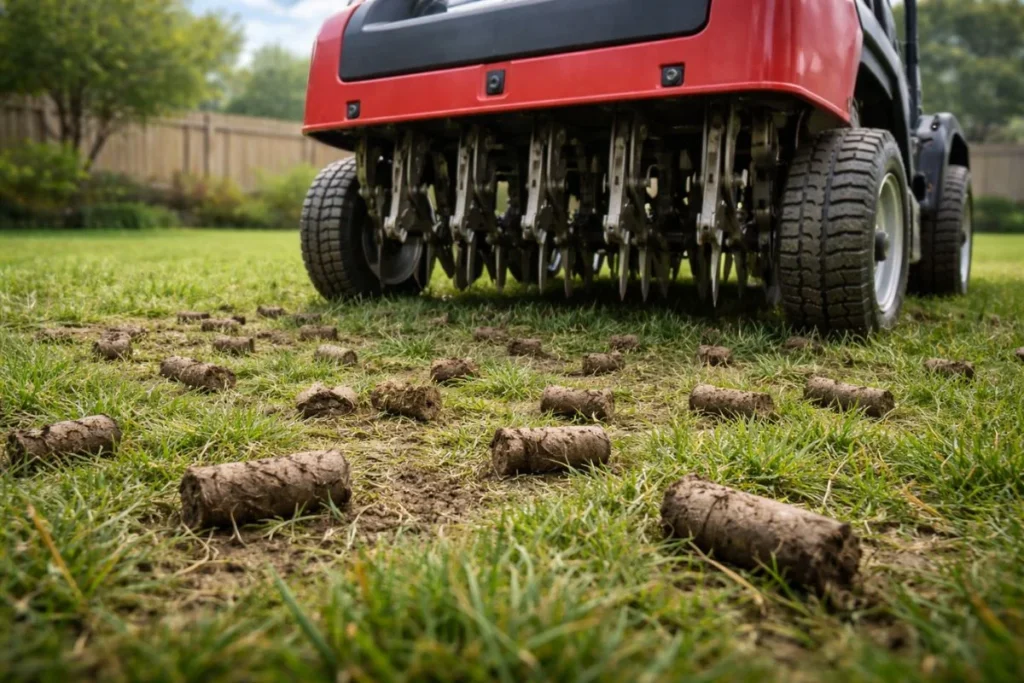
Fixing compact soil takes patience.
Lawns benefit most when you:
- Core aeration once or twice a year
- Avoid mowing wet grass
- Change walking paths
Gardens improve when you:
- Add compost regularly
- Use mulch to protect soil
- Avoid stepping on planting beds
Long-term prevention works best if you:
- Do not work soil when wet
- Spread traffic over different areas
- Use lighter equipment when possible
Organic matter helps soil improve over time.
In some lawns, compacted soil and acidic pH occur together. Learn when correcting soil acidity helps by reading our guide on lime treatment for lawn.
Common Myths About Soil Compaction
A common belief: Heavy rain loosens soil
What actually happens: Rain often makes compaction worse
Another assumption: Tilling always fixes the problem
The reality: Tilling can create deeper compact layers
One more misunderstanding: Only machines cause compaction
In practice: Foot traffic alone can compact soil
Soil Testing for Severe Compaction
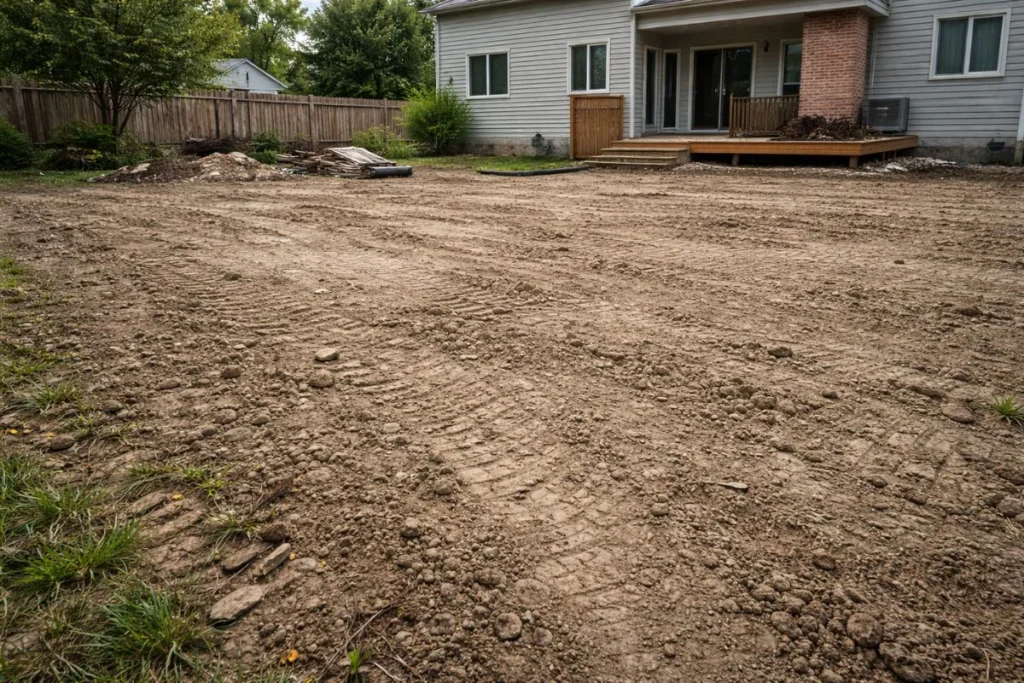
Some compaction goes deeper than the surface.
This often happens after construction or heavy equipment use.
In these cases, surface fixes may not work.
Soil testing can help:
- Confirm deep compaction
- Identify problem layers
- Guide proper treatment
Soil structure is only part of the picture. Chemical balance matters too. See how pH affects grass growth in our guide on pH level for grass.
Professional testing is useful when plants fail even after aeration.
It helps avoid repeated damage and wasted effort.
While compaction itself needs physical solutions, testing soil chemistry still matters. Learn how a soil test kit helps guide fertilizer and pH decisions before treatment.
Final Thoughts
Over time, I have seen compact soil cause slow damage that many people do not notice right away. Plants struggle quietly, water does not move as it should, and growth stays poor year after year. The good news is that compact soil is common and it can be improved with the right steps. When you understand the signs early and treat the soil with care, results follow. From experience, patience matters more than quick fixes. Healthy soil supports roots, air, and water, and once the soil improves, plants respond naturally.
Compact soil is common and easy to miss. Once you recognize the signs early, steady care and patience can restore soil health and improve plant growth over time.