
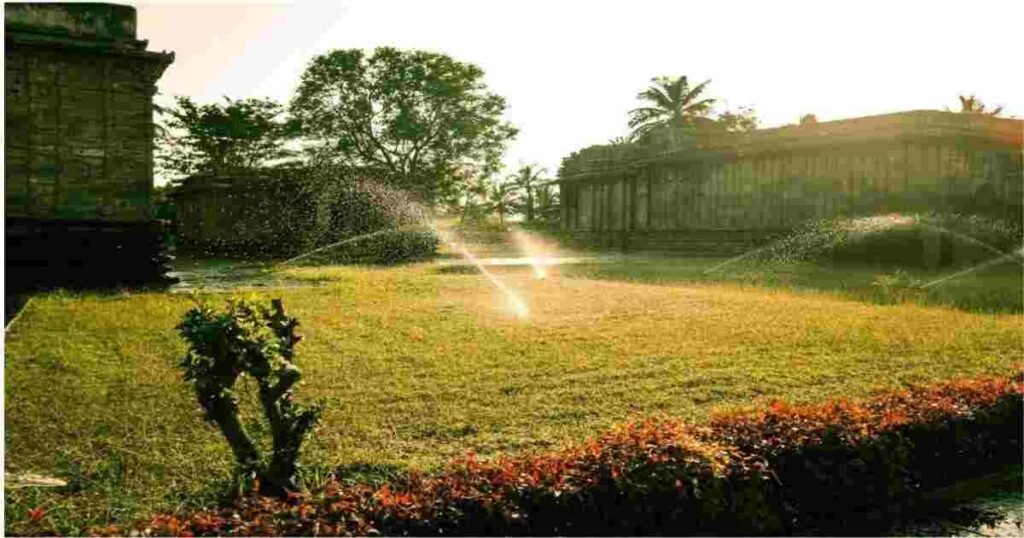
Maintaining a healthy lawn requires a balance between providing enough water for grass growth and avoiding unnecessary consumption. For homeowners, achieving this balance can be challenging, particularly during warmer months when rainfall becomes less predictable and outdoor temperatures increase.
Thank you for reading this post, don't forget to subscribe!Traditional watering methods often rely on fixed schedules that do not account for changing weather conditions, soil characteristics, or individual lawn requirements. As a result, some areas receive excessive moisture while others remain too dry.
Modern irrigation systems offer practical solutions through automated scheduling, targeted water distribution, and improved control over watering routines.
However, selecting the right system involves more than choosing the latest technology. Lawn size, grass type, soil conditions, and local climate all influence which approach will provide the best results.
Understanding these factors helps homeowners maintain attractive outdoor spaces while making more responsible use of water.
- Understanding How Smart Technology Improves Water Management
- Comparing Sprinkler Systems and Drip Irrigation
- Considering Soil Conditions Before Installing Irrigation
- Using Weather-Based Controllers to Reduce Water Waste
- Planning Sprinkler Placement for Even Coverage
- Maintaining an Irrigation System for Long-Term Efficiency
Understanding How Smart Technology Improves Water Management
Smart home technology has changed how homeowners manage energy consumption, indoor comfort, and outdoor maintenance. Automated controls and connected devices make it easier to adjust household systems according to changing conditions.
For example, comparisons such as ecobee vs honeywell demonstrate how different smart thermostat technologies approach temperature management, scheduling, and connected-home convenience.
Similar principles of automation and efficiency have influenced the development of modern irrigation controllers.
Smart watering systems can use weather information, programmable schedules, and compatible sensors to adjust irrigation according to lawn requirements.
Some models allow homeowners to monitor and modify watering schedules through smartphone applications, making outdoor maintenance more convenient.
This technology is particularly useful for households seeking greater control over water consumption without constantly adjusting equipment manually.
Comparing Sprinkler Systems and Drip Irrigation
Different irrigation methods distribute water in different ways, making system selection an important part of lawn maintenance.
Sprinkler systems are commonly used for grass because they can cover relatively large areas through strategically positioned spray heads.
Fixed spray sprinklers work well in certain smaller spaces, while rotating models may provide suitable coverage for larger lawns.
Drip irrigation operates differently, delivering water slowly and directly to designated planting areas.
Although drip systems are especially useful for garden beds, hedges, and landscaped borders, they are generally less practical for watering extensive turf areas.
Homeowners with mixed landscapes may benefit from combining sprinklers for lawns with drip irrigation for surrounding plants.
Choosing appropriate equipment for each area helps distribute water more effectively and reduces unnecessary watering of pathways and hard surfaces.
Considering Soil Conditions Before Installing Irrigation
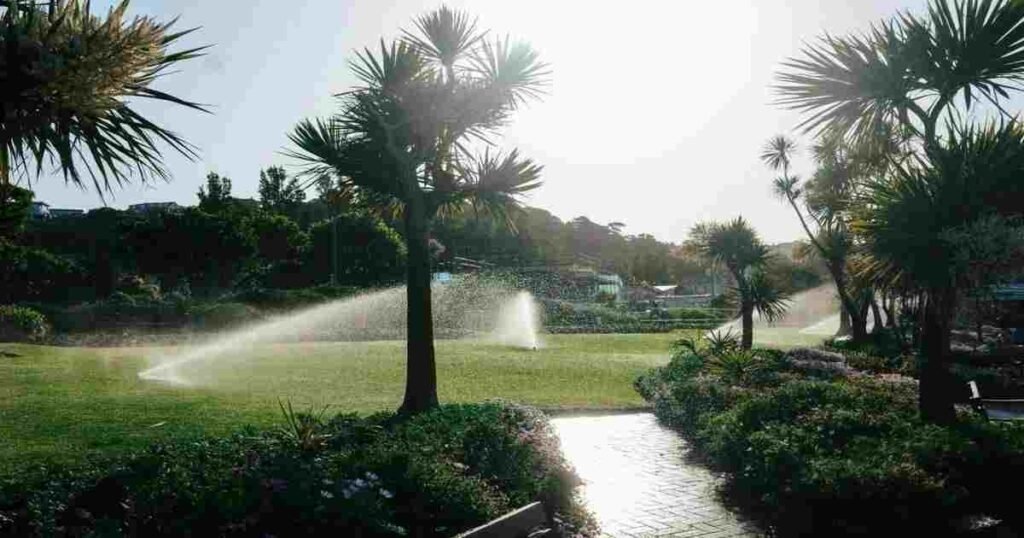
Soil characteristics influence how quickly water enters the ground and how long moisture remains available to grass roots.
Sandy soils typically drain quickly, meaning water may move beyond the root zone sooner than it would in heavier soils.
Clay-rich soils generally absorb water more slowly and may experience surface runoff when irrigation is applied too quickly.
Understanding these differences helps homeowners determine suitable watering durations and application rates.
A simple soil assessment can provide useful information before installing an irrigation system.
Professionals may also evaluate drainage, slope, and areas where water tends to accumulate.
Lawns with uneven terrain often require additional attention because water can travel downhill rather than soaking evenly into the ground.
Matching irrigation settings to soil conditions supports more consistent moisture distribution and healthier grass growth.
Using Weather-Based Controllers to Reduce Water Waste
Weather-based irrigation controllers offer an alternative to traditional fixed watering schedules.
Rather than operating at identical times regardless of conditions, these systems can adjust watering according to local weather information or estimated landscape water demand.
Some controllers incorporate rainfall data, temperature readings, and seasonal changes into their scheduling decisions.
Rain sensors provide another practical feature by interrupting irrigation when sufficient rainfall occurs.
Soil moisture sensors can offer additional information about whether watering is necessary.
These technologies help reduce unnecessary irrigation and make lawn maintenance more responsive to actual environmental conditions.
Homeowners should ensure that controllers are configured correctly for the landscape and that connected sensors remain properly maintained.
Even sophisticated equipment benefits from occasional inspection to confirm that watering schedules continue to match the lawn’s needs.
Planning Sprinkler Placement for Even Coverage
Proper sprinkler placement is essential for an efficient irrigation system.
Poorly positioned sprinklers may leave dry patches while repeatedly soaking other sections of the lawn.
Professional irrigation designs often use overlapping coverage patterns to achieve more uniform water distribution.
Sprinkler heads should be selected according to their intended spray distance, available water pressure, and the shape of the landscaped area.
Narrow strips of grass may require different equipment from broad open lawns.
Positioning sprinklers carefully also helps prevent water from reaching driveways, pavements, and building walls.
Homeowners can evaluate existing systems by observing sprinkler operation and identifying areas receiving excessive or insufficient moisture.
Simple adjustments to spray direction and operating duration can improve overall performance.
A well-designed layout supports consistent lawn growth while using available water more effectively.
Maintaining an Irrigation System for Long-Term Efficiency
Installing an efficient irrigation system is only the beginning. Regular maintenance helps ensure that equipment continues operating correctly throughout the growing season.
Sprinkler heads can become blocked by dirt, damaged by gardening equipment, or misaligned as surrounding grass grows.
Checking the system periodically allows homeowners to identify these problems before they result in substantial water waste.
Leaks, broken pipes, and malfunctioning valves should also receive prompt attention.
Seasonal adjustments are equally important because lawns generally require different amounts of irrigation as temperatures and rainfall patterns change.
Homeowners in colder regions may need to prepare irrigation systems for freezing conditions before winter.
Monitoring lawn appearance and soil moisture provides additional guidance when reviewing watering schedules.
Ultimately, selecting the right irrigation system requires balancing technology, landscape characteristics, and ongoing maintenance.
By combining suitable sprinkler equipment, responsive controllers, thoughtful placement, and regular inspections, homeowners can maintain attractive lawns while using water more efficiently.
A carefully planned system makes outdoor maintenance more convenient and supports healthier landscapes over the long term.