 Skip to content
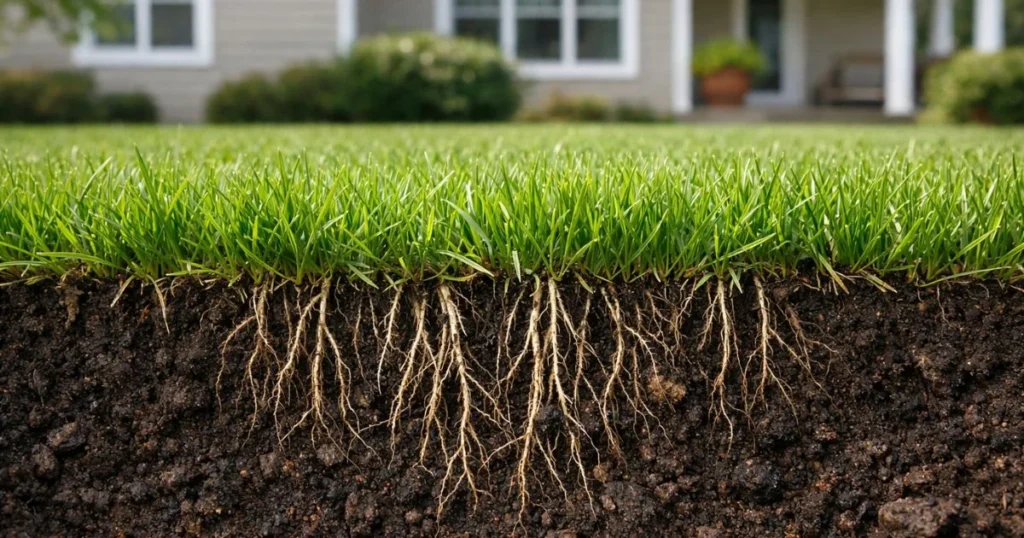
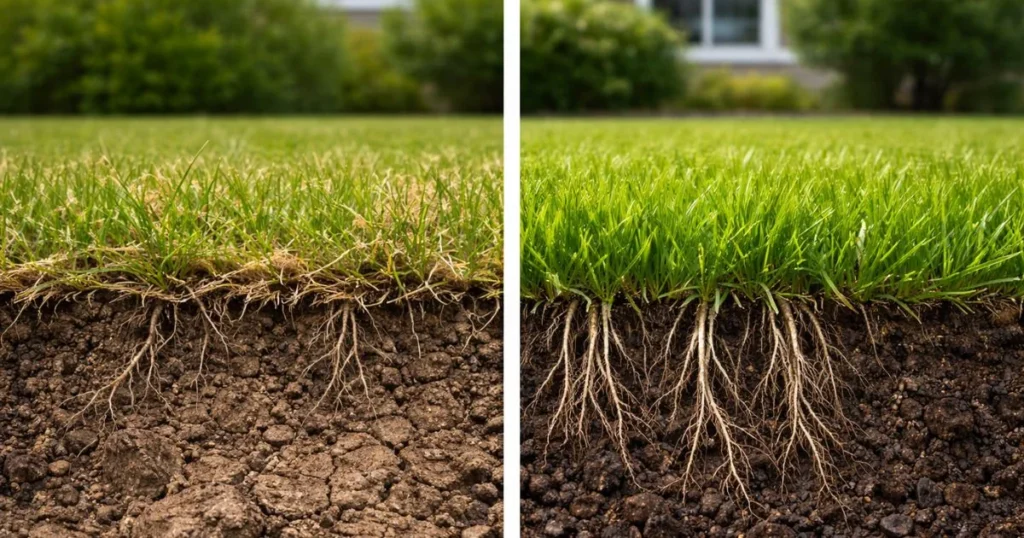
Many homeowners reach a point where lawn care feels frustrating. You fertilize on schedule. You water often. Still, the grass looks thin, stressed, or uneven. I have heard this story many times. In most of these cases, the problem is not effort. It is what is happening under the grass. Poor soil blocks roots from using water and nutrients, no matter how good the fertilizer is.
I have worked with lawns that looked healthy at first glance, but the soil told a different story. The ground was hard. Water ran off instead of soaking in. Fertilizer gave quick color, then faded. This is where humic acid for lawns became useful in my experience. It was not a fast fix. It was a way to improve soil so grass could finally grow the way it should. This guide explains how humic acid works and how to use it the right way.
- What Is Humic Acid?
- Adding Acid to Soil: Is That What Humic Acid Does?
- How Humic Acid Supercharges Your Soil
- Science & Evidence Behind Humic Acid
- Benefits of Humic Acid for Lawns
- How Humic Acid Helps with Heat, Drought, and Disease
- Can Humic Acid Stabilize Soil pH?
- Why You Should Test Your Soil First
- Is Fulvic Acid the Same as Humic Acid?
- Liquid or Granular Humic Acid?
- How to Apply Humic Acid to Your Lawn
- Practical Application Rate Examples
- How Much and How Often to Apply
- How Fast Can You See Results?
- Why Patience Pays Off
- Humic Acid and Different Lawn Types
- Humic Acid and Compacted Soil
- Using Humic Acid With Fertilizer
- Cost Expectations for Homeowners
- When Humic Acid Makes Sense
- Can You Reduce Nitrogen If Using Humic Acid?
- Estimated Cost Per 1,000 Square Feet
- Common Mistakes to Avoid
- Products That Contain Humic Acid
- The Organic Advantage
- FAQs About Humic Acid for Lawns
- Final Thoughts
Key Takeaways
- Humic acid improves soil, not grass directly
- It helps fertilizer work more effectively
- Visible results take weeks, not days
- Best applied during active grass growth
- Works best when guided by soil testing
What Is Humic Acid?
Humic acid is a natural organic substance.
It forms as plants break down over time.
You will often find it in:
- compost
- peat
- leonardite
Humic acid is not a fertilizer.
It does not feed grass directly.
Instead, it improves the soil that feeds the grass.
For best results, use it alongside fertilizer rather than as a replacement.
Adding Acid to Soil: Is That What Humic Acid Does?
The name can confuse people.
Humic acid does not lower soil pH like sulfur.
Instead, it helps balance soil conditions.
It improves nutrient movement in the soil.
It also helps soil stay loose and breathable.
How Humic Acid Supercharges Your Soil
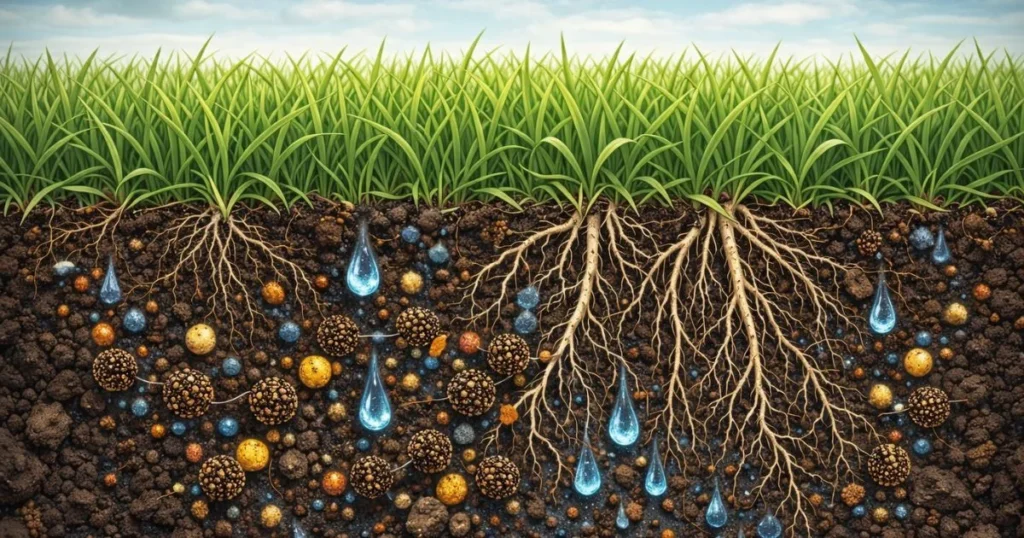
Most lawn problems begin in the soil.
Poor soil causes:
- weak roots
- poor water use
- low nutrient efficiency
Humic acid improves soil by:
- loosening compacted areas
- improving airflow around roots
- holding moisture longer
- reducing nutrient loss
As a result, grass roots grow deeper and stronger.
Science & Evidence Behind Humic Acid
Research supports many of the benefits discussed above.
Peer-reviewed studies show that humic substances can improve nutrient availability and support stronger root development. Research has found that humic acid can increase nutrient uptake efficiency and stimulate root growth in several plant systems.
Turf research also suggests that humic substances used alongside nitrogen fertilizer may help maintain turf quality while improving soil biological activity over time.
These findings support using humic acid as a soil improvement tool rather than a quick cosmetic solution.
Benefits of Humic Acid for Lawns
Using humic acid for lawns supports long-term lawn improvement.
Better Nutrient Uptake
Humic acid holds nutrients in the soil.
This keeps them available to roots longer.
Fertilizer becomes more effective.
This pairs well with slow release fertilizer, which also delivers nutrients gradually instead of all at once.
Improved Water Retention
Sandy soil drains too fast.
Clay soil holds water poorly.
Humic acid helps balance both.
Stronger Root Growth
Healthy soil leads to deeper roots.
Deeper roots help lawns survive stress.
Healthier Soil Life
Humic acid feeds helpful soil microbes.
These microbes support soil structure and nutrient cycling.
How Humic Acid Helps with Heat, Drought, and Disease
Heat and drought stress lawns.
Shallow roots suffer first.
Humic acid helps by:
- improving water storage
- reducing soil stress
- supporting root recovery
It does not cure disease.
It improves the conditions that support recovery.
Can Humic Acid Stabilize Soil pH?
Yes, within limits.
Humic acid does not change soil pH directly.
It helps reduce pH swings instead.
This makes nutrients easier for grass to absorb in problem soils.
Why You Should Test Your Soil First
Soil testing saves time and money.
A soil test shows:
- nutrient levels
- pH range
- organic matter
Humic acid works best when applied with soil data.
Learn more about when phosphorus for lawn care is actually necessary before applying extra nutrients.
Is Fulvic Acid the Same as Humic Acid?
No. They are related but different.
Humic acid works mainly in the soil.
Fulvic acid moves nutrients at the root level.
Some products contain both.
Each supports soil health in a different way.
Liquid or Granular Humic Acid?
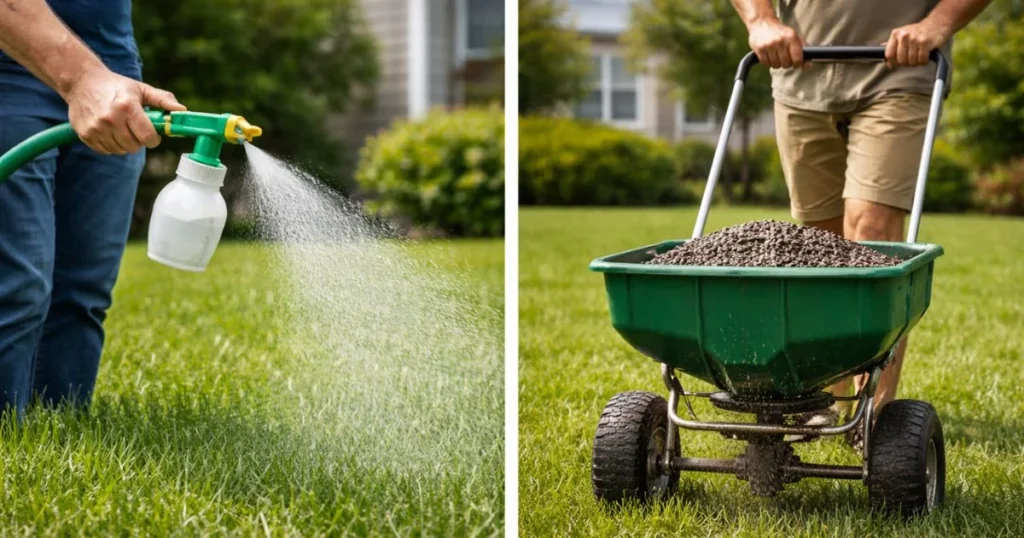
| Feature | Liquid Humic Acid | Granular Humic Acid |
|---|---|---|
| Speed | Faster soil contact | Slower release |
| Ease of use | Sprayed with hose or sprayer | Spread with spreader |
| Longevity | Shorter lasting | Longer lasting |
| Best use | Quick soil improvement | Long-term soil health |
Both forms work well.
Liquid Humic Acid
- faster soil contact
- easy to spray
- good for quick coverage
Granular Humic Acid
- slower release
- longer lasting
- easy to spread
Choose based on your lawn size and tools.
How to Apply Humic Acid to Your Lawn
Application is simple.
- apply during active growth
- water lightly after application
- follow label directions
Spring and fall work well for cool-season lawns.
Warm-season lawns respond during active summer growth.
Practical Application Rate Examples
Application rates vary by product strength. Always follow the label.
However, general examples for homeowners are:
- Liquid humic acid: often applied at a few ounces per 1,000 square feet, diluted with water.
- Granular humic acid: often applied at one to two pounds per 1,000 square feet.
Apply every four to six weeks during active growth for steady soil improvement.
How Much and How Often to Apply
Rates depend on the product.
Most lawns benefit from:
- application every 4 to 6 weeks
- steady use during the growing season
Using more does not improve results.
How Fast Can You See Results?
Humic acid improves soil before grass changes.
Typical results:
- 1 to 2 weeks: soil improvement begins
- 2 to 4 weeks: color may improve
- long term: deeper roots and better stress tolerance
Why Patience Pays Off
Humic acid supports steady improvement.
Soil changes first.
Grass follows later.
With regular use:
- soil becomes healthier
- grass responds better
- lawn care becomes easier
Humic Acid and Different Lawn Types
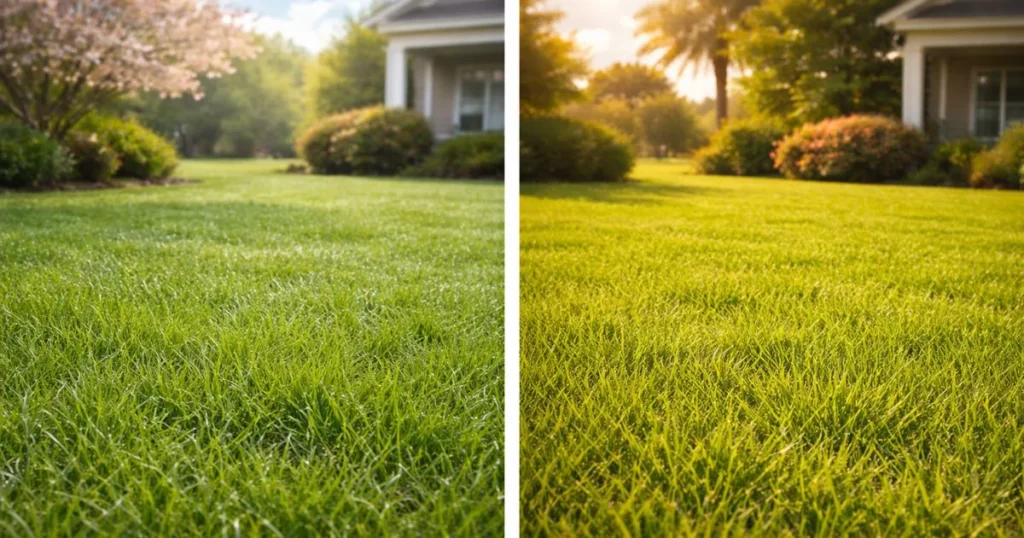
Grass type affects timing.
Cool-season lawns respond best in spring and fall.
Warm-season lawns respond during active summer growth.
Apply when grass is growing.
Do not apply to dormant lawns.
In fall, it can be applied alongside winterizer fertilizer to support root strength before cold weather.
| Lawn Type | Best Application Timing |
|---|---|
| Cool-season lawns | Spring and fall |
| Warm-season lawns | Late spring and summer |
| Dormant lawns | Avoid application |
Humic Acid and Compacted Soil
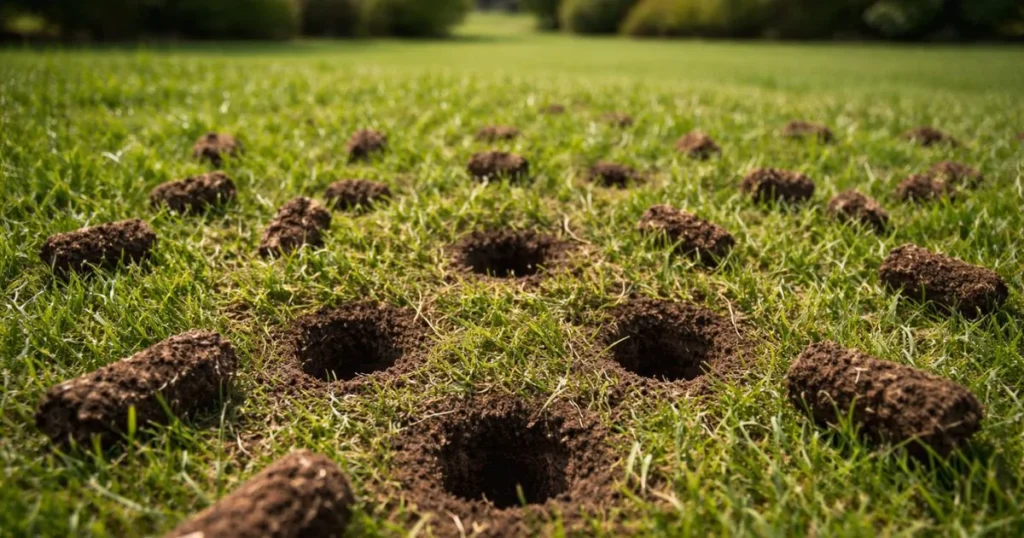
Compacted soil blocks water and air.
Roots struggle in hard soil.
Humic acid helps loosen soil over time.
It improves pore space and structure.
For best results, apply after core aeration.
Humic acid supports aeration.
It does not replace it.
Using Humic Acid With Fertilizer
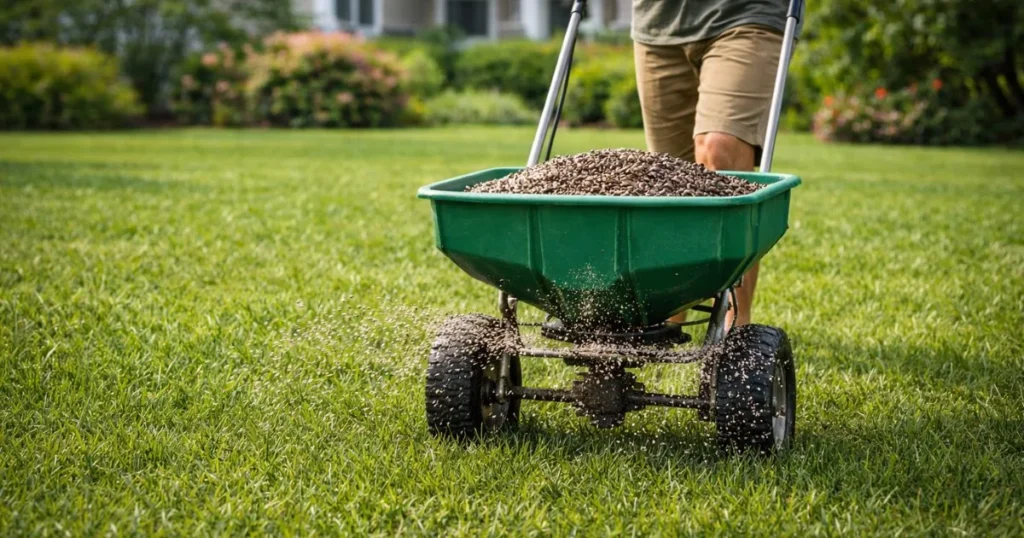
Humic acid works well with fertilizer.
You can apply both together.
You can also apply them within the same week.
Humic acid helps nutrients stay in the soil longer.
This improves fertilizer efficiency.
It does not replace fertilizer.
It does not replace fertilizer.To understand how fertilizer nutrients and numbers work before pairing them with humic acid, see our complete guide on lawn fertilizer numbers explained.
Cost Expectations for Homeowners
Humic acid costs vary by product type.
Most homeowners apply it a few times per season.
Liquid products often cost more upfront.
Granular products last longer per application.
It works best as a long-term soil investment.
When Humic Acid Makes Sense
Humic acid helps lawns with:
- compacted soil
- poor nutrient response
- weak root systems
It may not be needed for already rich soils.
Soil testing helps decide.
In some cases, combining humic acid with organic soil amendments like worm castings for lawn can further improve soil structure and microbial activity.
Can You Reduce Nitrogen If Using Humic Acid?
Some turf research suggests that long-term use of humic substances may help improve nitrogen efficiency.
In certain conditions, lawns maintained with humic acid alongside fertilizer may maintain turf quality even with slightly reduced nitrogen rates.
However, this should only be done carefully and based on soil testing and lawn performance. Humic acid supports fertilizer efficiency, but it does not replace nitrogen.
Estimated Cost Per 1,000 Square Feet
Costs vary depending on product type and concentration.
Liquid products often cost more upfront but cover large areas when diluted.
Granular products may cost less per application but require spreader equipment.
For most homeowners, seasonal use of humic acid represents a moderate soil improvement investment rather than a high recurring expense.
Common Mistakes to Avoid
Avoid these errors:
- using humic acid instead of fertilizer
- skipping soil testing
- expecting fast color change
- applying too often
Correct use brings better results.
Products That Contain Humic Acid
Humic acid appears in:
- soil conditioners
- organic fertilizers
- liquid biostimulants
Always check labels for application rates.
The Organic Advantage
Humic acid supports natural soil processes.
It fits well in organic lawn care programs.
When used correctly, it is safe for lawns, pets, and people.
FAQs About Humic Acid for Lawns
Is humic acid safe for pets?
Yes. Water it in and allow the lawn to dry.
Does humic acid replace fertilizer?
No. It supports fertilizer use.
Can humic acid fix compacted soil?
It helps over time, especially with aeration.
Is humic acid needed for every lawn?
No. Lawns with healthy soil may not need it.
Is Humic Acid Right for Your Lawn?
Humic acid may help if:
- Fertilizer results fade quickly
- Soil feels hard or compacted
- Water runs off instead of soaking in
- Grass struggles during heat or drought
Humic acid may not be needed if:
- Soil is loose and rich in organic matter
- Grass already responds well to fertilizer
Final Thoughts
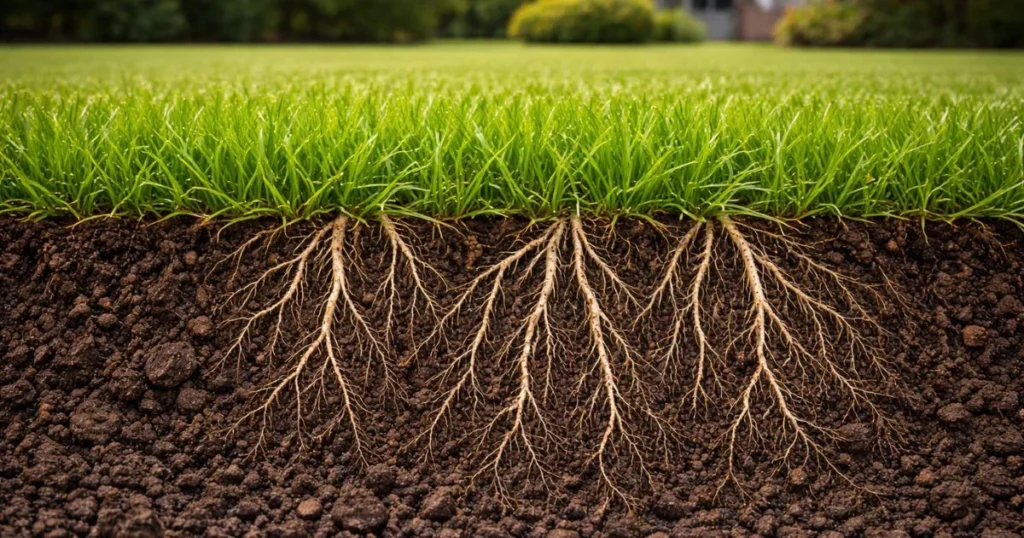
From real use and observation, humic acid works best when it is treated as a soil helper, not a miracle product. It does not create instant green color. What it does is improve soil structure, water movement, and nutrient use over time. I have seen lawns respond slowly but steadily when humic acid is used with proper timing, soil testing, and fertilizer. Roots grow deeper, stress becomes easier to manage, and lawn care starts to feel less like a struggle. That is why humic acid for lawns makes sense when basic lawn care is no longer enough.