 Skip to content
The first time I bought lawn fertilizer, I made a mistake that many homeowners make. I picked a bag based on the brand and the promise of fast green results. I did not pay attention to the three numbers on the label. After applying it, my lawn grew quickly, but the grass looked thin and weak. Some areas turned yellow. A few spots burned. I thought fertilizer had failed, but the real problem was my lack of knowledge.
Later, I learned that lawn fertilizer numbers control how grass grows, not the brand name on the bag. Those numbers decide leaf growth, root strength, and stress tolerance. Many people want a healthy lawn, but the numbers confuse them. This guide exists to remove that confusion and help you avoid the same problems I faced.
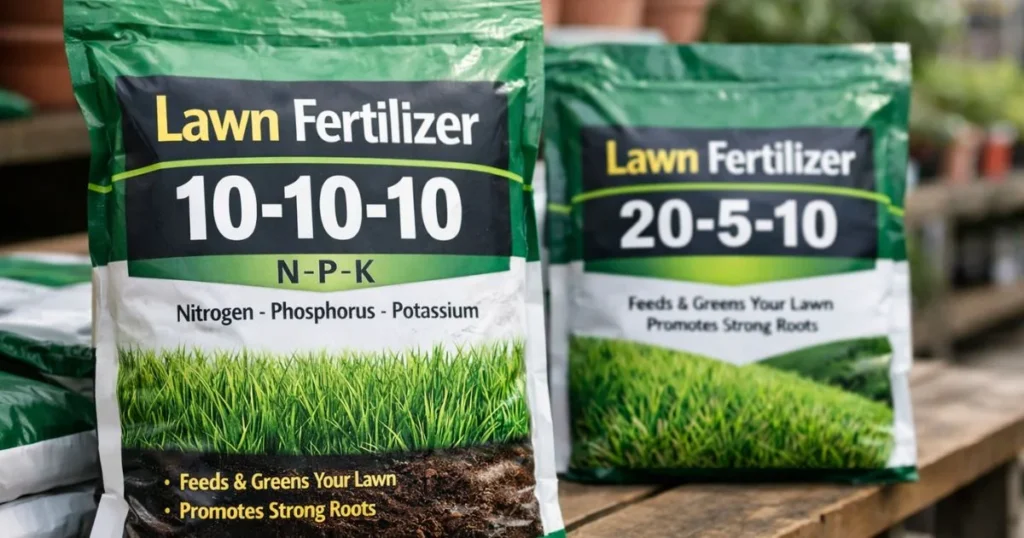
- Lawn fertilizer numbers show nutrient percentages.
- Nitrogen controls green growth and thickness.
- Phosphorus supports roots but is often already in soil.
- Potassium helps grass handle stress and weather.
- The right numbers depend on grass type and season.
- What Are Lawn Fertilizer Numbers?
- What Do N, P, and K Do for Grass?
- How to Read Fertilizer Numbers on the Bag
- Why Lawn Fertilizer Numbers Matter
- Soil Testing and Lawn Fertilizer Numbers
- Soil Test to Fertilizer Mapping Table
- Best Lawn Fertilizer Numbers by Grass Type
- Seasonal Lawn Fertilizer Numbers
- How Much Fertilizer to Apply to Your Lawn
- Simple Nitrogen Calculation Example
- Lawn Fertilizer Numbers for New Lawns vs Established Lawns
- Liquid vs Granular Fertilizer Numbers
- Slow-Release vs Quick-Release Fertilizer
- Micronutrients and Soil Balance
- Environmental Notes About Lawn Fertilizer Numbers
- Important U.S. Regulation Note
- Common Mistakes with Lawn Fertilizer Numbers
- Frequently Asked Questions
- Final Thoughts
What Are Lawn Fertilizer Numbers?
Lawn fertilizer numbers are the three numbers printed on a fertilizer bag.
Examples:
- 10-10-10
- 20-5-10
- 30-0-4
These numbers show the percentage of three nutrients:
- Nitrogen (N)
- Phosphorus (P)
- Potassium (K)
Each number is a percentage by weight.
A 50-pound bag of 10-10-10 contains:
- 5 pounds nitrogen
- 5 pounds phosphorus
- 5 pounds potassium
The rest is filler material.
What Do N, P, and K Do for Grass?
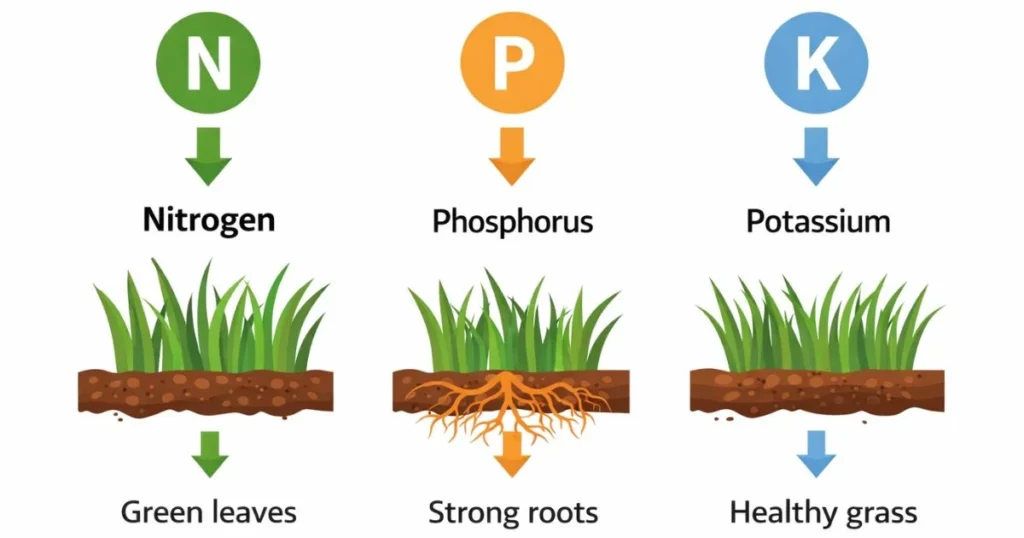
Each nutrient affects lawn growth in a different way.
Nitrogen (N)
Nitrogen controls:
- Green color
- Leaf growth
- Lawn thickness
Low nitrogen causes pale grass.
Too much nitrogen causes fast growth and weak roots.
To learn how much nitrogen grass needs per year and the right time to apply it, see our complete guide on nitrogen for grass.
Phosphorus (P)
Phosphorus supports:
- Root growth
- Seed development
- Early lawn growth
In many U.S. regions, soil already contains enough phosphorus.
To learn when phosphorus actually helps lawns and when it should be avoided, see our detailed guide on phosphorus for lawn.
Potassium (K)
Potassium helps grass:
- Handle heat and cold
- Recover from stress
- Resist disease
It improves lawn strength over time.
How to Read Fertilizer Numbers on the Bag
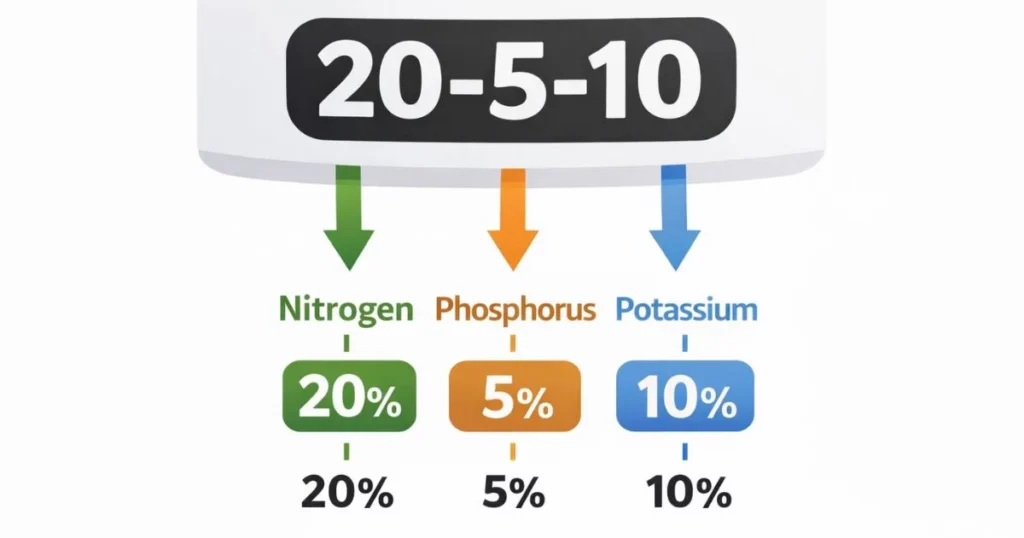
Let’s look at 20-5-10.
This means:
- 20% nitrogen
- 5% phosphorus
- 10% potassium
The first number affects growth the most.
Higher nitrogen means faster green growth.
| Fertilizer Numbers | Best Use Case | When to Apply |
|---|---|---|
| 10-10-10 | Balanced feeding | New lawns |
| 20-5-10 | Strong green growth | Spring |
| 10-0-10 | Stress support | Summer |
| 20-0-20 | Root strength | Fall |
Why Lawn Fertilizer Numbers Matter
Lawn fertilizer numbers control how grass grows.
Wrong numbers can cause:
- Burned grass
- Weak roots
- Poor color
Correct numbers support steady growth and healthy lawns.
Soil Testing and Lawn Fertilizer Numbers
A soil test shows what nutrients your lawn already has.
Many lawns already have enough phosphorus.
If your soil test shows:
- Low nitrogen → choose higher N
- Low potassium → choose higher K
- Normal phosphorus → use low or zero P
Soil testing prevents overuse and saves money.
Soil Test to Fertilizer Mapping Table
| Soil Test Result | What Fertilizer to Choose |
|---|---|
| Low Nitrogen | Higher first number (e.g., 20-5-10) |
| Low Phosphorus | Use phosphorus only if soil test confirms need |
| Low Potassium | Higher third number (e.g., 20-0-20) |
This helps turn soil test results into clear action.
Best Lawn Fertilizer Numbers by Grass Type
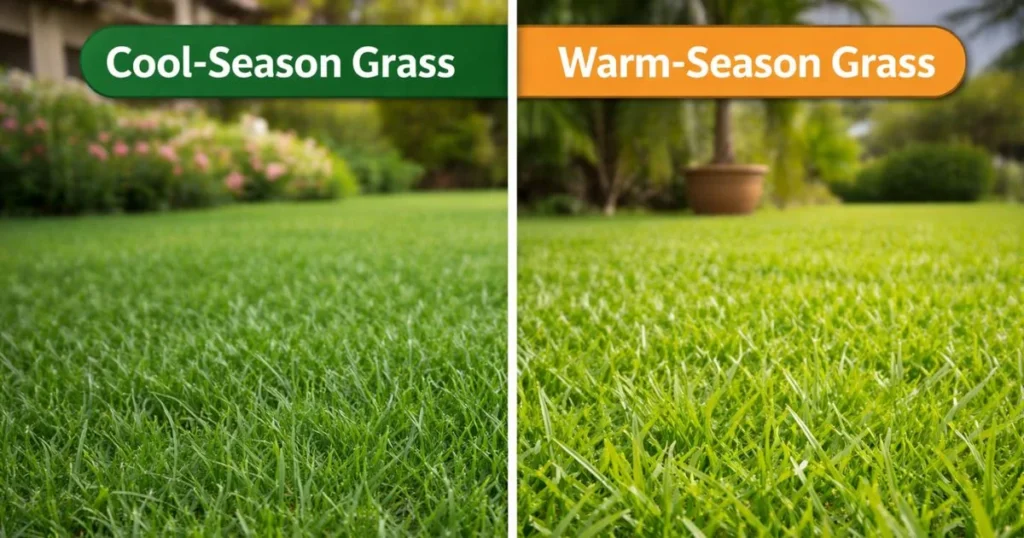
Different grasses need different feeding.
Cool-Season Grasses
Examples:
- Kentucky bluegrass
- Tall fescue
- Ryegrass
Common fertilizer numbers:
- 20-5-10
- 24-0-12
- 30-0-4
These grasses respond well to nitrogen.
Warm-Season Grasses
Examples:
- Bermuda grass
- Zoysia grass
- St. Augustine grass
Common fertilizer numbers:
- 15-0-15
- 16-4-8
- 10-0-10
Exact numbers can change based on soil test results.
Seasonal Lawn Fertilizer Numbers
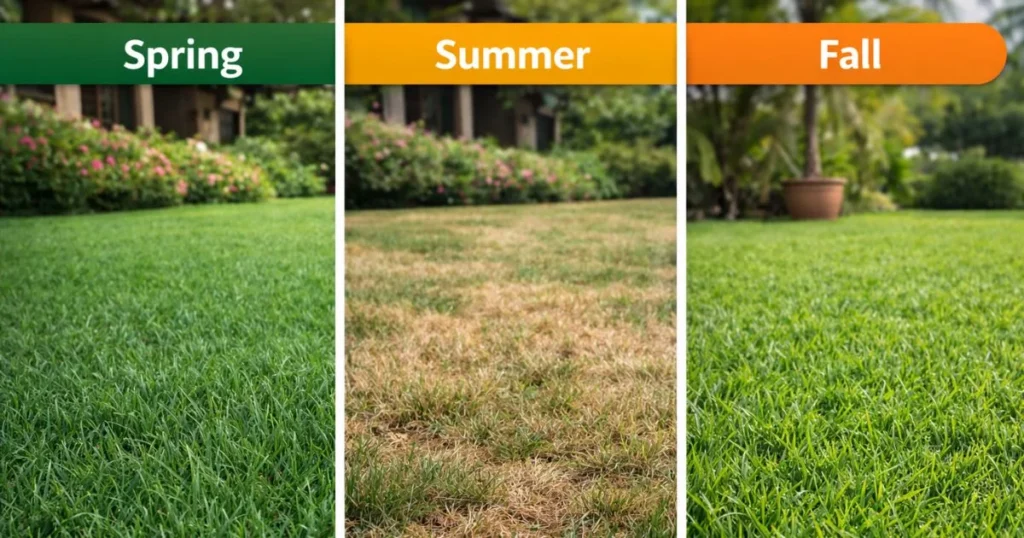
Timing matters as much as the numbers.
Spring
| Season | Main Focus | Example Numbers |
|---|---|---|
| Spring | Leaf growth | 20-5-10 |
| Summer | Stress control | 10-0-10 |
| Fall | Root strength | 20-0-20 |
Grass starts active growth.
Best choice:
- Higher nitrogen
- Moderate potassium
Examples:
- 20-5-10
- 24-0-12
To choose the right fertilizer and timing specifically for spring lawns, see our complete guide on what fertilizer to use in spring.
Summer
Heat stresses grass.
Best choice:
- Lower nitrogen
- Higher potassium
Examples:
- 10-0-10
- 15-0-15
Fall
Roots grow deeper in fall.
Best choice:
- Moderate nitrogen
- Strong potassium
Examples:
- 20-0-20
- 24-0-12
For a full explanation of how fall fertilizers support roots and prepare lawns for winter, see our detailed guide on winterizer fertilizer.
How Much Fertilizer to Apply to Your Lawn
Lawn fertilizer numbers show nutrients, not how much to apply.
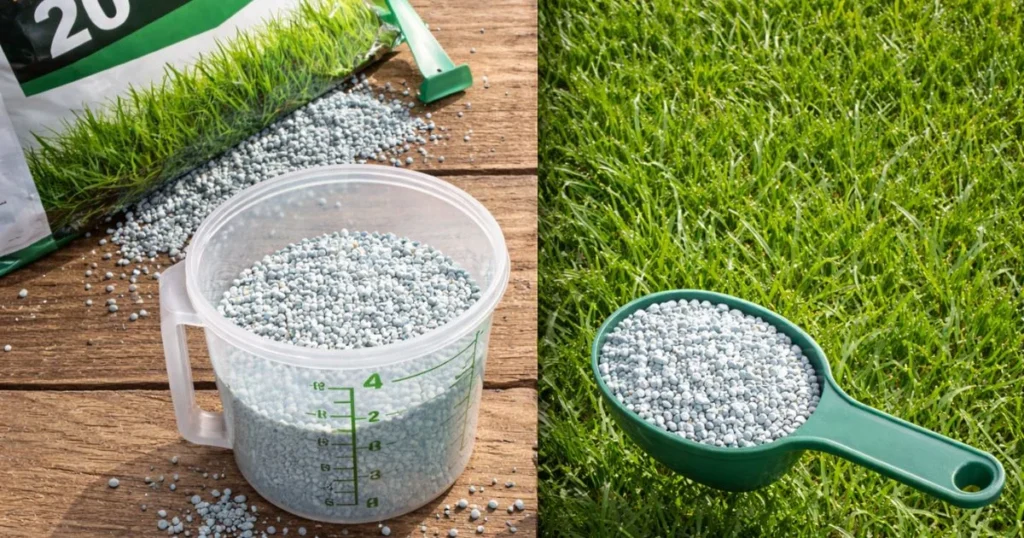
Most lawns need 0.5 to 1 pound of nitrogen per 1,000 square feet per application.
Simple example
Using 20-0-10 fertilizer:
- It contains 20% nitrogen
- To apply 1 pound of nitrogen
- Apply 5 pounds of fertilizer per 1,000 sq ft
More fertilizer does not help grass grow better.c
Simple Nitrogen Calculation Example
If you want to apply 0.5 pounds of nitrogen using a 20-0-10 fertilizer:
Step 1: Convert percentage to decimal → 20% = 0.20
Step 2: Divide desired nitrogen by decimal → 0.5 ÷ 0.20 = 2.5
You would apply 2.5 pounds of fertilizer per 1,000 square feet.
This simple method works for any fertilizer ratio.
Lawn Fertilizer Numbers for New Lawns vs Established Lawns
New lawns and older lawns need different feeding.
New lawns
So new grass has weak roots.
Best approach:
- Lower nitrogen
- Balanced nutrients
- Light feeding
Examples:
- 10-10-10
- 12-12-12
Established lawns
Older lawns handle stronger feeding.
Best approach:
- Higher nitrogen
- Seasonal adjustments
Examples:
- 20-5-10
- 24-0-12
Liquid vs Granular Fertilizer Numbers
The numbers mean the same for both types.
Granular fertilizer
- Feeds slowly
- Lasts longer
- Lower burn risk
Liquid fertilizer
- Fast green color
- Short feeding time
- Needs frequent use
To see how liquid and granular fertilizers differ in speed, duration, cost, and best use cases, read our detailed comparison on liquid vs granular fertilizer.
Slow-Release vs Quick-Release Fertilizer
Release speed matters.
Slow-release fertilizer
- Feeds over weeks
- Safer for grass
- Good for beginners
To learn how slow release fertilizer works, how long it lasts, and when to use it, see our detailed guide on slow release fertilizer.
Quick-release fertilizer
- Fast results
- Higher burn risk
- Needs careful timing
Micronutrients and Soil Balance
Grass also needs small nutrients like:
- Iron
- Magnesium
- Sulfur
Iron improves green color.
Soil pH affects how nutrients work.
Poor pH reduces fertilizer results.
For improving soil structure and helping fertilizers work more efficiently, see our detailed guide on humic acid for lawns.
Environmental Notes About Lawn Fertilizer Numbers
Some U.S. states limit phosphorus use.
Phosphorus runoff can harm water sources.
If soil already has enough phosphorus:
- Choose fertilizer with 0 in the middle number
- Example: 20-0-10
Soil testing helps avoid misuse.
- Know your grass type.
- Check when you last fertilized.
- Measure your lawn size.
- Avoid feeding during extreme heat.
- Read the fertilizer numbers carefully.
If your lawn still struggles even after choosing the right fertilizer numbers, the issue may be soil health rather than nutrients. See our guide on worm castings for lawn for a safe, long-term soil improvement option.
Important U.S. Regulation Note
In several U.S. states, phosphorus fertilizer use is restricted unless a soil test shows a deficiency or the lawn is newly seeded. Always check local regulations before applying phosphorus-heavy fertilizer.
Common Mistakes with Lawn Fertilizer Numbers
Avoid these mistakes:
- Using high nitrogen all year
- Applying phosphorus without testing
- Overfeeding during hot weather
- Ignoring potassium needs
More fertilizer does not mean better grass.
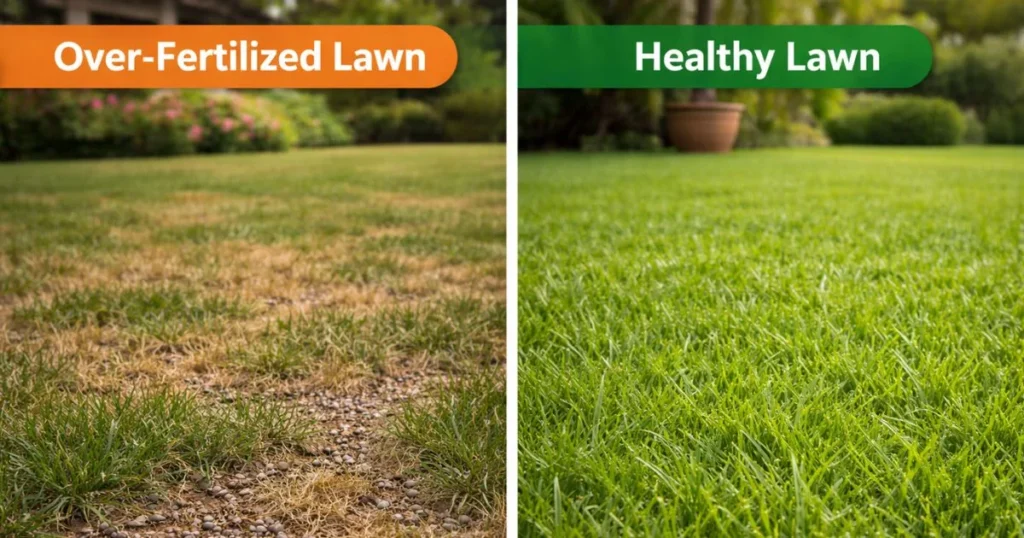
If fertilizer damage has already happened, see our detailed guide on over fertilization lawn symptoms to identify the signs and fix the problem safely.
Frequently Asked Questions
What does 10-10-10 fertilizer mean?
It contains equal parts nitrogen, phosphorus, and potassium.
Which lawn fertilizer numbers are best?
The best numbers depend on grass type, soil, and season.
Can wrong fertilizer numbers damage grass?
Yes. Too much nitrogen can burn grass and weaken roots.
If you are comparing different balanced fertilizers by strength, see our detailed breakdown on is 4-4-4 the same as 10-10-10 fertilizer.
Final Thoughts
After working with lawns and using different fertilizer types over time, one thing became clear. Lawn fertilizer numbers matter more than anything else on the label. I have seen lawns struggle because nitrogen was too high and roots stayed weak. I have also seen lawns improve once the right numbers were used at the right time. When you match fertilizer numbers with your grass type, soil condition, and season, the lawn responds better. Growth becomes steady, roots grow deeper, and stress damage reduces. You do not need to guess. You just need to understand the numbers and use them with care.