 Skip to content
Many homeowners go through the same lawn problem year after year. The grass starts turning yellow. Growth slows down. No matter how much you water or mow, the lawn still looks weak. I have seen people add fertilizer again and again, hoping for quick results, only to end up confused or disappointed.
From my own experience working with lawns, nitrogen is often the missing or misused piece. Some lawns do not get enough nitrogen to stay green. Others get too much at the wrong time and suffer damage. Once nitrogen is applied with the right amount and timing, lawn care becomes much simpler. This guide explains nitrogen in a clear and practical way, based on real lawn issues and proven results.
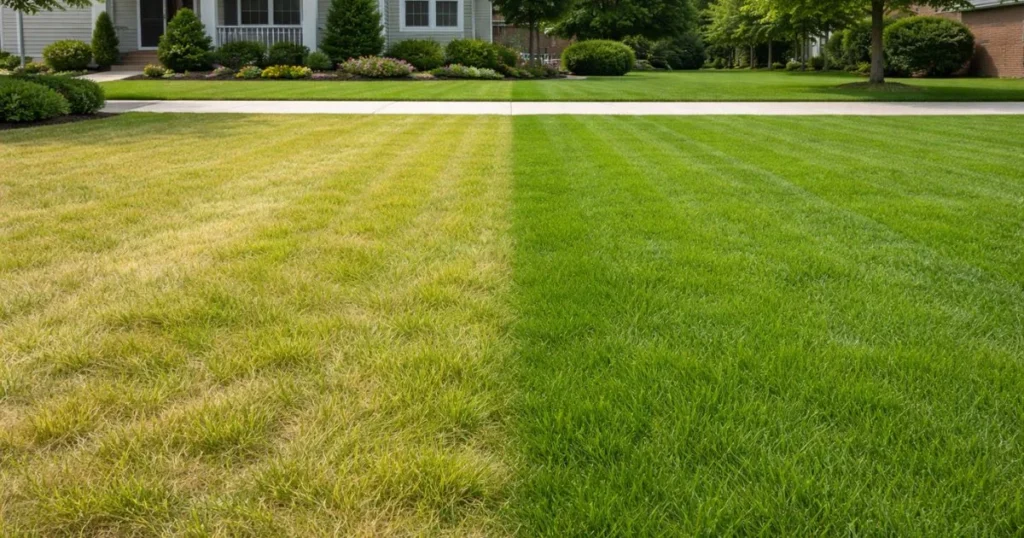
- Nitrogen controls grass color and growth
- Most lawns need 1–4 lb of nitrogen per 1,000 sq ft per year
- Apply nitrogen only during active growth
- Split applications work better than one heavy feeding
- Too much nitrogen can burn grass and weaken roots
- Why Is Nitrogen Important for Lawns
- Does Nitrogen Make Grass Green
- Signs of Nitrogen Deficiency in Lawns
- How Much Nitrogen Does Grass Need Per Year
- Nitrogen Needs by Common Grass Types
- When to Apply Fertilizer With Nitrogen on Your Lawn
- Soil Temperature and Nitrogen Timing
- Applying Nitrogen-Rich Fertilizer to Your Lawn
- How to Calculate Nitrogen From Fertilizer Labels
- Too Much Nitrogen in Grass: The Risks of Over-Fertilizing
- Nitrogen Fertilizers for Turf: Which One Is Right for You
- How Long Nitrogen Takes to Work
- Choosing the Right Nitrogen Type for Your Lawn
- Tips for Success When Using Nitrogen Fertilizers
- 6 Different Nitrogen Sources for the Lawn
- FAQ About Nitrogen Sources for the Lawn
- When to Hire a Pro
- Nitrogen Fertilizer for Grass
- Understanding Fertilizer Labels
- Types of Fertilizers
- Cool-Season vs Warm-Season Grasses
- When to Fertilize Your Lawn
- How to Fertilize Your Lawn
- Fertilizer Solutions for Common Lawn Problems
Why Is Nitrogen Important for Lawns
Grass needs nitrogen to grow.
Nitrogen helps grass make chlorophyll.
Chlorophyll gives grass its green color.
Nitrogen also supports leaf growth.
This makes the lawn thicker and stronger.
Lawns with enough nitrogen recover faster after mowing and foot traffic.
Without nitrogen, growth slows.
Leaves turn light green or yellow.
The lawn becomes thin over time.
Does Nitrogen Make Grass Green
Yes.
Nitrogen is the main nutrient that keeps grass green.
When nitrogen levels are good, grass produces more chlorophyll.
This creates a deep green color.
When nitrogen is low, chlorophyll breaks down.
Grass loses color and turns yellow.
Older blades usually change color first.
Signs of Nitrogen Deficiency in Lawns
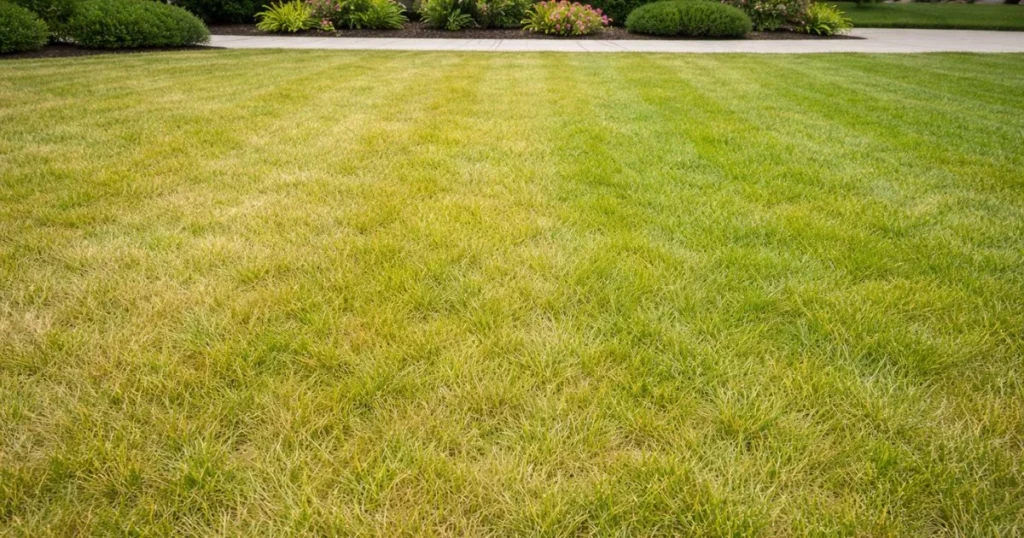
Common signs include:
- Pale green or yellow grass
- Slow growth
- Thin turf
- Weak recovery after mowing
Nitrogen deficiency often appears evenly across the lawn.
It does not show up in random spots.
If yellowing appears in patches, the problem may be different.
A soil test helps confirm low nitrogen levels and avoids mistakes.
How Much Nitrogen Does Grass Need Per Year
| Lawn Type | Nitrogen per 1,000 sq ft (Yearly) | Best Season |
|---|---|---|
| Low-maintenance lawn | 1–2 lb | Spring / Fall |
| Medium-maintenance lawn | 2–3 lb | Spring + Fall |
| High-maintenance lawn | 3–4 lb | Split applications |
| Cool-season grass | 2–4 lb | Mostly Fall |
| Warm-season grass | 1–3 lb | Late Spring–Summer |
Grass needs different nitrogen amounts based on care level.
Most lawns in the USA fall into these yearly ranges per 1,000 square feet:
- Low-maintenance lawns: 1 to 2 pounds of nitrogen per year
- Medium-maintenance lawns: 2 to 3 pounds of nitrogen per year
- High-maintenance lawns: 3 to 4 pounds of nitrogen per year
These totals should be split into several applications.
Applying everything at once increases burn risk.
Smaller feedings help grass grow evenly.
They also reduce nutrient loss.
A soil test gives the most accurate nitrogen recommendation for your lawn and prevents overuse.
Nitrogen Needs by Common Grass Types
Different grasses respond differently to nitrogen.
Cool-Season Grasses
- Kentucky bluegrass
- Tall fescue
- Perennial ryegrass
These grasses usually need 2 to 4 pounds of nitrogen per 1,000 sq ft per year.
Most nitrogen is applied in fall because roots grow best then.
Warm-Season Grasses
- Bermudagrass
- Zoysia grass
- Centipede grass
These grasses usually need 1 to 3 pounds of nitrogen per 1,000 sq ft per year.
Nitrogen is applied during late spring and summer.
Centipede grass needs less nitrogen than most grasses.
Too much nitrogen can weaken it.
When to Apply Fertilizer With Nitrogen on Your Lawn
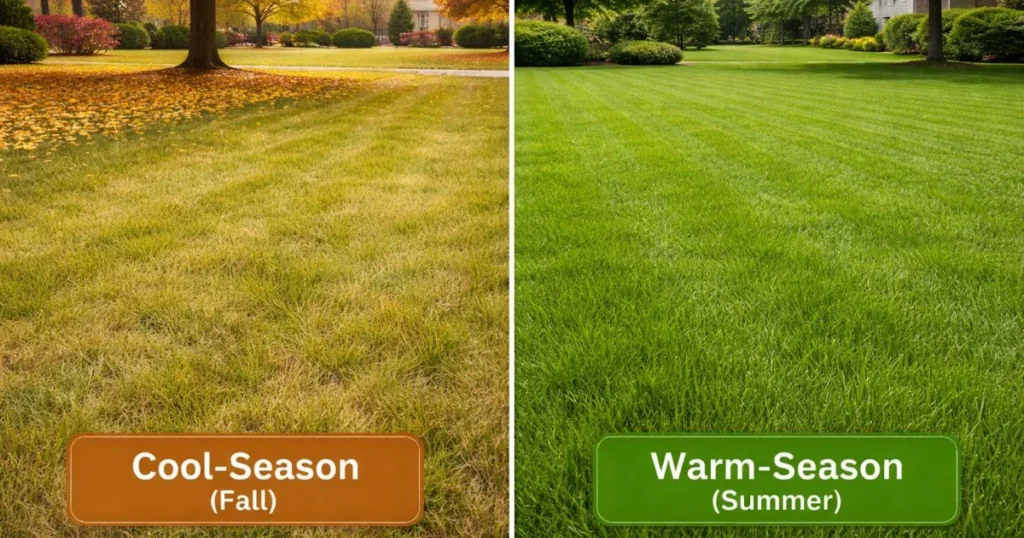
Timing matters as much as amount.
Wrong timing wastes fertilizer and stresses grass.
Cool-Season Grasses
Best times to apply nitrogen:
- Early spring (light feeding)
- Fall (main feeding season)
Fall feeding supports root growth.
This prepares grass for the next year.
Avoid heavy nitrogen during summer heat.
Warm-Season Grasses
Best times to apply nitrogen:
- Late spring
- Summer while grass is growing
Do not fertilize too early.
Grass must be fully green before feeding.
Stop feeding before fall dormancy.
Soil Temperature and Nitrogen Timing
Season names alone can mislead.
Soil temperature gives clearer timing.
- Cool-season grasses respond near 55°F soil temperature
- Warm-season grasses respond near 65°F soil temperature
Applying nitrogen before these points leads to waste.
Grass roots cannot absorb nutrients when inactive.
Applying Nitrogen-Rich Fertilizer to Your Lawn
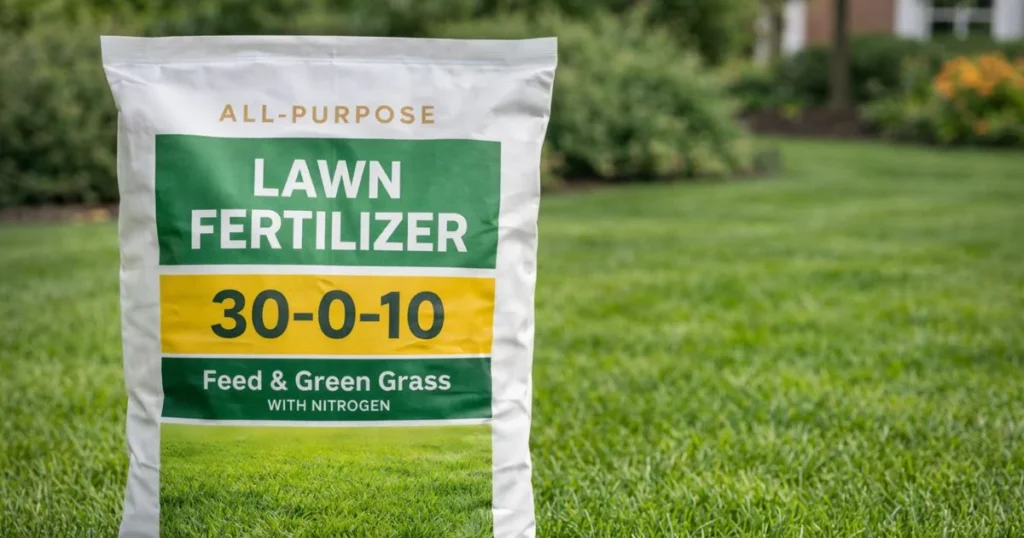
Always read the fertilizer label.
The first number shows nitrogen content.
Example:
A 30-0-10 fertilizer contains 30 percent nitrogen.
Most lawns apply nitrogen in small doses.
One pound of nitrogen per 1,000 square feet per application is common.
Spread fertilizer evenly.
Uneven spreading causes stripes and burn spots.
Water lightly after application.
This helps nitrogen move into the soil.
Do not apply more than 1 pound of actual nitrogen per 1,000 square feet in a single application. Smaller amounts are safer for most lawns.
How to Calculate Nitrogen From Fertilizer Labels
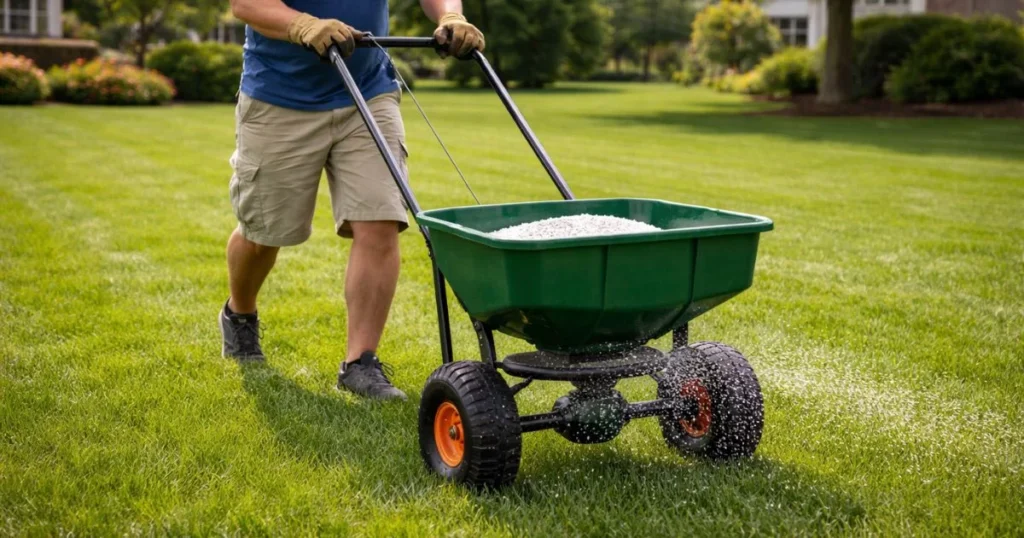
Fertilizer labels show nitrogen as a percentage.
Example calculation:
- Fertilizer: 30-0-10
- Nitrogen content: 30%
To apply 1 pound of nitrogen per 1,000 sq ft:
1 ÷ 0.30 = 3.3 pounds of fertilizer per 1,000 sq ft
This means you spread 3.3 pounds of product.
Measuring lawn size prevents overuse.
The nitrogen amount only makes sense if you know what the fertilizer numbers mean. For a full breakdown, read our guide on lawn fertilizer numbers explained.
Too Much Nitrogen in Grass: The Risks of Over-Fertilizing
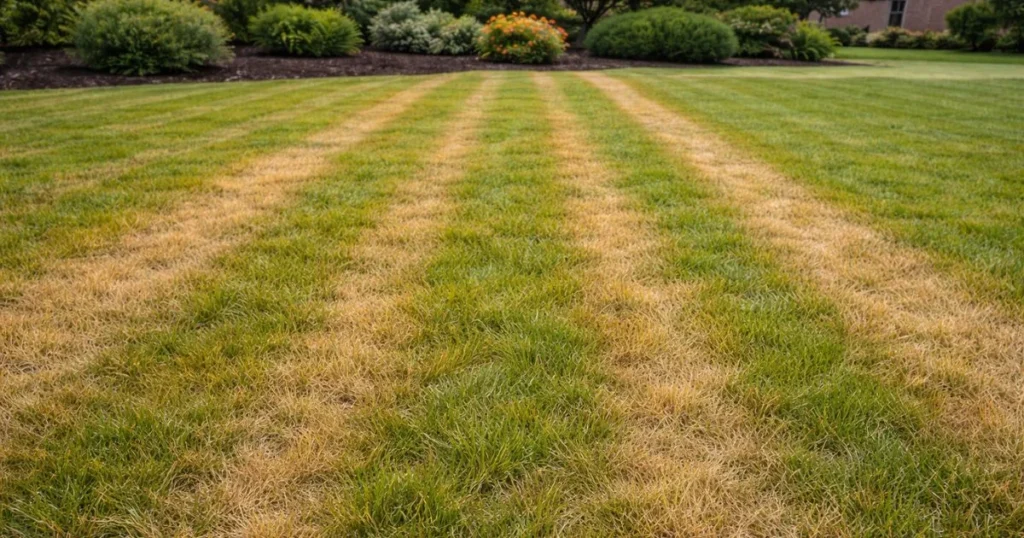
Too much nitrogen creates problems.
Common issues include:
- Burned grass tips
- Fast top growth
- Weak roots
- Extra mowing
- Higher disease risk
Excess nitrogen can wash into water systems.
This harms lakes and streams.
More fertilizer does not improve results.
Excess nitrogen pushes fast leaf growth but does not strengthen the root system.
- Applying nitrogen before grass starts growing
- Fertilizing before heavy rain
- Using high nitrogen during summer heat
- Guessing lawn size instead of measuring
Nitrogen Fertilizers for Turf: Which One Is Right for You
| Nitrogen Type | Speed | Burn Risk | Best Use |
|---|---|---|---|
| Quick-release | Fast | High | Fast green-up |
| Slow-release | Slow | Low | Steady growth |
| Organic | Very slow | Very low | Low-maintenance lawns |
Nitrogen fertilizers come in different forms.
Quick-release nitrogen
- Fast green color
- Higher burn risk
Slow-release nitrogen
- Feeds grass over time
- Safer for most lawns
Organic nitrogen
- Improves soil health
- Slower results
Many fertilizers combine fast and slow nitrogen.
This balances color and steady growth.
Water-soluble nitrogen is often applied at lower rates per application compared to slow-release forms.
How Long Nitrogen Takes to Work
Results depend on nitrogen type.
- Quick-release nitrogen:
Visible color change in 3 to 7 days - Slow-release nitrogen:
Color change in 2 to 4 weeks - Organic nitrogen:
Gradual improvement over time
Fast results are not always better.
Steady growth supports healthier lawns.
Choosing the Right Nitrogen Type for Your Lawn
Different lawn conditions need different approaches.
- New lawns: light, slow-release nitrogen
- Stressed lawns: avoid heavy nitrogen
- Summer lawns: slow-release nitrogen works best
- Low-maintenance lawns: organic or blended products
Matching nitrogen type to lawn condition reduces damage.
Tips for Success When Using Nitrogen Fertilizers
- Apply during active growth
- Avoid fertilizing before heavy rain
- Measure lawn size before applying
- Use a spreader for even coverage
- Follow label directions
A soil test helps fine-tune nitrogen use.
6 Different Nitrogen Sources for the Lawn
Nitrogen comes from natural and manufactured sources.
1. Grass Clippings
Leaving clippings returns nitrogen to soil.
2. Animal Products
Manure-based products release nitrogen slowly.
3. Biosolids
Provide slow nitrogen and organic matter.
4. Commercial Fertilizer
Common and easy to control.
5. Inorganic Sources of Nitrogen
Fast acting and precise.
6. Urea
High nitrogen content.
Needs careful use.
FAQ About Nitrogen Sources for the Lawn
How do I know if my lawn needs nitrogen?
Yellow color and slow growth are common signs.
How can I add nitrogen to my grass?
Use fertilizer, grass clippings, or organic sources.
What is the most natural nitrogen source?
Grass clippings and compost.
When to Hire a Pro
Hire a professional if:
- Lawn problems continue
- Soil test results are unclear
- Lawn damage is severe
Professional advice prevents costly errors.
Nitrogen Fertilizer for Grass
Nitrogen fertilizers are grouped by strength.
Low Nitrogen Fertilizer
Used for steady feeding.
High Nitrogen Fertilizer
Used for fast green color.
Needs careful timing.
Frequently Asked Questions
Split applications work best for most lawns.
Understanding Fertilizer Labels
Fertilizer labels show three numbers.
The first number is nitrogen.
Higher numbers mean more nitrogen per pound.
Types of Fertilizers
- Granular fertilizers
- Liquid fertilizers
Granular lasts longer.
Liquid works faster.
Cool-Season vs Warm-Season Grasses
Each grass type has different nitrogen needs.
Correct timing improves results.
When to Fertilize Your Lawn
Fertilize only during active growth.
Avoid extreme heat or cold.
How to Fertilize Your Lawn
Measure first.
Apply evenly.
Water lightly after application.
Fertilizer Solutions for Common Lawn Problems
Yellow grass often needs nitrogen.
Thin lawns usually need better timing, not more fertilizer.
Conclusion
After years of dealing with lawn problems, one thing stands out clearly. Nitrogen works best when it is used with balance and patience. Healthy lawns do not come from heavy feeding or guesswork. They come from knowing how much nitrogen grass needs, applying it at the right time, and choosing the right type for the situation. When nitrogen is used correctly, grass grows thicker, greener, and stronger over time. It is not a fast fix, but it is one of the most reliable ways to build a healthy lawn that lasts.
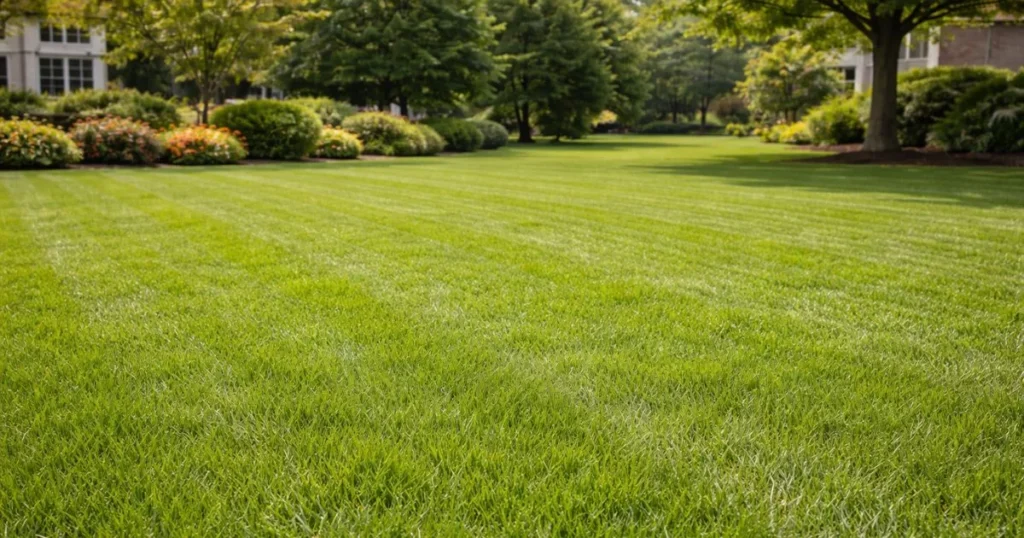
- Use the right nitrogen amount for your lawn
- Apply nitrogen during active growth only
- Choose slow-release nitrogen for safety
- Avoid over-feeding and guesswork