 Skip to content
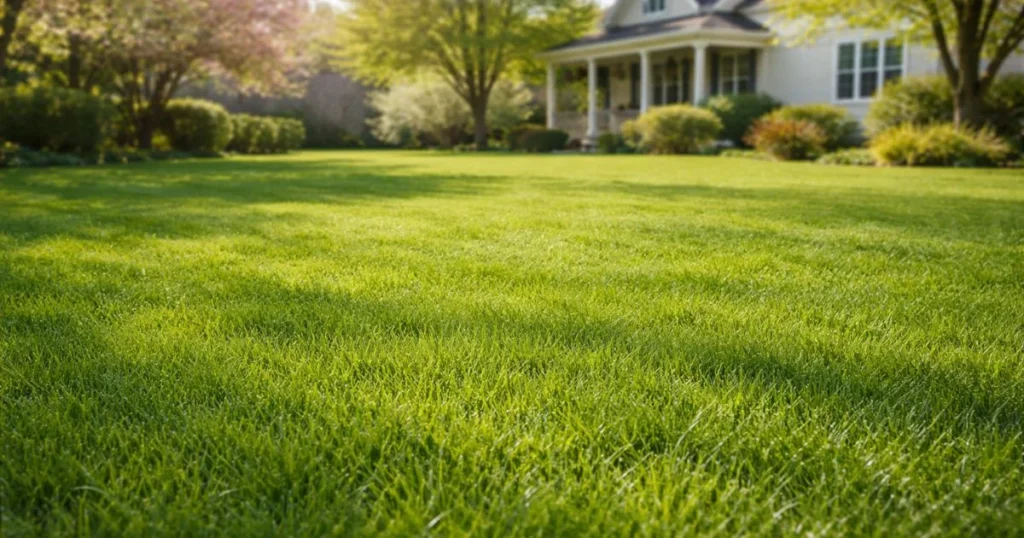
Every spring, many homeowners face the same problem. You walk into a store or search online and see rows of fertilizer bags. Different numbers. Different claims. Everyone says their product is best. I remember feeling unsure myself, wondering if one wrong choice could damage my lawn instead of helping it.
I learned this the hard way. One spring, I fertilized too early because I wanted quick green color. The lawn looked fine for a short time, but the roots stayed weak. When summer arrived, the grass thinned and struggled. That experience taught me an important lesson. Spring fertilizer is not about speed. It is about timing and choosing what your lawn actually needs.
- Why Spring Fertilizer Matters
- What Fertilizer Should You Use in Spring?
- NPK Quick Decision Table
- If You Live in the North
- If You Live in the South
- What Is the Best Fertilizer for Grass in Spring?
- Seeding in Spring? Skip the Pre-Emergent
- Why Spring Fertilizer for Lawns Is Important
- Best Grass Fertilizer for Spring: Growth and Protection
- Application Rate for Spring Lawn Fertilizers
- When Is the Right Time in Spring to Fertilize?
- Should You Test Your Soil Before Fertilizing?
- Spring Fertilizer for Gardens, Flowers, and Shrubs
- Weather Conditions to Avoid When Fertilizing
- The Different Types of Spring Fertilizer
- Frequently Asked Questions
- Quick Spring Fertilizer Checklist
- Conclusion
Spring Fertilizer Takeaways
- Apply fertilizer only when grass starts growing
- Nitrogen is the main nutrient needed in spring
- Cool-season and warm-season lawns need different timing
- Avoid pre-emergent if you are seeding grass
- Always follow the fertilizer label rate
Why Spring Fertilizer Matters
During winter, grass growth slows.
Soil nutrients also drop.
In spring, grass needs food to:
- Strengthen roots
- Grow evenly
- Recover from cold stress
Spring fertilizer supports growth at the right moment.
What Fertilizer Should You Use in Spring?
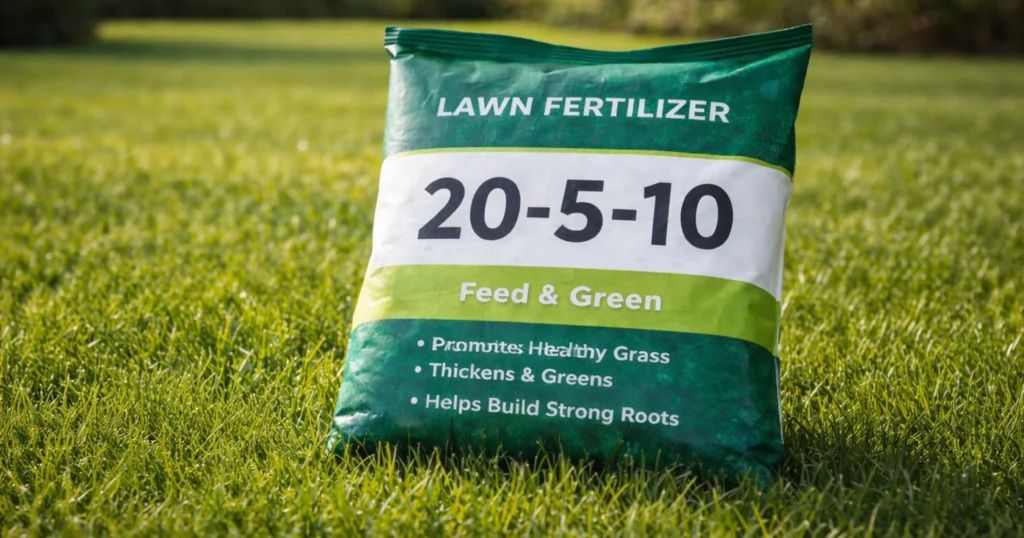
Most spring fertilizers focus on nitrogen.
- Turn green
- Grow evenly
- Recover faster
A good spring fertilizer usually has:
- Higher nitrogen
- Lower phosphorus unless seeding
- Balanced potassium
You may see numbers like 20-5-10 or 16-0-8.
The first number shows nitrogen level.
If these fertilizer numbers feel confusing, read our full guide on lawn fertilizer numbers explained to understand what each number means for spring lawn care.
NPK Quick Decision Table
| Goal | Example Ratio | When to Use |
|---|
| Improve green color | High nitrogen (20-5-10) | When grass is actively growing |
| Grow new grass | Starter fertilizer (10-20-10) | During seeding |
| General feeding | Balanced (10-10-10) | Normal spring maintenance |
If You Live in the North
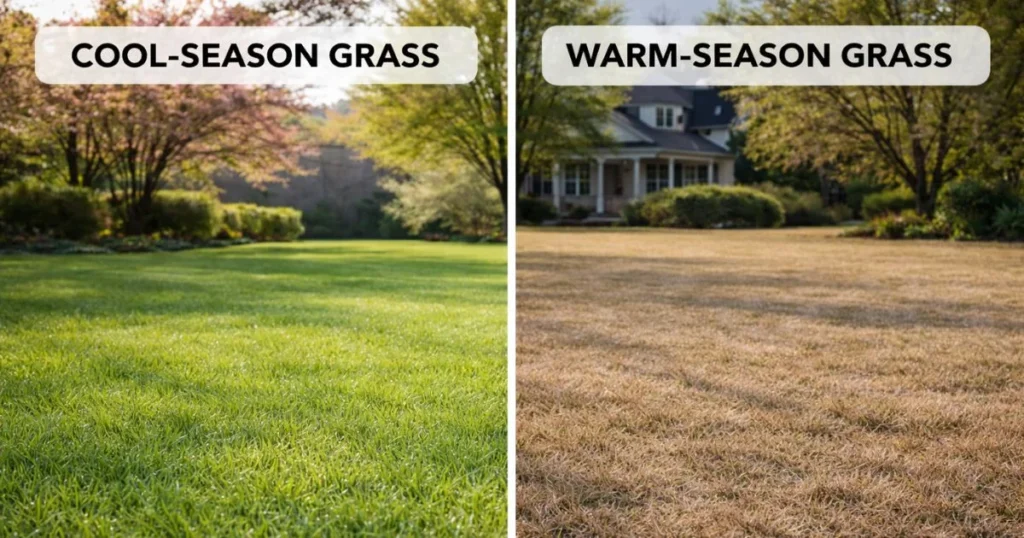
Cool-season grasses grow best in northern states.
These lawns start growing early.
For northern lawns:
- Use moderate nitrogen
- Avoid heavy feeding too early
- Apply once grass begins active growth
This helps roots grow before top growth speeds up.
If You Live in the South
Warm-season grasses grow later.
They stay dormant longer.
For southern lawns:
- Wait until grass turns green
- Use fertilizer made for warm-season grass
- Avoid early feeding
Fertilizing too soon can weaken roots.
If you live in a transition zone, identify whether your lawn is cool-season or warm-season before choosing fertilizer.
What Is the Best Fertilizer for Grass in Spring?
There is no single best option for every lawn.
Common choices include:
- Balanced fertilizer
Good for basic feeding - High nitrogen fertilizer
Improves green color - Slow-release fertilizer
Feeds grass over time
Slow-release fertilizers lower burn risk and last longer.
Seeding in Spring? Skip the Pre-Emergent
Pre-emergent fertilizers stop weed seeds.
They also stop grass seed.
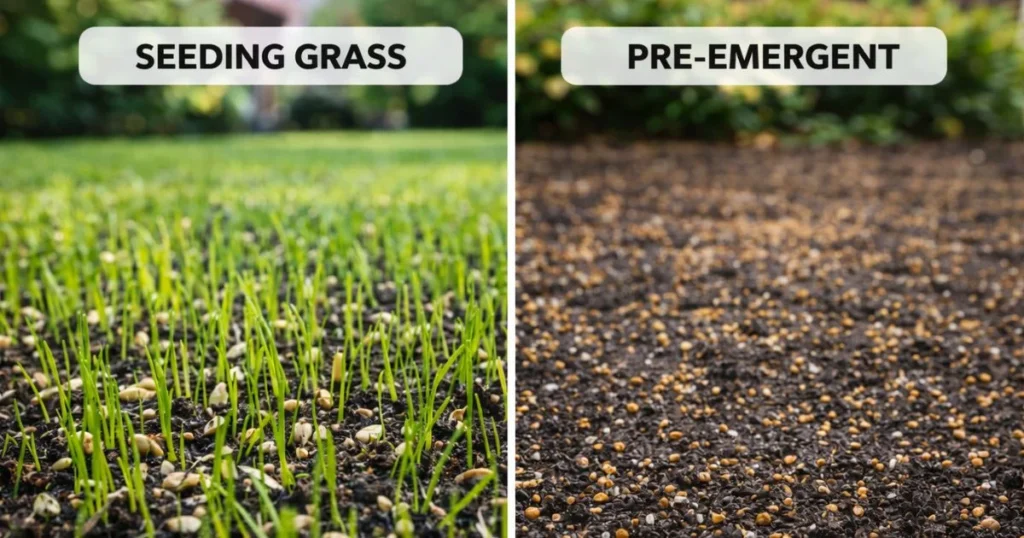
If you plan to seed:
- Do not use pre-emergent
- Use a starter fertilizer
Starter fertilizers support new root growth.
Why Spring Fertilizer for Lawns Is Important
Spring feeding helps your lawn:
- Grow thicker
- Compete with weeds
- Stay healthy longer
A strong start reduces problems later.
Best Grass Fertilizer for Spring: Growth and Protection
Some fertilizers also control weeds.
These products:
- Feed grass
- Control early weeds
Use them only if:
- You are not seeding
- Weeds are already present
Wrong timing can damage new grass.
Application Rate for Spring Lawn Fertilizers
Always follow label directions.
Using too much fertilizer can:
- Burn grass
- Cause weak roots
- Harm soil
Helpful tips:
- Spread evenly
- Water after application
- Avoid windy days
Applying more fertilizer does not make grass grow better. It can burn roots and cause long-term damage. If overfeeding has already happened, see the signs of over fertilization lawn symptoms and how to fix them.
When Is the Right Time in Spring to Fertilize?
Timing matters.
Grass can only use fertilizer when it is actively growing.
Spring Fertilizer Timing Guide
| Lawn Type | When to Fertilize | Key Note |
|---|---|---|
| Cool-season grass | Early spring | Apply once active growth begins |
| Warm-season grass | Mid to late spring | Wait until grass turns green |
| Newly seeded lawn | At seeding time | Use a starter fertilizer only |
| Dormant grass | Do not fertilize | Wait for growth to start |
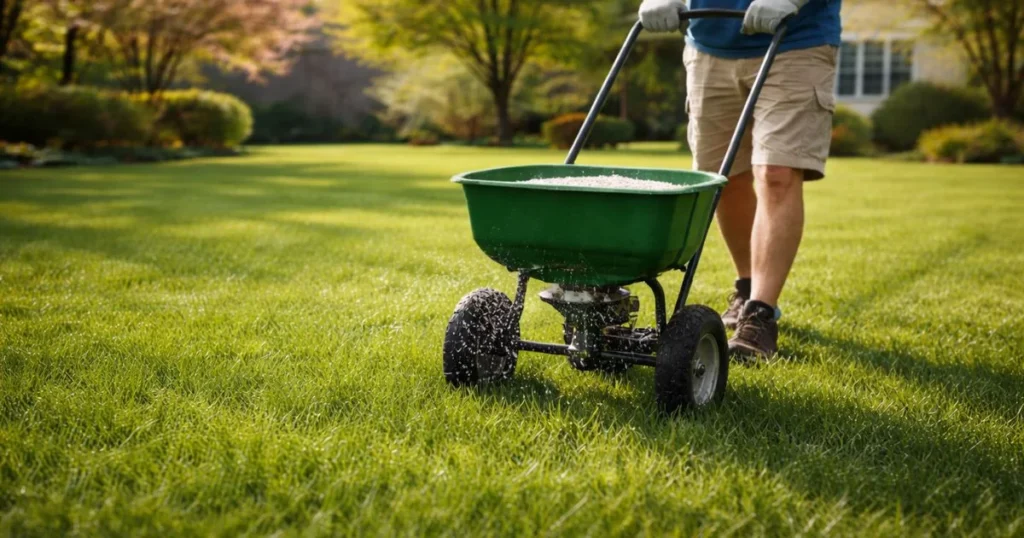
A simple guide:
- Fertilize when soil reaches about 55°F
- Grass should be green
- Applying earlier wastes fertilizer
If grass is still brown, wait.
Use a soil thermometer and check 2 to 4 inches deep. When soil stays near 55°F for several days, it is safe to fertilize.
Should You Test Your Soil Before Fertilizing?
Soil testing removes guesswork.
A basic soil test shows:
- Nutrient levels
- Soil pH
- If phosphorus is needed
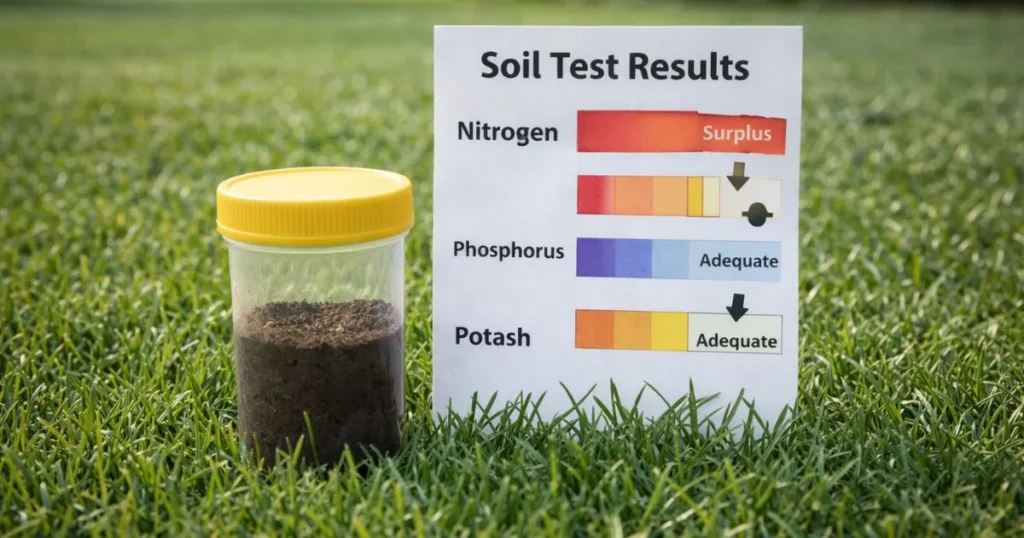
Many lawns already have enough phosphorus.
Extra phosphorus can harm soil and water.
Testing helps you choose the right fertilizer.
Testing helps you choose the right If your soil test shows phosphorus levels are already high, adding more can cause problems. Learn when phosphorus is actually needed in our guide on phosphorus for lawn..
Spring Fertilizer for Gardens, Flowers, and Shrubs
Spring fertilizer is not only for lawns.
- Vegetable gardens need balanced fertilizer
- Flowers need light feeding after growth starts
- Shrubs and trees need slow, steady nutrients
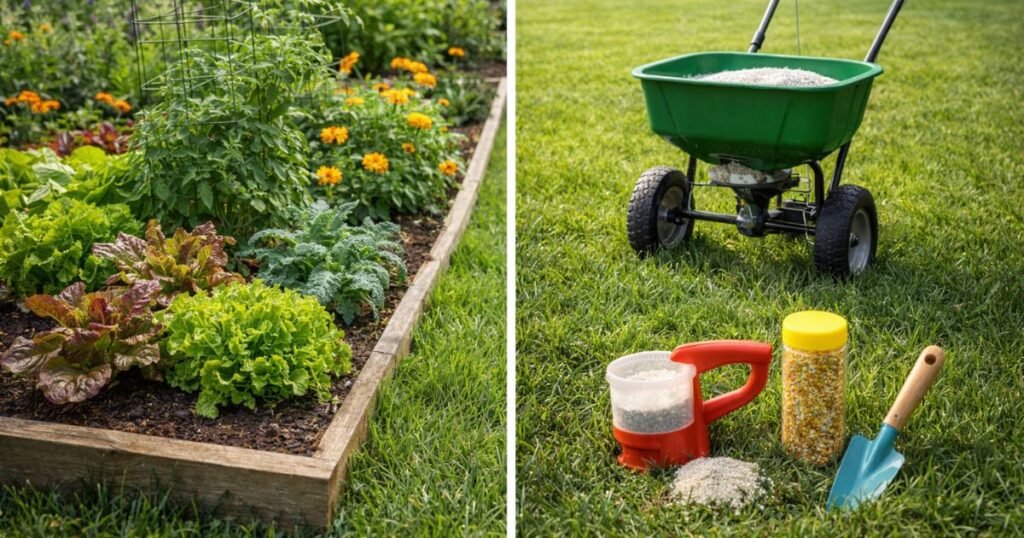
Do not use lawn fertilizer on garden plants.
They need different nutrient levels.
Weather Conditions to Avoid When Fertilizing
Weather affects results.
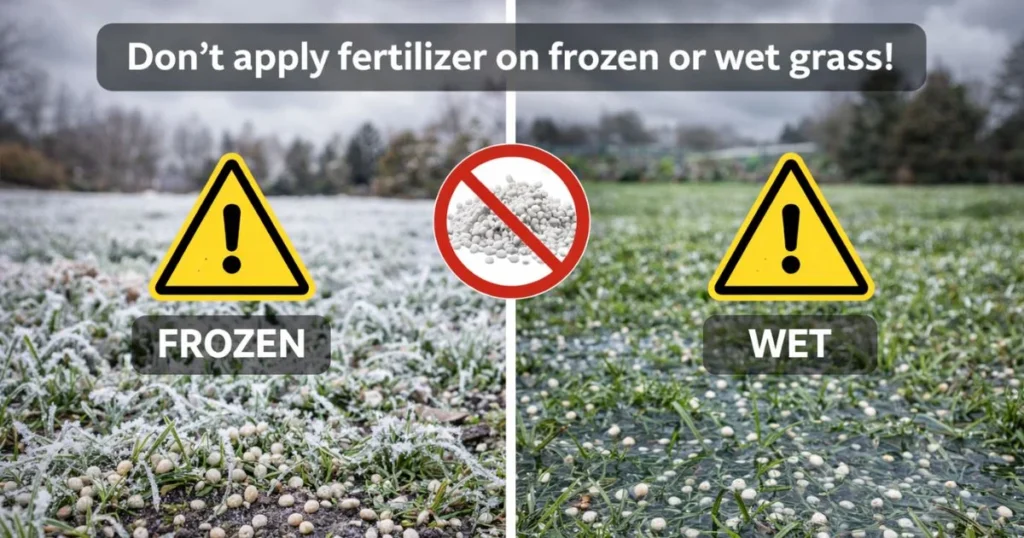
Do not fertilize:
- Before heavy rain
- On frozen soil
- On very wet ground
Rain can wash nutrients away.
Frozen soil blocks absorption.
Choose a dry, calm day.
The Different Types of Spring Fertilizer
Spring Fertilizer Quick Guide
| Fertilizer Type | Best Use | Avoid If |
|---|---|---|
| High nitrogen fertilizer | Boosting green color | Grass is dormant |
| Slow-release fertilizer | Long-term feeding | Fast results are needed |
| Starter fertilizer | New grass and seeding | No seeding is planned |
| Weed and feed | Controlling early weeds | You plan to seed grass |
If you are unsure whether liquid or granular fertilizer is better for your lawn or garden, see our detailed comparison of liquid vs granular fertilizer.
All-Season Fertilizer
Good for basic feeding.
Fertilizer for New Grass
Used when seeding or repairing bare spots.
Fertilizer for Special Events
Boosts color for short-term results.
Fertilizer That Prevents Weeds
Stops dandelions and crabgrass early.
Fertilizer That Controls Moss
Used where moss is common.
Choose based on your lawn issue.
Common Spring Fertilizer Mistakes
- Fertilizing frozen or cold soil
- Applying fertilizer before heavy rain
- Using pre-emergent while seeding
- Applying more fertilizer than recommended
Frequently Asked Questions
What fertilizer should I use in early spring?
Use light nitrogen once grass starts growing.
Can I fertilize before grass turns green?
No. Wait for active growth.
Should I fertilize if it is still cold?
No. Cold soil blocks nutrient use.
Can I fertilize and seed at the same time?
Yes, but only with a starter fertilizer.
Quick Spring Fertilizer Checklist
Before applying fertilizer, confirm:
- Grass is actively growing
- Soil is not frozen
- No heavy rain expected
- Correct fertilizer chosen
- Label directions followed
This prevents mistakes.
Conclusion
After years of caring for lawns and learning from mistakes, I know this much is true. The right spring fertilizer depends on growth, soil condition, and grass type, not guesswork. I have seen lawns improve simply by waiting for active growth and using the right amount. I have also seen damage caused by rushing or overfeeding. If you slow down, watch your lawn, and apply fertilizer at the right time, spring feeding becomes simple and effective. That approach leads to stronger roots, healthier grass, and fewer problems later in the season.