 Skip to content
Have you ever spent hours watering, mowing, and fertilizing your lawn… only to see it turn brown, thin, or patchy anyway? I know that frustration personally. Over the years, I’ve tested different grass types on my own lawn, only to realize the problem wasn’t how I cared for it—it was choosing the wrong grass for my climate. As a result, many homeowners face the same struggle, trying hard but seeing little improvement.
That’s where grass zones come in. They show which grasses grow best in your region, helping you avoid common mistakes. In this guide, I’ll share what I’ve learned through years of hands-on lawn care and research. Next, you’ll discover how to pick the right grass, match it to your environment, and finally grow a strong, green lawn that lasts all year.
- Grass Zones vs USDA Zones (Important to Know)
- Why Grass Zones Matter for Lawn Success
- How to Choose the Right Grass Seed for Your Region
- Grass Zones and Lawn Care in Different Locations
- Cool-Season, Warm-Season, and Transition Zone Grasses
- How Grass Handles Microclimates
- Important Considerations Before Buying Grass Seed
- The Turfgrass Zone
- Zone 1: The Coastal West
- Zone 2: The Western Transitional Zone
- Zone 3: The Arid Southwest
- Zone 4: The Intermountain West
- Zone 5: The Midwest
- Zone 6: New England and the Northeast
- Zone 7: The Eastern Transitional Zone
- Zone 8: The Central Southeast
- Zone 9: The Gulf Coast, Florida, and Hawaii
- Common Grass Types Used in Each Grass Zone
- Quick Examples by State
- How to Find Your Grass Zone
- Local Conditions That Can Change Your Grass Zone
- Grass Zone Maps and Resources
- How to Use These Maps Together
- Grass Seeding and Fertilization
- Seasonal Lawn Care by Grass Type
- If You Want a Quick Answer
- Frequently Asked Questions About Grass Zones
- Final Thoughts
- Key Takeaways
Grass Zones vs USDA Zones (Important to Know)
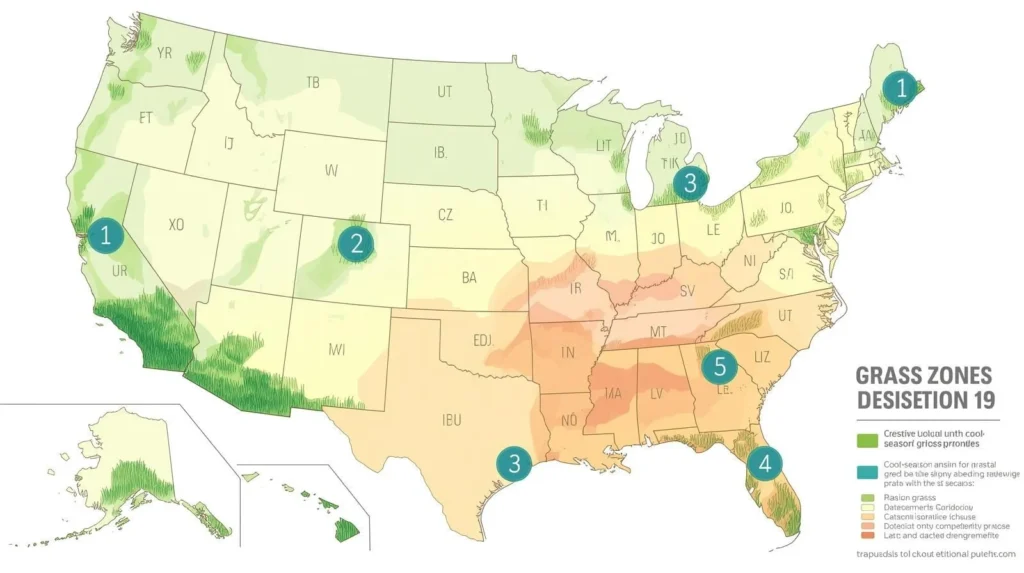
Grass zones are not the same as USDA plant hardiness zones.
This difference often confuses homeowners.
USDA zones focus only on winter cold.
Grass zones focus on how turf performs all year.
Some systems use numbers.
Others use letters or climate regions.
This is why grass zone maps sometimes look different.
Therefore, always check which system is being used before choosing grass seed.
Why Grass Zones Matter for Lawn Success
Grass zones reduce guesswork.
They explain why grass fails even with proper watering and care.
When grass does not match the zone:
- It may turn brown in summer
- It may die in winter
- It may thin out every year
Choosing grass based on zone saves time, money, and effort.
Choosing the correct grass zone is only one part of the process. To make the best decision, you also need to understand the different types of lawn grasses used in the USA and how each one performs in various climates.
How to Choose the Right Grass Seed for Your Region
Every grass has limits.
Some grasses prefer cold weather.
Others need heat to grow strong.
Grass zones group regions with similar climate conditions.
They help match grass to temperature, rainfall, and seasonal changes.
In addition, before choosing grass seed, consider:
- Average temperatures
- Winter cold
- Summer heat
- Rainfall
- Sun exposure
Matching grass to your zone improves lawn health long term.
Grass Zones and Lawn Care in Different Locations
The United States has many climate patterns.
Lawn care is not the same everywhere.
Northern lawns grow most in spring and fall.
Southern lawns grow most in summer.
Watering, mowing, and fertilizing must match the grass zone.
Ignoring zone differences leads to poor results.
Cool-Season, Warm-Season, and Transition Zone Grasses
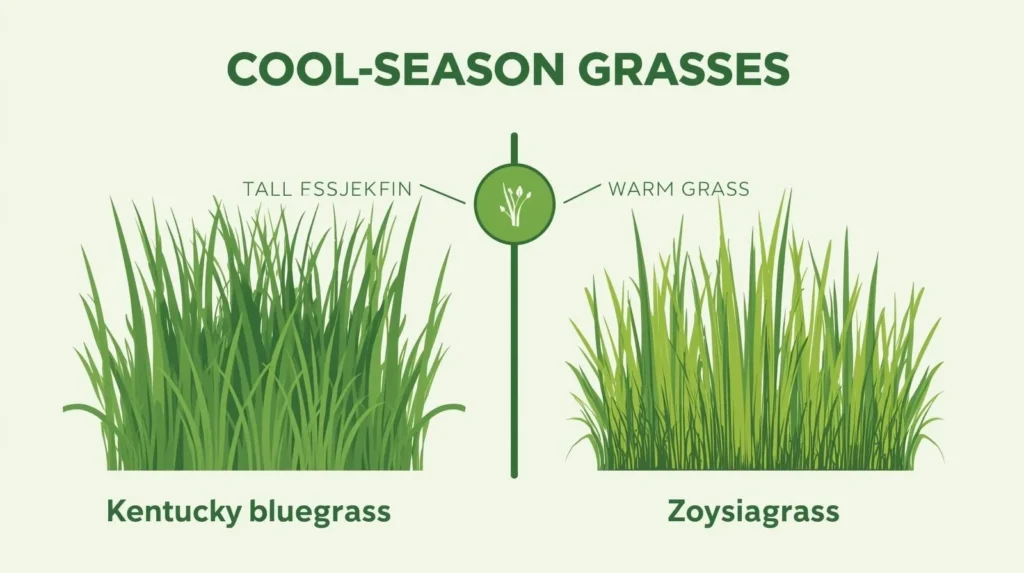
Grass zones are commonly grouped into three main types.
Cool-Season Grass Zones
Cool-season grasses grow best in spring and fall.
They handle cold winters and mild summers.
These grasses are common in northern states.
Warm-Season Grass Zones
Warm-season grasses grow best in summer.
They tolerate heat and go dormant in winter.
These grasses are common in southern states.
The Transition Zone
The transition zone sits between cool and warm regions.
Summers are hot.
Winters are cold.
This zone causes many lawn problems.
Grass selection here requires extra care.
Living in the transition zone does not mean lawn success is impossible.
The key is choosing grass that tolerates both heat and cold. Tall fescue and Zoysiagrass are often used because they adapt well to changing conditions. With proper care, lawns in this zone can stay healthy year after year.
How Grass Handles Microclimates
Even within the same grass zone, local conditions can change results. For example:
- High shade areas: Tall fescue and fine fescues handle shade better than Bermudagrass.
- Heavy clay soils: Taller, deeper-root grasses resist compaction and water logging.
- Urban heat islands: Warm-season grasses like Zoysiagrass stay greener longer in city centers.
Account for these factors when choosing seed blends and planning your lawn care routine.
Important Considerations Before Buying Grass Seed
Before choosing grass seed, ask these questions.
What do you want your lawn to look like?
Some grasses are soft and dense.
Others are coarse but durable.
How much time and money can you spend?
Some lawns need frequent care.
Others grow well with less work.
Know your growing conditions
Check:
- Sun or shade
- Soil type
- Drainage
- Foot traffic
How will you use your lawn?
Lawns with pets or kids need tougher grass.
Decorative lawns can use finer grass types.
The Turfgrass Zone
Turfgrass zones divide the country by climate and geography.
These zones focus on grass performance, not just temperature.
For example, they help explain why certain grasses succeed in one region but fail in another.
Zone 1: The Coastal West
This zone has mild temperatures and steady rainfall.
Cool-season grasses grow well here.
Good drainage is important.
Zone 2: The Western Transitional Zone
Temperatures vary by elevation.
Both grass types may work.
However, local conditions matter more than maps.
Zone 3: The Arid Southwest
This region is hot and dry.
Water is limited.
Warm-season grasses perform best.
Drought tolerance is critical.
Zone 4: The Intermountain West
Winters are cold.
Summers are warm.
Cold-tolerant grasses are common.
Zone 5: The Midwest
This zone has four seasons.
Winters are cold.
Summers are warm.
Cool-season grasses are widely used.
Zone 6: New England and the Northeast
Long winters are common.
Snow and frost affect lawns.
Spring and fall drive most growth.
Zone 7: The Eastern Transitional Zone
This is a classic transition zone.
Both heat and cold stress lawns.
Grass choice here makes a big difference.
Zone 8: The Central Southeast
Temperatures stay warm most of the year.
Humidity is high.
Warm-season grasses grow best.
Zone 9: The Gulf Coast, Florida, and Hawaii
This zone stays warm year-round.
Grass grows fast.
Frequent mowing is needed.
Common Grass Types Used in Each Grass Zone
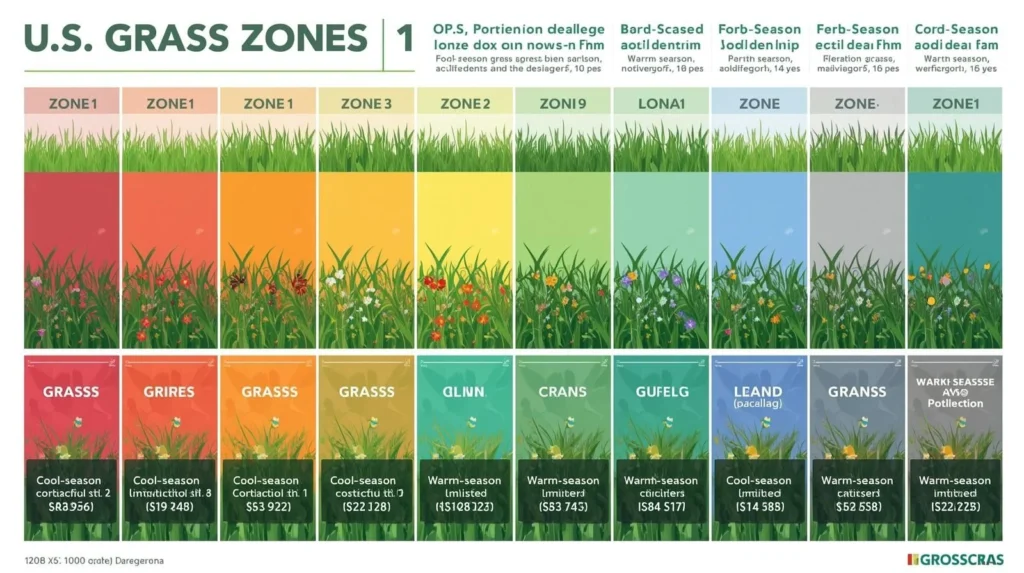
| Grass Zone | Cool-Season Grasses | Warm-Season Grasses | Notes |
|---|---|---|---|
| Zone 1 (Coastal West) | Kentucky bluegrass, Tall fescue | – | Needs good drainage |
| Zone 2 (Western Transitional) | Tall fescue | Bermudagrass, Zoysiagrass | Mixed options |
| Zone 3 (Arid Southwest) | – | Bermudagrass, Zoysiagrass | Drought tolerant |
| Zone 4 (Intermountain West) | Kentucky bluegrass, Tall fescue | – | Cold-hardy grasses |
| Zone 5 (Midwest) | Kentucky bluegrass, Perennial ryegrass | – | Seasonal variation |
| Zone 6 (Northeast) | Tall fescue, Perennial ryegrass | – | Snow and frost resistant |
| Zone 7 (Eastern Transitional) | Tall fescue | Zoysiagrass, Bermudagrass | Careful selection needed |
| Zone 8 (Central Southeast) | – | Bermudagrass, St. Augustinegrass | Heat tolerant |
| Zone 9 (Gulf Coast/Florida/Hawaii) | – | St. Augustinegrass, Zoysiagrass | Frequent mowing needed |
Different zones support different grass species.
Common Cool-Season Grass Types
- Kentucky bluegrass
- Tall fescue
- Perennial ryegrass
These grasses stay green longer in cooler climates.
Common Warm-Season Grass Types
- Bermudagrass
- Zoysiagrass
- St. Augustinegrass
- Centipedegrass
These grasses handle heat and humidity.
Grasses Often Used in the Transition Zone
- Tall fescue
- Zoysiagrass
- Bermudagrass with winter care
Final choice depends on sun, soil, and water.
Quick Examples by State
If you want a fast starting point, these examples can help.
- Georgia: Bermudagrass or Zoysiagrass work well in warm, humid conditions.
- Texas: Bermudagrass and St. Augustinegrass handle heat and long summers.
- Ohio: Kentucky bluegrass and Tall fescue perform well in cooler climates.
- California (Coastal areas): Tall fescue and Perennial ryegrass grow well with mild temperatures.
These examples give general guidance. However, local soil, sun, and water still matter.
How to Find Your Grass Zone
Finding your grass zone is simple.
- Check your ZIP code
- Look up your USDA hardiness zone
- Review heat exposure
- Match grass to both cold and heat tolerance
Although maps guide you, local conditions matter most.
Local Conditions That Can Change Your Grass Zone
Your lawn may not match the map exactly.
Shade lowers soil temperature.
Concrete increases heat.
Clay soil holds water.
Sandy soil drains quickly.
Always adjust grass choice for:
- Sun or shade
- Soil type
- Drainage
- Foot traffic
Grass Zone Maps and Resources
Grass zone maps help homeowners understand climate risk.
Two common tools are used.
USDA Plant Hardiness Map
Shows minimum winter temperatures.
Helps evaluate cold tolerance.
AHS Heat-Zone Map
Shows how many hot days a region has.
Helps measure summer stress.
Using both maps gives better results.
How to Use These Maps Together
To choose grass correctly, it helps to use both maps side by side.
- First, find your ZIP code on the USDA map to understand winter cold.
- Next, check the AHS Heat-Zone Map to see summer heat stress.
- Then, select grass that can handle both conditions.
Grass Seeding and Fertilization
Seasonal Lawn Care by Grass Type
| Season | Cool-Season Grass | Warm-Season Grass | Notes |
|---|---|---|---|
| Spring | Light fertilization, mowing | Light watering, mowing | Monitor growth carefully |
| Summer | Deep watering if heat stress | Frequent mowing | Watch drought stress |
| Fall | Seed & fertilize | Reduce watering | Ideal for planting cool-season grass |
| Winter | Avoid heavy traffic | Minimal care | Protect from frost |
Seasonal care changes by grass zone.
Fall Lawn Care
Best time to seed cool-season grass.
Winter Lawn Care
Growth slows.
Avoid heavy traffic.
Spring Lawn Care
Grass wakes up.
Light fertilization begins.
Summer Lawn Care
Heat stress increases.
Water deeply but less often.
If You Want a Quick Answer
Northern U.S.: Cool-season grasses
Southern U.S.: Warm-season grasses
Middle states: Transition zone grasses
Frequently Asked Questions About Grass Zones
What are grass zones?
They group regions by climate to guide grass selection.
Are grass zones the same as USDA zones?
No.
USDA zones measure cold only.
What grass grows best in the transition zone?
Tall fescue and zoysiagrass are common choices.
Why does grass fail even in the right zone?
Shade, soil, water, and traffic all matter.
Final Thoughts
From my experience, the key to a healthy lawn isn’t just watering or fertilizing—it’s understanding your grass zone. These recommendations are based on real lawn testing, regional climate data, and established turfgrass research. Consequently, when you choose grass that fits your climate and care for it according to seasonal needs, your lawn grows stronger and greener with far less effort. Homeowners who follow these principles consistently enjoy better results, save time and money, and avoid the frustration of failed lawns. By taking a few minutes to check your zone and select the right grass, you’re investing in a lawn that can thrive year after year, turning your yard into a space you’re truly proud of.
Key Takeaways
- Always check your grass zone before buying grass seed.
- Cool-season grasses grow best in northern regions; warm-season in southern regions.
- The transition zone requires careful selection due to heat and cold stress.
- Local factors like sun, shade, soil, and drainage can change how grass performs.
- Seasonal care should align with your grass type and zone for best results.