 Skip to content
Many homeowners look at their lawn and feel unsure. One season it looks thick and green. Another season it looks thin or stressed. Some areas spread fast, while others stay bare. You search online, see many grass names, and still feel confused. This usually leads to wrong choices. More watering. More mowing. Sometimes money spent in the wrong place.
I have seen this situation many times while observing and discussing lawn problems with homeowners. In most cases, the lawn was not failing. The grass type was simply misunderstood. Kentucky bluegrass causes this confusion often because it looks similar to other cool-season grasses. Once you know the key visual signs, the picture becomes clear very quickly. If you want a broader overview of lawn grasses and how different types behave across climates and uses, see our Grass Types guide.
- Why Correct Identification Matters
- Quick Visual Answer
- Kentucky Bluegrass at a Glance
- Leaf Blade and Tip Shape
- Leaf Vein Detail
- Color and Surface Look
- Simple Shine Test
- Growth Pattern and Density
- New Leaf Growth Pattern
- Seasonal Appearance
- What Is Normal for Kentucky Bluegrass
- Comparison With Similar Grasses
- How It Looks in Real Lawns
- Quick Identification Checklist
- Common Identification Mistakes
- Confirm Before You Act
- Final Thoughts
Why Correct Identification Matters
Many lawn problems start with guessing.
People treat grass without knowing what it is.
This often leads to wasted effort and poor results.
Kentucky bluegrass reacts differently than other grasses.
Knowing you have it helps explain spreading, thinning, and color changes.
Identification should always come before any lawn decision.
Quick Visual Answer
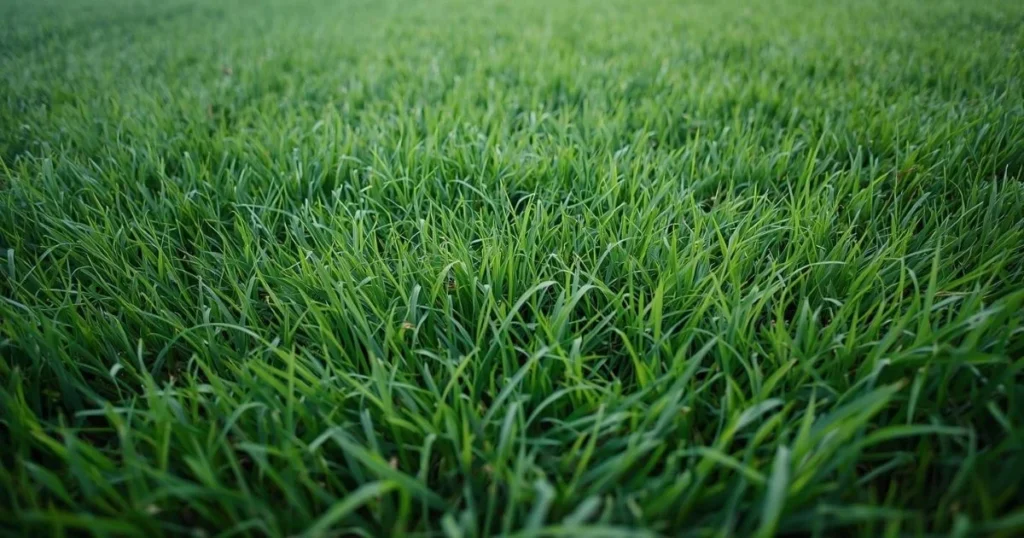
Kentucky bluegrass looks dense, smooth, and evenly green.
The blades are fine to medium in width.
The lawn feels soft under bare feet.
Kentucky Bluegrass at a Glance
- Color: rich green to blue-green
- Texture: fine to medium
- Growth style: thick and carpet-like
- Spread: underground stems
- Feel: soft when walked on
A healthy lawn looks smooth and uniform.
Leaf Blade and Tip Shape
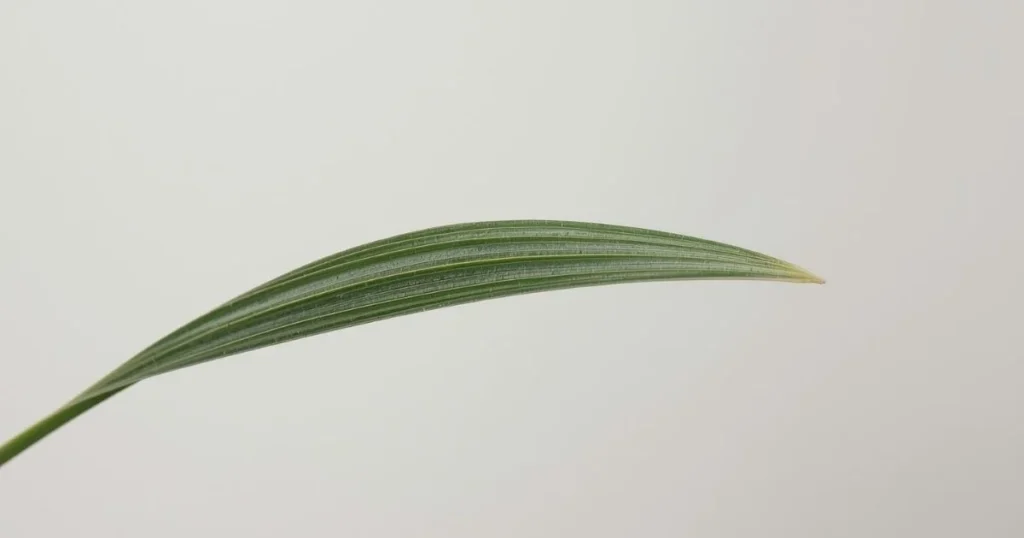
The leaf blades are narrow and flat.
They are not wide or rough.
The strongest visual clue is the leaf tip.
It looks like the front of a small boat.
The tip is rounded, not sharp.
If the tip is pointed, the grass is likely not Kentucky bluegrass.
Leaf Vein Detail
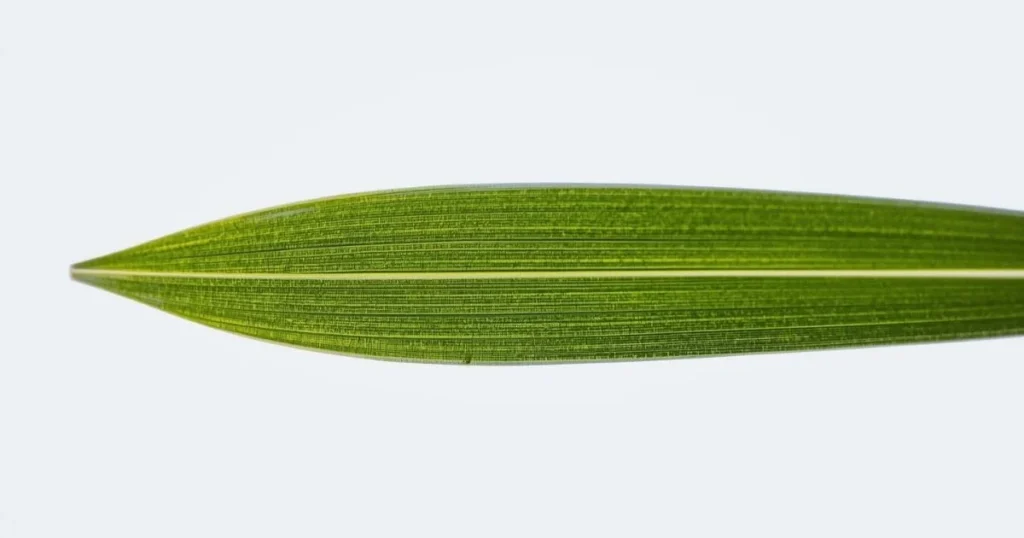
Kentucky bluegrass usually shows one clear vein running down the center of the blade.
You will not see many strong veins side by side.
This detail helps confirm identification.
Color and Surface Look
Kentucky bluegrass has a deep green color.
Some lawns show a blue tone in sunlight.
The leaf surface looks smooth.
It does not shine.
It feels soft rather than rough.
Simple Shine Test
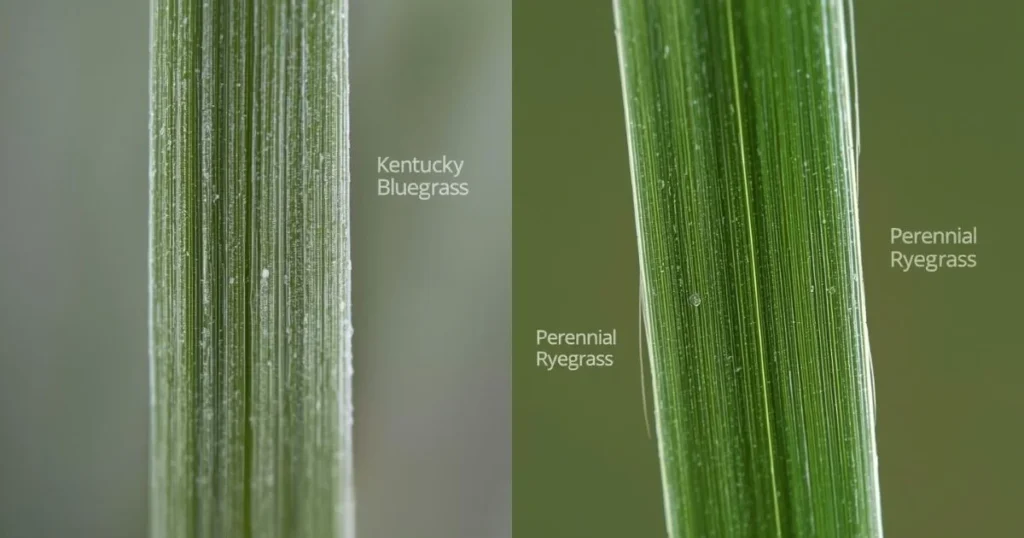
Turn a blade over and look at the underside.
Kentucky bluegrass looks dull, not glossy.
If the underside looks shiny, it is more likely ryegrass.
Growth Pattern and Density
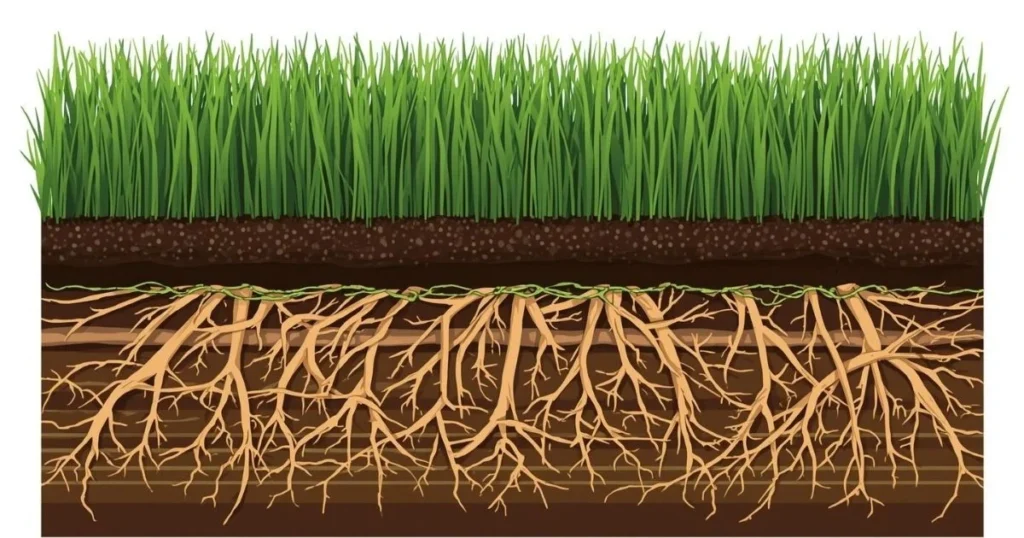
This grass spreads through underground stems.
These stems allow it to fill bare areas.
Because of this growth pattern, the lawn looks thick and even.
It does not grow in clumps.
New Leaf Growth Pattern
New leaves grow folded flat, not rolled.
This can be seen during active growth periods.
It is another useful sign during grass identification.
Seasonal Appearance
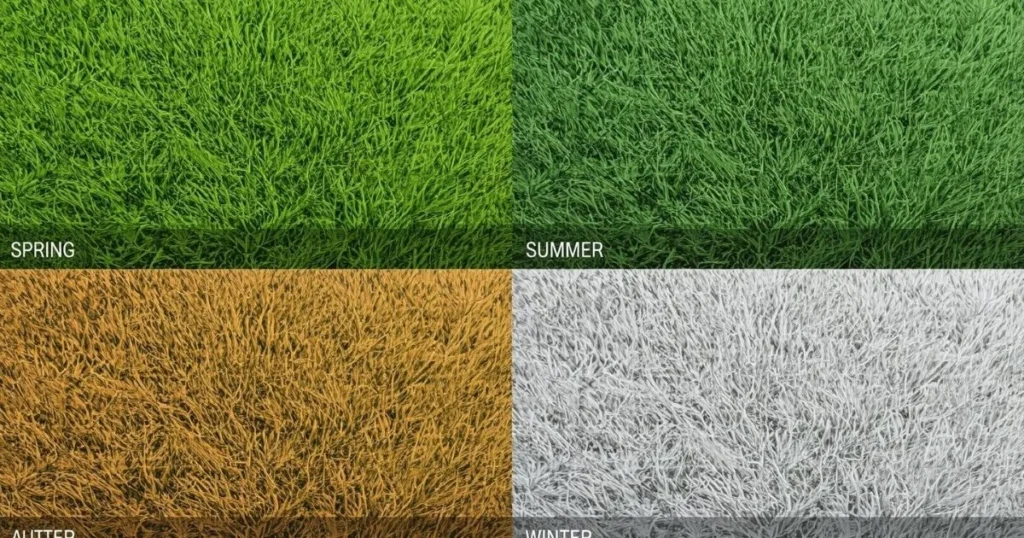
Spring
The lawn turns bright green.
Growth becomes fast and thick.
Summer
Color may fade during strong heat.
The lawn may thin if water is low.
Fall
Green color returns.
The lawn regains density.
Winter
In colder regions, the grass turns brown.
This is normal dormancy.
What Is Normal for Kentucky Bluegrass
Some changes are part of how this grass behaves.
Summer fading does not always mean damage.
Winter browning is normal in cold regions.
Slow growth during heat is expected.
Spreading in cool seasons is normal.
These signs often confuse homeowners, but they are typical for Kentucky bluegrass.
Comparison With Similar Grasses
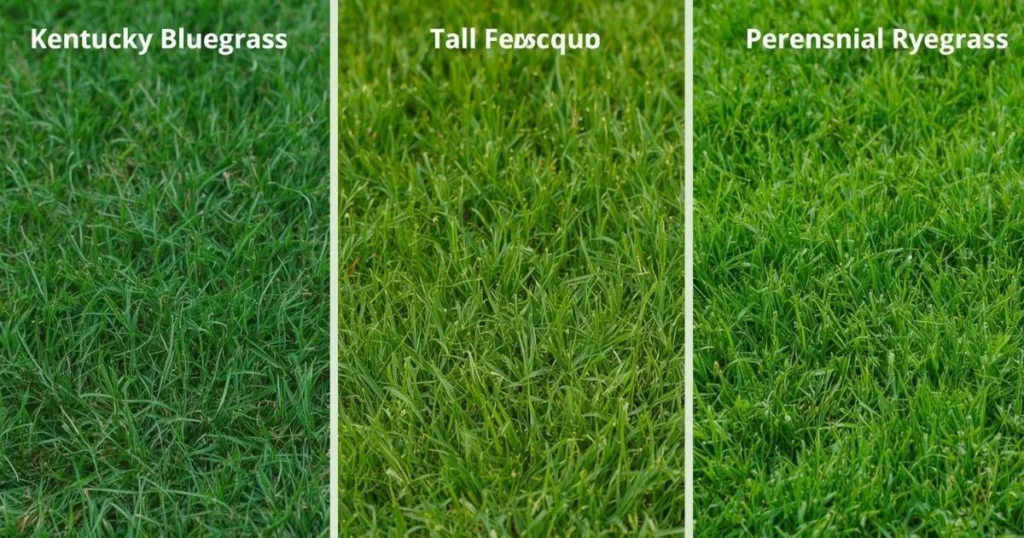
| Feature | Kentucky Bluegrass | Tall Fescue | Perennial Ryegrass |
|---|---|---|---|
| Blade width | Fine to medium | Wide | Fine |
| Tip shape | Boat-shaped | Pointed | Pointed |
| Texture | Soft | Rough | Smooth |
| Growth style | Spreads | Clumps | Clumps |
| Summer appearance | Fades | Stays greener | Stays greener |
| If you notice this | It likely means |
|---|---|
| Boat-shaped leaf tip | Kentucky bluegrass |
| Wide and rough blade | Tall fescue |
| Shiny leaf underside | Perennial ryegrass |
| Grass grows in clumps | Fescue or ryegrass |
How It Looks in Real Lawns
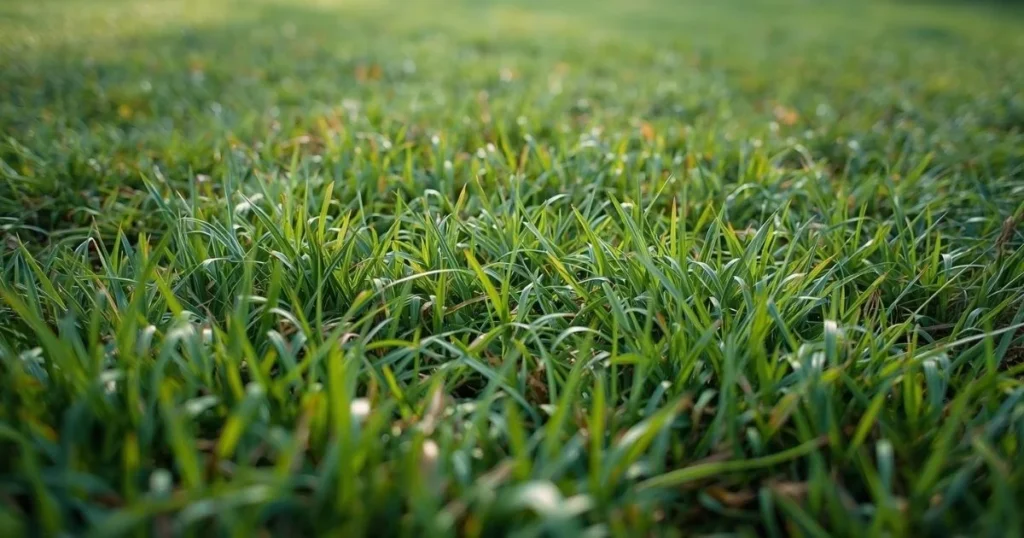
- Healthy lawns appear smooth and full
- Stressed lawns may look pale or thin
- New lawns slowly fill gaps over time
- Mixed lawns show blade texture differences
Kentucky bluegrass blends well but keeps a fine look.
Quick Identification Checklist
Check these signs:
- Soft feel underfoot
- Fine to medium blades
- Boat-shaped leaf tips
- One clear mid-vein
- Lawn spreads on its own
If most match, it is likely Kentucky bluegrass.
Common Identification Mistakes
- Judging by color alone
- Checking only during summer heat
- Ignoring leaf tip shape
- Confusing it with tall fescue
Always look closely at the blade.
- Kentucky bluegrass has fine to medium blades and a soft feel
- The leaf tip is rounded like a small boat
- It spreads and fills bare spots over time
- Color may fade during hot summer weather
- A dull leaf underside helps confirm identification
Confirm Before You Act
Some lawns contain more than one grass type.
Your lawn may show some signs of Kentucky bluegrass, but not all.
Before making changes, confirm what you have.
Use blade tips, texture, and growth pattern together.
Clear identification helps avoid wrong choices later.
Final Thoughts
After years of observing lawns and helping people identify what is growing in their yard, one thing stays true. Guessing creates frustration. Knowing brings confidence. Kentucky bluegrass shows clear visual clues through its leaf tip shape, fine texture, and spreading growth. I have seen how a close look at one blade can answer weeks of doubt. When you understand what your lawn is made of, every decision you make becomes easier and more effective.