
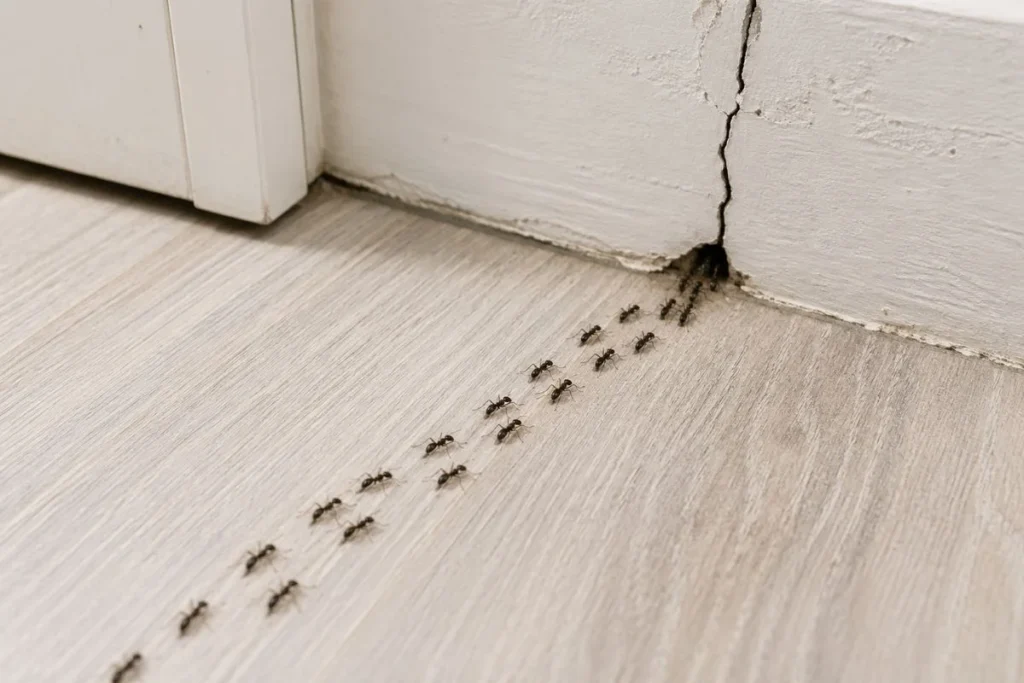
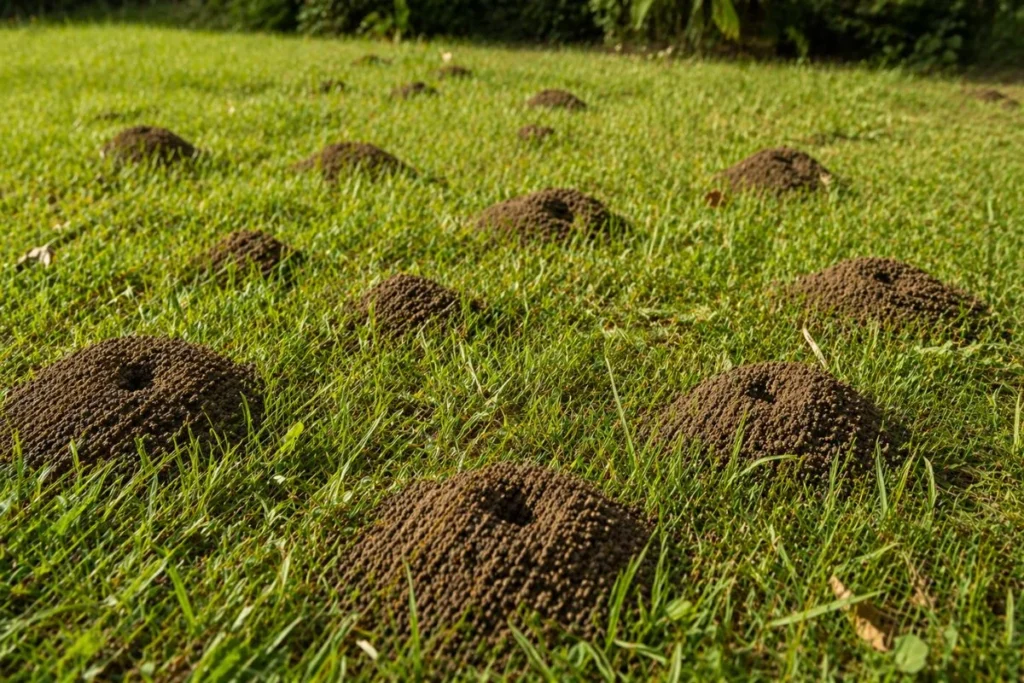
Ants in your lawn and house can turn into a daily headache very fast. You may first notice small ant hills in your grass, and it does not seem serious. But soon, ants start showing up inside your home, on the floor, in the kitchen, or near food. You clean them or spray them, but they keep coming back again and again.
Thank you for reading this post, don't forget to subscribe!From real lawn care and pest control experience, this usually happens because people treat only the ants they see inside. The real problem is often outside in the lawn, where the colony is still active. As long as that colony is alive, ants will keep entering your home. This guide will help you understand the cause, how ants move from lawn to house, and the exact steps to remove them fully.
- Quick Answer: How to Get Rid of Ants in Lawn and House Fast
- Why Are There Ants in Your Lawn and House?
- How Ants Move From Lawn to House
- Common Types of Ants in Lawn and House (USA)
- Lawn Conditions That Attract Ants
- Why Ants Protect Aphids in Your Lawn
- Step-by-Step System to Get Rid of Ants in Lawn and House
- Simple Ant Control System
- How Long Does It Take to Get Rid of Ants?
- What to Do Based on Infestation Level
- Choose the Right Method for Your Situation
- Best Ways to Get Rid of Ants in Your Lawn
- Lawn Treatment Tips for Better Results
- How to Get Rid of Ants Inside Your House
- Natural vs Chemical Ant Control
- Natural vs Chemical Ant Control (Simple Comparison)
- Common Mistakes to Avoid
- Avoid These Common Mistakes
- How to Prevent Ants From Coming Back
- When to Call a Professional
- Do Ants Damage Your Lawn or Home?
- Frequently Asked Questions
- Final Thoughts
Quick Answer: How to Get Rid of Ants in Lawn and House Fast
- Find ant nests in your lawn
- Use ant bait to kill the whole colony
- Seal cracks and entry points into your home
- Keep your lawn healthy to prevent ants from coming back
This simple process works because ants in your house usually come from a colony in your yard.
Why Are There Ants in Your Lawn and House?
Ants live in soil. Your lawn is a perfect place for them to build nests.
Common reasons include:
- Dry, loose soil makes digging easy
- Moisture helps ants survive
- Bare patches give space for nests
- Food sources like crumbs or pet food
Healthy lawns can reduce nesting spots, but ants can still exist if conditions are right.
How Ants Move From Lawn to House
Ants do not appear inside randomly.
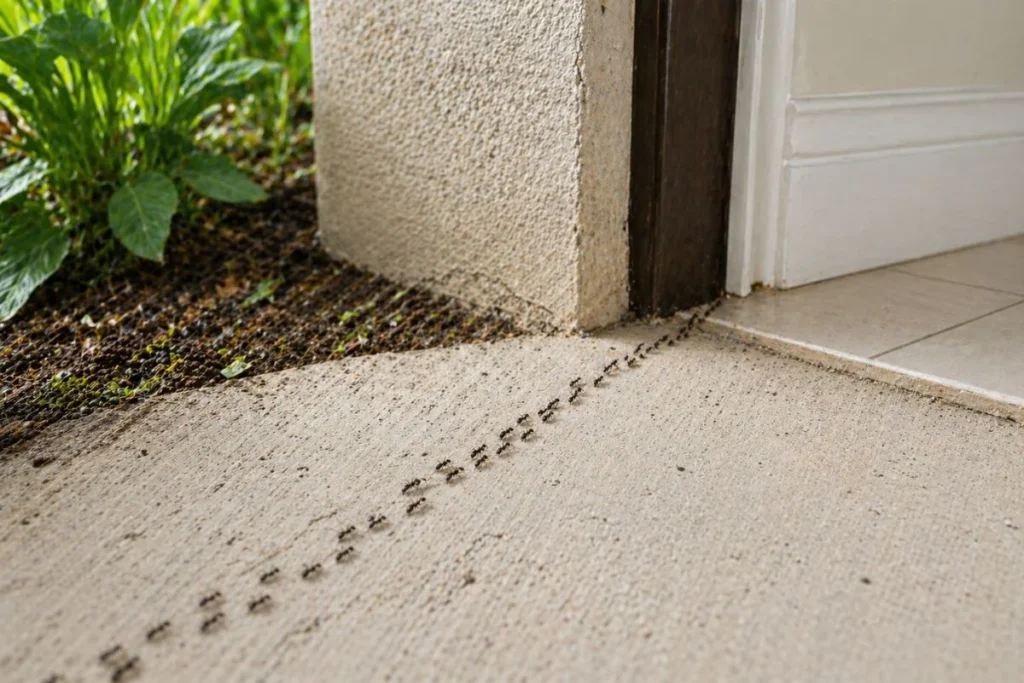
They follow a clear path:
- Build nests in your lawn
- Send worker ants to find food
- Create scent trails
- Enter through small gaps
Common entry points:
- cracks in walls
- gaps around doors
- pipes and vents
One colony can feed both outside and inside your home. If you only kill ants indoors, the colony outside will keep sending more.
Common Types of Ants in Lawn and House (USA)
Different ants behave differently. Here are the most common ones:
- Fire ants – build mounds and can sting
- Carpenter ants – can damage wood
- Pavement ants – live in cracks and sidewalks
- Odorous house ants – common indoor pests
Lawn Conditions That Attract Ants
Some lawn problems make ant infestations worse.
Watch for these:
- thin or weak grass
- bare spots
- thatch buildup
- very dry or uneven soil moisture
- presence of other pests
If your lawn has other pest problems, check for signs of grubs on lawn as they can weaken grass and create conditions where ants are more likely to build nests.
Knowing when to treat for grubs can help prevent lawn damage that attracts ants and other pests.
Why Ants Protect Aphids in Your Lawn
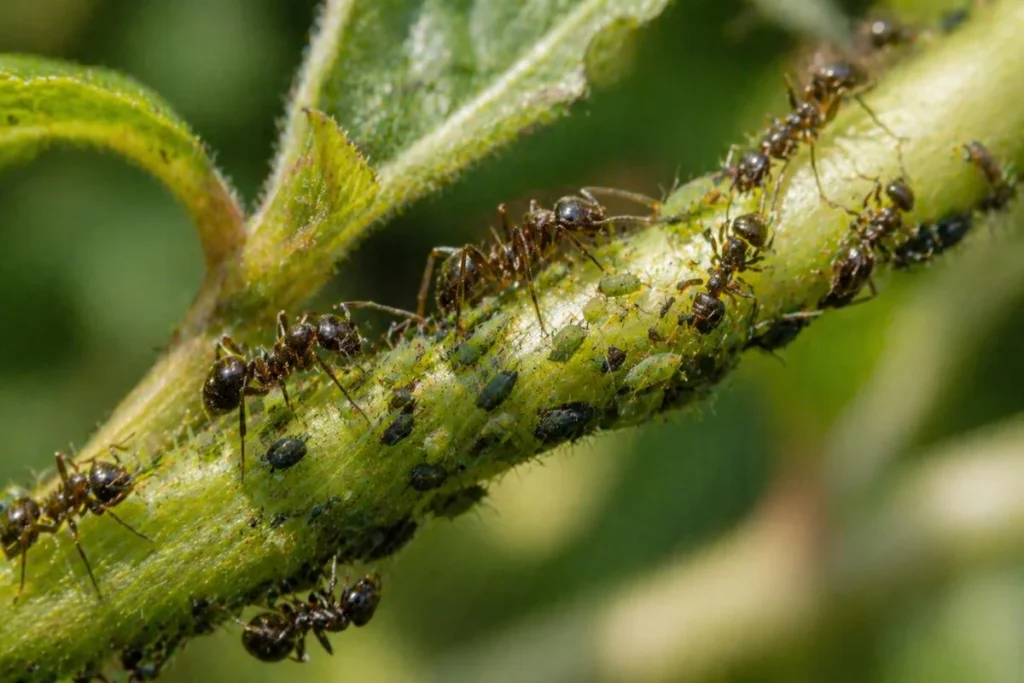
Ants and aphids often live together.
Aphids are small insects that suck sap from plants. They produce a sweet liquid called honeydew. Ants feed on this liquid.
Because of this, ants protect aphids from other insects.
This creates a bigger problem:
- more aphids damage your lawn and plants
- more ants stay in your yard
If you see both ants and plant damage, aphids may be the reason.
Step-by-Step System to Get Rid of Ants in Lawn and House
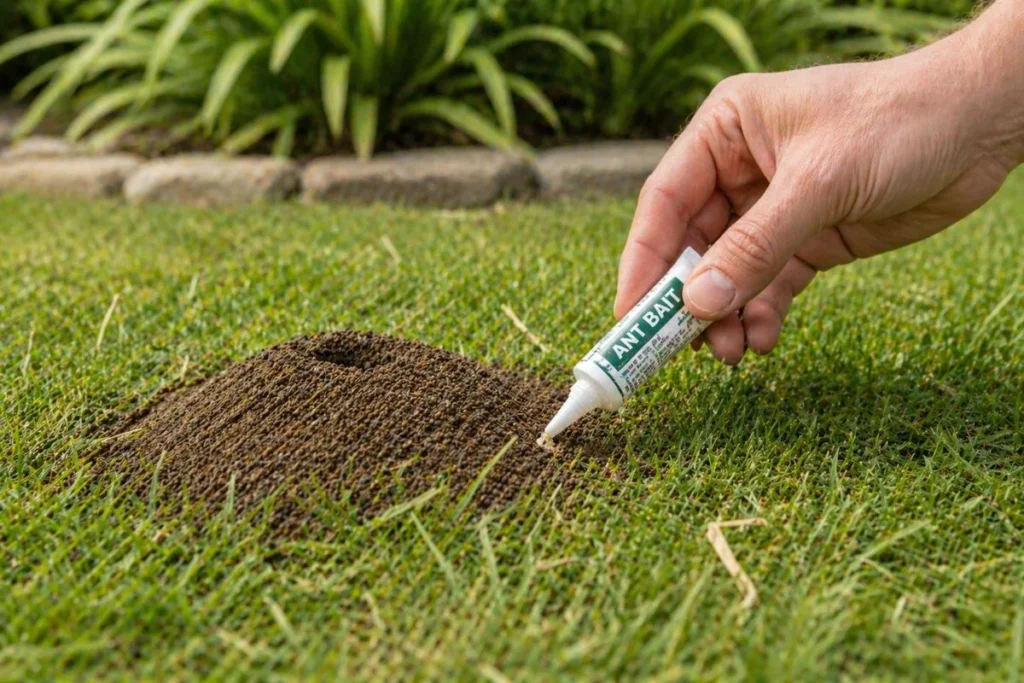
Do not just spray and hope it works. Follow a simple system.
Step 1: Find the Source
Look for:
- ant hills in lawn
- trails along edges
- cracks near foundation
Ant nests can go deep into the soil, often several feet below the surface.
Step 2: Kill the Colony
Use ant bait, not just spray.
- worker ants carry bait back to the nest
- the bait reaches the queen
- once the queen dies, the colony cannot survive
Killing only visible ants will not solve the problem.
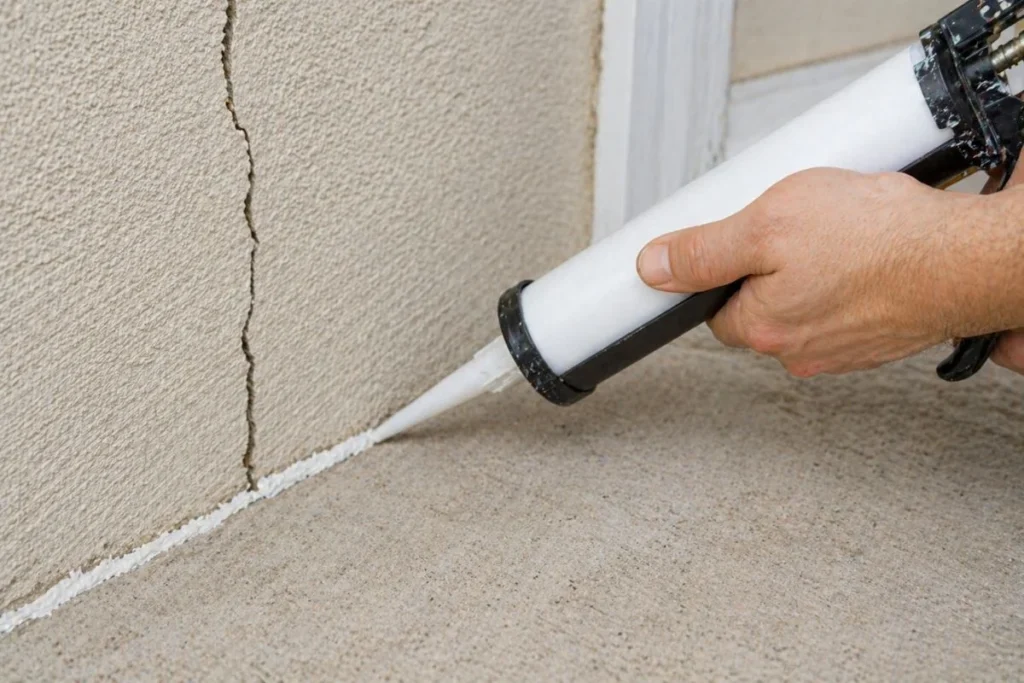
Step 3: Stop Entry Into House
- seal cracks and gaps
- clean food areas
- remove scent trails
If you skip any step, ants will return.
Simple Ant Control System
Problem Flow:
Lawn Nest → Worker Ants → Enter House → Find Food → Colony Grows
Solution Flow:
Find Nest → Use Bait → Kill Queen → Seal Entry Points → Prevent Return
This is why treating both your lawn and house is important.
How Long Does It Take to Get Rid of Ants?
Ant control takes time.
- Day 1: apply bait
- Day 2–3: ant activity may increase
- Day 5–7: fewer ants are seen
- Day 7–14: colony declines
Do not disturb ants during this time. Let them carry bait back to the nest.
What to Do Based on Infestation Level
Not all ant problems are the same.
Small infestation
- use natural methods
- clean and remove food sources
Moderate infestation
- use ant bait near trails
- treat visible ant hills
Severe infestation
- use bait and granular treatment
- treat the entire lawn
- seal all entry points
Choose the Right Method for Your Situation
- Few ants → use natural methods and clean the area
- Moderate problem → use ant bait near trails and nests
- Severe infestation → use bait and granular lawn treatment
- Ants inside house → use bait and seal entry points
Choosing the right method saves time and gives better results.
Best Ways to Get Rid of Ants in Your Lawn
1. Ant Baits
- best long-term solution
- targets the entire colony
2. Granular Treatments
- spread across lawn
- water after applying
- works for large areas
3. Sprays
- fast results
- do not remove the colony
Best approach: combine bait and granules.
Lawn Treatment Tips for Better Results
- apply treatments in early morning or evening
- water the lawn after using granules
- avoid mowing right after treatment
- do not disturb ant mounds before using bait
How to Get Rid of Ants Inside Your House
- place bait near ant trails
- do not kill ants immediately
- clean surfaces to remove scent trails
- seal entry points
Focus on stopping new ants from entering.
Natural vs Chemical Ant Control
Natural methods
- vinegar
- diatomaceous earth
- essential oils
Best for small problems.
Chemical methods
- ant bait
- insecticides
- granules
Best for larger infestations.
Natural vs Chemical Ant Control (Simple Comparison)
| Method | Works Fast | Kills Colony | Safe for Pets | Best For |
|---|---|---|---|---|
| Vinegar / natural sprays | Yes | No | Yes | Small problems |
| Diatomaceous earth | Medium | No | Yes | Light infestations |
| Ant bait | Slow | Yes | Use with care | Long-term control |
| Granules / insecticides | Fast | Sometimes | Use with care | Large infestations |
Choose your method based on how serious your ant problem is.
Common Mistakes to Avoid
- killing only visible ants
- ignoring the nest in your lawn
- using spray instead of bait
- not sealing entry points
- poor lawn care
Avoid These Common Mistakes
- Killing only the ants you can see
- Ignoring the nest in your lawn
- Using sprays instead of bait for long-term control
- Not sealing entry points into your home
- Poor lawn care that attracts ants
Fixing these mistakes can solve the problem faster.
How to Prevent Ants From Coming Back
You may also need proper chinch bugs treatment if your lawn shows signs of thinning or stress, as weak grass can attract ants and other pests.
Lawn care
- keep grass thick
- fix bare patches
- manage watering
Home protection
- seal cracks
- keep kitchen clean
- store food properly
Moisture control
- fix leaks
- remove standing water
When to Call a Professional
Consider help if:
- ants keep returning
- nests are inside walls
- infestation is large
- fire ants are present
Do Ants Damage Your Lawn or Home?
Most ants are harmless, but they can cause problems.
- mounds affect lawn surface
- fire ants can sting
- carpenter ants can damage wood
Frequently Asked Questions
Why are ants in my lawn?
Ants live in soil and build nests where digging is easy and food is available.
Do ants damage grass?
Most ants do not harm grass directly, but their mounds can affect growth.
What is the fastest way to get rid of ants?
Sprays work fast, but bait removes the whole colony.
Will vinegar kill ants permanently?
No. It repels ants but does not kill the colony.
Final Thoughts
Ants in lawn and house are usually part of the same problem, and treating only one area will not fix it for long. From practical experience, the most effective method is to find the nest in your lawn, use bait to kill the colony and queen, and then seal entry points into your home while improving lawn conditions. This approach works better than quick fixes and helps stop ants from coming back. If the problem still continues, it often means the colony was not fully removed or there are multiple nests, and a deeper treatment may be needed.