
If your lawn has brown patches, yellow grass, or thin areas, it can feel frustrating. You water it, mow it, and still see no improvement. Many homeowners face this same problem. The hard part is not fixing the lawn, it is knowing what is wrong in the first place. One issue can look like another, and guessing often leads to wasting time and effort.
Thank you for reading this post, don't forget to subscribe!From real lawn care experience, most problems come down to a few common causes like watering mistakes, poor soil, pests, or disease. I have seen many lawns improve just by fixing the root cause instead of trying random solutions. In this guide, you will learn how to identify lawn problems step by step, fix them the right way, and keep your lawn healthy over time.
- Quick Takeaways
- Quick Lawn Problem Finder
- Lawn Problem Diagnosis Flow
- What Should You Do First?
- Common Lawn Problems and Solutions
- Lawn Problem Comparison
- Seasonal Lawn Problems
- 5-Minute Lawn Check Routine
- Step-by-Step Lawn Repair Method
- Best Time to Treat Lawn Problems
- Tools That Make Lawn Repair Easier
- How to Prevent Lawn Problems
- Advanced Lawn Care Tips
- Common Lawn Care Mistakes
- Most Common Lawn Care Mistake
- Helpful Guides
- FAQs About Lawn Problems & Solutions
- Conclusion
Quick Takeaways
- Most lawn problems come from water, soil, pests, or disease
- Always confirm the problem before applying a fix
- Brown patches are not always caused by drought, check for fungus or grubs
- Water deeply 2–3 times per week instead of daily
- A healthy lawn prevents most common issues
Quick Lawn Problem Finder
| Lawn Problem | Most Likely Cause | How to Confirm | Best Fix |
|---|---|---|---|
| Brown patches | Fungus, drought, or grubs | Circular patches or grass lifts easily | Use fungicide, water deeply, or apply pest control |
| Yellow grass | Low nitrogen or uneven fertilizer | Pale color and slow growth | Apply lawn fertilizer evenly |
| Thin grass | Poor soil or heavy traffic | Weak growth in busy areas | Overseed and fertilize |
| Dead spots | Pets or pests | Green edges or loose grass | Reseed and treat the cause |
| Weeds | Weak or thin lawn | Different plants visible | Use weed control and improve lawn health |
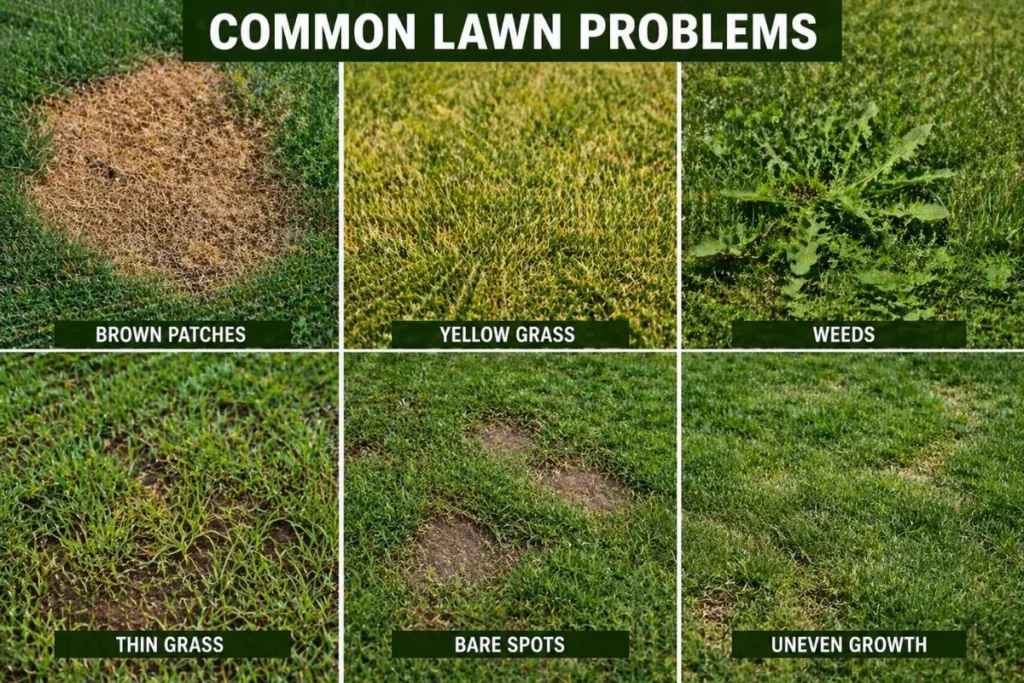
Lawn Problem Diagnosis Flow
Use this simple guide to identify your lawn problem fast:
- If grass feels dry and crispy, it is likely underwatering
- If soil feels soft and soggy, it is overwatering
- If patches are circular and spreading, it is likely lawn fungus
- If grass lifts up easily like a carpet, you may have grubs
- If spots have green edges and brown center, it is pet damage
- If grass is thin in high traffic areas, it is wear and tear
This quick check helps you choose the right solution.
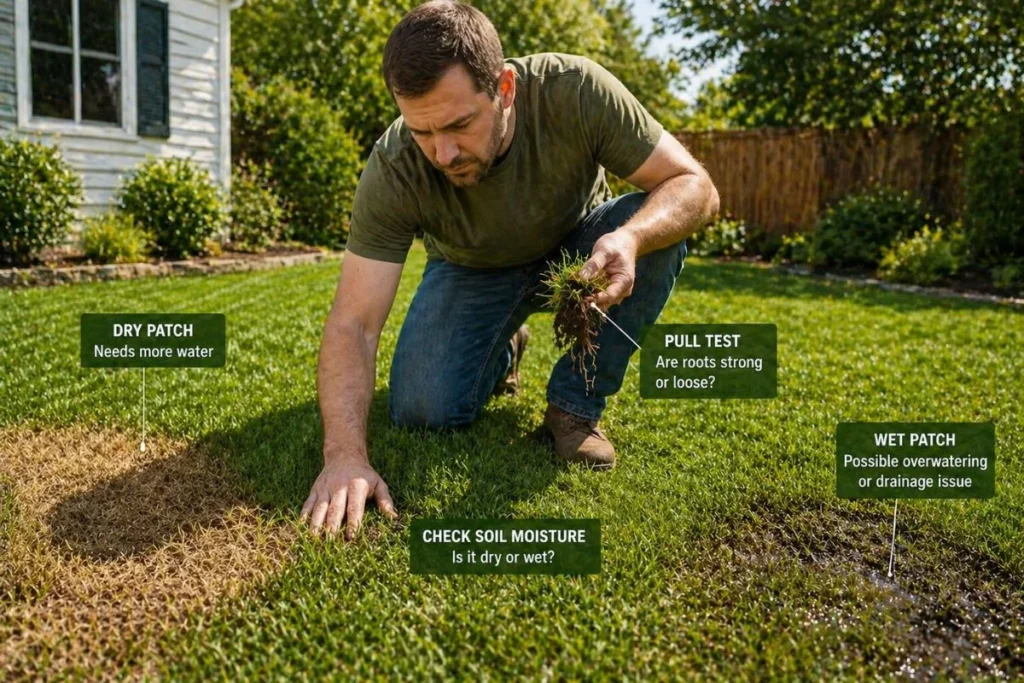
What Should You Do First?
If your lawn looks unhealthy, follow this order:
- Check soil moisture, is it dry or too wet
- Look at the pattern, patchy, circular, or random
- Do a pull test, are roots strong or loose
- Identify the cause before using any treatment
Taking these steps first will help you avoid mistakes and fix the problem faster.
Common Lawn Problems and Solutions
Let’s break down the most common lawn problems and how to fix them.
My Grass is Thin
Thin grass makes your lawn look weak.
Causes:
- Too much foot traffic
- Poor soil
- Lack of nutrients
How to confirm:
- Grass is thin in walkways or play areas
- Soil looks hard or dry
Solution:
- Overseed your lawn
- Apply lawn fertilizer
- Water deeply 2–3 times per week
My Lawn Has Bare Spots
Bare spots are empty patches with no grass.
Causes:
- Heavy use
- Poor soil
- Pet damage
How to confirm:
- No grass growth in small areas
- Soil exposed and dry
Solution:
- Loosen the soil with a rake
- Add grass seed
- Water daily until new grass grows
Brown Patches in Lawn
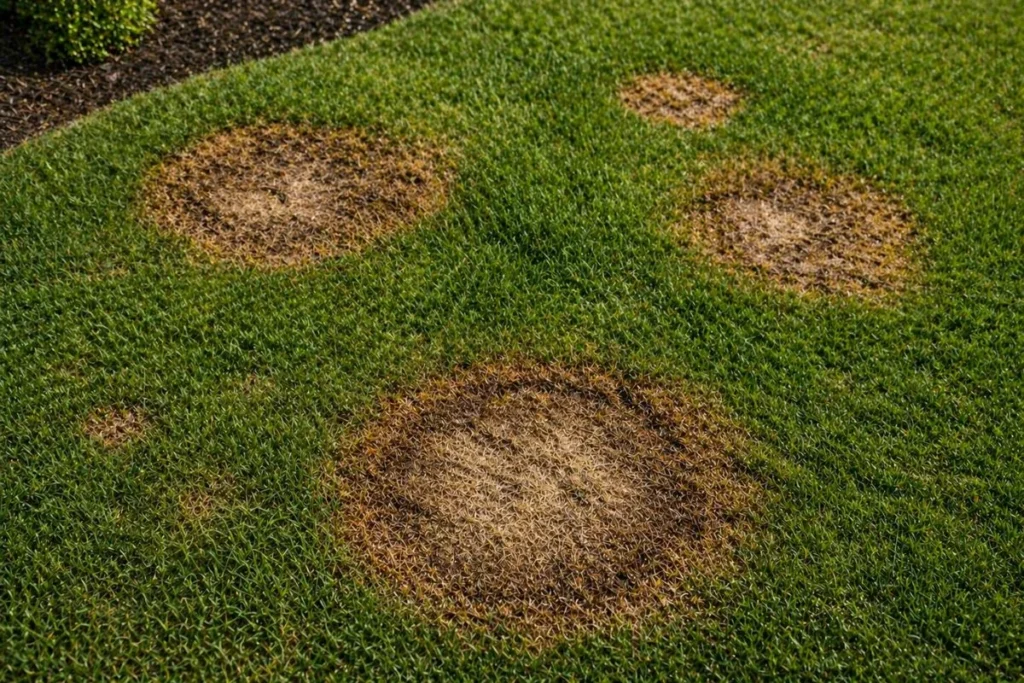
Brown patches are very common lawn problems.
Causes:
- Fungus
- Drought
- Dog urine
- Grubs
How to confirm:
- Pull grass, if it comes out easily it may be grubs
- Circular patches may be fungus
- Dry soil points to lack of water
Solution:
- Fungus, apply fungicide
- Drought, water deeply
- Grubs, use pest control
- Repair damaged areas
I Think There Are Grubs in My Lawn
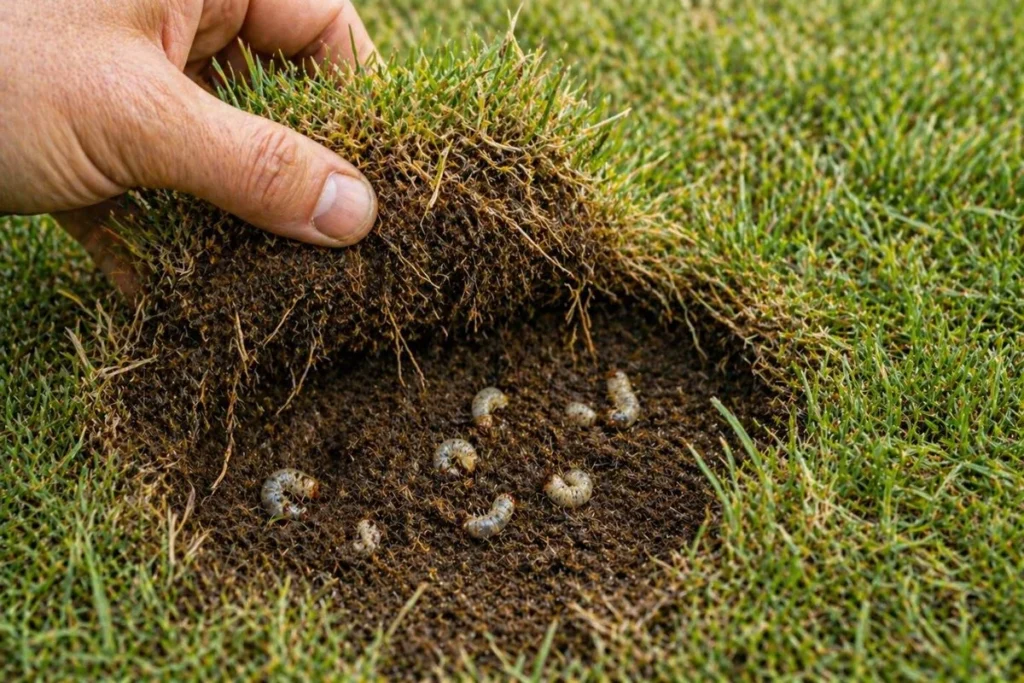
Grubs eat grass roots and cause dead patches.
Signs:
- Grass lifts like carpet
- Animals digging in lawn
How to confirm:
- Dig a small area and check for white grubs
Solution:
- Apply grub control treatment
- Best time is late spring or early summer
The Weeds Are Out of Control
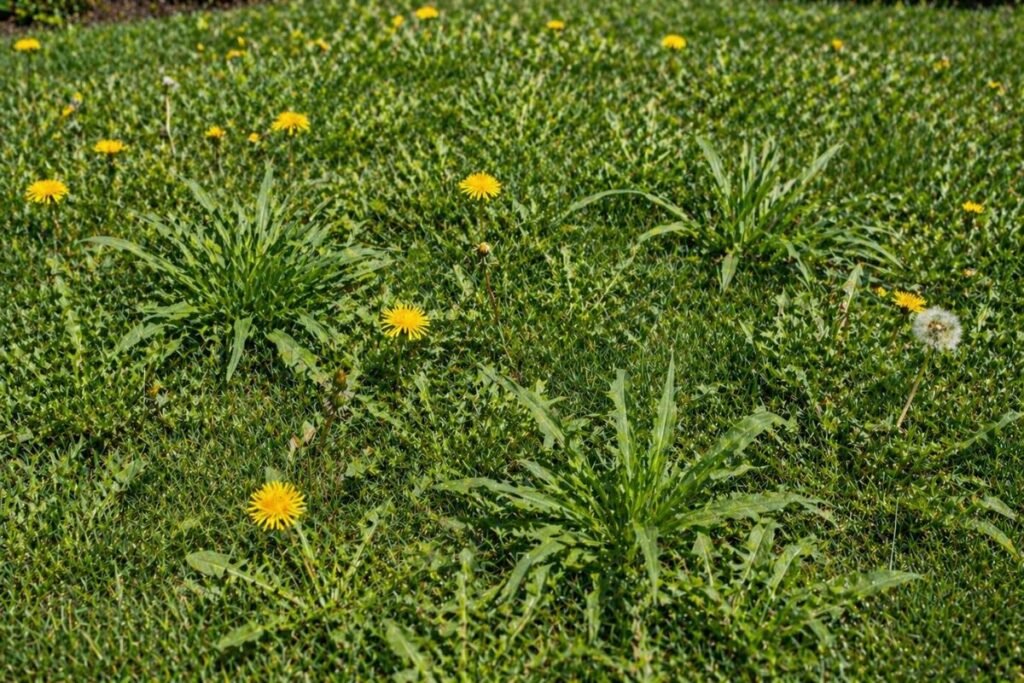
Weeds take over weak lawns.
Common weeds:
- Dandelions
- Crabgrass
- Clover
How to confirm:
- Different plants growing among grass
Solution:
- Use weed control
- Keep lawn thick and healthy
- Mow at correct height
I’ve Got Crabgrass in My Lawn
Crabgrass spreads fast and ruins lawn look.
How to confirm:
- Wide and flat blades growing quickly
Solution:
- Use crabgrass preventer in early spring
- Maintain thick lawn
Yellow Grass in Lawn
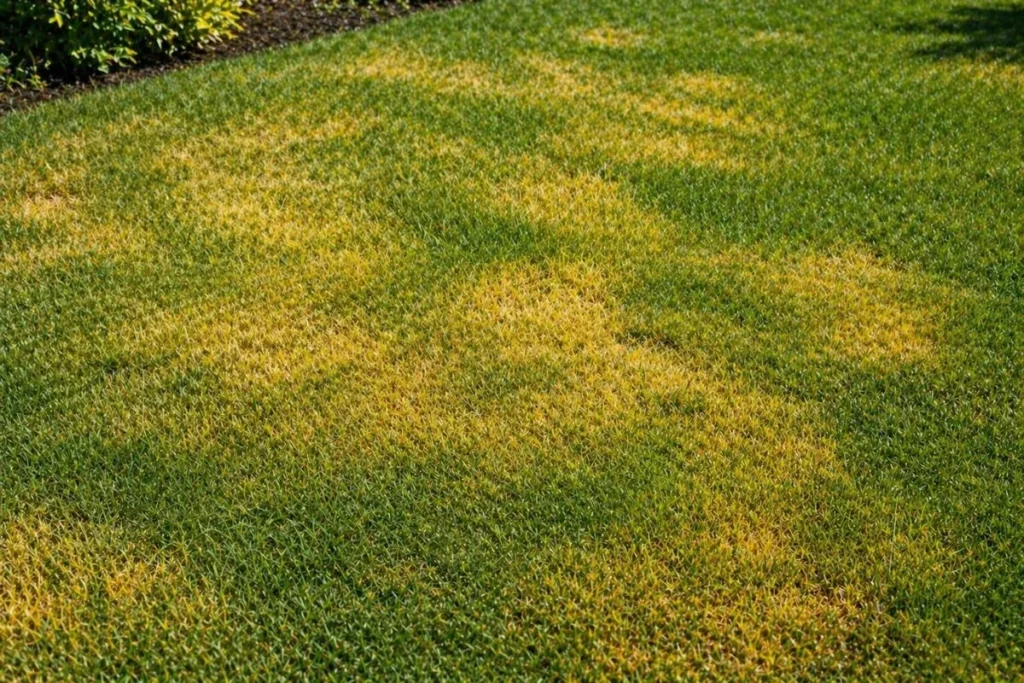
Yellow grass shows your lawn is stressed.
Causes:
- Low nitrogen
- Uneven fertilizer use
- Overwatering
How to confirm:
- Grass looks pale or uneven in color
Solution:
- Apply lawn fertilizer evenly
- Fix watering schedule
Uneven Growth in Lawn
Some areas grow fast while others grow slow.
Causes:
- Shade and sunlight difference
- Poor drainage
How to confirm:
- One side thick and the other side thin
Solution:
- Improve sunlight
- Fix drainage
- Use the right grass type
Pet Damage
Pets can damage grass.
Causes:
- Urine spots
- Digging
How to confirm:
- Brown center with green edges
Solution:
- Water affected area
- Reseed patches
- Train pets
Lawn Fungus and Rust
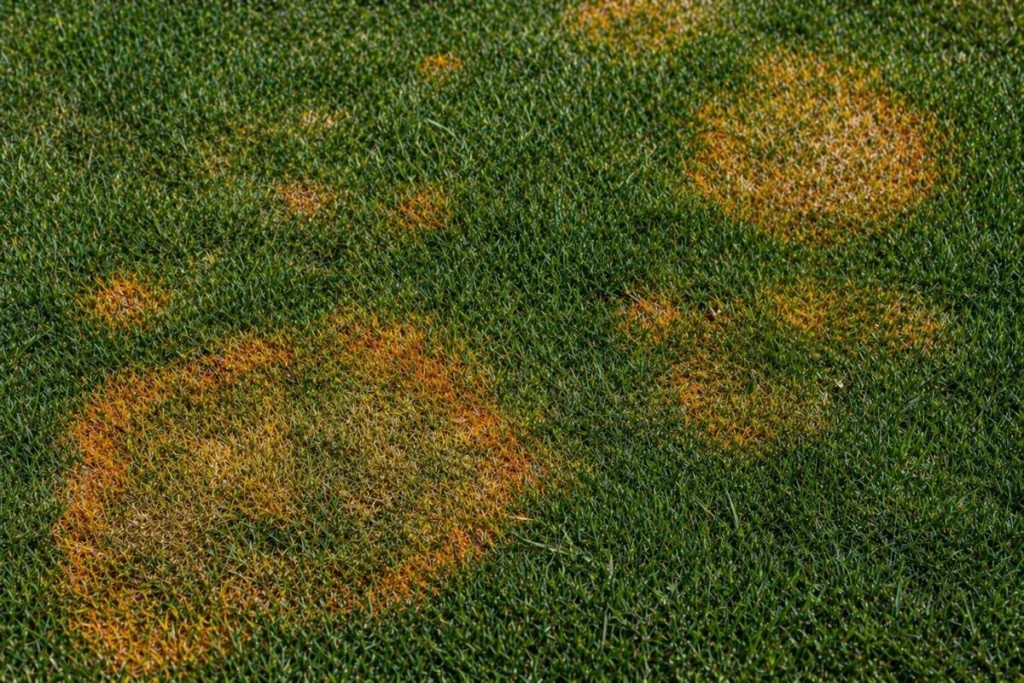
Fungus causes patches and discoloration.
Signs:
- Orange or yellow powder
- Irregular patches
How to confirm:
- Powder sticks to shoes or hands
Solution:
- Avoid overwatering
- Improve airflow
- Apply fungicide
Dry Spots in Lawn
Dry spots are areas with no moisture.
Causes:
- Poor sprinkler coverage
- Compacted soil
How to confirm:
- Soil is dry even after watering
Solution:
- Adjust sprinkler
- Aerate soil
Thatch Buildup
Thatch is a layer of dead grass.
Problem:
- Blocks water and nutrients
How to confirm:
- Lawn feels spongy
Solution:
- Dethatch lawn
- Aerate soil
Lawn Problem Comparison
Fungus vs Drought:
- Fungus shows circular patches
- Drought makes grass dry and crispy
Overwatering vs Underwatering:
- Overwatering creates soft soil
- Underwatering makes soil hard
Dead Grass vs Dormant Grass:
- Dead grass does not return
- Dormant grass grows back
Seasonal Lawn Problems
Spring:
- Thin grass
- Weed growth
Summer:
- Heat stress
- Brown patches
Fall:
- Fungus
- Lawn recovery
5-Minute Lawn Check Routine
You can spot most lawn problems in just a few minutes:
- Walk across your lawn slowly
- Look for color changes or patches
- Touch the soil to check moisture
- Pull a small section of grass
- Check for insects or unusual spots
Do this once a week to catch problems early.
Step-by-Step Lawn Repair Method
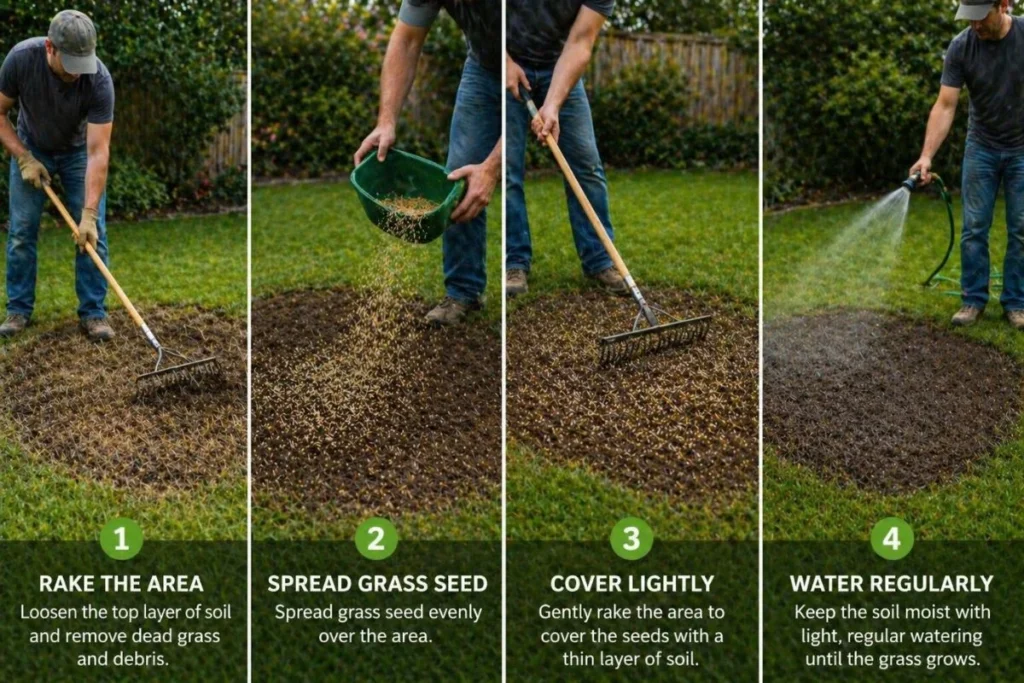
Step 1: Clear the Area
- Remove dead grass
- Rake the soil
Step 2: Treat the Cause
- Apply fertilizer, fungicide, or pest control
- Fix watering
Step 3: Repair the Lawn
- Add grass seed
- Cover lightly with soil
- Water daily
Best Time to Treat Lawn Problems
- Spring is best for weed and crabgrass control
- Early summer is best for grub treatment
- Summer is for watering care
- Fall is best for overseeding and repair
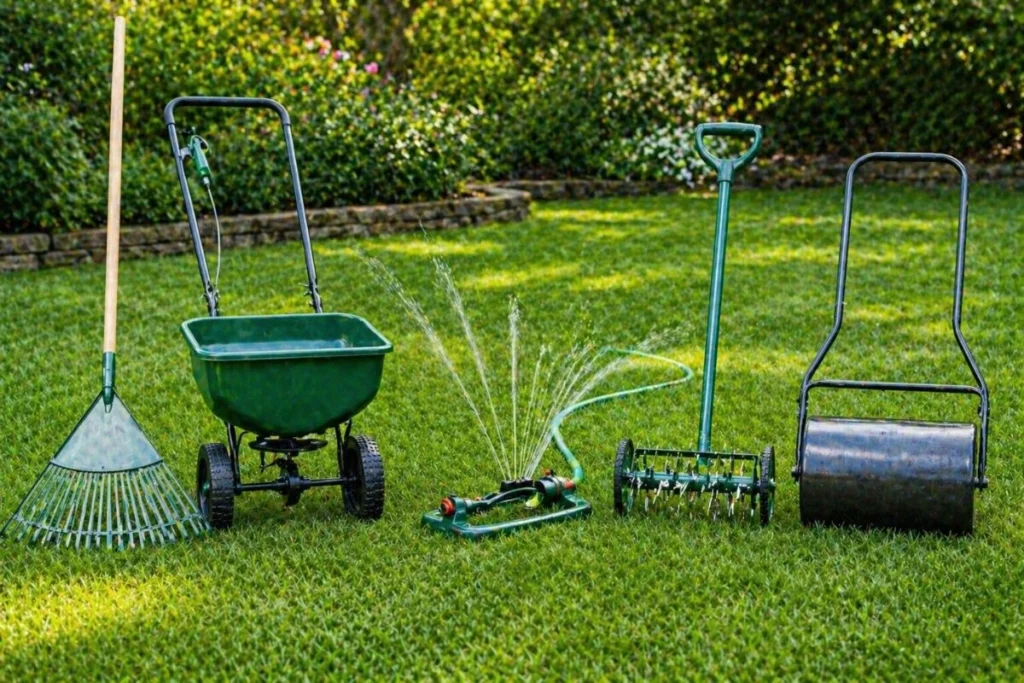
Tools That Make Lawn Repair Easier
- Lawn spreader for seed and fertilizer
- Rake for soil preparation
- Aerator to improve soil
- Sprinkler for even watering
How to Prevent Lawn Problems
- Water deeply 2–3 times per week, about 1 inch total
- Mow at the correct height
- Apply lawn fertilizer regularly
- Aerate once a year
Advanced Lawn Care Tips
- Test soil once a year
- Keep mower blades sharp
- Do not cut more than one-third of grass height
- Adjust care based on season
Common Lawn Care Mistakes
- Watering too often
- Using too much fertilizer
- Cutting grass too short
- Ignoring early signs
Most Common Lawn Care Mistake
The biggest mistake is trying to fix the lawn without knowing the real cause. Many people water more when the problem is fungus, or add fertilizer when the issue is pests.
Always identify the problem first, then apply the right solution.
Helpful Guides
- Best time to water lawn
- Brown patch disease
- Lawn drainage solutions
- Overseeding a thin lawn
FAQs About Lawn Problems & Solutions
Why is my lawn turning brown in patches?
It may be fungus, drought, or pests.
How do I fix yellow grass fast?
Apply fertilizer and fix watering.
Can overwatering damage grass?
Yes, it can cause fungus and weak roots.
How often should I water my lawn?
Water deeply 2–3 times per week.
Conclusion
Lawn problems can look confusing, but they become easier once you understand what is causing them. From experience, the best results come from simple habits like proper watering, good mowing, and early action when problems appear. You do not need complex methods to get a healthy lawn, you need the right steps and consistency. If you follow the approach shared in this guide, your lawn will slowly recover and become stronger with time.