
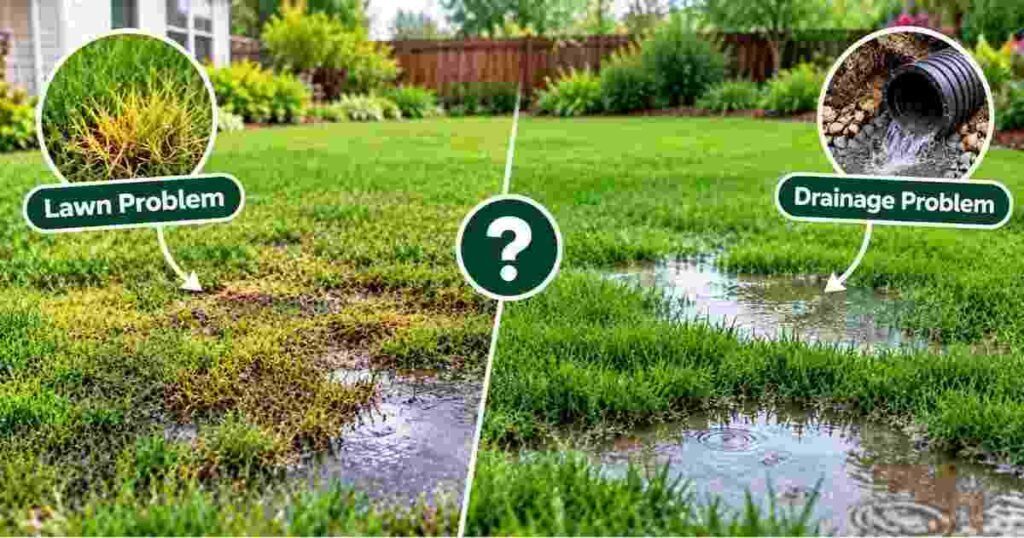
A lawn that squishes underfoot for days after a storm is one of the most frustrating problems a homeowner can face. You fertilize, you overseed, and you water carefully—and the grass still thins out, turns yellow, or fills with moss in the same wet patch every spring.
Thank you for reading this post, don't forget to subscribe!The tricky part is that a soggy lawn can have two very different root causes. Sometimes the problem really is the turf and the top few inches of soil. Other times, the lawn is simply the victim of water that is arriving from somewhere else and has nowhere to go. Treating the wrong cause wastes a season and a lot of money. Here’s how to tell the difference.
Signs the Problem Is in the Lawn Itself
Some wet-lawn issues start and end in the root zone. These usually respond well to good lawn care practices.
Heavy thatch. When the layer of dead stems and roots between the soil and the green blades grows beyond about half an inch, it acts like a sponge. Water sits in the thatch instead of soaking into the soil. Pull up a small wedge of turf: if you see a thick, spongy brown mat, dethatching may be the fix.
Surface compaction. Kids’ play areas, dog runs, and the path to the shed get packed down over time. Push a long screwdriver into the soil after a rain. If it slides in easily in most of the yard but stops hard in the soggy spot, compaction is a likely suspect. Core aeration, ideally in early fall for cool-season grasses, opens channels for water and air.
Overwatering. It sounds obvious, but irrigation systems often run on a schedule that ignores rainfall. A rain sensor or smart controller can stop the sprinklers from soaking a lawn that’s already wet.
Shade and poor airflow. Areas under dense trees or along a north-facing wall dry out slowly. Thinning lower branches and choosing shade-tolerant grass varieties can make a real difference.
If the wet area is small, dries within a day, and improves after aeration and better watering, you likely had a lawn problem.
Signs the Problem Is Drainage
Other soggy lawns won’t improve no matter how well you care for the grass. That’s usually a sign water is collecting because of the shape of the land, the soil beneath, or runoff from elsewhere.
Watch for these clues:
- Standing water lasts more than 24–48 hours after a normal rain.
- The wet area is at the lowest point of the yard, or water visibly flows into it from a slope, driveway, or neighboring property.
- Downspouts or a sump pump discharge near the problem area.
- The soil is dense clay a few inches down. Dig a small hole: if it feels slick and sticky and holds water like a bowl, infiltration is the bottleneck.
- Moss, rushes, or sedges move in where grass used to grow.
- The problem gets worse every year, even with aeration and topdressing.
A quick percolation test helps confirm it. Dig a hole roughly a foot deep, fill it with water, let it drain, then refill and time it. If the water level drops less than an inch per hour, the soil itself drains poorly and surface fixes alone are unlikely to solve it.
What You Can Try Yourself
Before calling anyone, a few low-cost steps can make a noticeable difference:
- Redirect downspouts. Extend them at least several feet from the house and away from the lawn’s low spot.
- Aerate and topdress. Core aerate, then spread a thin layer of compost or sandy topsoil to slowly improve soil structure.
- Level minor dips gradually. Add no more than about half an inch of topsoil at a time so the grass can grow through.
- Adjust irrigation. Cut back run times and install a rain sensor.
- Consider a rain garden. For a corner that will always be damp, moisture-loving plants can soak up water and look great doing it.
When to Bring in a Professional
If the lawn is still soggy after a season of good care, the fix usually involves regrading, a subsurface drain such as a French drain or dry well, or burying downspout lines—work that depends on getting the slope and the outlet exactly right.
It also helps to know which kind of pro to call. A landscaper is great for regrading and soil improvement, while a drainage specialist is better for installed systems, and a plumber may be needed if a leaking line is the culprit. This guide on who to call for yard drainage issues breaks down which professional fits which symptom. If you’re in the Chicago suburbs, experienced yard drainage contractors can diagnose where the water is coming from before recommending a fix.
Whoever you hire, ask them to explain where the water comes from, where it will go, and how the lawn will be restored afterward. A good contractor diagnoses first and sells second.
The Bottom Line
A healthy lawn needs water — but it also needs that water to move. If your soggy spot improves with aeration, dethatching, and smarter watering, you’ve solved a lawn problem. If it keeps coming back in the same low spot after every storm, you’re dealing with drainage, and the grass won’t recover until the water has somewhere to go.
Figure out which one you have, and you’ll spend your time and budget on the fix that actually works.