
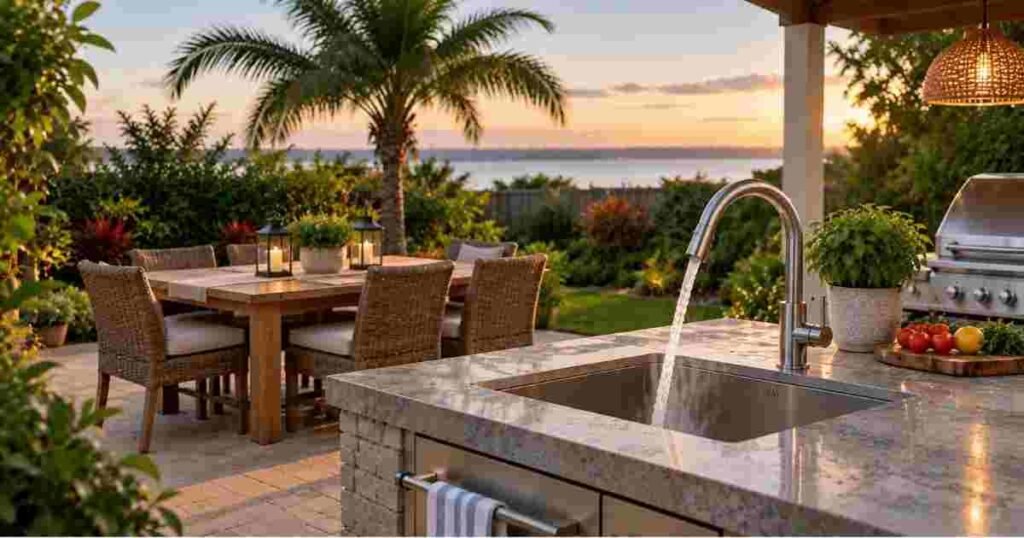
An outdoor sink can make a backyard more practical. It gives you somewhere to rinse muddy hands, wash a harvest basket, or clean up after a meal without carrying everything through the house. Adding hot water can make that space more comfortable, but it also introduces decisions that belong early in the design process.
Thank you for reading this post, don't forget to subscribe!Before choosing cabinets or laying a patio, think about how the sink will be used, where its water will come from, and what happens when temperatures fall. A well-planned installation should support outdoor routines without creating problems for the plumbing indoors.
Decide Whether You Need Hot Water
Not every garden sink needs a hot water connection. Cold water may be sufficient for rinsing tools, filling watering cans, and many outdoor tasks. A sink used regularly for handwashing or washing dishes presents a different set of needs.
Write down the activities you expect to do rather than adding features simply because they are available. Include how often you will use the sink and whether it needs to operate year-round.
Keep gardening and food preparation separate. Equipment used with fertilizers or pesticides should not be cleaned in a food-preparation sink. Plan appropriate handling and disposal around the product instructions.
Choose the Location Before the Finishes
A sink close to existing plumbing may be easier to connect than one across the yard. However, the shortest route is not automatically the right one. A plumber needs to assess the supply route, drainage, access, and protection from weather.
Distance also affects the wait for hot water. Water standing in a long supply line must be displaced before freshly heated water reaches the faucet. A larger household water heater does not eliminate that delay.
Ask how the proposed layout will perform during ordinary use. If you only wash your hands briefly, a long wait may make the hot water connection less useful than expected.
Check the Existing Household System
Connecting an outdoor fixture does not automatically require replacing your water heater. Start by checking whether the current equipment reliably meets indoor demand and whether the new sink will add meaningful simultaneous use.
Consider a busy summer evening: someone may be washing dishes outdoors while a shower and dishwasher run inside. Give the installer that description rather than relying only on the number of fixtures.
For storage equipment, tank volume, recovery performance, and first-hour rating help inform the assessment. Tankless equipment needs to be evaluated against simultaneous flow and the temperature rise required.
If the current heater already struggles, review water heater replacement options before committing to the outdoor layout. First have the cause investigated; inconsistent hot water can involve a repairable fault rather than insufficient capacity.
Compare a Shared Supply With Local Heating
One option is extending hot water from the household system. Another is providing a suitable point-of-use heater closer to the outdoor sink.
Local heating can address a long distribution run, but it brings its own requirements. The equipment needs an approved installation location, suitable power or fuel connections, and protection appropriate to its design. An indoor-rated appliance should not simply be placed inside an exposed outdoor cabinet.
Ask the installer to compare both approaches, including operating costs, maintenance, seasonal shutdown, and service access. The best choice depends on the property and usage pattern.
Plan Drainage as Carefully as the Faucet
Water arriving at a sink needs an appropriate destination. Do not assume that a nearby storm drain, planting bed, or gravel pit is an acceptable discharge point.
Kitchen wastewater may contain food particles, grease, and cleaning products. Have the drainage arrangement and any required approvals confirmed before construction begins.
Use a removable strainer, collect food scraps, and keep cooking fat out of the drain. Position cabinets so that plumbing connections remain accessible for inspection and repair.
Make Winter Protection Part of the Design
In climates with freezing weather, exposed plumbing needs a deliberate winterization strategy. Insulation alone does not guarantee protection during prolonged cold.
Ask where accessible shutoffs will be located, how vulnerable sections will drain, and what procedure applies to the faucet and any local heater. Follow equipment instructions rather than improvising a shutdown routine.
Arrange the layout so seasonal maintenance is straightforward. A beautiful cabinet is less practical if reaching a valve requires removing a countertop or unloading the entire outdoor kitchen.
Get One Complete Installation Plan
Before approving the work, request a written scope covering supply lines, drainage, equipment, electrical work, weather protection, and restoration of disturbed landscaping.
Confirm who coordinates the trades and which checks occur before pipes are concealed or paving is completed. Keep a record of buried routes and accessible shutoff locations.
An outdoor sink earns its place when it makes everyday tasks easier. Planning the plumbing alongside the garden layout helps create a useful space that remains manageable long after the first backyard gathering.