
If you’ve been searching for the lawn care aisle, staring at fertilizer bags, the real question isn’t “Which brand is popular?” It’s “What’s actually going into my soil, my kids’ bare feet, my dog’s paws, and the storm drain at the end of my driveway?” “That question now has real answers, backed by soil science and water-quality data.
Thank you for reading this post, don't forget to subscribe!- What Is Organic Lawn Fertilizer
- Organic vs. Synthetic Fertilizer
- The Hidden Problem with Synthetic Lawn Fertilizer
- How Organic Fertilizer Changes Your Soil Biology
- Why Synthetic Nitrogen Quietly Damages Soil Long-Term
- NPK Ratios What Actually Needs
- Types of Organic Lawn Fertilizer
- Some Organic Lawn Fertilizer Products in Shop
- How to Choose the Right One for Your Region, Soil, and Grass Type
- Application Timing and Method
- Common Lawn Problems Organic Fertilizer Solves
- FAQs
- Final Task
What Is Organic Lawn Fertilizer
Organic lawn fertilizers are things that come from natural materials such as composted plant matter, animal byproducts like bone meal or manure, fish and extracts, or microbes. Microbes help to release nutrients that are bound in this organic matter.
Synthetic fertilizer makes by humans in industrial plants in exact amounts of nitrogen, phosphorus, and potassium in a specific manner. It serves to immediately improve plant health, green them up and increase production. It feeds the grass directly and bypasses the biology underneath. Feeding soil versus feeding plants are the core difference behind everything below.
Organic vs. Synthetic Fertilizer
| Key Factors | Organic Fertilizer | Synthetic Fertilizer |
| Nutrient release | Slow, microbe-digested | Fast, water-soluble |
| Time to visible results | 2–4 weeks | 3–5 days |
| Feeding window | 6–10 weeks per application | 4–6 weeks, often shorter |
| Burn risk | Low | Higher if over-applied |
| Soil microbial health | Builds it over time | Can suppress it long-term |
| Runoff risk | Lower (still possible if overused) | Higher, especially after rain |
| Safety for pets/kids | Generally safer, fewer waiting restrictions | Often needs re-entry wait time |
| Cost per application | Higher upfront | Lower upfront |
| Long-term lawn dependency | Decreases over seasons | Tends to increase |
The honest feedback: pick synthetic for a fast fix before an event and organic if you want a lawn that gets healthier soil and is easier to maintain year after year.
The Hidden Problem with Synthetic Lawn Fertilizer
This matters if you live near a lake, river, or storm drain- true for most U.S. suburbs. The EPA names lawn fertilizer as a source of nitrogen and phosphorus in urban runoff, alongside pet waste. A University of Florida and UC field study confirmed this directly, instrumenting a residential storm drain over 56 sampling events: average concentrations of nearly 11 mg/L total nitrogen and over 1 mg/L total phosphorus, enough to feed downstream algae growth.
Those nutrients can trigger eutrophication, causing oxygen-depleted “dead zones” that kill fish, and a separate analysis of 885 experiments confirmed nutrient enrichment cascades through stream food webs. Fast-release synthetic nutrients wash away easily soon after application — a risk built into the chemistry itself.
How Organic Fertilizer Changes Your Soil Biology
This is measurable, not anecdotal. A controlled rhizosphere study found that organic fertilizer increased grass height and biomass while reshaping microbial communities around the roots. Arbuscular mycorrhizal fungi (AMF), which thrive in organically fed soil, access water through hyphae that root hairs can reach, and colonized plants resist soil pathogens like Fusarium and Pythium more effectively. Field research found mycorrhizal-treated turf grew denser roots and withstood drought far longer than untreated turf. Organic fertilizer doesn’t add these fungi directly, but feeding organic matter creates the conditions they need to thrive.
Why Synthetic Nitrogen Quietly Damages Soil Long-Term
One of the longest-running ecological field trials in the world tracked over 150 years of fertilization data. Synthetic nitrogen caused measurable soil acidification, and species richness declined as soil pH dropped, worsening when nitrogen and phosphorus were combined. Soil pH proved the primary driver of microbial diversity- a lawn can look fine on the surface while the soil beneath grows less capable of supporting it without chemical help.
NPK Ratios What Actually Needs
NPK stands for nitrogen (N), phosphorus (P), and potassium (K).
- Nitrogen drives leaf and blade growth- established lawns need this most.
- Phosphorus supports root development, mainly for new seed or sod; established lawns usually have enough, so excess mainly fuels runoff.
- Potassium strengthens drought tolerance, disease resistance, and temperature stress resilience.
A common organic formula sits around 8-3-5 or 9-0-0, favouring nitrogen while keeping phosphorus low.
Types of Organic Lawn Fertilizer
Each organic fertilizer type works differently underground, and homemade or DIY blends need correct ratios to avoid burning grass or wasting nutrients.
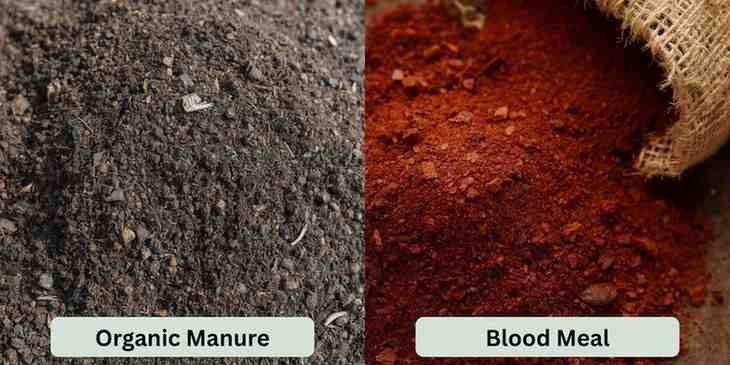
1. Manure-based fertilizer (by cow, chicken, or horse): Use only well-aged or composted manure, never fresh- fresh manure is too high in ammonia and can burn roots. Apply about 20–25 lbs of composted manure per 1,000 sq ft, worked into the top inch of soil. Best for early spring application.
2. Blood meal: A fast-acting nitrogen source (around 12-0-0). Use no more than 1–2 lbs per 1,000 sq ft, since over-application can scorch grass and attract animals. Mix into the soil or water immediately.
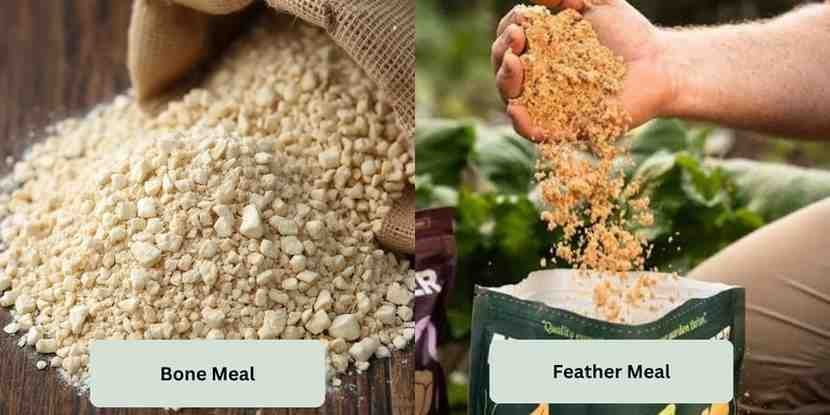
3. Bone meal: A phosphorus source (roughly 3-15-0), best for new seed or sod rather than established lawns. Apply 10 lbs per 1,000 sq ft at the time of seeding.
4. Feather meal: A slow-release nitrogen source (about 12-0-0) that breaks down over 8–12 weeks. Apply 2–3 lbs per 1,000 sq ft for steady, burn-free feeding.
5. Compost: Best used as a soil conditioner, not a standalone fertilizer. Spread a thin layer, about a quarter-inch (roughly 1 cubic yard per 1,000 sq ft), as top dressing once or twice a year.
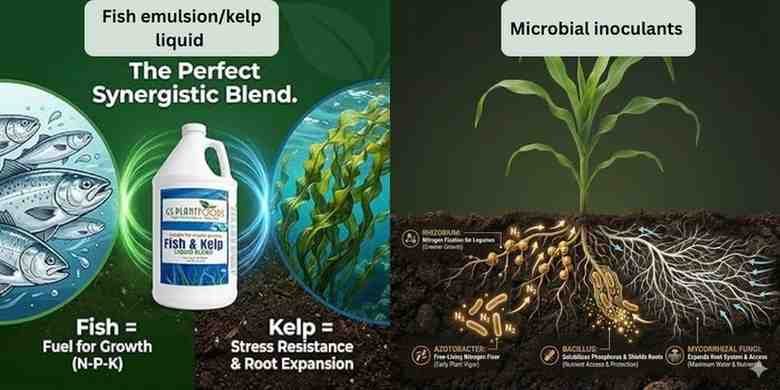
6. Fish emulsion/kelp liquid: Typically diluted at 2–3 tablespoons per gallon of water, applied every 2–3 weeks during the growing season for steady micronutrient feeding.
7. Microbial inoculants (mycorrhizal fungi blends): Applied once, ideally at seeding or aeration, since these establish a living colony rather than being reapplied like a standard fertilizer. Follow the product’s spore-count dosage per square foot exactly, as overuse provides no extra benefit.
General rule: never combine high-nitrogen organic inputs (manure + blood meal, for example) in the same application – stacking nitrogen sources is the most common cause of homemade-fertilizer lawn burn.
Some Organic Lawn Fertilizer Products in Shop
Prices and availability shift by retailer and season – always confirm current price at checkout before buying.
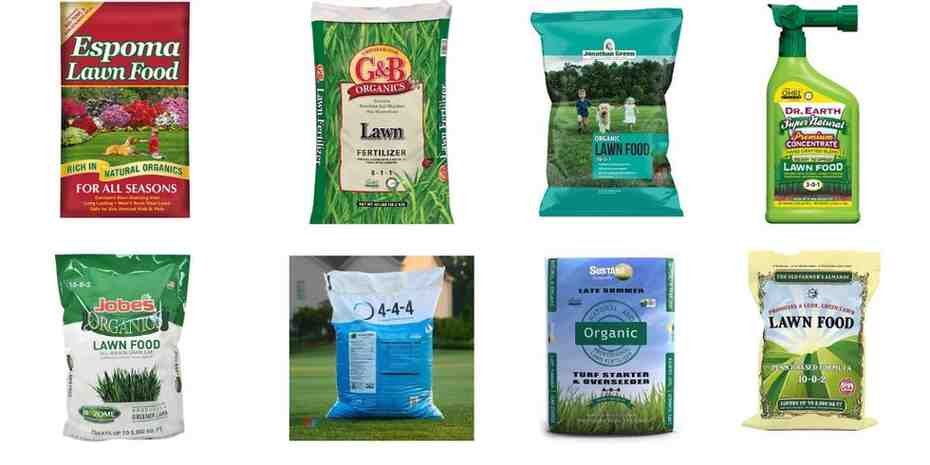
| Product | NPK | Size | Approx. Price (USD) |
| Milorganite All-Purpose Lawn Food | 6-4-0 | 32 lb | ~$35 |
| Espoma Organic Turf-Tone All Season | 10-0-2 | 28 lb | ~$30–40 |
| Espoma Organic Spring Lawn Booster | 8-0-0 | 27 lb | ~$30 |
| Jonathan Green Organic Lawn Food | 10-0-1 | 17 lb | ~$30–40 |
| Down to Earth Organic Bio-Turf | 8-3-5 | 25 lb | ~$35–45 |
| Dr. Earth Super Natural Lawn Fertilizer (granular) | 8-0-2 | 18 lb | ~$25–35 |
| Dr. Earth Super Natural Liquid (hose-end) | 3-0-1 | 32 fl oz | ~$15–20 |
| Safer Brand Lawn Restore | 9-0-2 | 9.5 lb | ~$25–30 |
| GreenView Natural Base Lawn Fertilizer | varies | 25 lb | ~$30–40 |
| Suståne 8-2-4 All-Natural | 8-2-4 | 50 lb | ~$40–50 |
How to Choose the Right One for Your Region, Soil, and Grass Type
Start with a soil test from your state extension office to learn actual pH and nutrient levels instead of guessing — since pH drives microbial diversity, fixing it first makes any fertilizer work better. From there, regional climate and grass type determine the rest:
- Northeast (e.g., New York, Pennsylvania, Massachusetts): Cool-season grasses like Kentucky bluegrass and tall fescue dominate. Apply nitrogen-heavy organic fertilizer in early spring and again in fall; clay-heavy soils common in this region need less frequent feeding.
- Southeast (e.g., Georgia, Florida, South Carolina): Warm-season grasses like St. Augustine, Bermuda, and centipede grass need feeding through late spring and summer. Sandy coastal soils drain fast, so slow-release organic options work better than fast-release inputs.
- Midwest (e.g., Ohio, Illinois, Minnesota): Cool-season lawns again, but harsher winters mean a fall feeding focused on potassium-rich formulas helps with cold resilience.
- Southwest (e.g., Arizona, Nevada, New Mexico): Bermuda and zoysia grasses tolerate heat well; apply organic fertilizer in late spring before peak summer heat, and water in thoroughly since arid soils lose moisture fast.
- Pacific Northwest (e.g., Washington, Oregon): Mild, wet climate supports cool-season grasses nearly year-round; lighter, more frequent organic applications work better than heavy seasonal doses given the consistent rainfall.
Match formula to soil type too: sandy soils lose nutrients faster and benefit most from organic matter’s slow release, while clay soils retain nutrients longer and need less frequent feeding.
Application Timing and Method
The best results come from matching application timing to your grass’s active growth cycle, not a fixed calendar date:
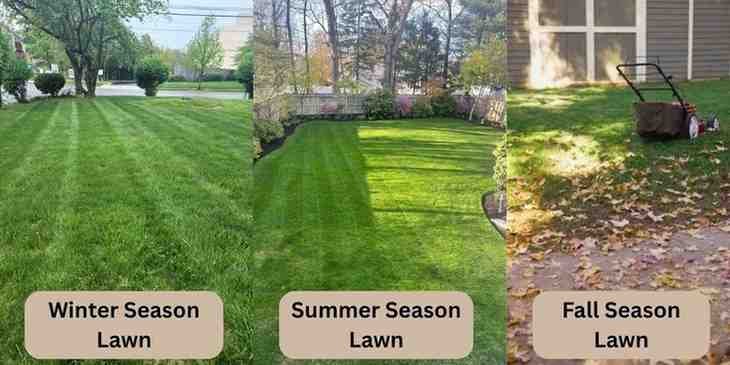
- Early Spring (March–April): First feeding as grass breaks dormancy. Use a balanced or nitrogen-forward organic formula to kick off growth without forcing excessive top growth before roots are ready.
- Late Spring (May–June): Second feeding for cool-season lawns heading into summer stress or first feeding for warm-season grasses entering their peak growth period.
- Summer (June–August): Warm-season lawns benefit from a mid-summer feeding; cool-season lawns generally should NOT be fertilized heavily here, since high heat increases burn risk and stresses dormant-leaning grass.
- Early Fall (September–October): The most important feeding for cool-season lawns — this is when roots store energy for winter. Use a potassium-rich formula for cold resilience.
- Late Fall / Winterizer (October–November): Optional final feeding for cool-season grasses in colder states, focused on root strength rather than leaf growth.
Common Lawn Problems Organic Fertilizer Solves
- Patchy, weak, or thin growth
Cause: Inconsistent nutrient uptake from depleted soil microbial activity.
Solution: Apply a balanced organic granular fertilizer (8-3-5 or similar) every 6–8 weeks during the growing season. The slow nutrient release rebuilds microbial activity that supports even, consistent growth across the whole lawn rather than isolated green patches.
- Drought stress and wilting
Cause: Shallow root systems that can’t access deep soil moisture.
Solution: Use a microbial inoculant or mycorrhizal fungi product at the start of the growing season. The AMF mechanism discussed earlier creates denser root networks and fungal water access that measurably extend drought tolerance.
- Recurring fungal disease (brown patch, dollar spot)
Cause: Weak natural pathogen resistance, often worsened by synthetic-fertilizer-driven soil imbalance.
Solution: Switch to compost topdressing plus a microbial-enhanced organic fertilizer. Mycorrhizal colonization primes roots for improved resistance to pathogens like Fusarium and Pythium, reducing recurrence over a season or two.
- Soil compaction and poor drainage
Cause: Heavy foot traffic or clay-heavy soil restricting root expansion.
Solution: Core aerate in early fall, then apply compost topdressing immediately after. Organic matter and fungal networks physically bind and aerate soil particles over time, something synthetic fertilizer cannot do.
- Yellowing or pale grass without an obvious cause
Cause: Often, a slow nitrogen deficiency or pH imbalance is blocking nutrient uptake. Solution: Get a soil pH test first. If pH is off, correct it with lime or sulfur before fertilizing. Then apply an iron-enhanced organic formula (like Espoma’s Bio-tone products) for a non-burning green-up while the underlying pH issue resolves.
FAQs
- Is organic lawn fertilizer actually better for water quality?
Generally, yes —nutrients release gradually, so less nitrogen and phosphorus wash away in a single rain event versus fast-release synthetic products, though timing matters for both. - How long until I see real results?
Visible greening takes two to four weeks, slower than synthetic’s near-instant response. Soil benefits build over a season or two, so evaluate year-over-year rather than week-over-week. - Can organic fertilizer still cause runoff if overused?
Yes. Applying more than your lawn can absorb, especially before rainfall, can still send excess nutrients into runoff. Slow release lowers this risk but doesn’t eliminate it. - Is it really safe for pets and kids?
Most organic fertilizers skip the synthetic herbicides and high-salt compounds requiring strict re-entry waits, but keep pets and kids off until any product is watered in.
Final Task
Natural fertilizer is safe for organic vegetable production in the garden. It will be much better than synthetic for health benefits and future disease risk. For that recommendation, if your plan is only for food production rather than aesthetic purposes or quickly solving any lawn problem, then grow better organically.