
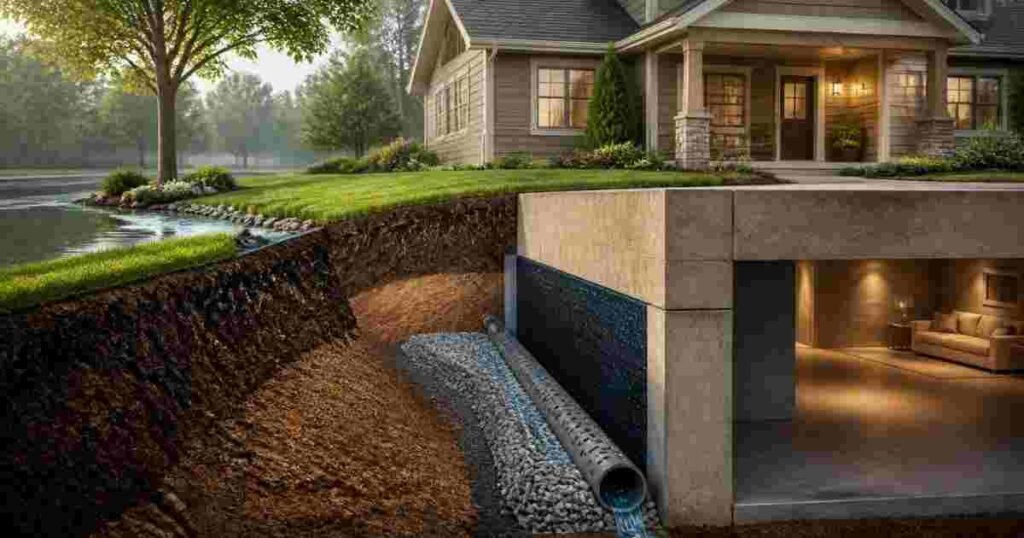
- The Elements Surrounding a Foundation
- How Soil Conditions Affect Foundation Stability
- The Role of Water in Foundation Movement
- Drainage: The First Line of Defense Around a Home
- Gutters, Downspouts, and Roof Runoff Matter More Than Homeowners Think
- When Landscaping Changes the Way Water Moves Through Soil
- Warning Signs That Soil and Drainage May Be Affecting Your Foundation
- Practical Ways to Improve Soil and Drainage Around the Foundation
- When Drainage Improvements Are Not Enough
- Building a Long-Term Foundation Maintenance Strategy
- Conclusion: Protect the Foundation by Managing the Ground Around It
- The Elements Surrounding a Foundation
- How Soil Conditions Affect Foundation Stability
- The Role of Water in Foundation Movement
- Drainage: The First Line of Defense Around a Home
- Gutters, Downspouts, and Roof Runoff Matter More Than Homeowners Think
- When Landscaping Changes the Way Water Moves Through Soil
- Warning Signs That Soil and Drainage May Be Affecting Your Foundation
- Practical Ways to Improve Soil and Drainage Around the Foundation
- When Drainage Improvements Are Not Enough
- Building a Long-Term Foundation Maintenance Strategy
- Conclusion: Protect the Foundation by Managing the Ground Around It
The Elements Surrounding a Foundation
A home’s foundation doesn’t operate in isolation. The soil and landscape around the structure influence how water moves, how evenly the ground supports the house, and how much moisture-related stress the foundation experiences. Rainfall, roof runoff, soil composition, grading, irrigation, and seasonal weather can interact in ways that are easy to miss. Good drainage is therefore part of foundation maintenance, not simply a landscaping concern.
Thank you for reading this post, don't forget to subscribe!When homeowners notice cracks or movement, they often look only at the concrete, masonry, or drywall. The cause, however, may lie in changing conditions outside the foundation. Saturated soil, uneven drying, settlement, and expansion can all affect the support beneath part of a structure. Early attention to drainage can prevent a manageable site problem from becoming more serious, but once the situation is too far gone, foundation repair experts must be called in.
How Soil Conditions Affect Foundation Stability
Different soils respond to water in different ways. Sandy soil usually drains quickly, although loose or poorly compacted sand can shift as water moves through it. Clay-rich soil holds more moisture and can soften when saturated. Mixed or layered soils may behave unevenly, especially where construction fill meets natural soil. A drainage plan that works well on one lot may not work as well on the next. If these conditions coincide with persistent movement, foundation repair experts can help determine whether soil behavior is contributing to the symptoms.
Expansive or shrink-swell soils deserve particular attention. They can expand as they absorb water and contract as they dry. Because changes in water content can produce significant volume changes in certain clay soils, movement may vary beneath different parts of a home when one area receives roof runoff while another remains dry.
Compaction and settlement are related concerns. Construction fill may not have been compacted evenly, or disturbed soil may compress under the structure’s weight. When support is lost beneath one section, differential movement can result. Soil type, fill depth, drainage history, and construction conditions should be considered together instead of treating every crack as the same kind of problem.
The Role of Water in Foundation Movement
Water can affect a foundation through excess, shortage, or uneven distribution. Heavy rainfall may saturate soil around a foundation, while prolonged dry weather can cause some clay soils to shrink away from footings. Neither condition automatically signals an emergency, but repeated changes can create movement over time.
Uneven moisture often matters more than the total amount of water on a property. A leaking downspout may keep one corner of the house wet while an unwatered side yard becomes extremely dry. A raised bed can hold water against one wall, while a compacted walkway prevents moisture from dispersing. Repeated wet-dry cycles may then cause differential movement in the same area season after season.
Possible symptoms include new masonry or drywall cracks, sticking doors and windows, uneven floors, and gaps around trim. Humidity, poor installation, and aging materials can produce similar signs. Pay attention to whether symptoms are new, whether they are progressing, whether they form a pattern, and whether the surrounding soil and drainage conditions support the same explanation.
Drainage: The First Line of Defense Around a Home
Positive drainage means surface water moves away from the foundation instead of pooling beside it. Maintaining that slope requires attention to the soil, landscaping, and places where runoff leaves the property. A yard may look level while still directing water toward a low corner after the soil settles or new mulch is added.
Grading is often the first condition to inspect. A shallow swale can guide water around a structure, while surface drains can collect water at defined low points. The right choice depends on runoff volume, topography, and where the water can be discharged without creating a new problem for the home or neighboring properties. Homeowners can also review these practical lawn drainage solutions when comparing ways to address standing water.
Landscaping can defeat positive drainage without anyone realizing it. Edging, retaining features, dense ground cover, and raised beds may trap water. Added soil can reduce the slope and raise the grade against a foundation wall. Established foundation-performance guidance emphasizes grading and drainage as ways to moderate moisture-related movement, so drainage should be treated as a foundation-maintenance strategy rather than just a lawn-care preference.
Gutters, Downspouts, and Roof Runoff Matter More Than Homeowners Think
A roof collects rainfall across a broad area and concentrates it into a few gutters and downspouts. If a gutter is clogged, a downspout is disconnected, or an extension is too short, that runoff may fall directly beside the foundation.
Warning signs include overflowing gutters, splash marks on siding, eroded soil below an outlet, and a strip of ground that stays wet along the house. A downspout that works during light rain may still discharge too close to the structure during a storm. Extensions should send water toward an appropriate drainage area instead of simply moving the outlet a few inches away from the wall.
Roof runoff should also be considered alongside the property’s natural slope. Directing water toward a low spot may solve one problem at the wall while creating another in the yard. Outlets should remain clear, connected, and stable. If an underground drainage system repeatedly backs up or water reappears near the foundation, it should be inspected.
When Landscaping Changes the Way Water Moves Through Soil
Landscape improvements can change the original drainage pattern. A planting bed may sit higher than the surrounding lawn, a berm may redirect runoff away from the house, and edging can act like a small dam. Over time, these changes may reduce the positive slope established during the property’s initial grading.
Irrigation is another source of localized moisture. Overspray on foundation walls, drip lines placed too close to the structure, or frequent watering in one zone can keep the soil unevenly wet. Irrigation schedules should reflect current weather and soil conditions. If one section stays muddy while nearby areas are dry, investigate the water source rather than simply reducing or increasing watering everywhere.
Trees and shrubs also deserve a thoughtful review. Roots can influence soil moisture and interact with existing drainage, but plants aren’t automatically the cause of foundation movement. Removing vegetation without correcting grading or runoff may leave the original problem untouched. Better landscaping works with the site’s natural drainage, leaves inspection space around foundation walls, and avoids adding soil or irrigation where water already collects.
Warning Signs That Soil and Drainage May Be Affecting Your Foundation
Exterior indicators include standing water near foundation walls, soil erosion, washed-out areas, persistent muddy zones, and ground that stays wet long after the rest of the yard dries. New or widening cracks in foundation walls or exterior masonry deserve attention, especially when they appear alongside signs of water entry.
Inside the home, new drywall or plaster cracks may appear around doors, windows, ceilings, or corners. Doors and windows that suddenly stick can indicate movement, although humidity and frame problems can create similar effects. Sloping floors, separation around trim, and gaps between walls and finished surfaces are additional observations worth recording.
One symptom doesn’t prove that a foundation has a structural defect. Patterns, progression, location, and site conditions matter more than a single isolated mark. Photograph a crack with the date, note when doors begin to bind, and check the area outside after storms. Those observations can help show whether a condition is stable or changing. Early investigation is usually more useful than waiting until visible damage becomes extensive.
Practical Ways to Improve Soil and Drainage Around the Foundation
Start with the most obvious water sources. Inspect gutters, reconnect loose sections, and extend downspouts toward a safe outlet. Walk the property after rainfall to see where water flows or ponds, then correct grading where soil has settled or landscaping has created a low spot.
If ponding keeps returning, find the cause before adding a drain. A swale may suit a surface-runoff problem, an area drain can collect water in a depression, and a French drain may help where water moves through the soil, but each one has its specific purpose. They also have unique maintenance requirements, and the discharge point still needs to be handled responsibly.
The solution should reflect the soil, topography, water sources, and existing drainage system. Installing a familiar product without understanding the cause may simply move the problem somewhere else. Complex sites need professional assessment when drainage changes coincide with foundation movement, seepage, settlement, or runoff from adjoining properties.
When Drainage Improvements Are Not Enough
Drainage improvements can prevent additional moisture-related stress, but they don’t repair damage that’s already occurred. If a corrected downspout and reshaped low area don’t stop a widening crack or uneven floor, persistent cracks, measurable movement, settlement, and recurring water problems all warrant a closer assessment.
A professional evaluation should determine whether a condition is cosmetic, drainage-related, soil-related, or structural. The mechanism is important because sealing a visible crack without addressing movement or water may only provide a temporary result.
Documentation helps connect building symptoms with outdoor conditions. Keep photographs, note heavy storms, record landscaping or irrigation changes, and identify where water collects. If the problem is progressive, early evaluation can clarify which site improvements are appropriate and whether to consider structural repair.
Building a Long-Term Foundation Maintenance Strategy
Foundation maintenance works best as a routine rather than a one-time response. Inspect grading, gutters, downspouts, drainage outlets, and areas where water collects several times a year. Repeat those inspections after major storms, landscaping projects, irrigation changes, or grading work. Small shifts in soil or mulch can gradually change the path of runoff.
Drainage systems require maintenance as well. Clogged inlets, displaced soil, erosion, sediment, and vegetation can reduce performance. Inspect subsurface systems periodically, keep surface outlets visible, and adjust irrigation seasonally so one section of soil isn’t repeatedly saturated while another becomes excessively dry.
For properties with pronounced seasonal moisture changes, consistency is key. The goal isn’t to keep soil at one exact moisture level, which is rarely practical. Instead, avoid abrupt, concentrated changes whenever possible. Controlling water before it becomes a structural problem is generally preferable to responding after substantial movement has occurred.
Conclusion: Protect the Foundation by Managing the Ground Around It
Foundation health is closely tied to the sequence of soil behavior, water movement, and structural performance. Clay may swell or shrink, loose fill may settle, and saturated soil may lose stability. The effects become harder to predict when water concentrates in one area or can’t drain away from the house.
Homeowners can reduce moisture-related stress with positive grading, functional gutters and downspouts, controlled irrigation, and drainage systems suited to the property. Treat persistent ponding and progressive foundation symptoms as connected issues. Regular inspections, careful documentation, and timely professional assessment can help prevent a small drainage problem from becoming a larger structural concern.