
- The Shift Towards Outdoor Living Spaces
- 1. A Defined Patio or Lounge Zone
- 2. An Outdoor Kitchen or Grill Station
- 3. Retaining Walls or Tiered Landscaping
- 4. A Fire Feature
- 5. A Water Feature
- 6. Privacy Screening
- 7. Outdoor Lighting Design
- 8. A Pergola or Shade Structure
- 9. Low-Maintenance Turf or Native Planting
- 10. Walkways and Pathway Connectivity
- Bringing It All Together
- The Shift Towards Outdoor Living Spaces
- 1. A Defined Patio or Lounge Zone
- 2. An Outdoor Kitchen or Grill Station
- 3. Retaining Walls or Tiered Landscaping
- 4. A Fire Feature
- 5. A Water Feature
- 6. Privacy Screening
- 7. Outdoor Lighting Design
- 8. A Pergola or Shade Structure
- 9. Low-Maintenance Turf or Native Planting
- 10. Walkways and Pathway Connectivity
- Bringing It All Together
The Shift Towards Outdoor Living Spaces
Homeowners no longer treat the backyard as an afterthought. What used to be a patch of grass with a grill is now expected to function like an extra room: somewhere to cook, entertain, unwind, and add real value to the property. Real estate agents increasingly point to outdoor upgrades as a factor that buyers ask about directly rather than mention in passing during a showing.
Thank you for reading this post, don't forget to subscribe!The features driving that interest aren’t random; they follow a pattern of durable materials, clear zoning, and thoughtful flow between spaces. A yard with a dozen scattered additions and no underlying plan rarely looks as good as one built around quality hardscaping and a handful of well-placed features. Here are ten upgrades that consistently elevate a backyard from “nice yard” to a true outdoor living space.
1. A Defined Patio or Lounge Zone
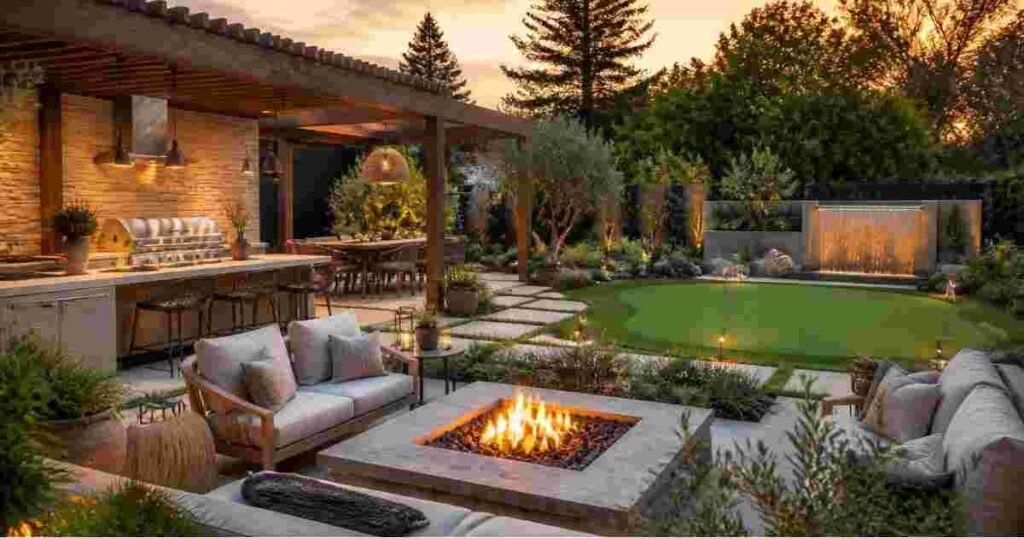
Every strong backyard starts with a solid base. A poured concrete slab, natural stone, or interlocking pavers gives the space structure and keeps furniture from sinking into soft ground after rain. This is where good hardscaping comes in, as a well-installed foundation determines how every other feature on this list gets used, from where the grill sits to how furniture is arranged for conversation. Skipping this step and building around grass or gravel almost always becomes a maintenance headache within a year or two, with furniture legs sinking and weeds pushing up through gaps.
Sizing the patio correctly matters as much as the material choice. A lounge zone that’s too small forces awkward furniture arrangements, while one that’s oversized can make a yard feel empty and uninviting.
2. An Outdoor Kitchen or Grill Station
A built-in grill station with counter space and storage makes outdoor cooking more than flipping burgers on a rusty cart. Even a modest setup (a grill, a small counter, and a couple of cabinets) keeps the cook connected to guests instead of stuck indoors prepping while everyone else is outside. Homeowners who entertain regularly tend to see this as one of the highest-return additions, since it directly changes how often the space gets used throughout the week, not just for occasional big gatherings.
More ambitious setups add a side burner, a small refrigerator, or a pizza oven, but the core value comes from simply moving food prep outdoors rather than the specific equipment chosen.
3. Retaining Walls or Tiered Landscaping
Sloped yards are common, and ignoring the grade usually leads to erosion, pooling water, or a yard that never quite feels usable. Retaining walls solve the structural problem while creating flat, functional zones on properties that would otherwise be wasted space. Before adding any wall or terrace, it’s worth understanding how water moves across the property. Sorting out drainage solutions first prevents the wall from becoming a maintenance problem later, since standing water behind a poorly drained wall is one of the most common causes of failure.
Done well, tiered landscaping can turn a steep, awkward lot into two or three distinct outdoor rooms: a play area on one level, a dining space on another, connected by short runs of steps.
4. A Fire Feature
Fire pits and outdoor fireplaces extend the usable season on both ends, since spring evenings and early fall nights suddenly become viable outdoor time. A fire feature also gives a yard a natural focal point, which matters more than people expect when arranging seating; fires tend to attract conversational gathering in ways flat, open patios don’t naturally encourage.
Gas-start options add convenience for people who want ambiance without the upkeep of a wood fire, while built-in masonry fireplaces read as a more permanent architectural statement and typically anchor the seating layout around them.
5. A Water Feature
A fountain, small pond, or recirculating waterfall adds movement and sound to a space that would otherwise be static. Beyond aesthetics, running water helps mask street noise or nearby traffic, which is part of why smaller urban and suburban lots benefit from even a modest feature. A compact wall fountain can do more for privacy and calm than a much larger, silent addition.
Anyone planning heavier plantings or turf nearby should also consider overall water-smart landscaping so the feature doesn’t work against the rest of the yard’s irrigation needs, particularly in regions where water restrictions are common during summer months.
6. Privacy Screening
Fencing, hedges, or built structures like slatted privacy walls give a backyard a sense of enclosure that makes people want to linger. Without some form of screening, even a beautifully designed patio can feel exposed and thus go underused, especially on lots with close neighbors or a clear sightline from a nearby street.
The right choice depends on the lot. A tall hedge softens a space naturally and keeps things green year-round in some climates, while a cedar or composite privacy wall works faster, needs less maintenance over time, and can double as a backdrop for outdoor art or lighting.
7. Outdoor Lighting Design
Lighting is what separates a yard that shuts down at sunset from one that stays in use well into the evening. Layering path lights, string lights over a seating area, and accent lighting on trees or walls creates depth instead of one flat wash of brightness, and it makes nighttime navigation around steps or uneven ground much safer.
Anyone planning a lighting layout should also look into energy-efficient lighting options, since LED fixtures cut electricity use significantly compared to older outdoor bulbs while lasting far longer, which is important given how many hours exterior lights tend to stay on compared to lighting indoors.
8. A Pergola or Shade Structure
Direct sun limits how long people stay outside, especially during the hottest parts of summer, when an unshaded patio can go unused for hours in the middle of the day. A pergola, shade sail, or retractable awning solves that without fully enclosing the space, which keeps the yard feeling open rather than boxed in.
Pergolas can also double as a framework for string lights, climbing plants, or curtains, giving homeowners a way to soften the hardscaping with overhead texture and add a sense of architecture to what might otherwise be an open, unstructured patio.
9. Low-Maintenance Turf or Native Planting
Not every yard needs to be high-upkeep to look intentional. Swapping thirsty, high-maintenance grass for native or drought-tolerant plantings reduces mowing, watering, and fertilizing while still adding color and texture throughout the growing season.
Choosing the right low-maintenance plants for the region means less time spent on upkeep and a landscape that holds up better during dry stretches, without the yard looking neglected the way an under-watered traditional lawn often does by midsummer.
10. Walkways and Pathway Connectivity
The features above only work well together if people can actually move between them. Defined walkways, whether stepping stones, poured concrete, or gravel paths, connect the patio, kitchen, fire feature, and garden beds into one cohesive layout instead of a scattered set of separate zones that don’t relate to one another.
Pathways also protect the lawn from wear patterns that show up when people cut across the same stretch of grass repeatedly, and a well-planned route through the yard makes the whole space feel larger and more considered.
Bringing It All Together
These features don’t need to be added all at once. Most successful backyards are built in phases, starting with the patio or lounge zone and layering in additional features as budget allows over one or more seasons. What matters more than sequence is making sure each addition works with the others. A fire pit without seating, or a kitchen without shade nearby, tends to go unused no matter how nice it looks on its own.
Approached with a plan rather than a wish list, these ten upgrades turn an ordinary backyard into a space that gets used every week instead of a few times a year, and one that continues to pay off in both daily enjoyment and long-term property value.