
Palm trees look strong and beautiful in a yard, but many homeowners begin to worry when problems appear. Leaves may turn yellow, brown tips can form on the fronds, or the tree may stop growing as expected. These signs often make people think their palm tree is dying. In many cases, the problem comes from simple care mistakes such as overwatering, poor soil drainage, or using the wrong fertilizer.
Thank you for reading this post, don't forget to subscribe!From observing landscape plants and common tree care practices, one thing becomes clear. Palm trees are actually easy to maintain once their basic needs are understood. Palms grow differently from regular trees and require the right balance of sunlight, water, soil, and nutrients. When these factors are managed properly, palm trees can stay healthy and continue producing strong green fronds for many years. Palm trees need a consistent care routine, and following a complete year-round plant care plan can help prevent many common problems before they start.
Palm tree care includes proper sunlight, well-drained soil, deep but controlled watering, and regular use of slow-release fertilizer. Most problems like yellow leaves or brown tips come from overwatering, poor drainage, or nutrient deficiency.
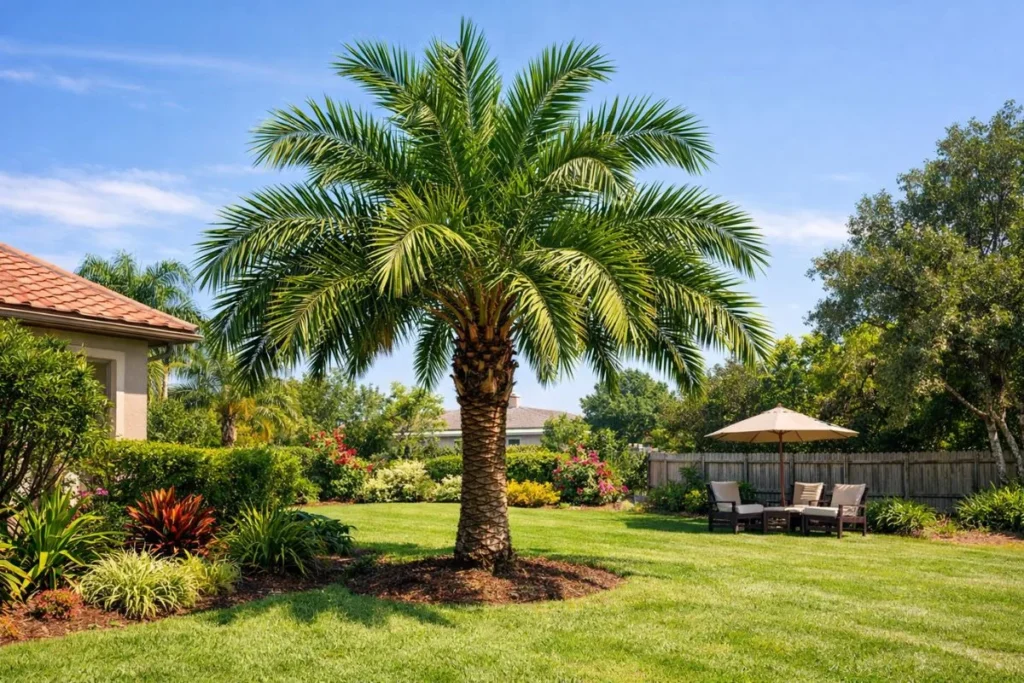
Quick Palm Tree Care Takeaways
- Water palm trees deeply but allow the soil to dry slightly between watering.
- Use slow-release palm fertilizer two or three times each year.
- Remove only dead or damaged fronds when pruning.
- Plant palms in soil that drains well.
- Inspect leaves regularly for pests or nutrient problems.
Palm Tree Care for Beginners
If you are new to palm tree care, the most important thing is to avoid overwatering and poor soil drainage. Most palm problems happen when roots stay too wet or do not get enough nutrients.
Beginner gardeners should focus on four main things:
- proper sunlight
- well-drained soil
- correct watering
- balanced fertilizer
Most palm problems happen when plants receive too much water or poor soil drainage.
Starting with simple care habits can help beginners grow healthy palm trees.
Choosing Palms to Fit Your Goals
There are many types of palm trees. Some grow very tall, while others stay small. Before planting, think about where the palm will grow.
If you want a palm for your yard, choose a type that fits the space. Large palms can grow more than 50 feet tall. Small palms work better in small gardens.
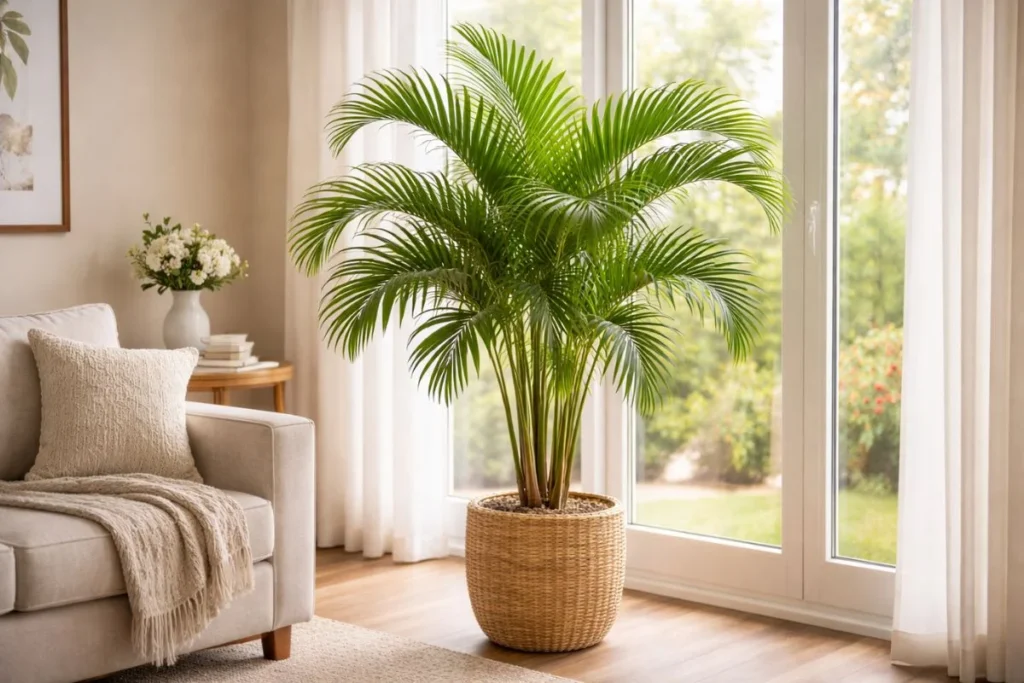
Indoor palms should grow well in containers. Popular indoor choices include:
- Areca palm
- Parlor palm
- Majesty palm
Outdoor palms often need full sun and more space to grow.
Choosing the right palm is the first step in good palm tree care.

Providing the Right Light and Soil
Palm trees grow best in bright light. Many outdoor palms need full sun for strong growth. Some indoor palms prefer indirect light.
If a palm does not get enough light, the leaves may turn yellow or grow slowly.
Soil also plays a big role in palm tree care. Palms prefer soil that drains well. Water should move through the soil easily.
Good soil usually contains:
- sand
- organic matter
- well-draining garden soil
Heavy clay soil can hold too much water. This may lead to root rot.
If your soil holds too much moisture, you can improve drainage by learning how to properly mulch around a tree to protect roots and control moisture levels.
Palm Tree Care Requirements
| Care Factor | What Palm Trees Need |
|---|---|
| Sunlight | Full sun or bright indirect light |
| Soil | Well-drained soil with organic matter |
| Water | Deep watering with slight drying between watering |
| Fertilizer | Slow-release palm fertilizer |
| Pruning | Remove only dead or damaged fronds |
Caring for Palms Indoors and Out
Palm tree care changes slightly depending on where the plant grows.
Indoor palms need stable temperatures. Most palms grow well between 65°F and 80°F.
Outdoor palms can handle higher temperatures. However, sudden cold weather can damage them.
For indoor palms:
- keep them near bright windows
- avoid cold drafts
- rotate the plant so all sides get light
For outdoor palms:
- plant them in sunny areas
- provide space for root growth
- protect them from strong winds if possible
These small steps help palms stay healthy.
Indoor Palm Tree Care Tips
Indoor palm plants often grow slower than outdoor palms. They need stable indoor conditions to stay healthy.
Important indoor care tips include:
- place the plant near bright indirect light
- water when the top soil becomes dry
- avoid overwatering containers
- keep the plant away from cold air or heaters
Indoor palms may also benefit from occasional misting if indoor air becomes very dry.
These simple steps help indoor palm plants grow better inside homes.
Maintain Sufficient Nutrient Levels
Palm trees need nutrients to grow strong leaves and roots.
Many palms suffer from nutrient problems if the soil lacks minerals.
Important nutrients for palms include:
- nitrogen
- potassium
- magnesium
- manganese
A slow-release palm fertilizer often works best. It feeds the plant over time and prevents nutrient loss.
Most palms benefit from fertilizing two or three times each year.
Healthy palms usually show:
- deep green fronds
- steady growth
- strong trunks
If the leaves turn yellow or brown, the plant may need nutrients.
Watering
Water is an important part of palm tree care.
Young palms need more water while they establish roots. Mature palms need less frequent watering.
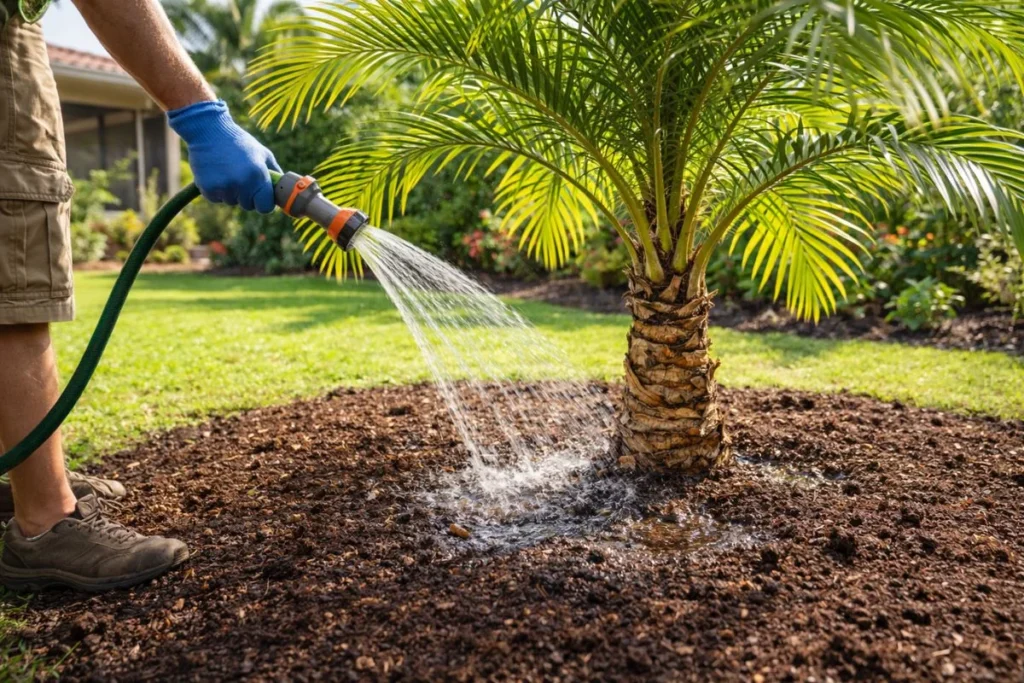
A simple watering method works well:
- Water deeply.
- Allow the top soil to dry slightly.
- Water again when needed.
Many palm problems happen because of overwatering. Always check the soil before watering. If the soil still feels wet, wait before adding more water. Good drainage helps prevent root rot.
Overwatering can harm palm roots. Standing water in soil may cause root rot.
Outdoor palms often need more water during hot summer months.
Indoor palms usually need watering once the top inch of soil feels dry.
Palm Tree Watering Guide
| Palm Type | Watering Frequency |
|---|---|
| Newly planted palm | 2–3 times per week |
| Established outdoor palm | Once or twice per week |
| Indoor palm | Water when top inch of soil becomes dry |
Fertilization
Fertilization helps palms grow strong and healthy.
Palm fertilizer often contains the nutrients palms use most.
A balanced palm fertilizer may include:
- nitrogen for leaf growth
- potassium for strong fronds
- magnesium for healthy color
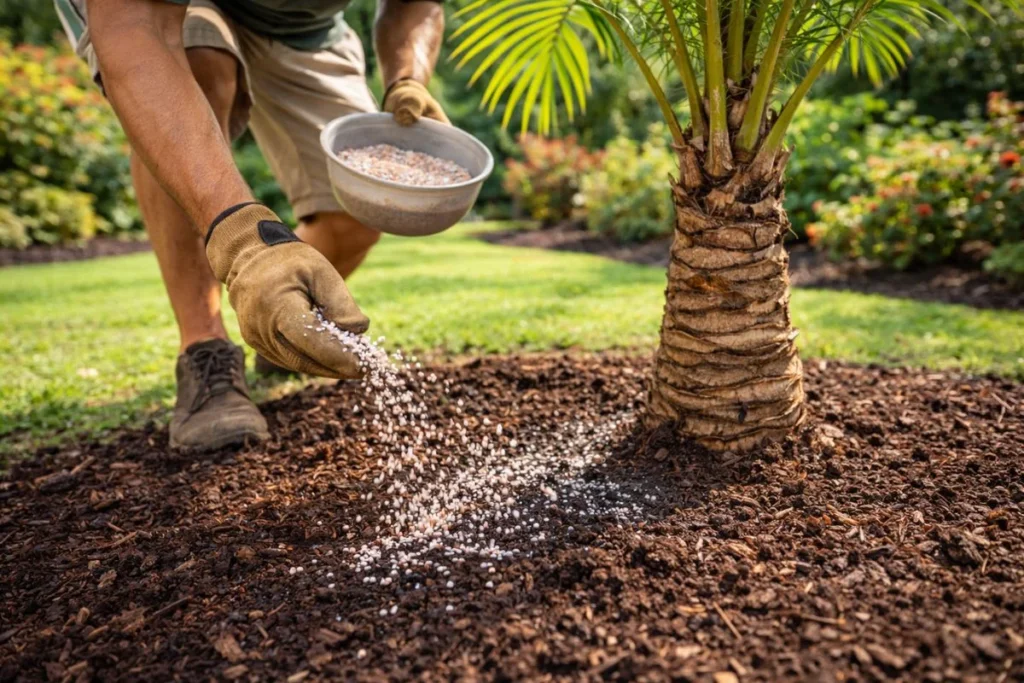
Spread fertilizer around the base of the tree. Avoid placing fertilizer directly against the trunk.
Slow-release fertilizer works well because it feeds the plant gradually.
Regular feeding helps prevent common palm nutrient problems.
Best Fertilizer for Palm Trees
The best fertilizer for palm trees is a slow-release formula that contains nitrogen, potassium, and magnesium. These nutrients support healthy fronds, strong roots, and consistent growth.
Pest and Disease Awareness
Palm trees can sometimes attract pests.
Common palm pests include:
- spider mites
- scale insects
- palm weevils
These pests may damage leaves or weaken the plant.
Look for signs like:
- yellow spots on leaves
- sticky residue
- damaged fronds
Palm diseases can also affect the tree.
Common issues include:
- root rot
- fungal infections
- leaf spots
Good watering practices and proper care help prevent many of these problems.
If pests appear, remove damaged leaves and treat the plant early.
Common Palm Tree Problems and Solutions
Homeowners often search for solutions when palm trees show visible problems.
Below are a few common issues.
Palm leaves turning yellow
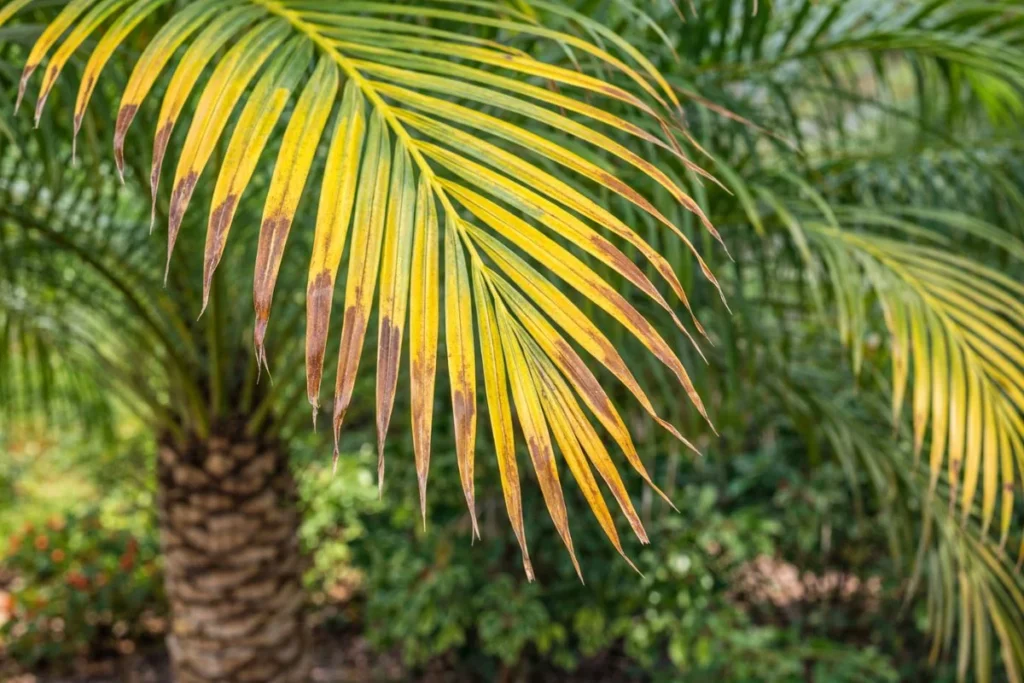
This can happen because of nutrient deficiency or poor watering.
Brown tips on palm leaves
Dry soil, salt buildup, or nutrient problems may cause this issue.
Slow palm growth
Low nutrients or poor sunlight may affect growth.
Drooping fronds
This may happen if the tree receives too much or too little water.
Identifying the problem early helps keep palm trees healthy.
Similar leaf damage can also appear in other evergreens, so it helps to compare with cases where leaves start turning brown on similar plants to better understand the cause.
Palm Tree Problem Diagnosis Chart
| Palm Tree Problem | Possible Cause | Simple Fix |
|---|---|---|
| Yellow leaves | Nutrient deficiency | Apply palm fertilizer |
| Brown leaf tips | Dry soil or salt buildup | Adjust watering and flush soil |
| Slow growth | Lack of nutrients or sunlight | Improve fertilizer and light exposure |
| Drooping fronds | Overwatering or underwatering | Check soil moisture and watering routine |
Protecting Your Palm Trees in Winter
Some palm trees tolerate mild cold. Others can suffer damage from frost.
Cold temperatures may cause:
- leaf browning
- slow growth
- plant stress
In colder regions, protect palms during winter.
Helpful methods include:
- covering young palms during frost
- adding mulch around the base
- reducing watering during cold periods
Indoor palms should stay away from cold windows and drafts.
Protecting palms in winter helps them stay healthy for the next growing season.
Pruning Palm Trees
Pruning is an important step in palm tree care.
However, palms should not be over-pruned.
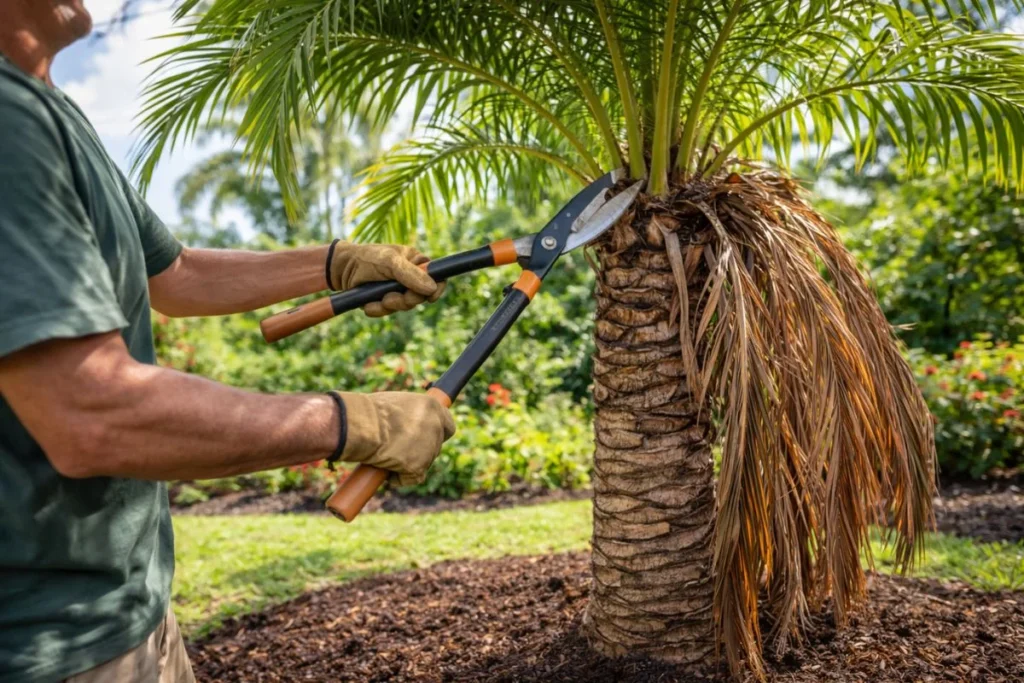
Only remove:
- dead fronds
- damaged leaves
- broken branches
Green fronds still provide nutrients to the tree. Removing them can weaken the palm.
Use clean, sharp tools when pruning.
Cut fronds close to the base but avoid damaging the trunk.
Proper pruning keeps palms healthy and improves their appearance.
Planting Palm Trees
Planting palms correctly helps them establish strong roots.
Choose a location with:
- enough sunlight
- good drainage
- enough space for growth
Dig a hole slightly wider than the root ball.
Place the palm so the root base sits level with the soil surface.
Fill the hole with soil and water thoroughly.
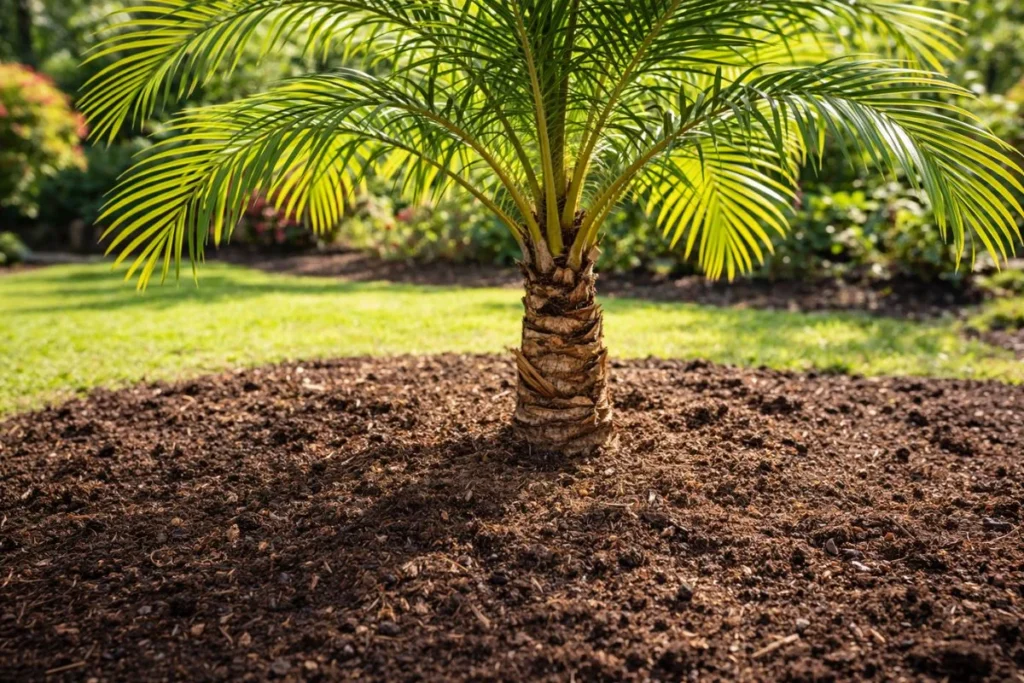
Mulch around the base to help retain moisture.
Good planting practices support long-term palm tree health.
If you want a yard that is easier to manage over time, you can also look into low maintenance landscaping plants for easy care yards and still look great.
Palm Tree Care for Newly Planted Trees
Newly planted palms need extra attention during the first few months. At this stage the roots are still growing into the surrounding soil.
Water the palm deeply after planting. During the first few weeks, watering two or three times each week is usually helpful. The soil should stay moist but not soggy.
Mulch can also help young palms. A layer of mulch around the base keeps moisture in the soil and protects the roots from heat.
Avoid strong fertilizer during the first weeks after planting. Too many nutrients too early can stress new roots.
Once the palm begins to produce new fronds, normal palm tree care can continue.
Common Palm Trees for Homes
Different palm species have different care needs. Choosing the right type makes palm tree care easier.
Here are a few common palms used in homes and landscapes.
Areca palm
This palm grows well indoors and prefers bright indirect light. It needs regular watering but well-drained soil.
Majesty palm
Majesty palms like bright light and higher humidity. They grow well indoors if they receive enough light.
Pygmy date palm
This small palm works well in outdoor landscapes. It tolerates warm climates and grows slowly.
Windmill palm
Windmill palms are known for better cold tolerance. They are often planted in cooler regions.
Knowing the type of palm helps you adjust watering, sunlight, and fertilizer.
Palm Tree Root System
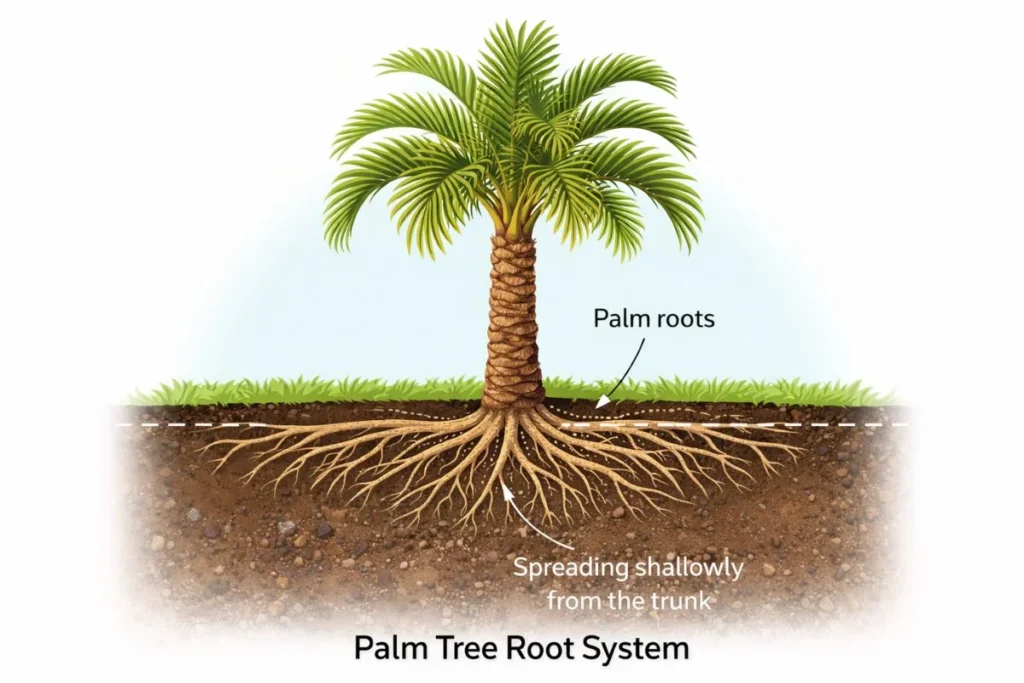
Palm roots grow differently than many other trees. Instead of deep roots, most palms have shallow roots that spread outward from the trunk.
These roots stay close to the soil surface and form a dense network.
Because of this root pattern, watering should cover the soil area around the canopy. The water needs to reach the full root zone.
Fertilizer should also be spread across this area rather than placed directly against the trunk.
Understanding the palm root system helps improve watering and fertilization practices.
Palm Tree Nutrient Deficiency Symptoms
Palm trees can show clear signs when nutrients are missing from the soil.
The table below explains some common symptoms.
| Symptom | Possible Cause |
|---|---|
| Yellow older leaves | Nitrogen deficiency |
| Brown or burnt leaf edges | Potassium deficiency |
| Frizzled or distorted new leaves | Manganese deficiency |
| Pale leaves | Magnesium deficiency |
If these symptoms appear, a balanced palm fertilizer may help restore healthy growth.
Regular feeding can prevent many nutrient problems.
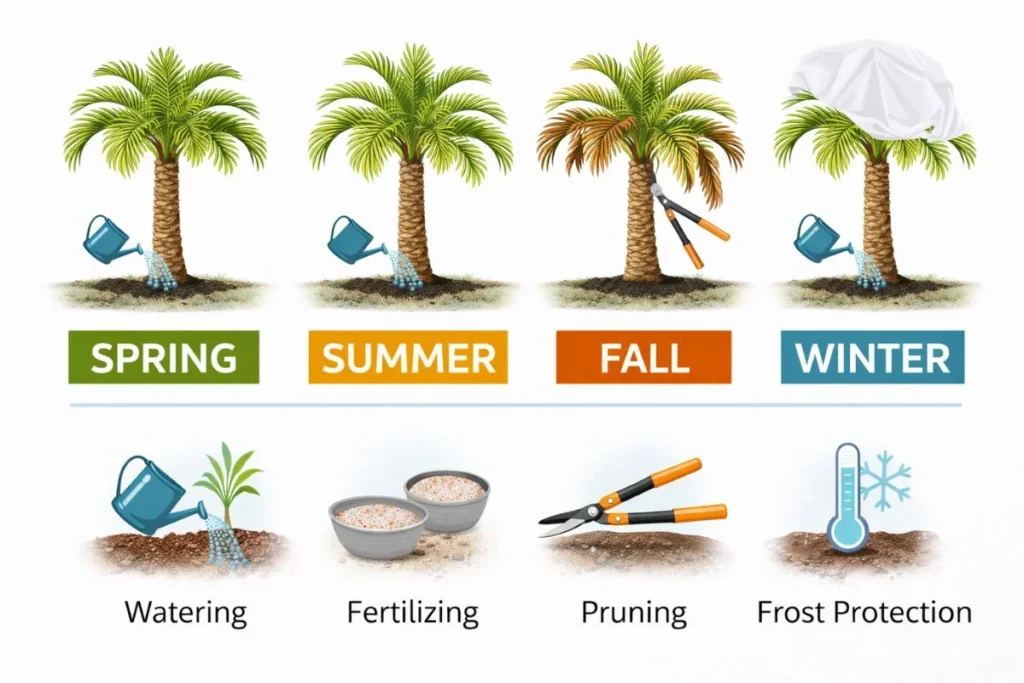
Palm Tree Care Calendar
A yearly care schedule can help keep palm trees healthy.
Spring
Apply fertilizer and check the palm for pests. New growth often begins during this season.
Summer
Water palms deeply during hot weather. Add mulch if the soil dries quickly.
Fall
Remove dead fronds and inspect the tree for damage.
Winter
Protect sensitive palms from frost. Reduce watering if the temperature drops.
Following a seasonal schedule makes palm tree care easier throughout the year.
Frequently Asked Questions
How often should you water a palm tree?
Most palm trees need deep watering once or twice per week depending on climate, soil drainage, and tree size.
What is the best fertilizer for palm trees?
A slow-release palm fertilizer that contains nitrogen, potassium, and magnesium helps palms grow strong fronds.
Why are palm tree leaves turning yellow?
Yellow leaves can appear because of nutrient deficiency, poor soil drainage, or incorrect watering practices.
Final Thoughts on Palm Tree Care
Palm tree care becomes much easier once you understand how these trees grow and what they need. Many common problems such as yellow leaves, brown tips, or slow growth usually come from watering mistakes or missing nutrients in the soil. In most situations, palms recover well when the care routine improves and the tree receives proper watering, balanced fertilizer, and careful pruning. With regular observation and simple maintenance, homeowners can keep their palm trees healthy, strong, and attractive for many years.