
Many homeowners want a yard that looks beautiful, but maintaining it can quickly become tiring. Regular watering, trimming, and weeding often take more time than expected. Many people start gardening with excitement, yet after a few months the work becomes overwhelming. Plants dry out in summer, weeds grow fast, and some shrubs need constant pruning. This is one of the most common problems homeowners face when planning their landscape. Planning your yard becomes much easier when you follow a complete tree and shrub care program instead of managing each plant separately.
Thank you for reading this post, don't forget to subscribe!From experience working with landscaping plans and plant guides, the biggest mistake people make is choosing plants that need too much care. Gardens become easier to manage when the right plants are selected from the beginning. Low maintenance landscaping plants can handle heat, dry soil, and changing weather conditions better than many other plants. When hardy shrubs, native plants, and drought tolerant flowers are used, the yard stays attractive while requiring far less effort.
If you want a yard that looks good without daily work, choosing the right plants is the most important step. The right selection reduces watering, trimming, and overall maintenance.
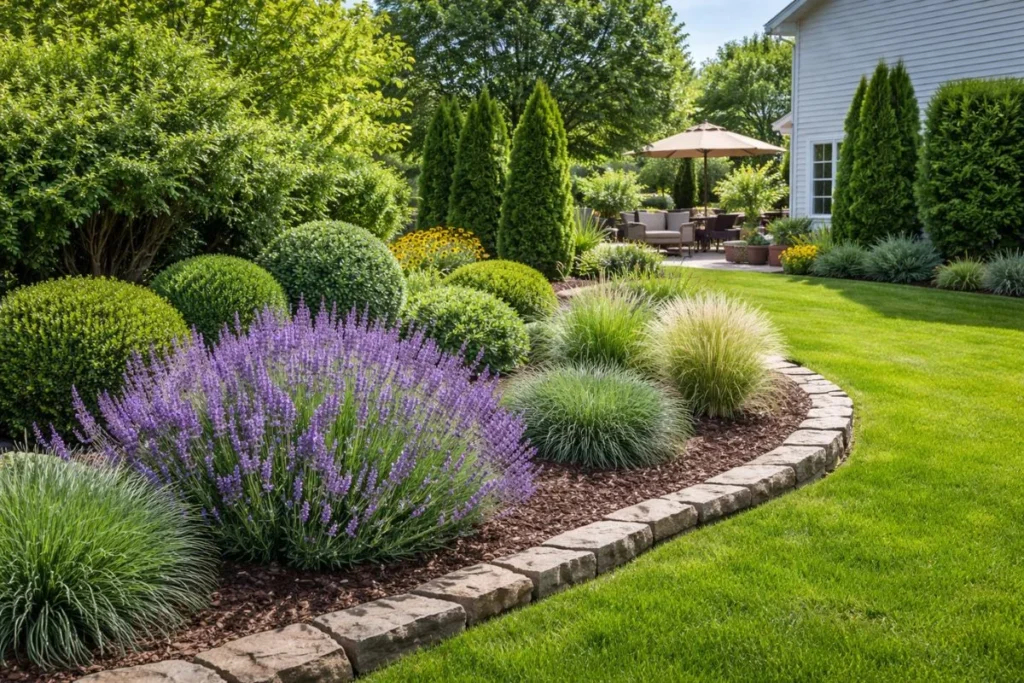
Low maintenance landscaping plants include lavender, sedum, boxwood, juniper, ornamental grasses, and coneflowers. These plants require less watering, minimal pruning, and grow well in different soil conditions, making them ideal for easy care yards.
- What You Need To Know About Low Maintenance Plants
- Landscaping Tips for Busy Homeowners
- What Are the Best Low Maintenance Plants?
- Top Low Maintenance Landscaping Plants (Quick List)
- Easy Landscaping Plants for Beginners
- Best Plants for a Low Maintenance Landscape
- Drought Tolerant Landscaping Plants
- Low Effort Plants for Simple Gardens
- 11 Low Maintenance Landscaping Ideas
- Low Maintenance Plants for Front Yard Landscaping
- Quick Plant Selection Guide
- Plants That Improve Curb Appeal
- What Are Some Low Maintenance Ground Cover Plants?
- Native Low Maintenance Plants
- Choose Plants Based on USDA Hardiness Zone
- Plant Comparison Table
- How to Design a Low Maintenance Landscape
- Common Mistakes When Choosing Low Maintenance Plants
- FAQs About Low Maintenance Landscaping
- Best Low Maintenance Plants for Different Needs
- conclusion
Key Takeaways
- Low maintenance landscaping plants require less watering, pruning, and care.
- Native plants usually grow better because they match local climate conditions.
- Drought tolerant plants such as lavender and sedum survive dry weather.
- Evergreen shrubs and ornamental grasses provide year-round structure in gardens.
- Using mulch and ground cover plants helps reduce weeds and lawn maintenance.
What You Need To Know About Low Maintenance Plants
Low maintenance landscaping plants grow well with little care. They need less watering, less trimming, and fewer treatments. Many of these plants also handle heat, dry soil, and pests better than other plants.
Homeowners choose these plants to save time and effort. A yard with easy care plants also needs less mowing and fewer chemicals. Because of this, many gardeners prefer plants that grow well on their own.
Low maintenance plants usually share a few common traits:
- They grow well in the local climate
- They survive with little watering
- They resist pests and diseases
- They do not need frequent pruning
Many native plants fall into this group. Native plants already match the local soil and weather. Because of this, they grow more easily than non-native species.
Using the right plants can also reduce lawn work. Instead of cutting grass every week, gardeners can plant shrubs, flowers, and ground covers.
Landscaping Tips for Busy Homeowners
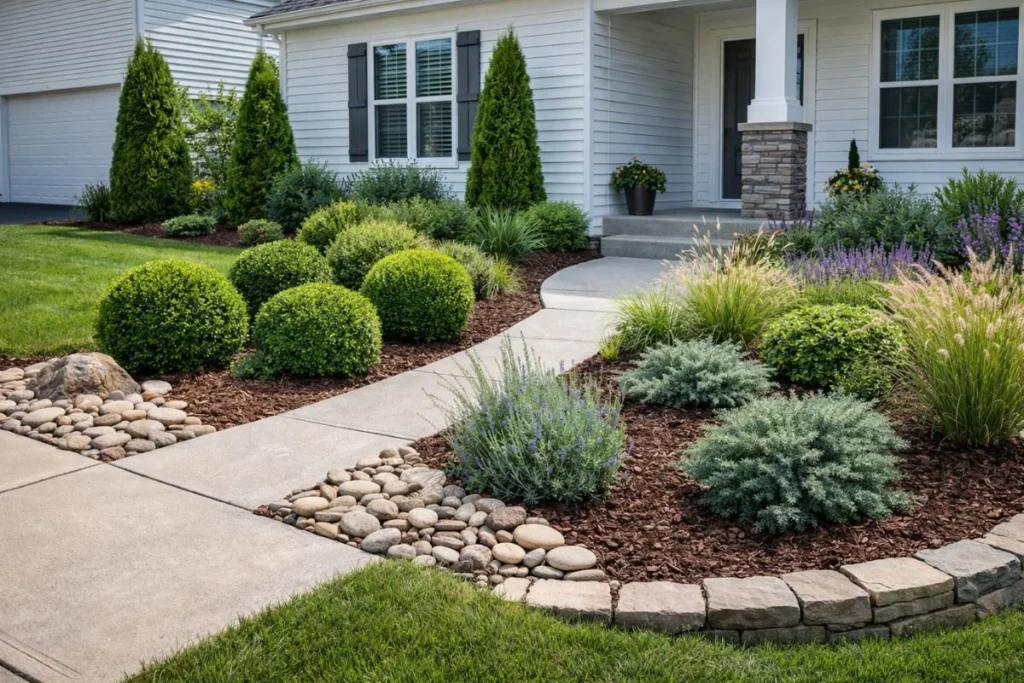
Many homeowners want a nice yard but do not have much time for garden work. Choosing the right plants can make yard care easier.
Low maintenance landscaping plants help reduce tasks like watering, trimming, and mowing. Evergreen shrubs, ground covers, and hardy perennials can grow well with little attention.
A few simple steps can also help reduce yard work:
- Replace some grass areas with ground cover plants
- Use mulch to stop weeds from growing
- Choose plants that tolerate dry soil
- Group plants that need the same amount of water
These steps help create a yard that stays attractive without constant work.
Using the right mulch can also reduce weeds and moisture loss, especially when you understand how to properly apply mulch around plants and trees.
What Are the Best Low Maintenance Plants?
Many plants grow well in low maintenance landscapes and require very little care once established. Some grow as flowers, shrubs, grasses, or trees. Each type adds a different look to the garden while still staying simple to maintain.
Featured Low Maintenance Evergreen Plants
Evergreen plants keep their leaves all year. They help the garden stay green during winter and colder months.
Popular evergreen options include:
- Juniper
- Arborvitae
- Boxwood
These plants also add structure to the landscape.
Even easy-care shrubs like these can sometimes show stress, so it helps to understand what causes browning in popular evergreen plants like arborvitae.
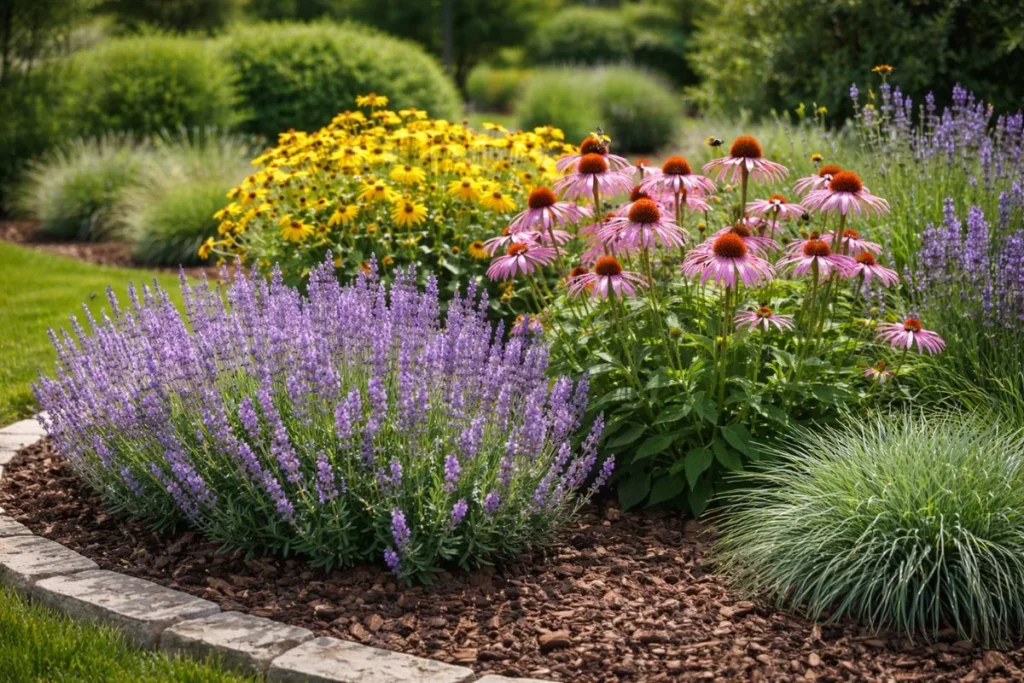
Best Low Maintenance Flowering Plants
Flowering plants bring color and attract pollinators such as bees and butterflies. Many perennials bloom each year without needing to be replanted.
Common easy flowering plants include:
- Lavender
- Coneflower
- Black-Eyed Susan
- Sedum
These flowers work well in garden beds and borders.
Low Maintenance Ornamental Grasses
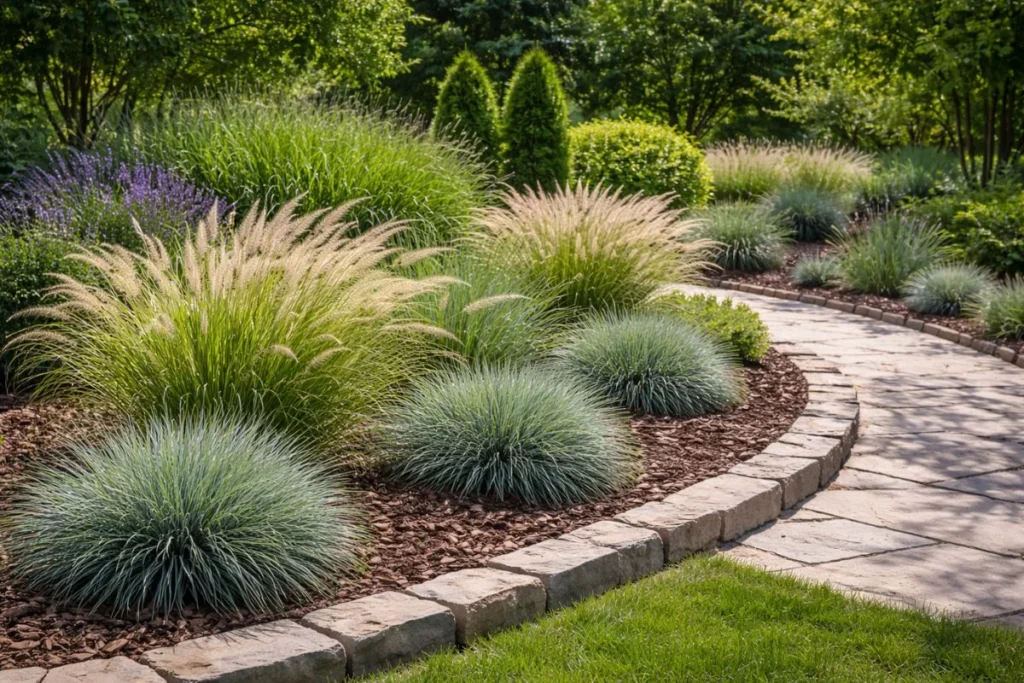
Ornamental grasses are popular in modern landscapes. They grow easily and require little care.
Good examples include:
- Switchgrass
- Fountain grass
- Blue fescue
Most grasses need trimming only once each year.
Best Low Maintenance Shade Trees
Shade trees help cool the yard and protect plants from strong sunlight.
Examples include:
- Red maple
- River birch
- Honey locust
These trees adapt well to different soil types.
Best Low Maintenance Flowering Trees
Flowering trees add seasonal beauty to a landscape.
Popular types include:
- Crepe myrtle
- Dogwood
- Magnolia
Once established, these trees usually require little care.
Best Low Maintenance Evergreen Trees
Evergreen trees give year round greenery and privacy.
Common evergreen trees include:
- Spruce
- Pine
- Cedar
These trees grow strong and tolerate colder climates.
Top Low Maintenance Landscaping Plants (Quick List)
- Lavender – drought tolerant and low watering
- Sedum – survives dry soil and heat
- Boxwood – evergreen structure with minimal pruning
- Juniper – hardy and low care ground cover
- Coneflower – blooms yearly with little effort
- Ornamental grasses – need trimming once a year
Easy Landscaping Plants for Beginners
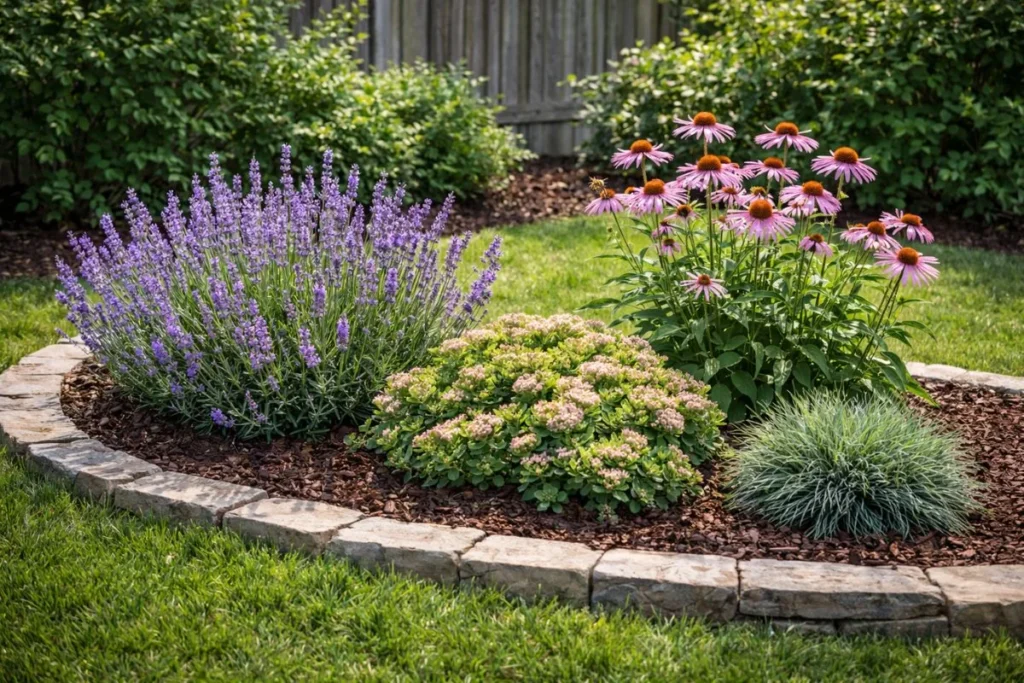
Beginner gardeners often worry that plants may die if they make mistakes. Choosing hardy plants makes gardening much easier.
Some plants grow well even with limited experience.
Examples include:
- Lavender
- Sedum
- Coneflower
- Black-Eyed Susan
These plants are often recommended for beginner gardeners because they survive in different conditions.
Best Plants for a Low Maintenance Landscape
Some plants grow easily in many landscapes and require little care.
Spirea
Spirea is a small shrub with clusters of flowers. It grows well in sunny areas and tolerates different soil conditions.
Creeping Thyme
Creeping thyme spreads across the ground. It works well as a ground cover and releases a light fragrance.
Boxwood Shrubs
Boxwood shrubs stay green all year and are often used for borders and hedges.
Lavender
Lavender grows best in sunny areas with well drained soil. It attracts pollinators and produces a pleasant scent.
Sedum (Stonecrop)
Sedum stores water in its leaves. This helps it survive dry conditions and makes it suitable for rock gardens.
Drought Tolerant Landscaping Plants
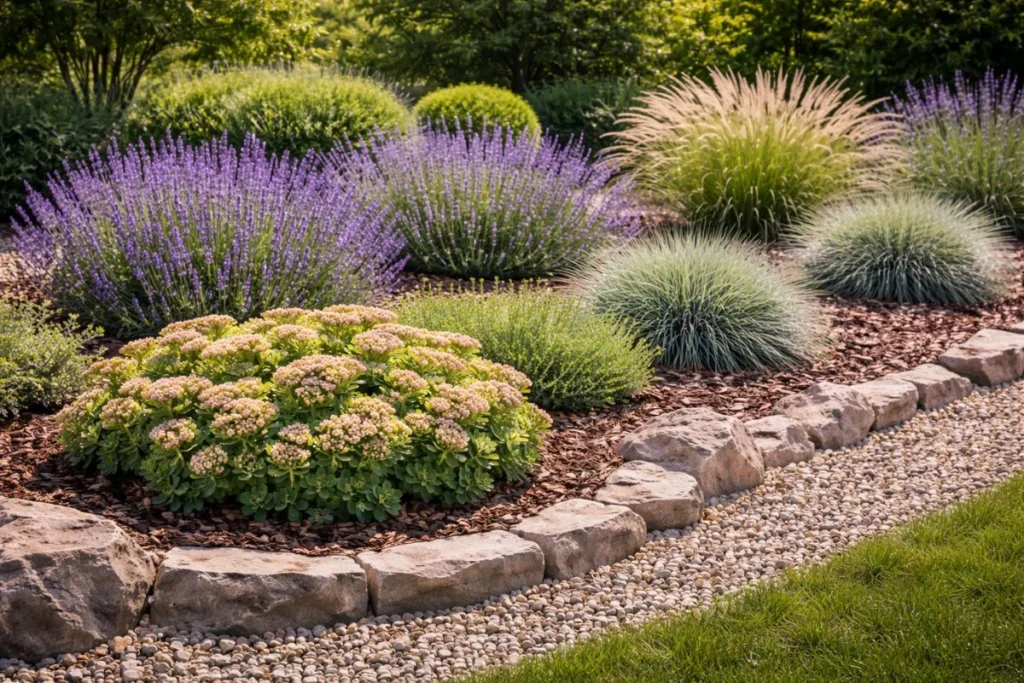
In hot or dry areas, water can be limited. Drought tolerant plants are useful because they survive with little watering.
Common drought tolerant landscaping plants include:
- Lavender
- Sedum
- Juniper
- Ornamental grasses
These plants can handle strong sunlight and dry soil.
Low Effort Plants for Simple Gardens
Some gardeners prefer plants that require very little physical work. Perennials and shrubs that grow slowly can help reduce maintenance.
Good examples include:
- Boxwood shrubs
- Ornamental grasses
- Coneflower
- Sedum
These plants usually need little pruning and can return each year without replanting.
Ground cover plants can also reduce mowing and weed control.
11 Low Maintenance Landscaping Ideas
Simple Low Maintenance Landscape Layout
A balanced landscape design can include a mix of shrubs, flowers, and ground cover plants.
- Back row: evergreen shrubs such as juniper or arborvitae
- Middle row: flowering plants like lavender or coneflower
- Front row: ground cover plants such as creeping thyme
This layout keeps the garden organized while reducing maintenance work.
Simple landscaping choices can reduce yard work.
- Use native plants suited to the local climate
- Add mulch to reduce weeds
- Replace some lawn with ground covers
- Plant drought tolerant flowers
- Use ornamental grasses for texture
- Add evergreen shrubs for year round color
- Use stone paths to reduce mowing areas
- Plant shrubs in groups
- Choose plants with similar water needs
- Add trees for shade
- Use raised beds to control soil quality
Low Maintenance Plants for Front Yard Landscaping
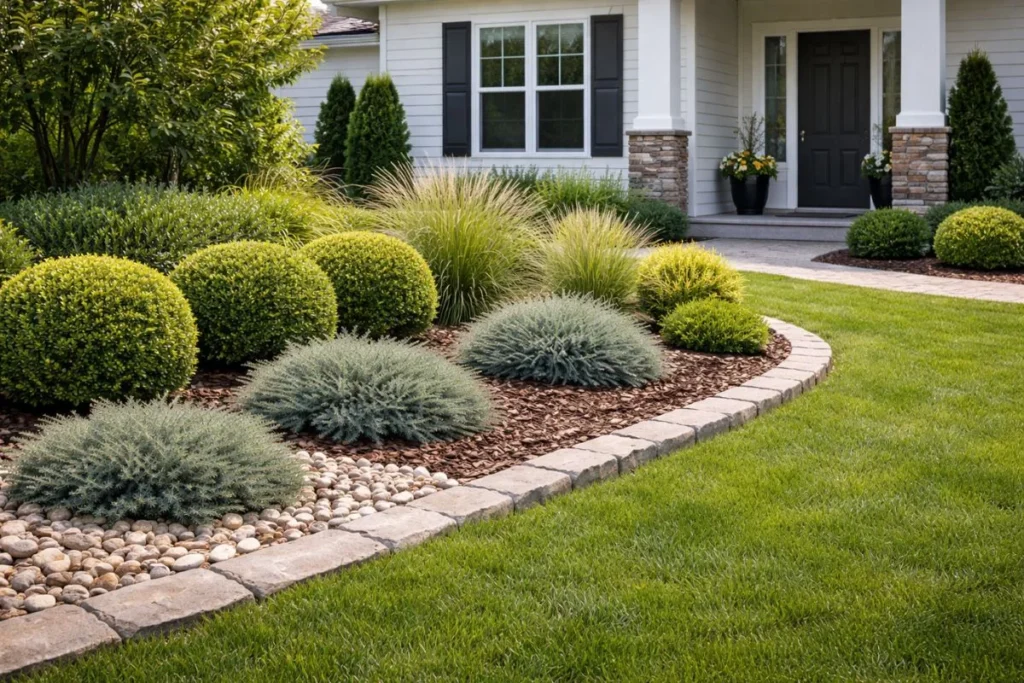
Front yards should look neat and attractive throughout the year.
Good plants for front yard landscaping include:
- Boxwood
- Lavender
- Ornamental grasses
- Dwarf juniper
These plants keep the yard organized without constant trimming.
Quick Plant Selection Guide
| Landscape Need | Recommended Plants |
|---|---|
| Full Sun Areas | Lavender, Coneflower, Sedum |
| Shade Areas | Hosta, Ferns, Astilbe |
| Ground Cover | Creeping Thyme, Ajuga |
| Evergreen Structure | Boxwood, Juniper |
| Drought Tolerant Plants | Sedum, Lavender, Ornamental Grasses |
Plants That Improve Curb Appeal
Many homeowners choose landscaping plants to improve the appearance of their homes.
Examples include:
- Boxwood for neat borders
- Lavender for color and fragrance
- Juniper for evergreen ground cover
- Ornamental grasses for texture
These plants help make the landscape look attractive with little maintenance.
What Are Some Low Maintenance Ground Cover Plants?
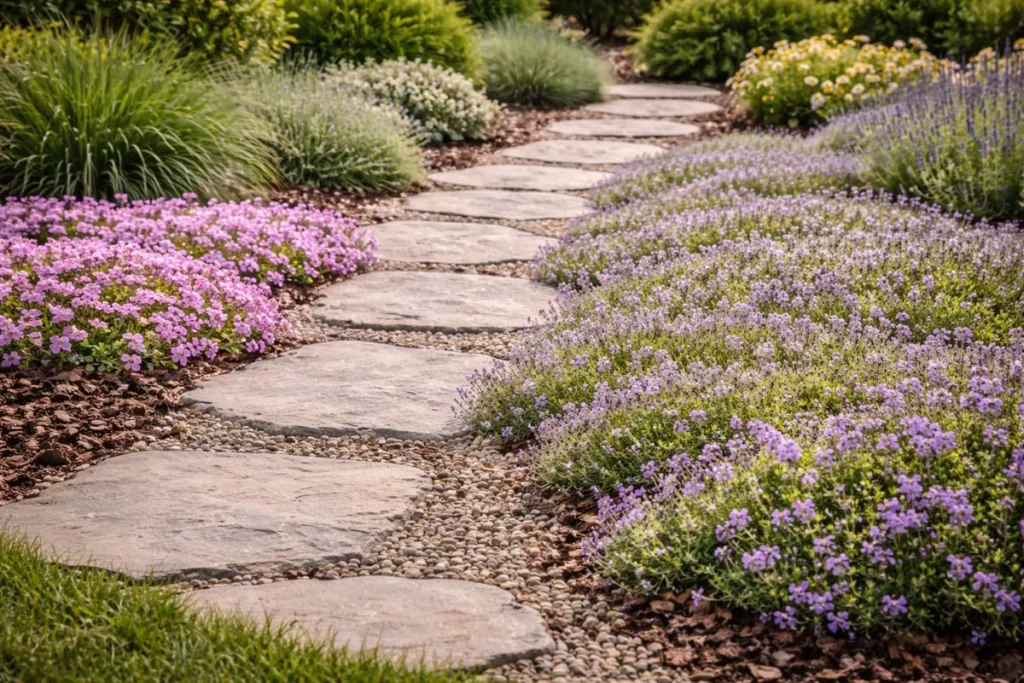
Ground cover plants spread across soil and help control weeds.
Examples include:
- Creeping thyme
- Moss phlox
- Ajuga
- Sedum
These plants also protect soil from erosion.
Native Low Maintenance Plants
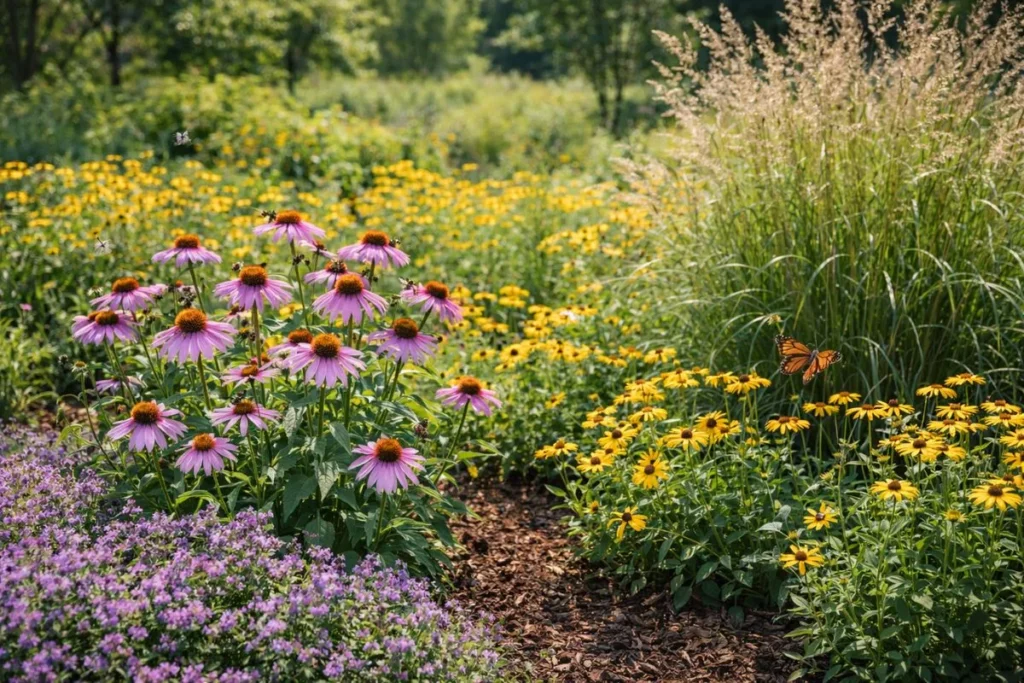
Native plants grow naturally in local environments. Because they match the climate and soil, they usually require less care.
Examples include:
- Coneflower
- Black-Eyed Susan
- Switchgrass
- Little bluestem
These plants also support pollinators.
Choose Plants Based on USDA Hardiness Zone
Plant success often depends on climate.
Examples:
Zone 3–5
Coneflower
Sedum
Zone 6–8
Lavender
Boxwood
Zone 9–10
Palm trees
Agave
Choosing plants suited to the correct zone helps reduce maintenance.
For warmer regions, palms are often included in easy-care landscapes, and learning palm tree care in warm climates can help them thrive.
Plant Comparison Table
| Plant | Sunlight | Water Needs | Height |
|---|---|---|---|
| Lavender | Full sun | Low | 2–3 ft |
| Sedum | Full sun | Low | 1–2 ft |
| Boxwood | Sun or partial shade | Medium | 3–5 ft |
| Coneflower | Full sun | Low | 2–4 ft |
| Juniper | Full sun | Low | 1–6 ft |
How to Design a Low Maintenance Landscape
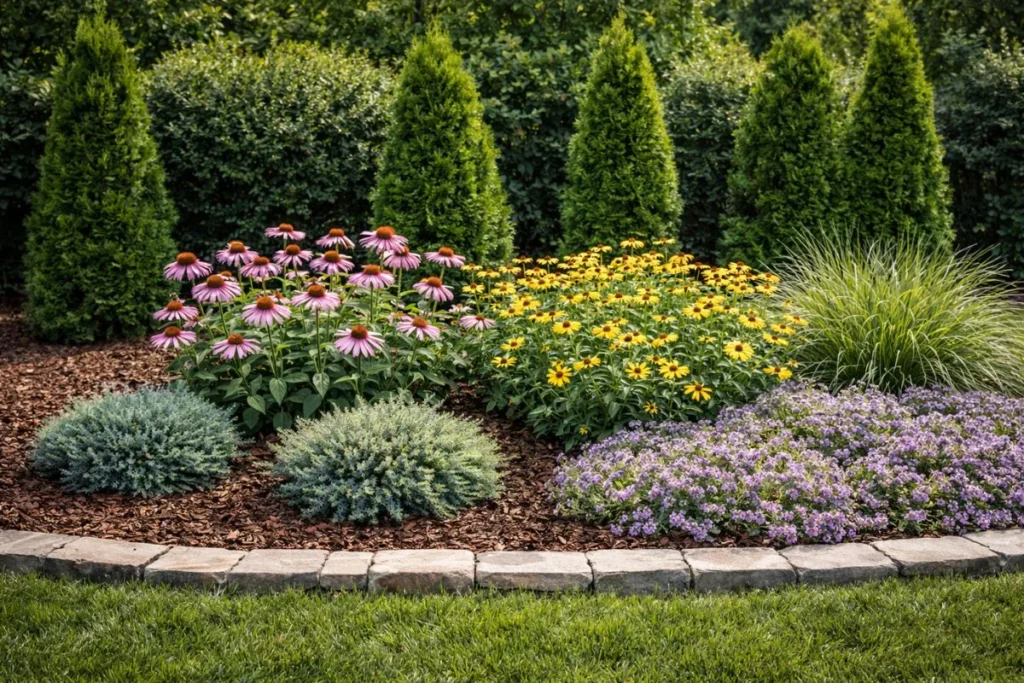
Helpful tips include:
- Group plants with similar watering needs
- Use mulch to control weeds
- Reduce large lawn areas
- Choose drought tolerant plants
These steps help create a landscape that stays healthy with less effort.
Common Mistakes When Choosing Low Maintenance Plants
Some gardeners unintentionally create more work by choosing the wrong plants. Avoiding these mistakes can make landscaping much easier.
- Planting species that require frequent watering.
- Ignoring sunlight conditions in the garden.
- Planting fast growing shrubs in small spaces.
- Choosing plants that are not suited to the local climate.
- Overcrowding plants, which can lead to poor air circulation.
FAQs About Low Maintenance Landscaping
What is the easiest plant for landscaping?
Lavender, sedum, and ornamental grasses are among the easiest plants to grow.
Do low maintenance plants need watering?
Yes, but they usually need less watering than many other plants.
Can low maintenance plants grow in poor soil?
Many can. Sedum and coneflower tolerate poor soil.
Do these plants attract pollinators?
Yes. Many flowering plants attract bees and butterflies.
Best Low Maintenance Plants for Different Needs
For full sun: Lavender, sedum, coneflower
For shade: Hosta, ferns, astilbe
For privacy: Boxwood, juniper
For ground cover: Creeping thyme, ajuga
conclusion
A successful landscape starts with choosing plants that match the climate, soil, and sunlight in your yard. From experience, gardens that use hardy plants such as lavender, sedum, ornamental grasses, and native flowers stay healthier and require far less work over time. Instead of spending hours watering and trimming, homeowners can focus on enjoying their outdoor space. With the right plant choices and simple design ideas, it is possible to create a landscape that looks beautiful throughout the year while remaining easy to maintain.