
Many homeowners add mulch around their trees because they hear it helps trees grow better. But many people are never shown the correct way to do it. It is common to see mulch piled high against the trunk like a small volcano, or grass growing right up to the base of the tree. Both of these situations can cause problems. Mulch touching the trunk can trap moisture and lead to bark damage, while grass competes with the tree for water and nutrients. Over time, these small mistakes can weaken a tree that would otherwise grow well.
Thank you for reading this post, don't forget to subscribe!From reviewing arborist guidelines and working with lawn and landscape care topics, one thing becomes clear. Most tree problems around homes come from simple maintenance mistakes. Proper mulching is one of the easiest ways to protect tree roots, improve soil conditions, and reduce weed growth around the base of the tree. Once you understand the right mulch depth, spacing, and ring size, you can create a healthy environment for the tree and avoid the common mistakes many homeowners make. Simple maintenance steps like this work best when combined with a proper year-round tree and plant care approach instead of treating each task separately.
Many people make one simple mistake: piling mulch against the tree trunk. This can damage the tree instead of helping it. Learning the correct method makes a big difference.
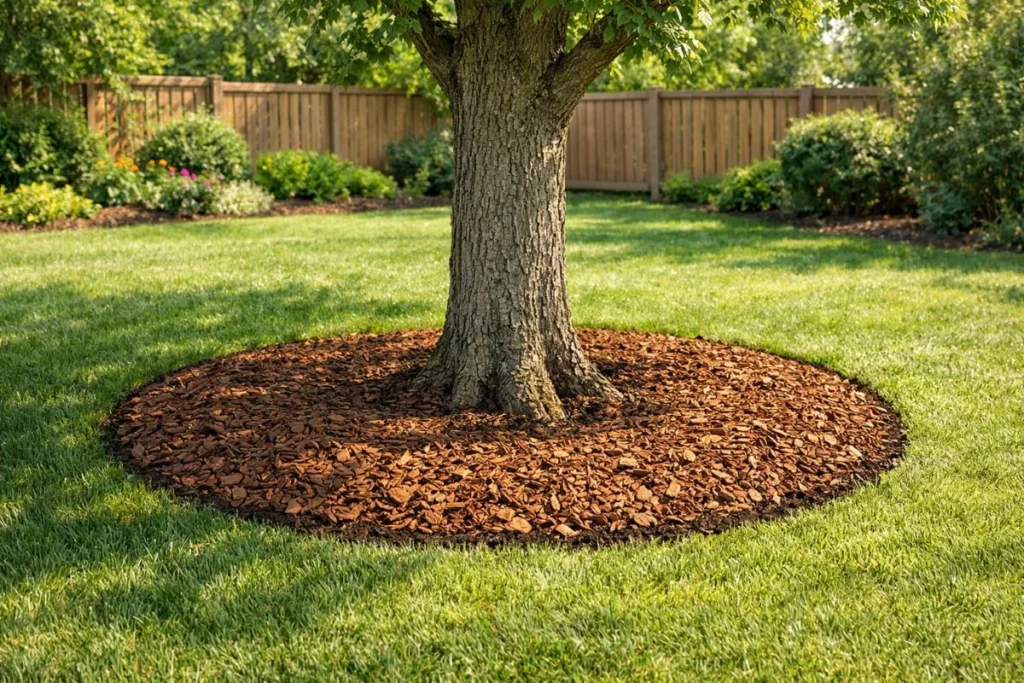
To mulch a tree properly, create a wide ring around the base, keep mulch 2–4 inches deep, and leave 2–3 inches of space from the trunk. Always spread mulch in a flat donut shape, not a mound, to protect roots and prevent bark damage.
- How to Put Mulch Around a Tree (Step-by-Step)
- Why Proper Tree Mulching Matters
- Benefits of Mulch for Young Trees
- The 3-3-3 Mulching Rule Explained
- Step-by-Step: How to Put Mulch Around a Tree Properly
- Mulch Rings Around Trees in Turfgrass
- Best Mulch Types for Trees
- Mulch Materials to Avoid
- How Much Mulch Do You Need for One Tree
- How to Mulch Newly Planted Trees
- When Should Trees Be Mulched
- When to Refresh Mulch
- 3 Common Tree Mulching Mistakes to Avoid
- Donut Mulch vs Volcano Mulch
- What Not to Do: Mulch Volcanoes
- Fixing Mulching Mistakes
- Frequently Asked Questions About Mulching Trees
- conclusion
How to Put Mulch Around a Tree (Step-by-Step)
- Remove grass and weeds around the tree base
- Create a wide mulch ring (at least 3 feet)
- Keep mulch 2–4 inches deep
- Leave 2–3 inches space from the trunk
- Spread mulch in a flat donut shape
Key Takeaways: Proper Tree Mulching
- Keep mulch 2–4 inches deep
- Leave 2–3 inches of space around the trunk
- Make the mulch ring at least 3 feet wide
- Use organic mulch like wood chips or bark
- Spread mulch in a donut shape, not a volcano
Why Proper Tree Mulching Matters
Trees grow better when the soil around their roots stays cool and moist. Mulch helps create this environment.
Here are the main reasons homeowners mulch trees:
- Keeps soil moisture in the ground
- Reduces weed growth
- Protects tree roots from heat and cold
- Improves soil as mulch breaks down
- Reduces damage from lawn mowers and trimmers
Without mulch, grass often grows around the trunk. Grass competes with tree roots for water and nutrients. A mulch ring removes this competition and gives the tree a better growing space.
Benefits of Mulch for Young Trees
Young trees especially benefit from proper care routines, and applying these methods alongside basic tree care practices for healthy growth can improve long-term results.
Mulch helps young trees by:
- Holding moisture in the soil
- Protecting roots from temperature changes
- Preventing weeds from growing near the tree
- Improving soil structure over time
A wide mulch ring around young trees helps roots spread more easily. This helps the tree grow stronger during its early years.
The 3-3-3 Mulching Rule Explained
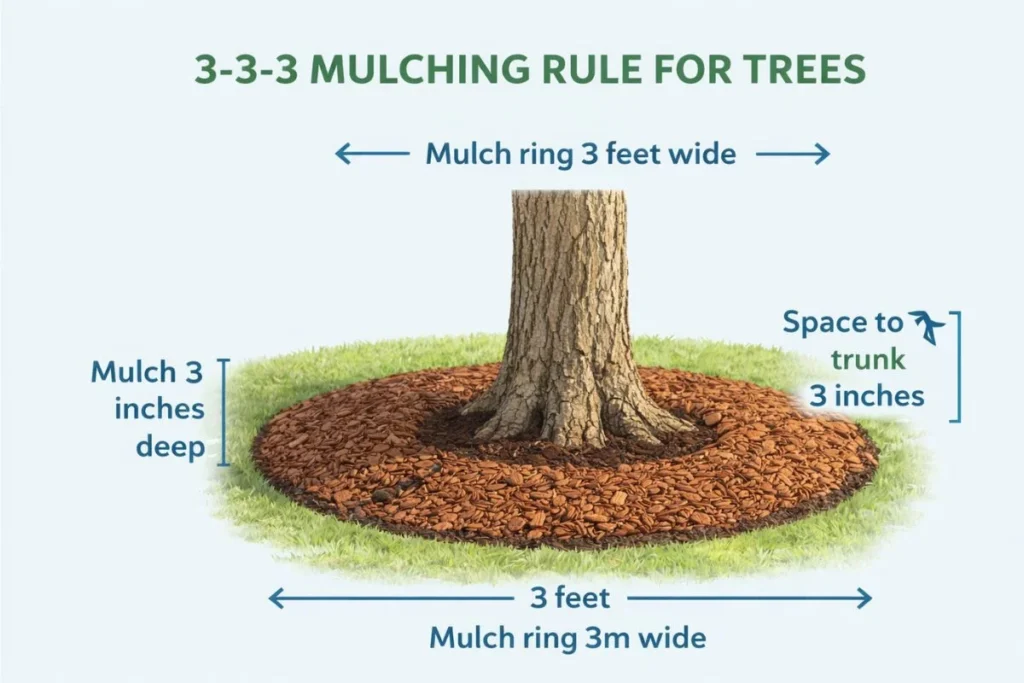
Many tree experts use the 3-3-3 rule when applying mulch around trees.
The rule means:
- 3 inches deep – mulch layer thickness
- 3 feet wide – minimum mulch ring size
- 3 inches away from trunk – space around bark
This rule prevents the most common mulching mistakes.
Step-by-Step: How to Put Mulch Around a Tree Properly
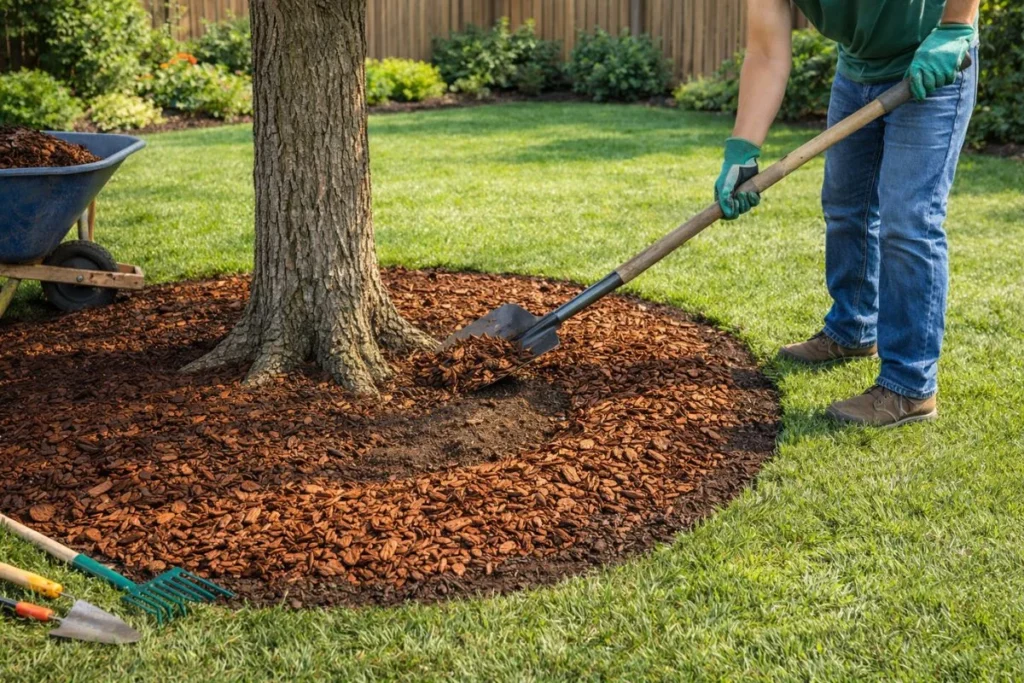
Follow these steps to mulch a tree correctly.
What You’ll Need
Before starting, gather these tools:
- Garden gloves
- Rake or hand cultivator
- Shovel
- Mulch material
- Measuring tape or ruler
These tools help spread mulch evenly around the tree.
Step 1: Choose the Right Mulch for Trees
Organic mulch works best for most trees.
Good mulch materials include:
- Wood chips
- Bark mulch
- Pine needles
- Shredded leaves
- Compost
Organic mulch breaks down slowly and improves soil health.
Step 2: Measure and Edge Your Mulch Ring
Create a circular mulch ring around the tree.
A mulch ring should be at least 3 feet wide, but wider rings provide better root protection.
Remove grass and weeds inside the ring. This prevents grass from competing with the tree.
Step 3: Remove Grass and Loosen the Soil
Remove grass and weeds completely.
Then lightly loosen the soil with a rake. This helps water move into the soil and reach the roots.
Step 4: Water the Soil Before Mulching
Water the soil before adding mulch.
Moist soil helps mulch hold water better and supports healthy root growth.
Step 5: Locate and Expose the Root Flare
The root flare is the place where the trunk widens near the soil surface.
This part of the tree should stay visible. If soil or mulch covers it, remove the extra material.
Keeping the root flare exposed helps prevent bark rot and disease.
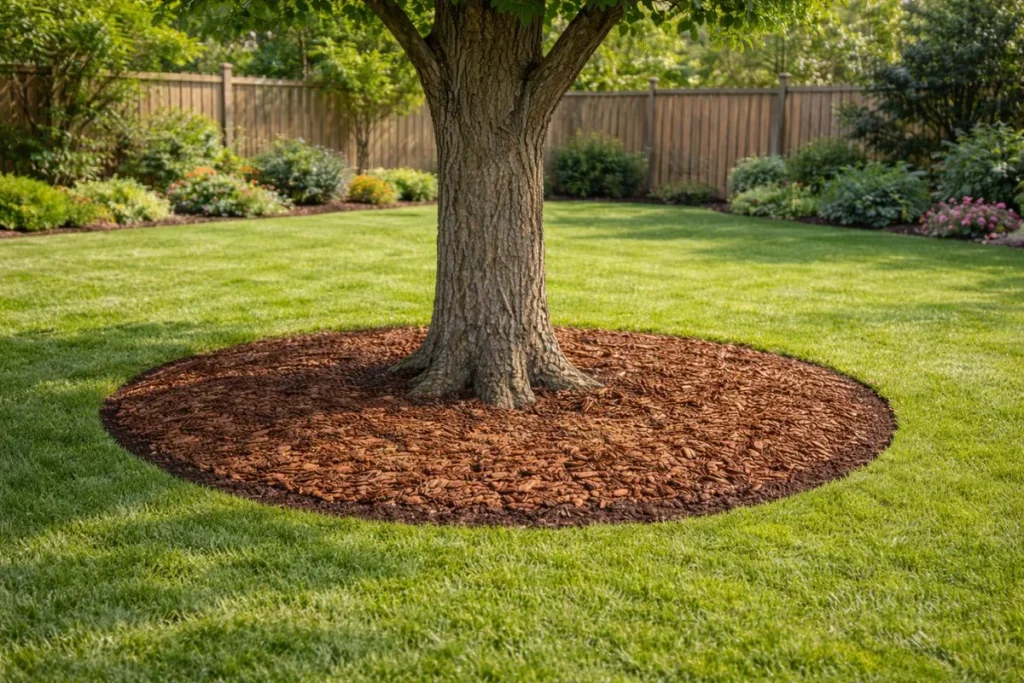
Step 6: Apply Mulch in a Donut Shape
Spread mulch evenly around the tree.
The mulch should form a donut shape, not a mound.
Follow these rules:
- Mulch depth should be 2–4 inches
- Leave 2–3 inches space around the trunk
- Spread mulch evenly across the ring
This shape protects roots while keeping the trunk dry.
This method is also helpful for plants like palms, where proper spacing and moisture control support healthier roots, especially when you understand how to care for palm trees in the right conditions.
Mulch Rings Around Trees in Turfgrass
Trees growing in lawns often struggle because grass competes with tree roots for water and nutrients.
A mulch ring solves this problem.
Mulch rings also help by:
- Preventing lawn mower damage
- Protecting the base of the tree
- Reducing soil compaction
The larger the mulch ring, the healthier the tree can grow.
Reducing lawn areas around trees can also be part of a smarter landscape plan, especially when using plants that need very little ongoing maintenance instead of high-maintenance grass.
Best Mulch Types for Trees
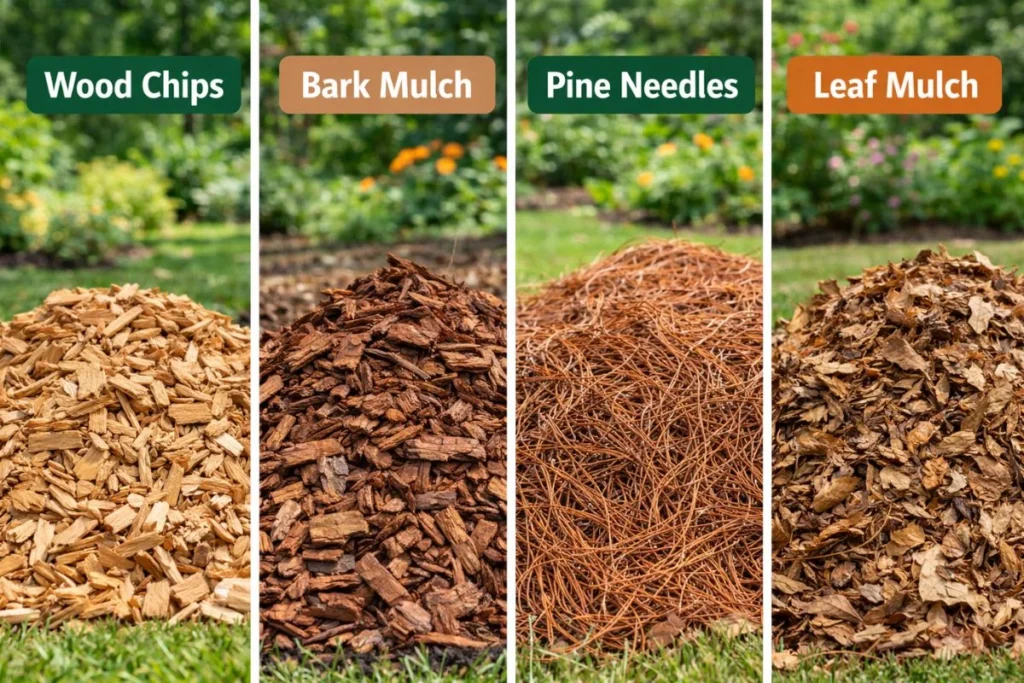
Choosing the right mulch improves soil and root health.
Common organic mulches include:
Wood chips
Long-lasting and commonly used around trees.
Bark mulch
Breaks down slowly and looks clean in landscapes.
Pine needles
Light mulch that drains well.
Leaf mulch
Made from shredded leaves and improves soil quality.
Compost mulch
Adds nutrients to the soil.
Recommended Mulch Depth for Trees
| Mulch Type | Recommended Depth |
|---|---|
| Wood chips | 3–4 inches |
| Bark mulch | 2–3 inches |
| Pine needles | 3–4 inches |
| Shredded leaves | 2–3 inches |
| Compost mulch | 2–3 inches |
Mulch Materials to Avoid
Some materials should not be used around trees.
Avoid these materials:
Rubber mulch
Does not improve soil and can trap heat.
Fresh sawdust
Can remove nitrogen from the soil as it breaks down.
Plastic landscape fabric under mulch
Blocks air and water from reaching the soil.
Natural organic mulch is the best choice for trees.
How Much Mulch Do You Need for One Tree
Many homeowners are unsure how much mulch they should buy.
The amount depends on the size of the mulch ring and mulch depth.
Example:
- Mulch ring diameter: 3 feet
- Mulch depth: 3 inches
This usually requires about 2–3 cubic feet of mulch, which equals one standard bag.
Larger mulch rings will require more mulch.
Recommended Mulch Ring Size
| Tree Size | Mulch Ring Diameter |
|---|---|
| Newly planted tree | About 3 feet |
| Young tree | 3–5 feet |
| Mature tree | Up to the drip line |
How to Mulch Newly Planted Trees
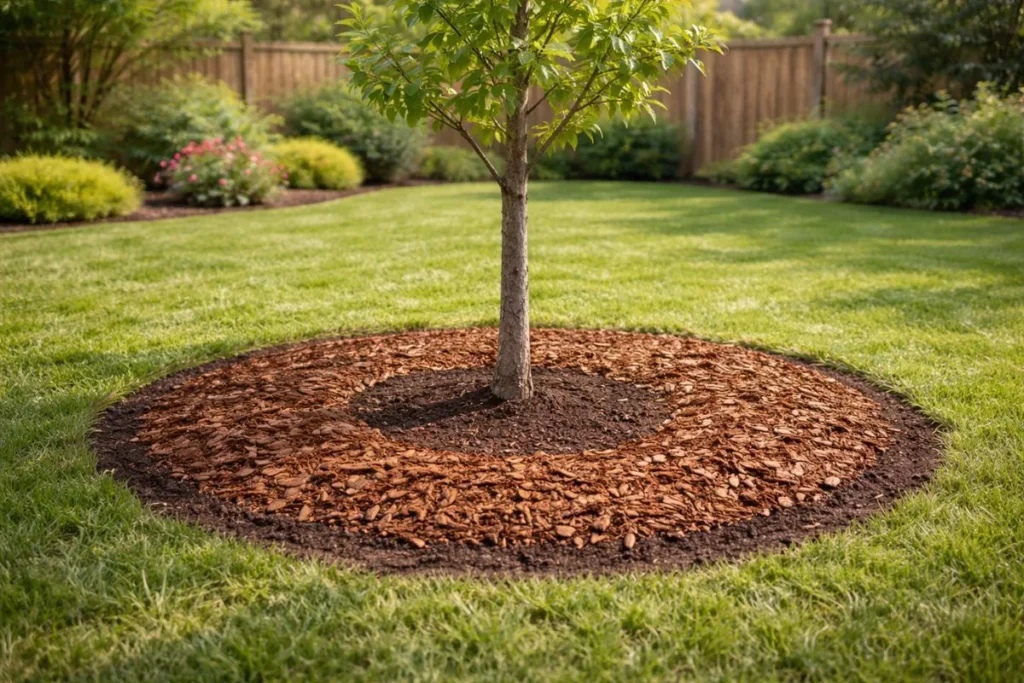
Newly planted trees need extra care.
Follow these tips:
- Create a wide mulch ring
- Keep mulch 2–4 inches deep
- Leave space around the trunk
- Water after mulching
Mulch protects young roots and helps the tree establish faster.
When Should Trees Be Mulched
Mulch can be added during different seasons.
Spring mulching helps soil retain moisture during warm weather.
Fall mulching protects tree roots during winter.
Mulch can also be refreshed when the existing mulch layer becomes thin.
When to Refresh Mulch
Mulch slowly breaks down and becomes part of the soil.
Mulch should be refreshed every 1–2 years.
Before adding new mulch:
- Check existing mulch depth
- Break up compacted mulch
- Remove excess mulch if needed
Then add a thin new layer to maintain the proper depth.
3 Common Tree Mulching Mistakes to Avoid
Many tree problems happen because mulch is applied incorrectly.
Avoid these mistakes.
Volcano Mulching
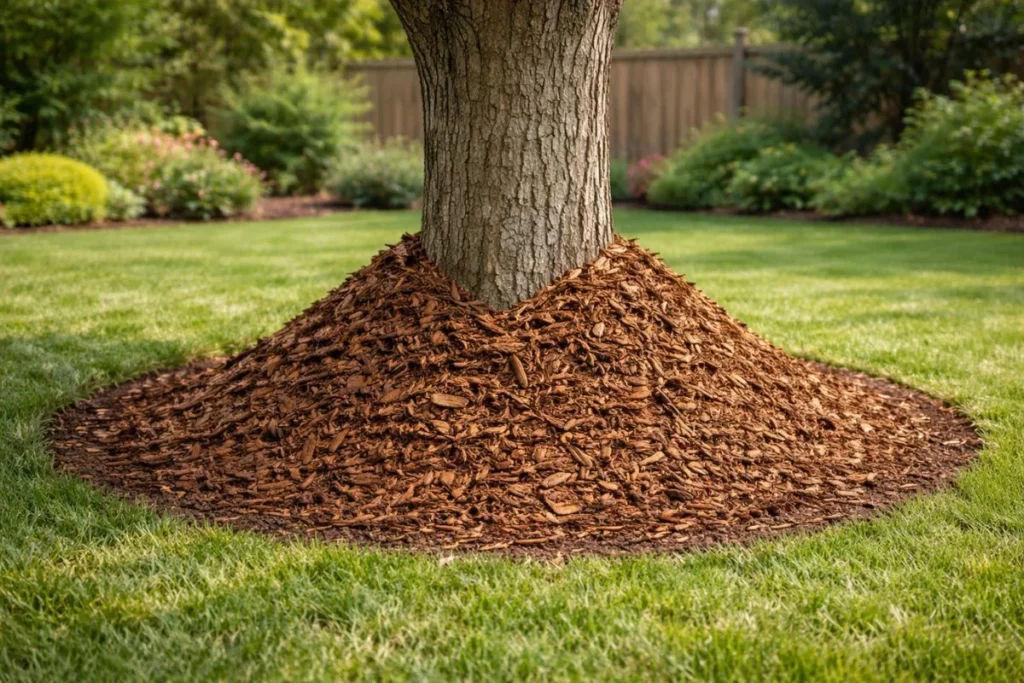
Volcano mulching happens when mulch is piled against the trunk.
This traps moisture and can cause:
- bark rot
- insect problems
- root damage
Over-Mulching
Too much mulch blocks water and oxygen.
Mulch depth should remain between 2 and 4 inches.
Stone or Rock Mulch Around Trees
Decorative rocks may look nice but can trap heat and harm soil health.
Organic mulch is better for trees.
Common Mulching Mistakes and How to Fix Them
| Mistake | Why It Is Bad | How to Fix It |
|---|---|---|
| Mulch touching the trunk | Causes bark rot and pests | Leave 2–3 inches space around the trunk |
| Mulch too deep | Blocks oxygen from reaching roots | Keep mulch depth between 2–4 inches |
| Mulch volcano | Traps moisture against bark | Spread mulch flat in a donut shape |
| Using rocks instead of mulch | Traps heat and harms soil | Use organic mulch like wood chips |
Donut Mulch vs Volcano Mulch
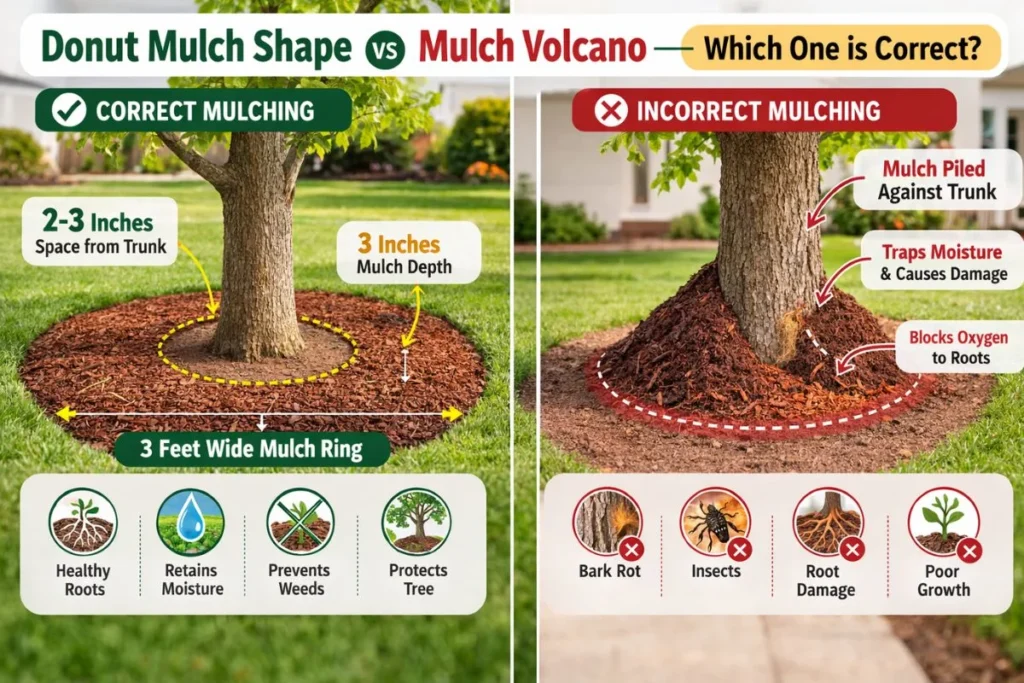
The correct way to mulch a tree is a flat donut shape. The mulch stays away from the trunk and spreads evenly across the soil.
Volcano mulching happens when mulch is piled against the trunk. This traps moisture and can cause bark damage, disease, and root problems.
What Not to Do: Mulch Volcanoes
Mulch volcanoes are easy to spot. The mulch forms a mound around the trunk.
The correct method spreads mulch flat around the tree.
The mulch should always form a donut shape.
Fixing Mulching Mistakes
Many homeowners discover mulch problems after landscaping work.
If mulch is piled against the trunk, gently remove the excess material.
If mulch is too thick, reduce the depth to about 2–4 inches.
Correcting these problems helps trees recover and grow normally.
Frequently Asked Questions About Mulching Trees
How far should mulch be from a tree trunk
Mulch should stay 2–3 inches away from the trunk.
How deep should mulch be
Most trees need 2–4 inches of mulch.
How wide should a mulch ring be
A mulch ring should be at least 3 feet wide.
Larger trees benefit from wider mulch rings.
Can too much mulch harm a tree
Yes. Excess mulch can trap moisture and reduce oxygen in the soil.
Should old mulch be removed
Old mulch can stay if the layer is thin. If mulch becomes thick or compacted, remove some before adding new mulch.
Applying mulch the correct way protects tree roots, improves soil health, and reduces weeds.
By following these steps, homeowners and gardeners can put mulch around a tree the right way and support healthy tree growth for many years.
conclusion
Mulching around a tree may seem like a small task, but doing it correctly can make a big difference in tree health. A proper mulch ring protects roots, holds moisture in the soil, reduces weeds, and improves soil quality as the mulch breaks down. From arborist recommendations and landscape care practices, one lesson stands out clearly: mulch should be spread in a wide, even ring and kept away from the trunk. By following the steps in this guide, homeowners can avoid common mulching mistakes and create better growing conditions for their trees for many years.