
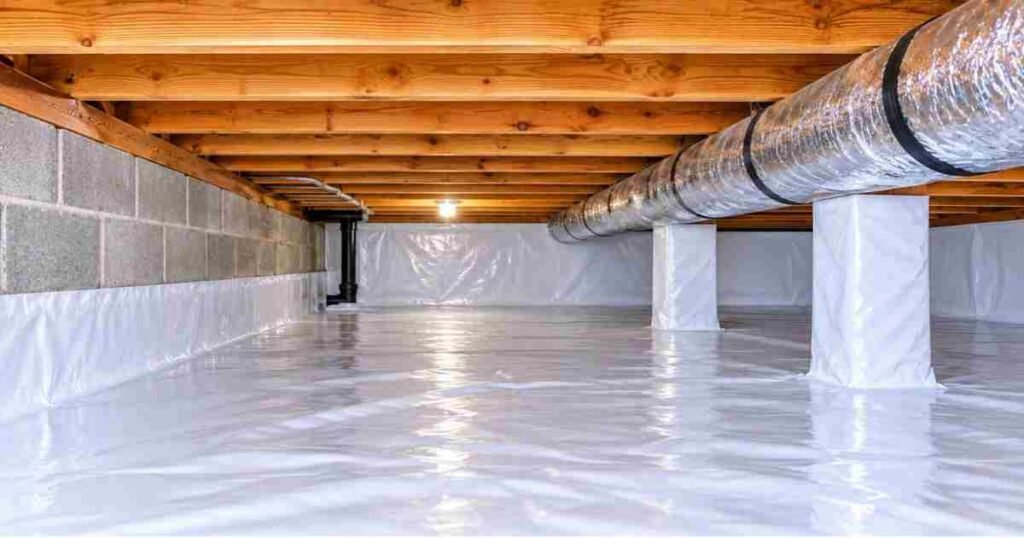
Crawl spaces contain wooden components and other materials that are vulnerable to excess moisture. When water enters or humidity remains uncontrolled, moisture damage, mold growth, wood decay, and pest activity can affect the home. Crawlspace encapsulations use protective barriers to limit ground moisture, and humidity management helps keep the enclosed space dry. Here are a few common issues that make crawl space encapsulation necessary:
Thank you for reading this post, don't forget to subscribe!Persistent Crawl Space Water
Water beneath a house often indicates drainage problems that allow groundwater to accumulate in the crawl space. Heavy rainfall can expose these issues, particularly when standing water remains after the rain stops. Prolonged water accumulation leaves the foundation and surrounding materials exposed to persistent moisture, increasing the risk of water damage.
An internal drainage system collects groundwater and directs it away from the structure; this helps prevent water from accumulating beneath the house. A professional assessment identifies where groundwater enters and determines the appropriate drainage improvements needed. The drainage solution also needs a suitable discharge route to move collected water away from the property.
Excess groundwater contributes to foundation deterioration and affects nearby building materials. Internal drainage systems redirect collected water away from the house, and vapor barriers restrict moisture transmission through crawl space floors and walls. Crawlspace encapsulations involve sealing openings and using dehumidification to control moisture within the enclosed space.
Uncontrolled Moisture Levels
High humidity often persists in a crawl space even when no standing water is visible. Exposed soil releases moisture into the enclosed area, while temperature differences cause condensation to form on cooler surfaces. Damp insulation and wooden components also retain moisture, creating conditions that accelerate material deterioration. A crawl space dehumidifier removes excess moisture from the air and helps maintain a dry environment.
Proper insulation reduces temperature fluctuations and limits condensation on building surfaces. When insulation is inadequate, outside temperatures affect the crawl space, making humidity control more difficult. Persistent humidity also reduces the efficiency of the home’s heating and cooling systems, as moisture and temperature changes make consistent indoor conditions harder to maintain. Dehumidification and appropriate insulation work together to regulate the crawl space environment and improve overall thermal performance.
Mold Beneath the Floor
Damp conditions in a crawl space create an environment where mold and mildew thrive on floor joists, subflooring, and insulation. Growth often appears as dark or discolored patches, while a musty odor indicates moisture problems in less visible areas. As mold develops, it damages wood and other building materials beneath the home. Mold spores and musty odors travel into living areas through gaps around floors and walls. Crawl space encapsulation addresses the moisture conditions that support mold growth. A vapor barrier limits moisture entering from the ground, while sealed openings and a dehumidifier help control humidity within the enclosed space.
Wood Rot in Crawl Spaces
Wooden floor joists and support beams carry the flooring system above a crawl space. Persistent moisture causes wood rot, which weakens these components and reduces their ability to support the structure. Damaged wood often exhibits discoloration, softness, or visible decay around joints and connections. As support members deteriorate, the flooring above develops signs of structural weakness, including:
- Dips in floor surfaces
- Uneven or sloping floors
- Bouncy or unstable flooring
- Visible sagging above weakened supports
A professional inspection identifies damaged framing and determines the extent of deterioration. Crawl space encapsulation helps control moisture through vapor barriers, sealed openings, and dehumidification. When existing supports weaken, crawl space support jacks provide additional reinforcement and help stabilize sagging floors.
Schedule Crawlspace Encapsulations
Excess moisture can damage crawl space materials and weaken wooden supports. Professional crawl space services address moisture problems and help protect the home’s structural components. Contact an encapsulation service provider to discuss moisture-control solutions and available repair services.