
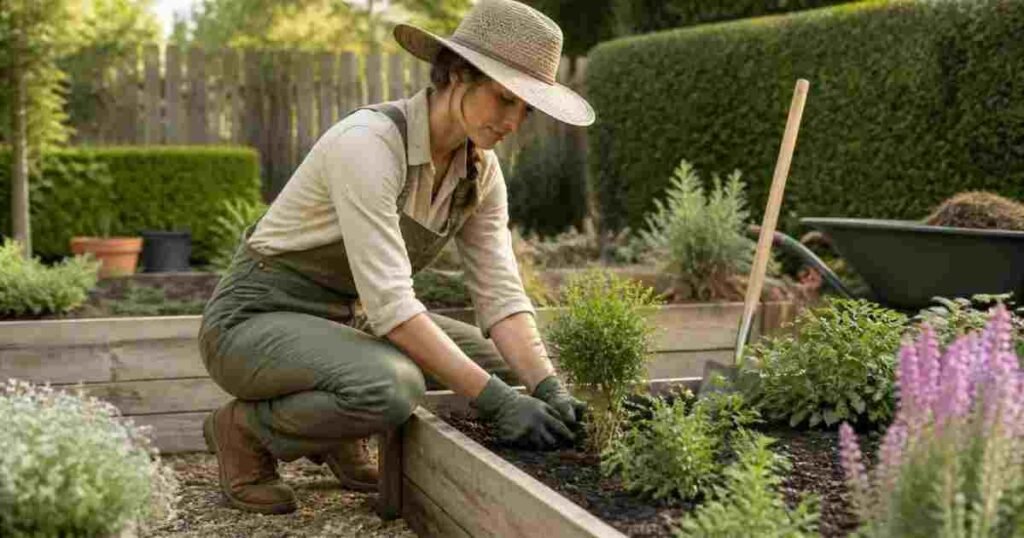
- 1. Choose Durable Pants With Useful Storage
- 2. Wear Long Sleeves for More Than Warmth
- 3. Use Gloves Based on the Task
- 4. Protect Your Knees
- 5. Pick Footwear for the Surface
- 6. Wear Eye Protection for Cutting and Trimming
- 7. Add Hearing Protection for Power Equipment
- 8. Use a Hat for Sun and Heat Management
- 9. Add a Tool Belt Only When It Saves Time
- 10. Layer Clothing for Changing Weather
- 11. Use High-Visibility Clothing Near Traffic
- 12. Keep Workwear Separate From Everyday Clothing
- Dress for the Work, Not Just the Weather
Gardening and yard work can be harder on clothing than it looks. Kneeling in soil, carrying branches, moving stone, trimming shrubs, handling tools, and working in changing weather all put extra stress on everyday clothes.
Thank you for reading this post, don't forget to subscribe!Good workwear should protect your skin, allow a full range of motion, resist abrasion, and keep frequently used tools within easy reach. The right setup depends on whether you are doing light planting, pruning, mowing, landscaping, or heavier property maintenance.
- 1. Choose Durable Pants With Useful Storage
- 2. Wear Long Sleeves for More Than Warmth
- 3. Use Gloves Based on the Task
- 4. Protect Your Knees
- 5. Pick Footwear for the Surface
- 6. Wear Eye Protection for Cutting and Trimming
- 7. Add Hearing Protection for Power Equipment
- 8. Use a Hat for Sun and Heat Management
- 9. Add a Tool Belt Only When It Saves Time
- 10. Layer Clothing for Changing Weather
- 11. Use High-Visibility Clothing Near Traffic
- 12. Keep Workwear Separate From Everyday Clothing
- Dress for the Work, Not Just the Weather
1. Choose Durable Pants With Useful Storage
Pants take most of the abuse during outdoor projects.
Look for fabric that resists tearing without becoming too stiff. Reinforced knees, gusseted construction, and stretch panels can help when you are kneeling, squatting, or stepping over garden beds.
For homeowners who want durable pants with multiple pockets, tactical jeans can be practical for yard work because they combine a familiar denim look with utility-focused storage and mobility features.
Extra pockets can keep small tools, gloves, markers, or fasteners accessible while you move around the yard.
Avoid overly loose pants around powered equipment because excess fabric can catch on branches or machinery.
2. Wear Long Sleeves for More Than Warmth
Long sleeves are useful even in mild weather.
They help protect against scratches from branches, sun exposure, insect bites, and contact with irritating plants.
Choose lightweight, breathable fabric for warmer conditions.
Synthetic blends often dry faster than heavy cotton if you are sweating or working around water.
For pruning dense shrubs or moving rough materials, consider a tougher overshirt or lightweight work jacket.
The extra layer can protect your arms without restricting movement.
3. Use Gloves Based on the Task
One pair of gloves is not enough for every yard project.
Thin gloves are useful for planting and handling small tools, while heavier gloves are better for branches, stone, fencing, or rough lumber.
Match Gloves to the Job
- Lightweight coated gloves for planting
- Leather or reinforced gloves for pruning
- Waterproof gloves for wet soil
- Cut-resistant gloves for sharp materials
- Insulated gloves for cold-weather work
Check fit carefully.
Loose gloves reduce dexterity and can make it harder to grip hand tools safely.
Replace gloves once the palm or fingertips wear through.
4. Protect Your Knees
Kneeling is common during planting, weeding, edging, and irrigation work.
Repeated pressure on hard ground can become uncomfortable quickly.
Knee pads are useful for larger jobs, while a portable kneeling pad may be enough for shorter sessions.
If you wear work pants with knee-pad pockets, make sure the insert sits directly over the kneecap rather than shifting while you move.
A good kneeling system can also reduce how often you need to bend at the waist.
5. Pick Footwear for the Surface
Shoes should match both the terrain and the work.
Light garden shoes may be fine for watering or harvesting, but heavier projects require better traction and protection.
For digging, moving material, or using heavy tools, choose work boots with a stable sole and, where appropriate, reinforced toe protection.
Water-resistant or waterproof footwear is useful when working in wet grass or muddy soil.
Avoid smooth soles on slopes.
Traction matters more than appearance when you are carrying weight across uneven ground.
6. Wear Eye Protection for Cutting and Trimming
Eye protection should be standard when using equipment that can throw debris.
String trimmers, hedge trimmers, blowers, saws, and even hand pruners can send dirt, wood chips, or plant material toward your face.
Use safety glasses with side protection.
For dusty work or heavy debris, sealed goggles may provide better coverage.
Keep lenses clean and replace heavily scratched pairs.
Damaged lenses can reduce visibility to the point that they create another safety problem.
7. Add Hearing Protection for Power Equipment
Lawn equipment can expose you to high noise levels.
Mowers, leaf blowers, chainsaws, and some trimmers can become uncomfortable during longer work periods.
Use earmuffs or properly fitted earplugs when operating loud equipment.
Comfort matters because protection that is difficult to wear is often removed too early.
Keep hearing protection with the equipment so it becomes part of the normal setup.
8. Use a Hat for Sun and Heat Management
A hat can reduce direct sun exposure on the face and neck.
Wide-brim styles provide more coverage than standard caps.
Choose breathable materials for summer work.
If you are working for several hours, combine the hat with sunscreen and regular water breaks.
Dark, heavy headwear can trap heat, so match the material to the conditions.
A damp cooling towel around the neck can also help during hotter projects.
9. Add a Tool Belt Only When It Saves Time
A tool belt can be useful for pruning, fencing, planting, or maintenance work that requires frequent tool changes.
Do not overload it.
Too much weight around the waist can become uncomfortable and may affect balance while climbing or bending.
Useful Items to Carry
- Hand pruners
- Small trowel
- Measuring tape
- Marker or pencil
- Gloves
- Fasteners
- Garden ties
Larger tools should stay in a bucket, cart, or wheelbarrow rather than hanging from your body.
10. Layer Clothing for Changing Weather
Outdoor work conditions can change quickly.
A cool morning may become hot by midday, while wind or light rain can make a comfortable temperature feel much colder.
Use removable layers.
A moisture-wicking base layer, lightweight overshirt, and packable outer shell can cover a wide range of conditions.
Avoid thick clothing that becomes restrictive when damp.
Store an extra dry layer nearby if you expect to work for several hours.
11. Use High-Visibility Clothing Near Traffic
Yard projects near roads, shared driveways, or parking areas require more visibility.
Bright colors or reflective elements can make you easier to see.
This is especially important when loading debris, trimming roadside vegetation, or working around vehicles.
Do not assume drivers can see you simply because you are standing near the property line.
Position cones or temporary markers where appropriate and keep tools out of traffic paths.
12. Keep Workwear Separate From Everyday Clothing
Gardening clothes pick up soil, chemicals, pollen, plant oils, and debris.
Keep a separate set for yard projects.
This also makes it easier to choose clothing based on function rather than worrying about stains or wear.
Store gloves, eye protection, knee pads, and other small items together.
A dedicated bin or shelf near the garage or mudroom can reduce setup time before each project.
Dress for the Work, Not Just the Weather
Good gardening workwear should make the job easier and safer.
Choose durable pants, protective gloves, stable footwear, and eye protection first. Add knee pads, hearing protection, high-visibility gear, or heavier layers based on the task.
The most useful clothing is the gear you can move comfortably in for several hours.
When workwear fits correctly and matches the project, you spend less time adjusting clothes and more time getting the yard work done efficiently.