
- Why Mailbox Identification Matters in Landscaped Environments
- Placement Strategies That Work With Your Landscape
- Choosing Numbers That Complement Your Design Aesthetic
- Coordinating House and Mailbox Identification Systems
- Lighting Considerations for Year-Round Visibility
- Seasonal Maintenance and Vegetation Management
- Design Inspiration From Modern Residential Architecture
- Making the Connection Work
A well-designed landscape can transform the approach to your home, but even the most carefully planned beds and borders lose their impact when visitors can’t locate your mailbox or house numbers. This functional challenge becomes particularly evident in neighborhoods where mature plantings, varying setbacks, and architectural diversity make properties difficult to identify from the street. The intersection of landscape design and clear address identification deserves more attention than it typically receives.
Thank you for reading this post, don't forget to subscribe!- Why Mailbox Identification Matters in Landscaped Environments
- Placement Strategies That Work With Your Landscape
- Choosing Numbers That Complement Your Design Aesthetic
- Coordinating House and Mailbox Identification Systems
- Lighting Considerations for Year-Round Visibility
- Seasonal Maintenance and Vegetation Management
- Design Inspiration From Modern Residential Architecture
- Making the Connection Work
Why Mailbox Identification Matters in Landscaped Environments
Emergency responders consistently cite poor address visibility as a factor that delays service calls. In residential areas with extensive landscaping, the problem intensifies after dark or during seasonal changes. A mailbox hidden behind ornamental grasses in summer or obscured by bare branch shadows in winter creates unnecessary confusion. Delivery drivers miss stops, guests circle the block repeatedly, and service providers waste time confirming locations.
The visual clutter that accompanies lush landscaping can work against mailbox identification. When your front yard features multiple focal points—specimen trees, stone features, architectural plantings—the mailbox often recedes into the background unless deliberately incorporated into the design hierarchy. This isn’t about sacrificing aesthetics for function, but rather recognizing that clear identification enhances the overall impression of thoughtful property maintenance.
Placement Strategies That Work With Your Landscape
The standard roadside mailbox placement creates immediate visibility challenges in properties with deep setbacks or curved driveways. When your landscape design draws the eye toward the house rather than the street edge, your mailbox becomes an afterthought. Strategic placement begins with understanding sight lines from both directions of travel on your street. Stand at the curb and identify which plants, structures, or grade changes obstruct views of the mailbox area.
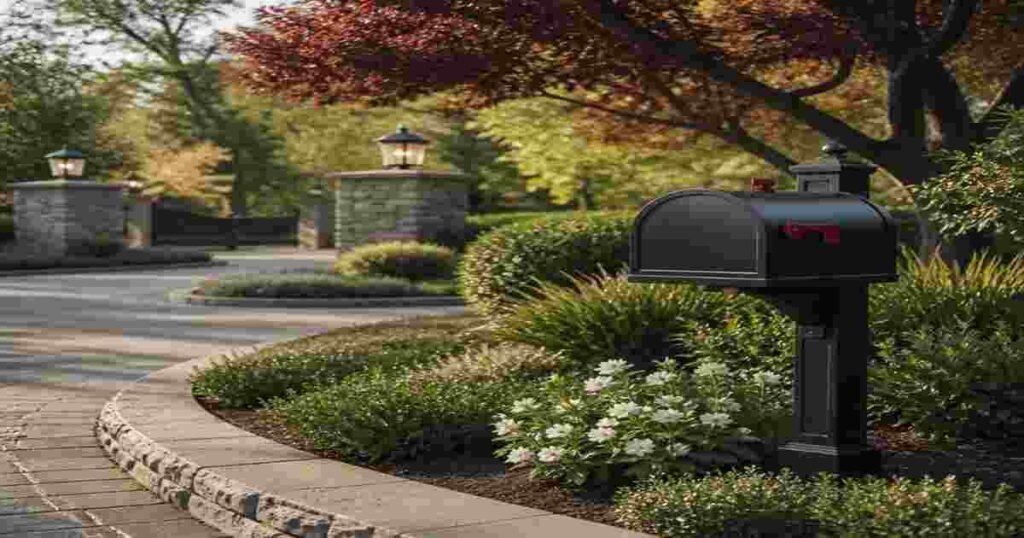
Integrating the mailbox into a planting bed requires maintaining a clear zone around the identification surface. Many homeowners plant perennials or groundcovers right up to the mailbox post, which looks cohesive initially but creates maintenance issues and visibility problems as plants mature. A six-inch radius of mulch or gravel around the post prevents vegetation from blocking numbers while still anchoring the mailbox visually within the landscape. For cluster mailbox installations common in planned developments, consider low-growing plants that won’t exceed 18 inches at maturity.
Choosing Numbers That Complement Your Design Aesthetic
The mailbox itself functions as a secondary location for address identification, particularly valuable in communities where house-mounted numbers may be obscured by porches, columns, or deep overhangs. Modern approaches to mailbox numbering have evolved beyond basic vinyl decals or painted digits. mailbox number stickers crafted from durable materials like solid recycled aluminum provide weather resistance and maintain legibility for years without the fading common to painted surfaces. The floating effect created by concealed mounting adds architectural interest that works particularly well with contemporary landscape designs featuring clean lines and mixed materials.
Number size significantly impacts readability. Municipal codes often specify minimum dimensions, typically 3 to 4 inches in height for roadside mailboxes, but these minimums assume ideal conditions. When your mailbox sits 40 feet from the street or in an area with competing visual elements, increasing the number height to 5 or 6 inches dramatically improves identification. Contrast matters equally—dark numbers on light surfaces or vice versa create the sharpest definition. Consider how your number choice relates to the mailbox color, the backdrop of vegetation, and the changing light conditions throughout the day.
Coordinating House and Mailbox Identification Systems
Consistency between your house numbers and mailbox creates a cohesive visual identity that reinforces address recognition. When both locations use the same typeface, finish, and mounting style, the design reads as intentional rather than assembled from whatever was available at different times. This coordination extends naturally to other address markers you might have—welcome signs, curb stencils, or driveway markers—creating a layered identification system that works from multiple approach angles.
The relationship between curb appeal and property value has been documented across real estate markets, and address visibility plays a subtle but measurable role. Properties that appear well-maintained and easily identifiable signal owner investment throughout the property. Strategic landscaping improvements gain additional impact when paired with clear, attractive address signage that frames the view rather than fighting for attention within it.
Lighting Considerations for Year-Round Visibility
Solar-powered or low-voltage lighting directed at mailbox numbers extends their functionality into evening hours without requiring electrical work. A small downlight mounted on the mailbox post or aimed from a nearby landscape fixture solves the after-dark identification problem that affects many residential streets. When selecting fixtures, choose narrow beam angles that illuminate the number surface without creating light pollution or glare for passing drivers.
Reflective materials offer a passive alternative to active lighting. Numbers with reflective finishes catch headlight beams from approaching vehicles, creating temporary illumination that helps drivers identify addresses. This approach works particularly well in rural or semi-rural settings where street lighting is minimal. The effectiveness depends on the angle between the road, mailbox, and typical parking positions for visitors.
Seasonal Maintenance and Vegetation Management
Deciduous plantings near mailboxes create seasonal visibility variations that require attention during spring growth and fall cleanup. Mark your calendar for mid-spring pruning of any shrubs or perennials within the mailbox sight triangle—the wedge-shaped area extending from both street directions toward your mailbox. This proactive approach prevents the sudden obscuration that occurs when plants hit their growth stride in May and June.
Snow accumulation presents challenges in northern climates, particularly when plow windrows bury mailbox posts or create temporary berms that change sight lines. Design considerations for cold climates include selecting taller posts, reflective post collars visible above typical snow depths, and positioning mailboxes slightly higher than standard height where local regulations permit. Some homeowners install temporary winter markers—reflective stakes or flags—that supplement year-round numbering during heavy snow periods.
Design Inspiration From Modern Residential Architecture
Contemporary residential design increasingly treats mailboxes as intentional design elements rather than afterthoughts. Midcentury modern approaches to mailbox design demonstrate how form and function coexist, with clean lines and quality materials creating installations that enhance rather than detract from landscape compositions. This philosophy extends naturally to the numbers themselves, where architect-designed options replace generic hardware store selections.
The shift toward viewing address identification as part of the overall design narrative opens possibilities for creative integration. A mailbox column clad in the same stone veneer as your house pillars, numbers that match your front door hardware finish, or a custom color that echoes your landscape accent plantings—these details signal attention to comprehensive design. The investment in quality identification materials typically represents a small fraction of landscape installation costs while delivering ongoing visibility benefits.
Making the Connection Work
Effective mailbox identification doesn’t compete with your landscape design—it completes it. The same principles that guide successful planting compositions—scale, contrast, repetition, and focal points—apply equally to address signage. When you select numbers that complement your home’s architectural style, position them for maximum visibility, and maintain clear sight lines through vegetation management, you create a system that serves both practical and aesthetic purposes. The result is a property that welcomes visitors clearly while maintaining the visual impact you’ve worked to achieve through thoughtful landscaping.