
Few things are as frustrating as pulling weeds all season, only to watch them march right back a few weeks later. Crabgrass creeps across your borders, dandelions pop their sunny yellow heads up overnight, and no matter how many you yank, there always seem to be more. If you’ve felt like you’re losing this battle, you’re in good company, and the good news is that lasting weed control is absolutely possible.
Thank you for reading this post, don't forget to subscribe!The secret is understanding that you’re not just fighting weeds. You’re managing a lawn. Once you grasp how crabgrass and dandelions actually work, and why they keep coming back, you can stop playing whack-a-mole and start building a lawn that keeps them out on its own. Let’s dig in.
Know Your Enemy: Crabgrass vs. Dandelions
These two weeds frustrate homeowners for completely different reasons, and treating them the same way is a common mistake.
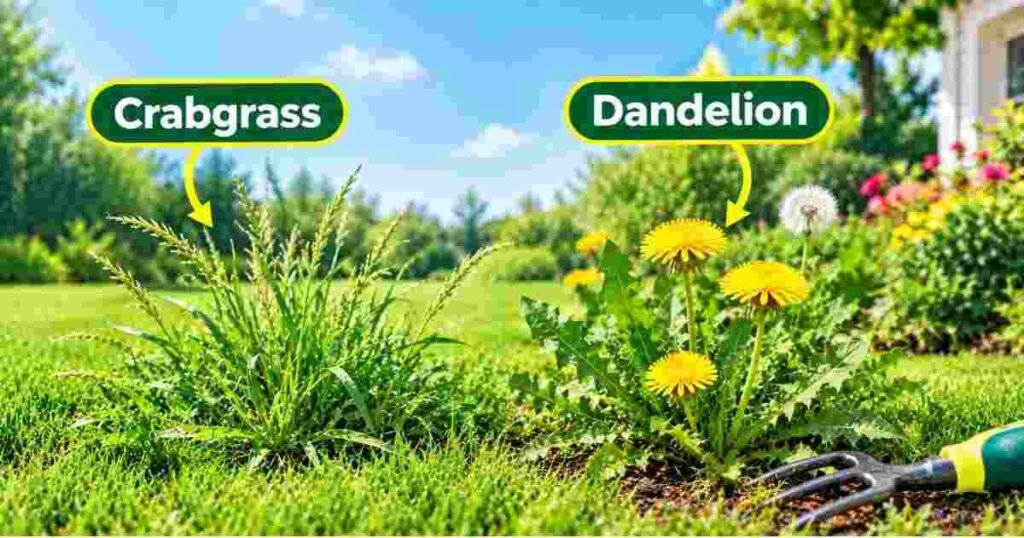
Crabgrass is an annual grassy weed. It sprouts from seed each year, spreads low and wide like its namesake crab, and thrives in hot, thin, stressed lawns. The plant itself dies off when cold weather arrives, but not before dropping thousands of seeds that wait patiently in your soil for next season. That’s why crabgrass seems to return no matter what. You’re not fighting the same plant; you’re fighting its offspring.
Dandelions are a different story. They’re perennial broadleaf weeds, meaning the same plant comes back year after year. Their superpower is a long, deep taproot. Snap off the leaves or the flower, and the root survives underground, ready to send up fresh growth. Worse, each of those cheerful yellow flowers turns into a puffball of seeds that drift across your yard and your neighbor’s.
So crabgrass is a seed problem, and dandelions are a root problem. Beating them for good means addressing both at the source.
Why Weeds Keep Winning
Here’s the truth that changes everything: weeds are usually a symptom, not the disease. They move into lawns that give them an opening.
Thin, patchy grass lets sunlight reach the soil, and sunlight is exactly what weed seeds need to germinate. Compacted soil, improper mowing, shallow watering, and poor nutrition all weaken your grass and roll out the welcome mat. A struggling lawn is a weedy lawn almost every time.
This is why spot-killing weeds never creates a lasting fix. You can clear every dandelion today, but if the underlying lawn is thin and stressed, new weeds simply fill the space. Real, lasting weed control comes from flipping that dynamic: making your grass so thick and healthy that weeds can’t find room to move in.
Timing Is Everything for Crabgrass
If there’s one concept that separates success from frustration with crabgrass, it’s timing.
The most effective approach is stopping crabgrass before it ever sprouts, using a pre-emergent treatment. A pre-emergent creates a barrier that prevents those waiting seeds from germinating. But it only works within a specific window, applied in spring before the soil warms enough to trigger germination. Miss that window, and the seeds are already up, making them far harder to control.
Once crabgrass is actively growing, you shift to post-emergent options, but prevention is genuinely the game-changer here. Getting the timing right is also where a lot of DIY efforts fall short, because that ideal window shifts from year to year and region to region based on soil temperature, not the calendar.
Tackling Dandelions at the Root
Because dandelions regrow from their taproot, surface removal alone is a losing game. If you’re pulling them by hand, you have to extract the entire root, which is tricky with a taproot that can run surprisingly deep. Leave a fragment behind, and it often grows right back.
For a lasting result, dandelions respond best to targeted broadleaf treatment that travels down into the root system rather than just burning off the top. Timing helps here too. Treating in the fall, when perennials pull energy down into their roots for winter, can be especially effective, because the treatment travels where it needs to go.
The goal with dandelions isn’t a one-time blitz. It’s consistent, well-timed attention that gradually exhausts the roots and the seed bank in your soil.
The Real Secret: A Lawn Too Healthy for Weeds
Here’s where it all comes together. The single best long-term weed control strategy isn’t a product at all. It’s a dense, vigorous lawn that physically crowds weeds out and shades the soil so new seeds can’t sprout.
A few habits make the biggest difference. Mow high, because taller grass shades the soil and starves weed seeds of the light they need, while scalping your lawn invites them in. Water deeply but less often, which encourages deep, strong grass roots rather than shallow ones that leave your turf vulnerable. Feed your lawn properly with a sensible fertilization schedule, since well-nourished grass grows thick enough to outcompete invaders. And address compaction through aeration, and thin spots through overseeding, so there are simply no open gaps for weeds to claim.
Do these things consistently and you create a lawn that defends itself. Weeds become the occasional exception rather than the yearly epidemic.
When to Call in the Pros
You can absolutely make progress on your own, but weed control rewards precision, and precision is where many homeowners understandably struggle. Getting pre-emergent timing exactly right, choosing and applying the correct treatments safely, and combining it all with the proper fertilization and lawn care is a lot to juggle, especially if you’d also like to keep things safe for kids and pets.
This is where a professional lawn care program earns its keep. A knowledgeable local team knows your region’s soil temperatures and weed cycles, applies the right treatment at the right moment, and builds the healthy turf that keeps weeds from returning. For homeowners across the Salt Lake Valley and Utah County, SolTerra Lawn & Pest offers eco-friendly lawn fertilization and weed control designed to be effective while staying mindful of families and pets. Wherever you live, the principle holds: lasting weed control is a season-long strategy, not a single afternoon with a sprayer.
Putting It All Together
Beating crabgrass and dandelions for good comes down to a simple shift in thinking. Stop chasing individual weeds and start building a lawn that refuses to host them.
Remember the essentials: crabgrass is a seed problem best stopped with well-timed prevention, dandelions are a root problem that needs targeted, patient treatment, and both are far easier to control when your grass is thick, tall, deeply rooted, and properly fed. Prevention beats reaction every time.
It won’t happen in a single weekend, and that’s okay. Lasting results come from consistent, well-timed care across the season. Commit to that, lean on professional help when the timing or safety gets tricky, and you’ll finally get what you’ve been after all along: a lush, green lawn that looks fantastic and keeps the weeds where they belong, which is to say, somewhere other than your yard.