
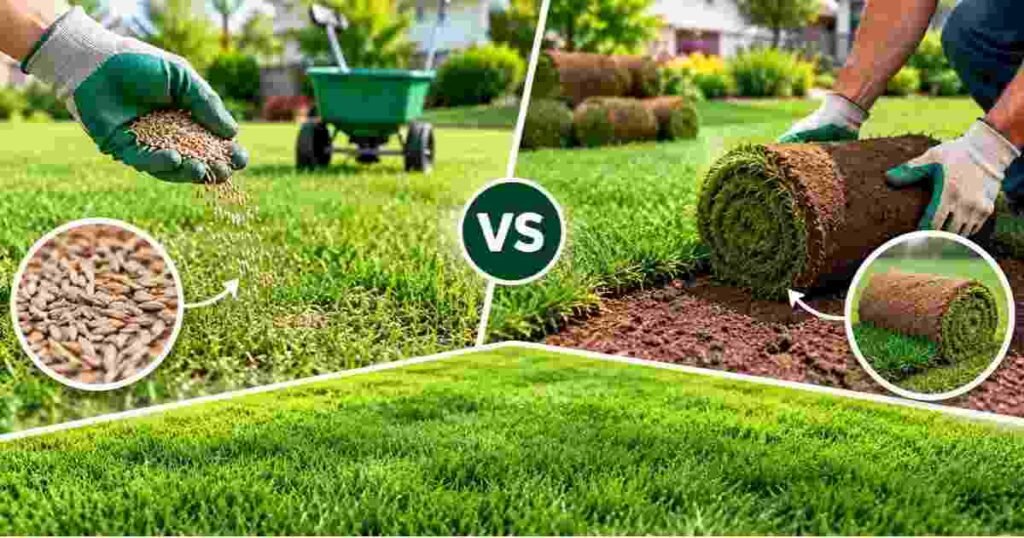
If your lawn is looking thin, patchy, or just plain tired, you’ve probably landed on two words that promise a greener future: overseeding and sod. Both can transform a struggling yard into a lush carpet of grass. But they go about it in completely different ways, and if speed is what you’re after, the right choice depends on more than just the calendar.
Thank you for reading this post, don't forget to subscribe!So let’s settle this the practical way. We’ll break down what each method actually does, how fast you’ll see real results, and how to decide which one fits your lawn, your timeline, and your patience level. By the end, you’ll know exactly which path leads to a thick, green lawn fastest for your situation.
First, What Are We Actually Comparing?
These two methods start from very different places, and understanding that is the key to the whole decision.
Overseeding means spreading fresh grass seed over your existing lawn. You’re not starting from scratch. You’re filling in thin areas, introducing newer grass varieties, and thickening up what’s already there. The existing turf stays, and the new seed grows in alongside it.
Sod, on the other hand, is mature grass that’s already been grown on a farm, harvested in rolls or slabs with the roots and soil attached, and delivered ready to lay down. Installing sod is essentially unrolling a finished lawn onto prepared soil. One day you have dirt; the next day you have green grass.
That difference, growing versus installing, is exactly why one feels instant and the other takes patience.
The Speed Question: Which Is Actually Faster?
Here’s the honest answer most people are looking for, so let’s not bury it.
If you want a green lawn the fastest, sod wins without contest. The moment it’s installed, your yard looks finished. It’s green, uniform, and instantly transformed. There’s no waiting to see if seeds sprout, no bare patches staring back at you for weeks. For curb appeal in a hurry, nothing beats it.
But “looks green today” and “ready to use” are two different milestones. Freshly laid sod needs time for its roots to knit into the soil below, usually a couple of weeks before you can walk on it freely and a bit longer before it’s truly established. During that window, it needs careful, consistent watering. So while sod gives you instant visual results, it still asks for a short period of patience before it’s fully yours.
Overseeding is the slower road to green. After seeding, you wait for germination, then for those tender new blades to mature and fill in. You’re often looking at several weeks before you see meaningful thickening, and a full season or two before the lawn reaches its peak. It rewards patience rather than delivering instant gratification.
So the quick verdict: sod is dramatically faster for immediate results, while overseeding is the gradual, grow-it-in approach.
Why Overseeding Still Wins for a Lot of Lawns
If sod is faster, why would anyone overseed? Because speed isn’t the only thing that matters, and overseeding has real advantages.
It’s the gentler, more budget-friendly option, which makes it ideal when your lawn is mostly healthy but could use a boost. If you’ve got decent grass with some thin spots, overseeding thickens the whole thing without the expense and labor of tearing everything out.
It also lets you improve your lawn’s genetics over time. By introducing newer, hardier, or more drought-tolerant grass varieties, you gradually build a lawn that’s better suited to your climate and more resistant to disease and stress. That’s a long game, but a smart one.
Overseeding works beautifully as regular maintenance too. Many homeowners overseed every year or two to keep their turf dense, because a thick lawn naturally crowds out weeds and handles foot traffic better. It’s less a dramatic makeover and more a steady investment in lawn health.
The catch is that overseeding only succeeds with good preparation and follow-through. Seed needs solid contact with the soil, consistent moisture, and the right timing to germinate well. Toss seed onto a compacted, neglected lawn, and you’ll be disappointed. Do it properly, often paired with aeration first, and the results can be excellent.
Why Sod Is Worth It When You Need Results Now
Sod earns its reputation in specific situations, and when those apply, it’s hard to beat.
It’s the clear choice when you’re starting with bare ground, a brand-new build, or a lawn so damaged that overseeding can’t save it. If there’s not enough healthy grass left to build on, sod gives you a complete, finished lawn immediately.
It also shines on slopes and problem areas prone to erosion, because that mature root system holds soil in place far better than loose seed, which can wash away in the first good rain. And if you simply need your yard looking its best by a certain date, a party, a home sale, the arrival of summer, sod delivers on a schedule seed never could.
The trade-offs are the higher upfront investment and the labor of proper installation. Sod also demands diligent watering in those critical first weeks, because if those roots don’t establish, even the most beautiful sod can fail. Getting the soil prep and installation right the first time makes all the difference, which is one reason many homeowners bring in professionals for sod projects.
How to Choose: A Simple Decision Guide
Standing in your yard trying to decide? Run through these questions.
Ask how much healthy grass you already have. Mostly decent lawn with thin spots points toward overseeding. Bare, dead, or severely damaged ground points toward sod.
Ask how fast you need results. A flexible timeline and a willingness to nurture new growth favor overseeding. A hard deadline or a need for instant curb appeal favors sod.
Ask about your budget and effort. Overseeding is the lighter lift on both. Sod costs more upfront but hands you a finished lawn in a day.
Ask about timing. Both methods have ideal planting windows tied to your grass type and climate, and planting at the wrong time of year is the fastest way to waste either effort. Cool-season lawns, common across places like Utah and the Mountain West, generally establish best in the cooler, moister stretches of the year rather than peak summer heat.
If you’re still unsure, or if your lawn has underlying issues like compaction, poor drainage, or stubborn bare patches, it’s worth getting a professional opinion before you commit. An experienced local lawn care team can assess your soil and turf and tell you honestly which method will actually work for your yard. For homeowners in the Salt Lake City and Davis County area, the crew at RedStone Property Maintenance & Landscaping handles overseeding, sod installation, and the aeration and prep that make either one succeed. Wherever you garden, matching the method to your lawn’s real condition is what separates a thriving result from a frustrating redo.
The Bottom Line
Which gets you a thick, green lawn faster? For instance, finished results—SOD is the undisputed champion, perfect for bare ground, slopes, or a looming deadline. For a healthier, denser lawn built affordably over time, overseeding is the smart, steady winner that keeps good grass getting better.
The best choice isn’t about which method is objectively superior. It’s about where your lawn is starting from and how quickly you need to get where you’re going. Read your yard honestly, time it right, and prep it well, and either path can lead to the lush, green lawn you’re picturing.