
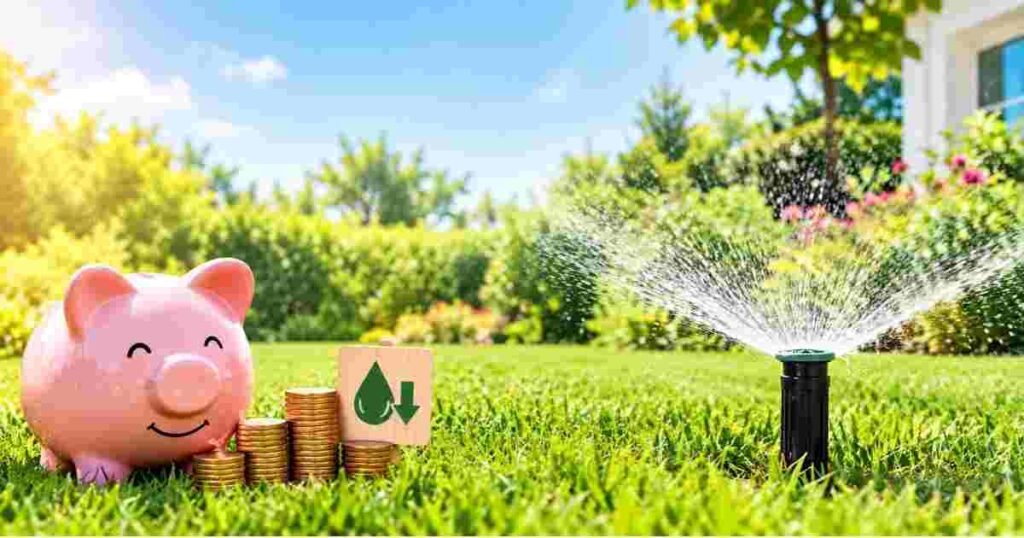
If your water bill makes you wince every July, you’re not imagining things. Outdoor watering is the single biggest driver of summer water use for most households, and a thirsty lawn can quietly drink away a shocking amount of money. The frustrating part? A lot of that water never even helps your grass. It evaporates, runs off, or pours out of a leak you didn’t know you had.
Thank you for reading this post, don't forget to subscribe!The good news is that lowering your summer watering bill rarely means settling for a brown, sad lawn. In most cases, you can have a green, healthy yard and a smaller bill at the same time, simply by watering smarter instead of more. Let’s walk through the practical changes that make the biggest difference.
Water Deeply and Less Often
This is the single most important habit, so we’ll start here. Many people water their lawn for a short time every day, thinking frequent sips keep it happy. In reality, that approach trains grass to grow shallow, weak roots that dry out fast and demand even more water.
Instead, water deeply but less often. A longer soak a couple of times a week encourages roots to grow deep in search of moisture, creating a lawn that’s more drought-resistant and far more efficient. Deep roots mean your grass can go longer between waterings without stress, which directly trims your bill. As a general target, most lawns want roughly an inch to an inch and a half of water per week, including rainfall, though this varies with your grass type and climate.
Time It Right: Early Morning Wins
When you water, it matters almost as much as how much. Watering in the heat of the afternoon sends a large share of your water straight into the air through evaporation before the roots ever get it. Watering in the evening leaves grass damp overnight, which can invite disease.
The sweet spot is early morning, generally before the sun is high. The air is cool, the wind is usually calm, and the water has time to soak down to the roots where it belongs. This one adjustment can noticeably reduce waste without costing you a thing.
Hunt Down Leaks and Broken Heads
Here’s where money quietly disappears. A single cracked line, a broken sprinkler head, or a stuck valve can waste water every single cycle, often without you realizing it. That mysterious green stripe or soggy patch in the lawn is frequently a leak announcing itself.
Walk your yard while the system runs and look for telltale signs: heads spraying onto the sidewalk or driveway, geysers from a broken head misting that drifts away in the breeze, or areas that stay soggy. Misaligned heads watering the pavement are pure waste. Fixing these issues is one of the fastest ways to cut a summer bill, because you stop paying for water that was never reaching your grass in the first place.
Upgrade How Your System Thinks
Older sprinkler systems run on simple timers that do exactly what they were set to do, rain or shine, cool or scorching. That rigidity costs money.
A smart controller adjusts watering based on actual weather and conditions, skipping cycles after rain and dialing back when temperatures drop. Pairing that with a rain sensor means your system won’t run during a downpour, which sounds obvious but happens constantly on older setups. These upgrades pay for themselves over time by cutting the watering you never needed to do. Even without new technology, simply adjusting your controller’s schedule as the season changes, rather than setting it once in spring and forgetting it, keeps you from overwatering as summer peaks and then fades.
Give Thirsty Beds a Drip
Spraying water across garden beds and around shrubs is inefficient, because much of it lands where no roots can use it. Drip irrigation delivers water slowly and directly to the base of plants, dramatically reducing evaporation and runoff.
For flower beds, vegetable gardens, and around trees and shrubs, converting to drip is one of the smartest water-saving moves available. Your plants get steadier moisture exactly where they need it, and you stop paying to water bare soil and mulch.
Help Your Soil Hold Water
Sometimes the problem isn’t your watering at all. It’s that the water can’t soak in. Compacted soil, which is common in many yards and especially in heavy clay, causes water to run off the surface instead of absorbing down to the roots.
Aerating your lawn once a year relieves that compaction and helps water, air, and nutrients reach the root zone. A healthy layer of mulch around beds and trees also locks moisture into the soil, slows evaporation, and means you water less often. Mowing a little higher helps too, because taller grass shades the soil and keeps it cooler and moister. These small habits all stretch every gallon further.
Rethink the Thirstiest Corners
If part of your yard is a constant water hog, a strip of struggling turf on a hot slope, say, it may be worth rethinking that space entirely. Water-wise landscaping, sometimes called xeriscaping, replaces high-demand grass with drought-tolerant plants, ground covers, and attractive hardscape that need far less water.
This doesn’t mean rocks and cactus. Done well, a water-wise conversion is lush and beautiful while slashing the water that area demands. In drought-prone regions, swapping out the thirstiest, least-used patches of lawn can make a real dent in your summer bill year after year, and it’s a one-time change that keeps paying you back.
When to Call in a Pro
You can tackle a lot of this yourself, but sprinkler systems reward precision, and some savings are hard to capture without an expert eye. A professional irrigation audit can reveal hidden leaks, uneven coverage, pressure problems, and scheduling mistakes that quietly inflate your bill month after month. Fixing those and upgrading older systems to water more efficiently often saves far more than the service costs.
This is especially true for older systems, which tend to hide inefficiencies behind decades of patches and guesswork. For homeowners across the Salt Lake Valley, for example, Water Wise Sprinkler and Irrigation specializes in exactly this kind of work, repairing leaks, tuning coverage, installing smart and drip systems, and helping homeowners water efficiently in a dry climate. Wherever you live, a knowledgeable local irrigation pro can turn a wasteful system into an efficient one and keep more money in your pocket all summer.
Smaller Bill, Greener Lawn
Lowering your summer watering bill isn’t about depriving your lawn. It’s about making sure every drop actually does its job. Water deeply and in the early morning, fix the leaks that drain your wallet, let smart controls and drip lines cut the waste, help your soil absorb what you give it, and rethink the thirstiest corners that never pay you back.
Start with one or two of these changes and build from there. You’ll likely be surprised how much a few smart adjustments shave off your bill, all while your grass grows deeper roots and stays greener through the heat. A healthy lawn and a lower water bill aren’t opposites. With a little strategy, they go hand in hand.