
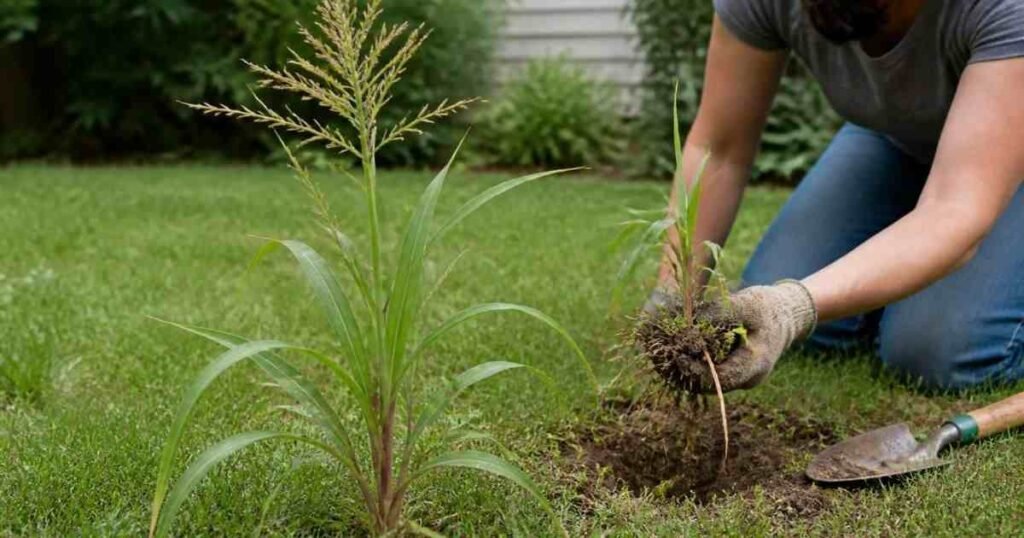
Tall, coarse grass shooting up faster than the rest of your lawn. A seed head with a purplish tint. A stalk that seems to laugh at your mower blade. If that sounds familiar, you’re probably dealing with Johnson grass. Most homeowners shrug it off the first year, then spend the next two trying to undo that mistake. Give this stuff a season to settle in, and it stops competing with your turf — it just takes over.
Thank you for reading this post, don't forget to subscribe!Below is what actually helps: how to tell Johnson grass apart from other weeds, why it’s such a pain to kill, and the removal steps that hold up over more than one growing season.
What Is Johnson Grass?
Johnson grass (Sorghum halepense) is a coarse perennial grass in the sorghum family. Farmers actually introduced it to the U.S. in the 1800s as forage, and some still use it that way today. In a home lawn, though, it doesn’t act like a crop. It acts like a squatter.
Here’s the real problem: it spreads two ways at once, through seed and through a thick web of underground rhizomes. Most weeds only rely on one or the other. That double strategy is why it’s earned a reputation as one of the toughest weeds to fully clear out, both on farms and in yards, mostly across the South and central U.S. but increasingly further north too.
How to Identify Johnson Grass
Crabgrass, bahiagrass, and even a stray corn seedling from birdseed can all get mistaken for Johnson grass. Here’s what to actually look for.
Height and Growth Habit
Left alone, it’ll reach three to eight feet. Even in a lawn you mow every week, it outgrows everything around it within days, so your yard starts looking patchy almost immediately after a cut. The base of the stem gets thick and almost woody as the plant matures.
Leaves
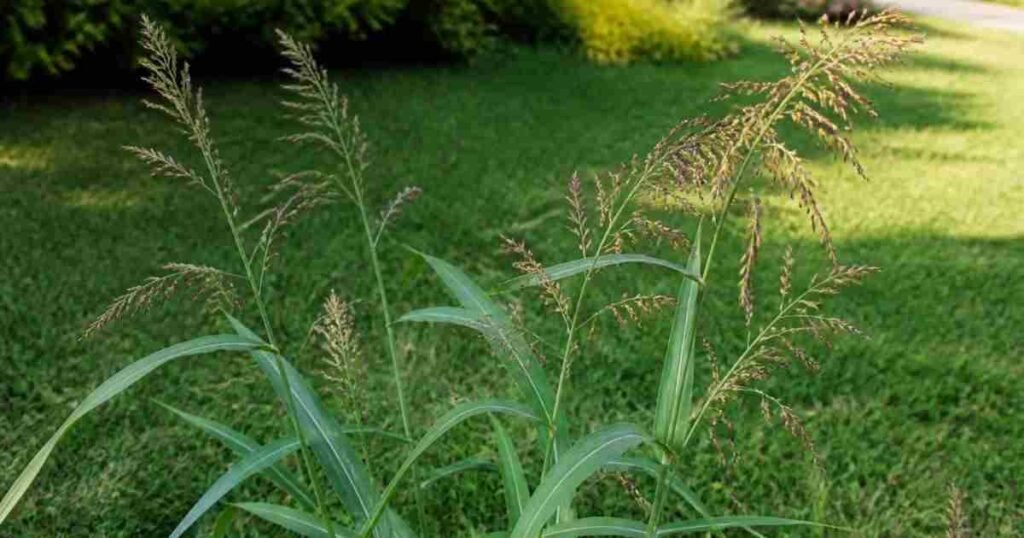
Long, smooth, lance-shaped leaves, usually half an inch to an inch across, with a blue-green cast. Look down the middle of a leaf, and you’ll spot a pale, almost white midrib — that’s one of the easiest ways to confirm you’re looking at the right plant. No hairs, no fuzz, just smooth on both sides.
Seed Heads
This is the tell nine times out of ten. Johnson grass throws up a big, loose, branching seed head that can stretch a foot or longer. Young ones often have a reddish-purple blush; as they mature, they fade to tan or straw. Let even one of these go to seed in your yard, and you’ve planted next year’s problem for yourself.
Roots and Rhizomes
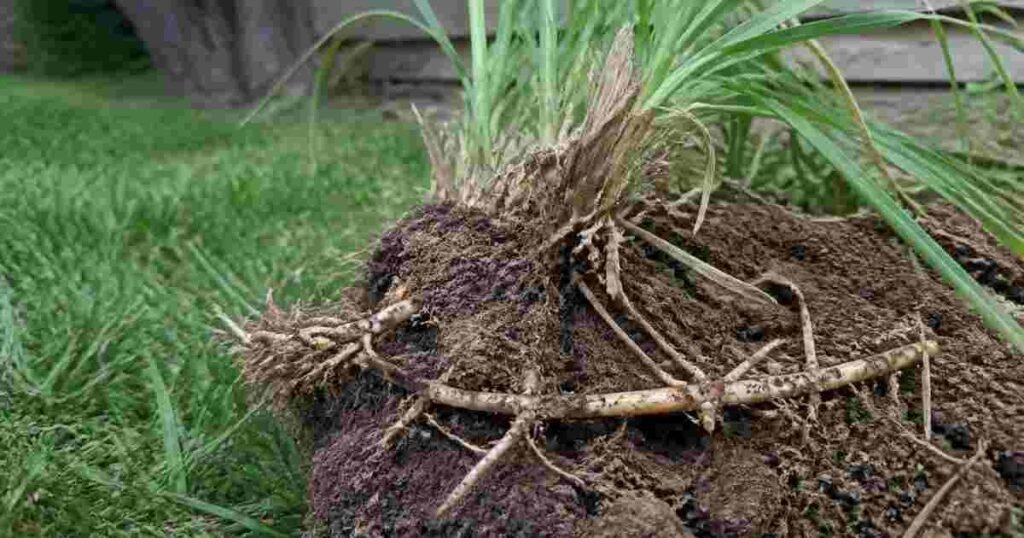
Dig up a young plant and check the roots. A well-established one will have thick, fleshy rhizomes underground—segmented, whitish or purplish, almost like short lengths of rope. This is the part that actually keeps the plant alive through mowing, dry spells, and even a light frost. Snap off a piece and leave it in the soil, and there’s a decent chance it grows into a new plant on its own.
Where It Shows Up
Disturbed ground is its favorite: fence lines, ditches, freshly graded dirt, the edges of garden beds. It also thrives in the kind of fertile, well-watered soil most people are trying to grow a nice lawn in — which is exactly the problem.
Why It’s So Hard to Kill for Good
A few things stack the deck against you here:
- The rhizomes do the heavy lifting. One plant can push rhizomes several feet out in a single season, and cutting the top growth back barely slows down what’s happening underground.
- The seeds don’t quit. They can sit in soil for years and still sprout, so a yard that looks clear for a season or two can suddenly flush with seedlings again.
- Digging can backfire. Till or dig aggressively, and you risk chopping the rhizomes into pieces — and a lot of those pieces will happily root and start over.
- It hides in plain sight early on. Young plants look enough like ornamental grass, or even corn, that people leave them alone “to see what they turn into.” By the time it’s obvious, it’s already spreading.
That’s why pulling it once, or spraying it once, rarely finishes the job. The strategy has to account for what’s happening below the surface, not just what you can see.
How to Remove Johnson Grass From Your Lawn
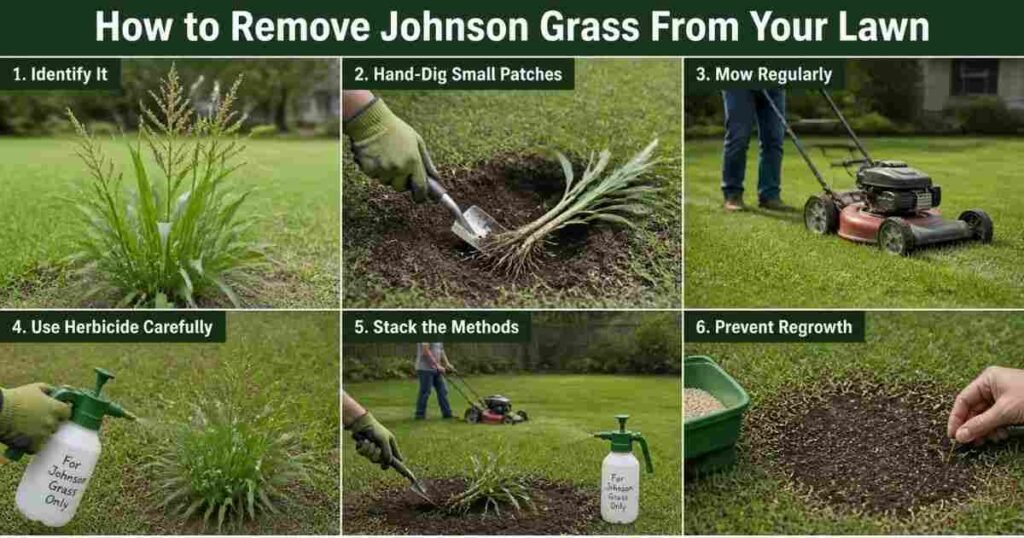
There’s no single trick that wipes it out overnight. What works is a process, and which parts of that process matter most depends on how bad the infestation is.
1. Figure Out What You’re Actually Dealing With
Walk the yard first. A few scattered clumps is a weekend project. A quarter of your lawn overrun is a season-long one. Small patches can often be handled by hand. Bigger infestations need mowing discipline plus herbicide, not one or the other.
2. Hand-Digging Small Patches
For a handful of clumps, digging works — as long as you do it right.
- Water the spot first so the ground softens and rhizomes come up more or less whole.
- Grab a garden fork instead of a shovel. A fork loosens the soil around the rhizomes rather than cutting straight through them.
- Go deep — eight to twelve inches, and a foot or so out from the base — since rhizomes travel further than you’d guess from the leaves above ground.
- Pick through the loosened soil by hand and get every fragment you can find. Leave a piece with a node on it in the ground, and it can start over.
- Skip the compost pile unless yours runs hot enough to actually kill rhizomes and seed. If you’re not sure, bag it and put it out with the trash instead.
- Go back and check every couple of weeks for the rest of the season. Missed fragments will send up new shoots, and catching them small — before the plant rebuilds its energy reserves — makes a real difference.
3. Managing It Through Mowing
If Johnson grass is scattered through an otherwise decent lawn, mowing won’t kill it, but it keeps things in check.
Because it outgrows your turf so fast, it’ll be sticking up again within days of a cut. Mow on the taller end of what’s recommended for your grass type, and mow often enough that Johnson grass never gets the chance to throw a seed head. Every time you cut it back before it fully recovers, you’re forcing the plant to burn energy on regrowing leaves instead of building up its rhizomes. That alone won’t finish it off, but paired with the other steps here, it slows things down a lot.
4. Herbicide
Beyond a few isolated clumps, herbicide is usually where the real progress happens, because it’s the one method that can reach the rhizomes directly.
In a lawn you want to keep: you need something labeled safe for your specific turf that still knocks back grassy weeds. Sethoxydim works on Johnson grass in some cool-season lawns, but it’ll damage most warm-season turf like Bermuda or zoysia — so check the label against your grass type before you spray anything. “Grass killer” is a broad category, and the details matter.
In spots where you don’t care what else dies: fence lines, garden beds you’re reclaiming, areas you plan to reseed anyway — a glyphosate product applied to actively growing foliage tends to work well, since glyphosate travels down into the rhizomes instead of just burning the leaf tips. Expect to spray more than once, a few weeks apart, to catch whatever survives the first round.
Timing beats brand. Spray when the plant is actively growing and has enough leaf area to actually pull the herbicide down to the roots — late spring through summer, generally. Spraying it right after a mow, or when it’s drought-stressed, wastes your effort. Let it regrow a few inches after cutting, then hit that fresh growth.
5. Stack the Methods
For anything past a couple of clumps, this combination tends to work best:
- Mow on a regular schedule to stop it from seeding and to wear it down.
- Let it regrow a bit, then spray the fresh growth with the right herbicide.
- Go back and hand-pull whatever’s left once it’s small and isolated.
- Keep checking the area for a full growing season afterward — fragments and dormant seed both linger.
- Reseed bare spots with your regular turf right away. Bare dirt is exactly what Johnson grass seedlings are waiting for.
6. Keep It From Coming Back
Once an area’s clear, a few habits go a long way:
- Don’t till or dig up ground where Johnson grass has been a problem unless you have to — you risk spreading rhizome fragments around.
- Rinse off mower decks and tools after working in an infested spot, since fragments and seed hitch rides easily.
- Keep the lawn thick through regular feeding and watering. Dense turf crowds out new seedlings before they get a chance.
- Watch any soil, mulch, or compost you bring in from outside, especially if it comes from somewhere known to have Johnson grass.
- Keep an eye on any freshly disturbed ground — new beds, post-construction dirt, ditches, fence lines. That’s where new infestations usually start.
Set Your Expectations Now
Most established patches take more than one season to actually clear. The rhizome system is too extensive, and too good at surviving damage, for a single pass of anything to finish it. People who get this right tend to treat it as an ongoing job for a year or two, not a weekend fix, checking back regularly and dealing with new growth while it’s still small.
The good news: it gets easier every round. A patch that needed three herbicide treatments and constant hand-pulling in year one might only need a touch-up the next year, and by year three you’re usually just pulling the occasional stray seedling.
Quick Reference
- Spot it: fast, tall growth; blue-green leaves with a pale midrib; a large branching seed head that starts purplish and fades to tan; thick, segmented rhizomes below ground.
- Small patches: hand-dig with a fork, get every rhizome fragment, and keep checking back.
- Bigger infestations: mow to stop seeding, spray fresh regrowth with the right herbicide, follow up by hand, and reseed bare spots.
- Long haul: keep the lawn dense, avoid unnecessary digging, and stay watchful for a full season after it looks gone.
Johnson grass is genuinely tough, but it’s not unbeatable. Identify it correctly, stack a few methods instead of relying on one, and give it time — most yards can get free of it within a season or two.