
- Why Boundaries Belong in the First Sketch
- Fences Define Zones Before Plants Do
- Choosing Fence Materials That Fit the Landscape
- Gates Control How People Move Through a Yard
- How Fences Interact With Lawns and Planting Beds
- Planning for Soil Movement and Long-Term Wear
- Maintenance That Keeps Fences and Gates Working
- Building Boundaries Into the Plan
Most landscaping plans start with the lawn and planting beds. The fence usually gets pushed until the end, often after the sod is down and the shrubs are already in the ground. That order creates problems because the fence line determines where shade falls and where runoff goes after a storm, so adding it late often undoes finished work.
Thank you for reading this post, don't forget to subscribe!- Why Boundaries Belong in the First Sketch
- Fences Define Zones Before Plants Do
- Choosing Fence Materials That Fit the Landscape
- Gates Control How People Move Through a Yard
- How Fences Interact With Lawns and Planting Beds
- Planning for Soil Movement and Long-Term Wear
- Maintenance That Keeps Fences and Gates Working
- Building Boundaries Into the Plan
Why Boundaries Belong in the First Sketch
Arlington, Texas sits on the same heavy clay soils common across North Texas, and those soils swell after spring rains and pull apart during long summer dry spells. Fence posts tend to move with the ground, and gates usually show it first. A gate that drags across the walkway or no longer lines up with its latch can make a well-designed entry frustrating to use. This is why so many homeowners call Arlington gate repair contractors to straighten the frame and reset the posts before they plan new beds or paths around it.
Once the boundaries work properly, the rest of the plan has a solid foundation to build on. Paths can lead to an entry that opens freely, and beds can follow a fence line that stays straight season after season.
Fences Define Zones Before Plants Do
A fence splits a yard into areas with different jobs. A play area for kids works best with clear sightlines from the house, so a low picket or open metal design makes sense there. Vegetable beds, on the other hand, often need a taller barrier to keep dogs and rabbits out. You can place trash bins and the air conditioning unit behind a short screen panel that matches the main fence.
Height is the other early decision. Backyard privacy fences in most North Texas suburbs top out at 6 or 8 feet, while front-yard fences are usually kept lower, and both the city and any homeowners association may set their own rules on height and setbacks. Checking those limits before the layout is final avoids tearing out a section that went up a foot too high.
Thinking in zones also changes how much lawn a yard actually needs. Once you fence off a dog run or a garden corner, the remaining turf is often easier to mow and water. That shift toward purposeful landscapes, where each section has a clear use, usually begins with deciding where the fences and the openings go.
Choosing Fence Materials That Fit the Landscape
Material affects both the look of the yard and how much upkeep the fence will demand over the next 15 to 20 years. Wood remains the most common choice in Texas neighborhoods. Cedar handles heat reasonably well, though it needs a stain or a sealer every two to three years to slow graying and splitting. Pine costs less upfront, but it also wears out faster in direct sun.
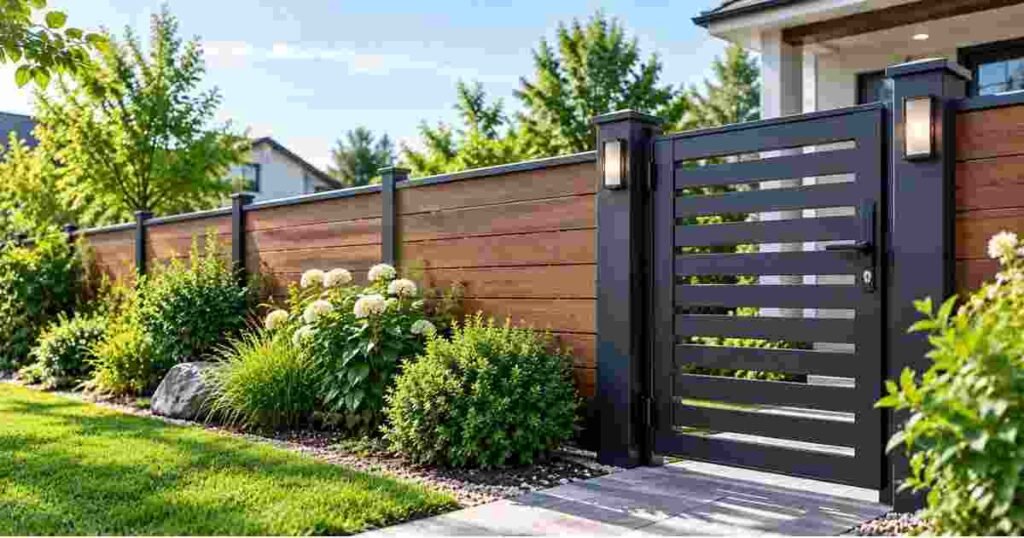
Vinyl and metal sit at the lower-maintenance end. Vinyl resists rot and insects, but it can sag over long spans if the posts aren’t reinforced. Ornamental steel or aluminum suits front yards and pool areas where visibility matters, and powder-coated finishes hold up for years with little more than an occasional rinse. Style counts too. A modern brick home with black steel trim looks odd beside a rustic split-rail fence, and most buyers notice that mismatch from the curb.
Gates Control How People Move Through a Yard
Gates get far less attention than fences during planning, even though they take the most wear. A single backyard gate can open and close thousands of times a year. Width comes first. A 36-inch opening works for foot traffic, but anyone hauling a riding mower or a loaded wheelbarrow should plan for at least 48 inches, or a double gate that opens to 10 or 12 feet for trailer access. Placement matters just as much, because a gate should sit where people already walk. Tucking it into the far corner because it looks tidier on paper leads to worn shortcuts across the grass.
Swing direction and latching come next. On sloped lots, a gate that swings uphill will scrape the ground, so it’s usually hung to swing downhill or fit with a rising hinge. Homes with pets need self-closing hinges and a latch mounted above the reach of a curious dog. The amount of yard space a dog needs depends on its size and energy level, but the gate is where most escapes happen, so its hardware deserves the same care as the fence.
How Fences Interact With Lawns and Planting Beds
Grass rarely grows well right up against a fence. String trimmers chew into wood posts, and mowers leave a ragged strip along the base. A 6- to 12-inch-wide mowing strip of pavers or gravel solves both problems and gives a clean edge that takes little effort to keep up. Solid privacy fences also change the light. A 6-foot board fence on the south side of a yard can shade a strip of lawn for most of the day, and warm-season grasses like Bermuda thin out quickly without full sun. St. Augustine tolerates more shade, although planting shade-loving shrubs along that edge is often the simpler fix. Drainage needs a look as well. When you build a solid fence across a natural slope, it can block runoff and leave water pooling along the bottom boards, so leave a 2-inch gap at ground level.
Trees near the fence line need space too. Digging post holes through the root zone of a mature oak can damage roots that feed the canopy, so shifting a post a foot or two, or spanning the area with a longer rail section, is often the better call. Young trees planted too close to a fence will eventually press against the boards as the trunk widens.
Planning for Soil Movement and Long-Term Wear
Soil type determines how long a fence stays upright. Much of the Dallas-Fort Worth area sits on expansive clay, which swells when it absorbs water and shrinks as it dries out. Over time, that movement pushes posts sideways and can lift concrete footings partway out of the ground.
Deeper footings help. A common rule is to bury about a third of a post’s total length, so a 6-foot fence needs posts set roughly 2 feet down, and gate posts benefit from going deeper still because they carry a hanging load. Some contractors prefer gravel backfill around wood posts, since it drains water away from the base and slows rot. In shifting clay, steel posts set in concrete tend to hold position better, especially at gate openings where even a half-inch of movement throws off the latch.
Maintenance That Keeps Fences and Gates Working
A quick walk along the fence line each spring and fall catches most problems early. Look for posts that lean and boards that have pulled away from the rails. Also note gaps under the bottom rail, since dogs find them fast. On gates, check whether the latch still catches without lifting the frame, and tighten any hinge screws that have worked loose. A small sag can be corrected with an inexpensive anti-sag cable kit. Left alone for a season or two, that same sag can bend the frame and crack the post.
Finishes need their own schedule. In full Texas sun, wood fences usually fade and dry out within a couple of summers, and a fresh coat of penetrating stain keeps them from cupping. Vinyl only needs a wash with mild soap to clear mildew from the shaded side, whereas metal panels should be checked for chipped coating, since bare spots rust quickly after heavy rain.
Building Boundaries Into the Plan
Fences and gates shape how a yard gets used and how its plants and turf perform over time. Treat them as part of the first sketch, with footings suited to the soil and gates placed where people actually walk, and you’ll save a good deal of rework later. In a clay-heavy region like North Texas, that early planning pays off each time the seasons change.