
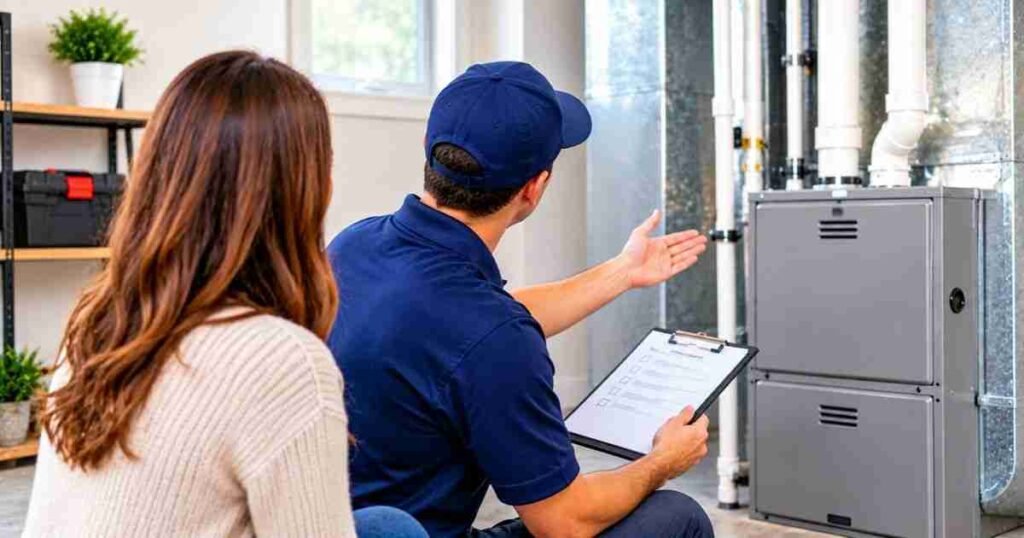
Installing a new furnace is an opportunity to address heating problems that may have affected your home for years. The replacement process also provides a chance to evaluate your ductwork, air filtration, and humidity levels, especially if dust continues to accumulate soon after cleaning. Choosing the right equipment without assessing these factors may leave underlying issues unresolved. Here are a few questions to discuss before starting your furnace installation:
Thank you for reading this post, don't forget to subscribe!How Is Furnace Size Determined?
Evaluating your home’s square footage provides a starting point before furnace installation, but several other factors affect its heating requirements. Ceiling height, insulation, window placement, and local winter temperatures all influence how much heat your home loses. Before recommending a furnace capacity, a technician evaluates these conditions to match the equipment to your home’s actual heating demand.
Recent renovations also affect how a house retains heat. Adding a bedroom or converting a garage increases the area that needs heating, while replacing windows often reduces heat loss. Because these changes alter your home’s heating requirements, a furnace selected before the renovations might no longer fit the updated layout. An installation expert is able to help evaluate your space and recommend an appropriately sized unit.
Which Air Quality Solutions Can I Get?
Standard furnace filters capture some airborne particles, but households with persistent dust often need additional filtration. Whole-home air purifiers and electronic air cleaners target particles circulating through the ductwork. Humidifiers add moisture when indoor air becomes too dry, while dehumidifiers remove excess moisture. A technician will evaluate your home’s air quality and recommend compatible solutions, including:
- Particle filtration: Explore filtration options that capture dust and other airborne particles.
- Humidity control: Determine whether dry air or excess moisture needs attention.
- Air purification: Discuss compatible products that clean air as it circulates through your home.
Does Your Ductwork Support Installation?
Leaky duct joints allow warm air to escape into attics and other unconditioned areas before it reaches occupied rooms. Damaged ducts also introduce dust and insulation particles into the airstream, which affects indoor air quality. An HVAC technician will locate the sources of these problems and determine whether the ducts require repairs or replacement.
Obstructed ductwork restricts airflow, and rooms farther from the furnace often receive less heat. A bedroom at the end of a long duct run may remain cold even when the thermostat is set correctly. Crushed flexible ducts restrict air movement, while poorly sealed connections allow heated air to escape.
Dust accumulating around supply vents often points to ductwork problems. When return ducts have leaks, they draw dust and particles from attics into the HVAC system. Addressing these issues before installing a new furnace helps reduce airborne dust and prevents existing ductwork problems from affecting the new equipment.
How Is Installation Tested?
Safe furnace operation depends on secure gas connections and clear venting pathways. Before the system enters regular use, an electrician checks the electrical connections and controls to confirm they function correctly. Faulty wiring or blocked vents interfere with furnace operation, so technicians inspect these components during installation. They also measure airflow and temperature rise. The team tests the thermostat and safety controls, and these checks help confirm that the system operates as intended. Ask the installation team which inspections, performance tests, and HVAC repairs are included in the process.
Schedule Your Furnace Installation Today
Partnering with an expert will help you understand how the heating system interacts with your home’s ventilation and indoor air quality. Because your home has its own heating and indoor air quality needs, a professional assessment helps address existing problems while you replace the old furnace. Contact an HVAC expert in your area to schedule a home visit and evaluate furnace installation options.