
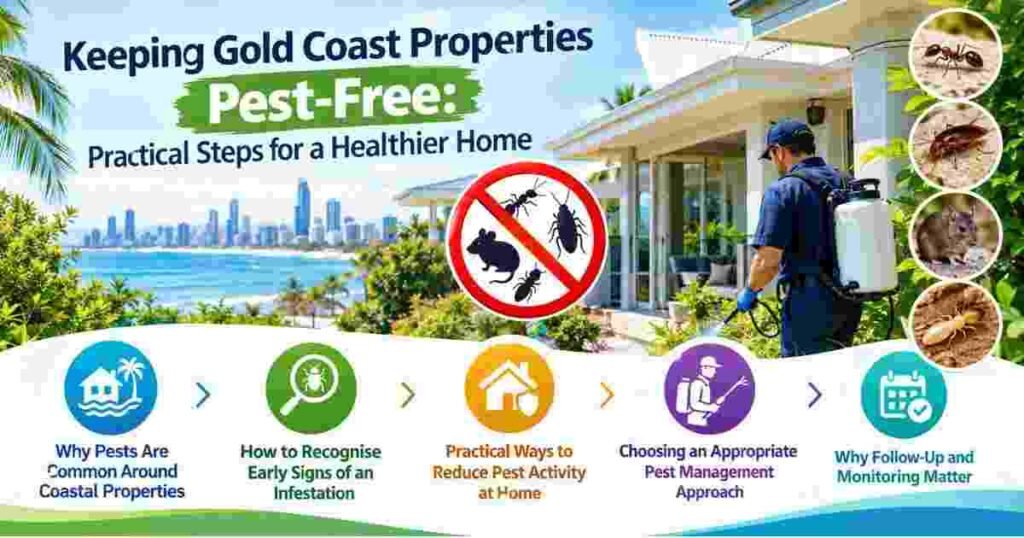
- Why Pests Are Common Around Coastal Properties
- How to Recognise Early Signs of an Infestation
- Practical Ways to Reduce Pest Activity at Home
- Choosing an Appropriate Pest Management Approach
- Why Follow-Up and Monitoring Matter
-
Frequently Asked Questions
- 1. What attracts pests to homes on the Gold Coast?
- 2. When should I arrange professional pest control?
- 3. Are household pest sprays enough to solve an infestation?
- 4. How can I tell whether I have termites?
- 5. Is pest treatment safe for children and pets?
- 6. How can I prevent pests from returning?
- 7. Does every property need the same pest treatment?
- Conclusion
A quiet scratching sound behind a kitchen cupboard or a trail of ants near a window can reveal problems that are easy to overlook during everyday cleaning. In coastal Queensland, warm temperatures, seasonal rainfall, gardens, and moisture around buildings can create conditions that attract a variety of unwanted pests.
Thank you for reading this post, don't forget to subscribe!Choosing pest control Gold Coast services is one way property owners can address existing infestations and reduce the risk of future problems. However, effective pest management begins with understanding why pests enter a building, where they hide, and which environmental conditions allow them to survive. A combination of inspection, prevention, and targeted treatment generally offers a more practical approach than simply reacting whenever pests appear.
- Why Pests Are Common Around Coastal Properties
- How to Recognise Early Signs of an Infestation
- Practical Ways to Reduce Pest Activity at Home
- Choosing an Appropriate Pest Management Approach
- Why Follow-Up and Monitoring Matter
-
Frequently Asked Questions
- 1. What attracts pests to homes on the Gold Coast?
- 2. When should I arrange professional pest control?
- 3. Are household pest sprays enough to solve an infestation?
- 4. How can I tell whether I have termites?
- 5. Is pest treatment safe for children and pets?
- 6. How can I prevent pests from returning?
- 7. Does every property need the same pest treatment?
- Conclusion
Why Pests Are Common Around Coastal Properties
The Gold Coast’s subtropical climate supports many insects and other pests throughout the year. Warm weather encourages insect activity, while heavy rain can disturb outdoor nesting areas and push pests toward sheltered spaces. Gardens, compost bins, timber structures, and standing water may also provide food, moisture, or suitable breeding conditions.
Different pests create different challenges. Ants can enter through tiny gaps while searching for food, cockroaches often gather around damp and concealed spaces, and rodents may exploit openings around pipes, roof spaces, or garage doors. Termites require particular attention because some species can damage structural timber without producing obvious early warning signs.
Property design also influences pest activity. Poor drainage, leaking plumbing, damaged fly screens, and vegetation touching exterior walls can make buildings more accessible to pests. For homeowners dealing with recurring infestations pest control Gold Coast solutions can help identify these contributing factors and develop a prevention plan suited to the property rather than relying on a single treatment for every situation.
How to Recognise Early Signs of an Infestation
Pests are often easier to manage when their presence is identified before the problem spreads. Regularly checking kitchens, bathrooms, roof spaces, garages, and outdoor storage areas can help residents notice changes that might otherwise go unnoticed.
Common warning signs include:
- Ants: Repeated trails near food storage areas, windows, and entry points.
- Cockroaches: Droppings, shed skins, egg cases, or insects appearing after dark.
- Rodents: Gnaw marks, droppings, scratching sounds, and damaged packaging.
- Termites: Damaged timber, mud tubes, or changes in the appearance of wooden structures.
- Fleas: Persistent itching in pets and small insects around animal bedding or carpets.
Why identifying the pest matters
Similar symptoms can have different causes. For example, damaged timber may result from moisture, decay, or termite activity. Likewise, finding one insect does not always indicate a widespread infestation.
Correct identification helps determine the appropriate response, including whether a specialist inspection is needed. Termite concerns deserve particular care because disturbing mud tubes or applying an unsuitable household product may interfere with a proper assessment without resolving the underlying problem.
Practical Ways to Reduce Pest Activity at Home
Prevention works best when it addresses the resources pests need to survive. Food, water, shelter, and accessible entry points are useful starting points for a household pest management routine.
Store food securely. Keep dry goods in sealed containers, clean crumbs promptly, and empty indoor rubbish regularly. Wash pet bowls and avoid leaving food exposed overnight.
Control moisture. Repair leaking taps, inspect plumbing connections, and keep gutters clear. Check areas beneath sinks and around washing machines for persistent dampness. Where practical, improve drainage so water does not collect near the building.
Seal entry points. Inspect gaps around pipes, utility connections, doors, and windows. Repair damaged screens and install suitable door seals. Rodent entry points may require durable materials that cannot easily be chewed through.
Maintain outdoor areas. Trim vegetation away from walls, remove accumulated garden debris, and avoid storing timber directly against the house. Keep firewood elevated and separated from buildings where possible.
Monitor vulnerable spaces. Periodically inspect garages, roof voids, sheds, and other areas used for storage. Early detection can help prevent a small problem from becoming more difficult to manage.
Choosing an Appropriate Pest Management Approach
Not every pest problem requires the same treatment. Ant activity around a food source may respond to improved sanitation and a targeted baiting strategy, while a rodent problem may require trapping, exclusion, and investigation of entry routes. Termite management can involve specialist assessment, monitoring, physical barriers, or appropriately selected termite treatments.
When comparing service providers, ask how the inspection is conducted, which pest species are being targeted, and what preparation is required before treatment. A reliable assessment should explain the proposed method, relevant safety precautions, and any limitations.
For homeowners researching local options, Gold Coast Pest Experts is a relevant name to consider when exploring pest management services in the area. Regardless of the provider selected, residents should look for clear explanations, appropriate qualifications where required, and treatment recommendations based on the actual pest problem.
Chemical treatments should always be used according to their labels and applicable Australian requirements. Keep children and pets away from treated areas for the specified period, and follow all instructions about ventilation, cleaning, and re-entry. Avoid mixing products or applying pesticides to surfaces where food is prepared unless the label explicitly permits that use.
Why Follow-Up and Monitoring Matter
A single treatment does not necessarily eliminate every pest or prevent a new infestation. Some pests have life cycles that require repeat monitoring, while others can return if food sources, moisture problems, or entry points remain unchanged.
After treatment, follow the provider’s instructions and monitor the affected areas for renewed activity. Record where and when pests appear, particularly if activity continues after the recommended follow-up period. This information can help a technician determine whether additional inspection or a different management method is appropriate.
Property owners should also consider periodic termite inspections where suitable for the building, its location, and its risk profile. Inspection frequency should reflect professional advice, construction details, previous termite activity, and relevant Australian guidance rather than an arbitrary schedule.
Frequently Asked Questions
1. What attracts pests to homes on the Gold Coast?
Food scraps, standing water, leaking pipes, garden debris, sheltered roof spaces, and gaps around doors or pipes can attract pests or provide access. Warm conditions and seasonal rainfall may also influence pest activity.
2. When should I arrange professional pest control?
Consider a professional inspection when pest activity keeps returning, the infestation is widespread, the pest cannot be identified, or there are signs of rodents, termites, or other potentially damaging pests.
3. Are household pest sprays enough to solve an infestation?
Household sprays may kill visible insects, but they do not always address nests, breeding sites, hidden harbourages, or entry points. The appropriate response depends on the pest species and the extent of the problem.
4. How can I tell whether I have termites?
Possible signs include mud tubes, damaged timber, discarded wings, or changes in wooden surfaces. These signs are not always conclusive, so a qualified termite inspection is advisable if an infestation is suspected.
5. Is pest treatment safe for children and pets?
Safety depends on the product, application method, and exposure. Follow the label and technician’s instructions, including restrictions on access and re-entry. Ask about precautions before treatment begins.
6. How can I prevent pests from returning?
Maintain good sanitation, fix leaks, seal suitable entry points, manage garden debris, and monitor areas where pests were previously found. Follow-up treatment may be necessary for certain infestations.
7. Does every property need the same pest treatment?
No. Building design, pest species, environmental conditions, and infestation severity all influence the recommended approach. An inspection helps determine which measures are appropriate.
Conclusion
Maintaining a pest-free property requires more than removing the pests that are visible today. Identifying early warning signs, controlling moisture, reducing food sources, sealing entry points, and arranging suitable inspections can help protect homes and buildings over time. For anyone considering pest control Gold Coast solutions, the most effective starting point is to understand the specific problem and choose a safe, targeted approach supported by ongoing prevention and monitoring.