
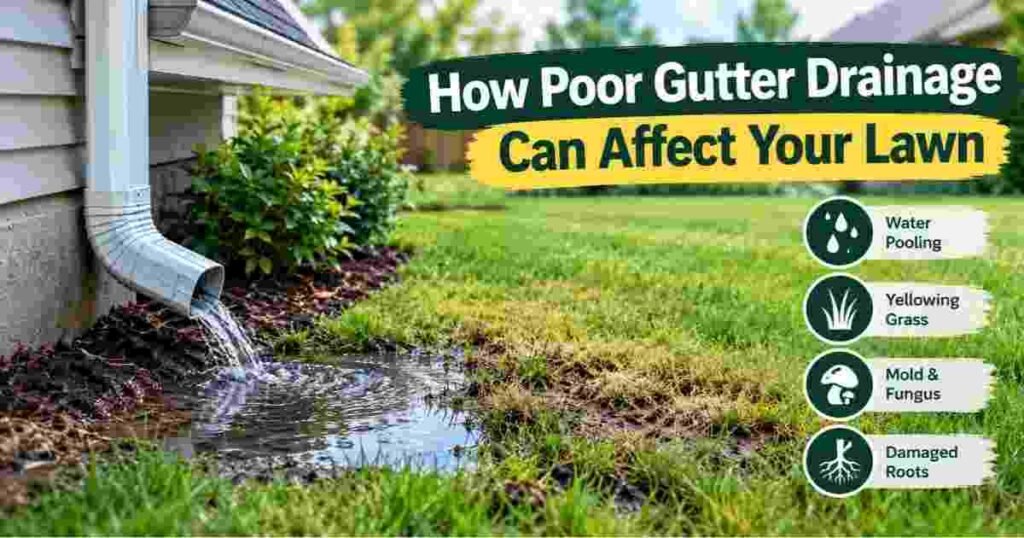
It’s easy to overlook your gutters when thinking about lawn care, but bad drainage can ruin a yard quickly. You might spend hundreds on seed, fertilizer, and pest control, only for a rogue downspout to destroy the progress overnight. If your gutters don’t carry heavy rain away from the foundation, that water pools right on your grass. Spotting the signs early saves you from costly outdoor repairs later.
Thank you for reading this post, don't forget to subscribe!Here is a full look at how poor gutter drainage affects your lawn, the signs to watch for, and how to fix the problem.
Soil Erosion and Exposed Roots
Heavy rain sends a massive volume of water rushing off your roof during a single storm. When gutters get clogged or broken, all that water has nowhere to go except spilling straight over the edges.
That falling water hits the ground with surprising force, eroding topsoil over time. Since topsoil holds the key nutrients your grass relies on, losing it leaves roots exposed to harsh air and direct sunlight. Unprotected roots dry out fast and die off. Before long, patches of turf wash away completely, leaving ugly bare mud spots all over your yard.
But regular gutter inspections by experts like those at Guaranteed Gutters can help you address gutter system issues on time.
Lawn Compaction and Poor Aeration
Excess water pooling near downspouts compresses the soil. Heavy, saturated soil packs down tightly. Compacted soil loses the small air pockets that healthy roots need to breathe.
When soil turns dense and compacted, several problems happen at once:
- Roots cannot grow deep into the ground
- Beneficial soil organisms like earthworms die or leave
- Oxygen cannot reach the root zone
- Lawn aeration becomes nearly impossible without mechanical tools
This causes your lawn to thin out and lose its green color. Adding fertilizer doesn’t solve the issue, because dense, compacted soil prevents the nutrients from actually reaching the roots.
Root Rot and Fungal Growth
Grass needs water to stay green, but too much of it chokes the root system. Standing water near your foundation creates soggy, waterlogged soil where roots simply can’t pull in oxygen. Over time, this leads straight to root rot.
Root rot turns healthy, white roots into mushy, brown strands. Once it sets in, the damaged turf can’t bounce back on its own.
To make matters worse, all that extra moisture creates the perfect environment for fungal growth. Lawn diseases like brown patch, dollar spot, and pythium blight spread fast in waterlogged grass, leaving behind ugly brown circles and patches of dead turf.
Puddles and Soil Nutrient Leaching
Heavy runoff drives crucial nutrients deep underground where roots can’t pull them up. This process, known as nutrient leaching, drains away the nitrogen, potassium, and phosphorus your lawn needs to stay green.
At the same time, pooling water covers the grass blades and cuts off sunlight. Without light to fuel photosynthesis, turf sitting under water for more than twenty-four hours starts to smother and rot.
Pest and Mosquito Breeding Grounds
Soggy lawns and standing water are an open invitation for pests. Mosquitoes need still water to lay their eggs. And a small puddle near a clogged downspout can hatch thousands of them in just a few days.
Other harmful pests love wet lawns too:
- Grubs thrive in moist soil and eat grass roots
- Fleas and ticks hide in tall, damp grass patches
- Snails and slugs feed on healthy plant leaves
- Subterranean termites find moist soil near foundations ideal for building colonies
Timely gutter repairs can help keep these annoying and destructive pests away from your home.
Foundation Damage and Lawn Sloping
The main job of gutters is keeping water away from your foundation. When they fail, water collects right against your home’s exterior walls, softening the surrounding soil over time.
That wet, unstable ground starts to shift under your home’s weight. As the dirt settles, it changes the natural slope of your yard. Instead of pitching away from the house, the ground tilts back toward the foundation.
This sets off a frustrating cycle where water constantly pools against the walls, leading to cracked concrete and basement leaks.
Signs Your Gutters Are Harming Your Lawn
You do not need to wait for a major storm to spot drainage issues. Look for these warning signs around your property:
- Deep trenches or grooves in the turf below gutter lines
- Patches of moss or algae growing on the lawn surface
- Standing water that remains hours after rain stops
- Mud splatters on your home siding or basement windows
- Uneven grass growth, with lush patches near leaks and dead spots nearby
Addressing these signs early saves you time and money on lawn repair.
Simple Ways to Fix Gutter Drainage Problems
Preventing lawn damage starts with basic gutter maintenance and smart drainage upgrades.
Clean Your Gutters Regularly – Leaves, twigs, and pine needles clog gutters fast. Clean your gutters at least twice a year – once in spring and once in autumn. Clear gutters allow rainwater to flow freely to downspouts.
Install Downspout Extensions – Standard downspouts drop water right at the base of your home. Attach downspout extensions to direct water at least five to ten feet away from your foundation and main lawn areas.
Add Splash Blocks – Place plastic or concrete splash blocks under downspout outlets. These blocks spread out heavy water flow, reducing soil erosion and protecting turf from washout.
Consider Underground Drainage Pipes – For a permanent solution, connect downspouts to underground PVC pipes. These pipes carry runoff directly to a dry well, rain garden, or street drainage drain.
Regrade the Soil – Ensure the ground around your home slopes down away from the foundation. A simple slope of one inch per foot helps water drain off naturally without pooling on grass.
Conclusion
Healthy gutters mean a healthy lawn. Excess rainwater looks harmless, but improper drainage strips nutrients, compacts soil, and rots grass roots. By inspecting your gutters, adding extensions, and keeping drainage paths clear, you protect your lawn investment and keep your yard green all year long.