
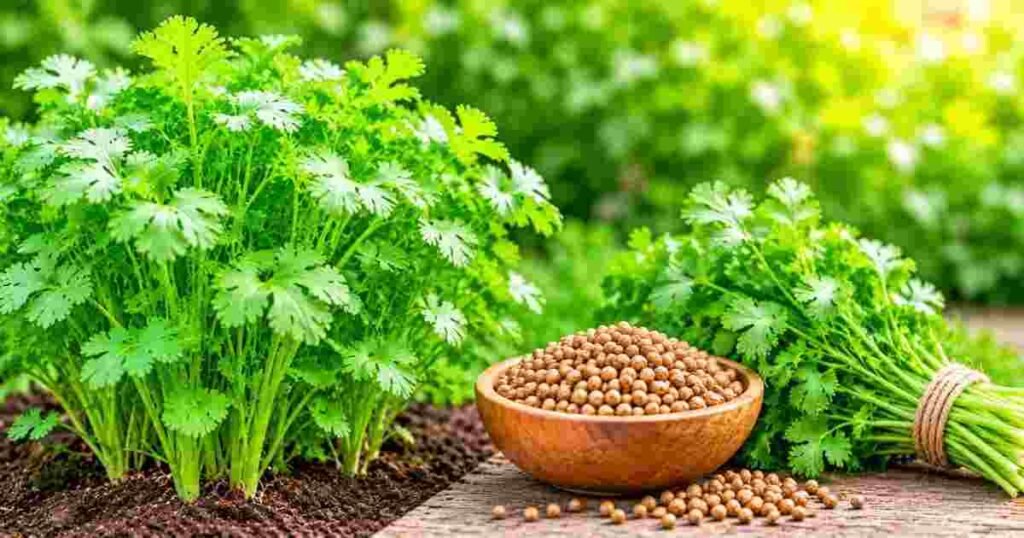
If there’s one herb that splits people into two camps, it’s coriander. Some people can’t get enough of it because the bright, citrusy punch it adds to a curry or a bowl of salsa is unbeatable. Others swear it tastes like soap, and that’s actually a real genetic thing, not just pickiness. A specific gene affects how some people perceive the aldehydes in the leaves. Whichever camp you fall into, there’s no denying coriander, known as cilantro when we’re talking about the leaves, is one of the easiest and most rewarding herbs you can grow at home.
Thank you for reading this post, don't forget to subscribe!What makes it especially good value for a home gardener is that you basically get two herbs out of one plant. The fresh leaves have that sharp, green, citrusy flavor, while the dried seeds taste completely different: warm, nutty, almost sweet, and show up in spice blends like garam masala and curry powder. Grow one plant, and depending on how you use it, you’ve got two pantry staples for the price of one packet of seeds.
This guide walks through everything from picking the right spot in your garden to the exact moment you should be cutting those seed heads down. I’ll also get into some of the little things nobody tells you the first time you try growing it, like why your coriander bolted after two weeks or why the seeds you saved last year didn’t taste anything like store-bought ones.
- A Quick Word on What Coriander Actually Is
- Why Bother Growing It Yourself?
- Picking the Right Spot and Soil
- Planting: Skip the Transplant
- Keeping It Happy Through the Season
- The Bolting Problem
- Harvesting the Leaves
- Harvesting the Seeds
- Storing Fresh Coriander Leaves
- Companion Planting with Coriander
- Popular Coriander Varieties Worth Knowing
- Coriander in Kitchens Around the World
- Troubleshooting Common Growing Problems
- Common Mistakes Worth Avoiding
- Wrapping Up
- Frequently Asked Questions
A Quick Word on What Coriander Actually Is
Botanically speaking, coriander (Coriandrum sativum) belongs to the same family as parsley, carrots, and celery, the Apiaceae family, if you want to get technical about it. It’s an annual, which means it grows, flowers, sets seed, and dies all within a single season. Don’t expect it to come back on its own next spring the way a perennial herb like rosemary or thyme would. If you want coriander every year, you’ll be planting fresh seed each time.
The whole plant is edible, which is fairly unusual among common kitchen herbs. The leaves and tender stems are what most people know as cilantro. The seeds, once dried, become the spice called coriander in most of the world (in the US, the naming gets confusing: leaves are cilantro, and seeds are coriander, but everywhere else the whole plant is usually just called coriander). Even the roots have a place in the kitchen; Thai cooking in particular uses coriander root, pounded into curry pastes, for a deeper, earthier flavor than the leaves alone provide.
It’s also one of the oldest cultivated herbs on record. Seeds have turned up in archaeological digs going back thousands of years, and it’s mentioned in ancient Egyptian, Greek, and Sanskrit texts. So when you’re growing a pot of it on your windowsill, you’re technically continuing a tradition that predates most of recorded history.
Why Bother Growing It Yourself?
Beyond the flavor, coriander has a decent nutritional resume. It carries a fair amount of antioxidants, some vitamin A, vitamin C, vitamin K, and a bit of folate. Traditionally, it’s been used across various cultures to settle an upset stomach or ease bloating, and there’s ongoing research into whether it offers benefits for blood sugar regulation and cholesterol, though nobody’s suggesting you swap out medication for a handful of cilantro leaves.
The bigger, more practical reason most people end up growing it, though, is simpler: store-bought bunches wilt within a couple of days in the fridge, no matter how carefully you store them. Homegrown coriander, snipped fresh right before you cook, just tastes brighter and lasts longer on the plant than it ever would once cut and bagged in a supermarket. And if you cook a lot of Mexican, Indian, Thai, or Middle Eastern food, having a steady, free supply growing a few steps from your kitchen door changes how often you actually reach for it.
There’s also a cost angle worth mentioning. A small packet of coriander seeds costs next to nothing and can produce far more leaves and seeds over a season than you’d get buying bunches at the store. If you use a lot of both fresh cilantro and ground coriander in your cooking, growing your own quickly pays for itself.
Picking the Right Spot and Soil
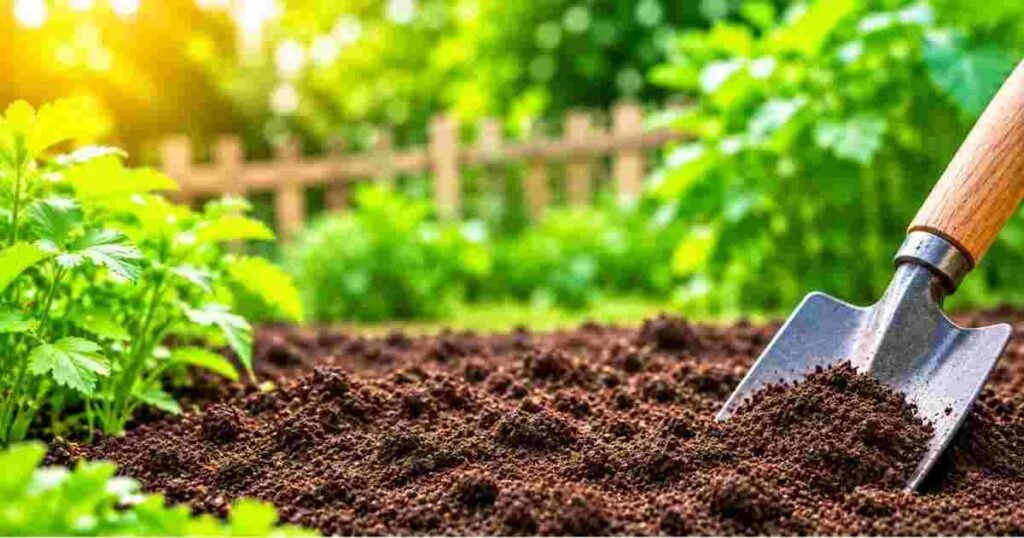
Coriander is a cool-weather plant at heart, and that single fact explains most of the problems people run into with it. Push it into summer heat, and it’ll bolt, meaning it shoots up a flower stalk and shifts its energy from leaf production to seed production faster than most gardeners expect, sometimes within a couple of weeks of hot weather setting in.
Temperature is the biggest factor. Aim for a range of roughly 50 to 75°F (10 to 24°C). If you live somewhere with hot summers, plant in early spring so you get a harvest before the heat arrives, or wait until early fall when temperatures start dropping again. In genuinely mild climates, you can sometimes grow coriander through most of the year, adjusting only for the hottest weeks.
Sunlight requirements shift depending on your climate. In cooler regions, full sun is fine and actually helps the plant grow strong and bushy. In hotter regions, though, some afternoon shade from a taller plant nearby, a shade cloth, or just the natural shadow of a fence or wall helps keep the plant from overheating and bolting prematurely.
Soil matters more than people expect for a herb that’s often treated as an afterthought. Coriander does best in well-draining, loamy soil with a pH somewhere between 6.2 and 6.8, which is only mildly acidic. Working some compost or well-rotted manure into the bed before planting gives it a good nutrient base to start from. What you want to avoid is heavy clay soil that holds onto water; coriander’s roots don’t tolerate sitting in wet, soggy ground, and root rot is a common way to lose the plant before it even gets going.
Planting: Skip the Transplant
Here’s a tip that trips up a lot of first-time growers, often because it goes against how most other vegetables and herbs are started: don’t sow coriander in trays with the intention of transplanting seedlings later. It has a long, delicate taproot that genuinely hates being disturbed, and transplanting it often sets the plant back significantly or kills it outright. The safest approach, by far, is to sow the seeds directly into the spot where you want the plant to grow for the rest of its life.
A few practical pointers for planting:
- Soak the seeds in water for about 24 hours before planting. This softens the outer husk and noticeably speeds up germination, which otherwise can be slow and patchy.
- Plant them roughly a quarter to half an inch deep, not too deep, since coriander seeds need some light exposure to germinate reliably.
- Give each seed about 6 to 8 inches of space around it, so the mature plants aren’t crowding each other and competing for light and nutrients.
- Water gently right after sowing, and then keep the soil consistently moist (not soaked) while germination is happening, which usually takes 7 to 10 days depending on temperature.
If you’re growing in containers rather than a garden bed, coriander adapts to pots quite well, which makes it a good option for balconies, windowsills, or anyone without much outdoor space. Use a pot that’s at least 8 inches deep to give that taproot room to develop, make sure it has proper drainage holes, and fill it with a decent potting mix combined with some compost. Position the container somewhere it gets morning sun, with afternoon shade if you’re in a warmer climate.
One habit worth building early on: don’t plant all your seeds in one go. Sow a small new batch every two to three weeks throughout your growing season. Because coriander’s productive window before bolting is relatively short, this staggered approach, often called succession planting, keeps you supplied with fresh, tender leaves continuously, rather than getting one big flush of growth followed by weeks of nothing while an older planting bolts and finishes.
Keeping It Happy Through the Season
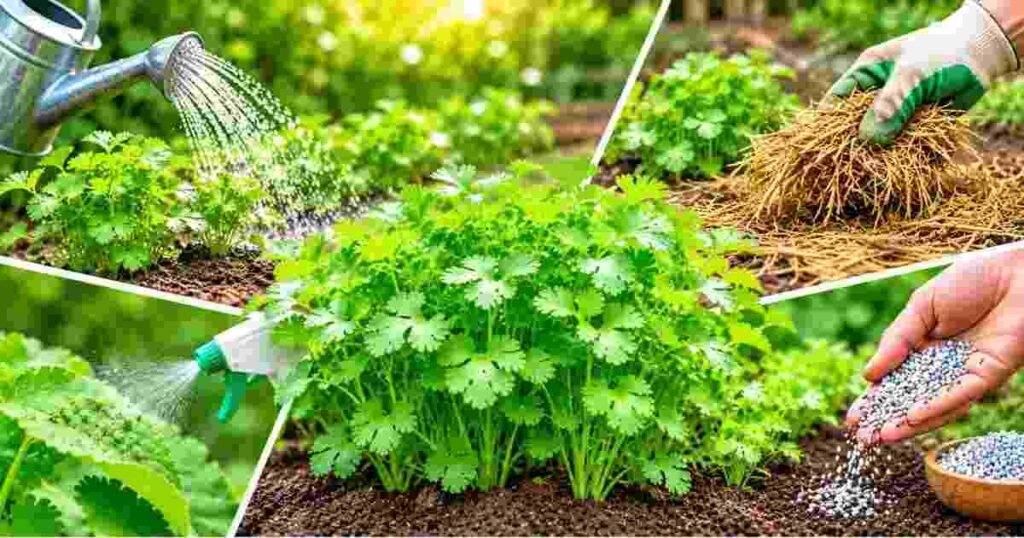
Watering deserves special attention because coriander’s roots are relatively shallow, which means the plant dries out faster than deeper-rooted herbs, especially in containers that heat up in the sun. Aim to water deeply once or twice a week under normal conditions, and increase that during hot or windy stretches. The goal is consistently moist soil, not waterlogged, not bone dry.
Fertilizing should be kept light-handed. Coriander isn’t a particularly hungry plant, and here’s something worth knowing: over-fertilizing, especially with high-nitrogen feeds, tends to push the plant toward fast, leggy growth at the expense of flavor. A single application of a balanced, water-soluble fertilizer partway through the growing season is usually plenty.
Mulching around the base of the plants helps retain soil moisture between waterings and keeps root temperatures cooler, which, as you’ll notice, is a recurring theme that helps delay bolting during warm spells.
Pests and diseases aren’t usually major headaches with coriander, but a few things are worth watching for. Aphids sometimes show up on new growth; a mild soap-and-water spray usually clears them without needing anything harsher. Powdery mildew can appear if plants are crowded and airflow is poor, so give them room to breathe and avoid wetting the leaves when you water. Leaf spot, a fungal issue, is best managed by removing affected leaves promptly and, again, not overcrowding your plants.
The Bolting Problem
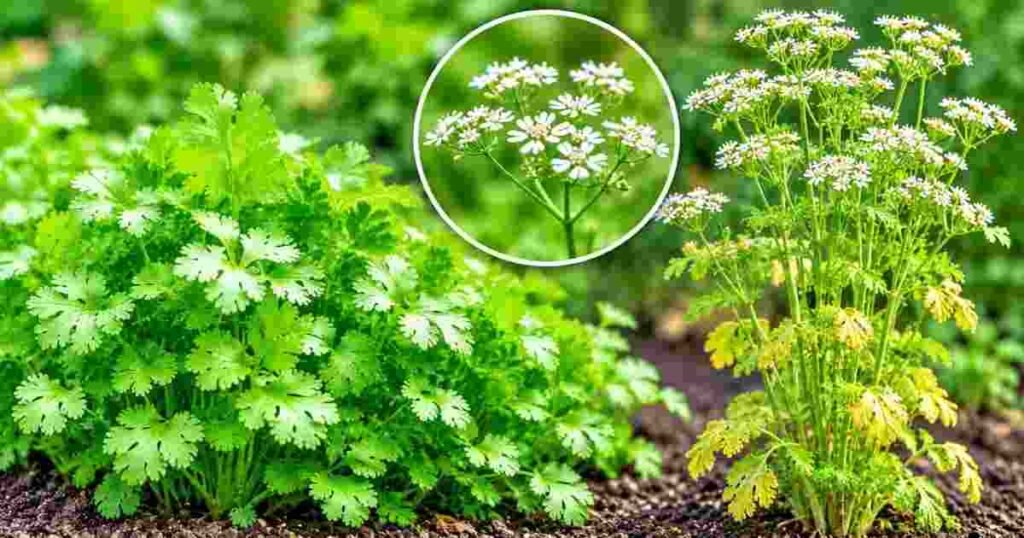
If there’s one single issue that frustrates coriander growers more than anything else, it’s bolting. One week you’ve got a lush, leafy little plant that looks like it’s just getting started, and the next it’s sent up a tall central flower stalk, the lower leaves have thinned out and turned bitter, and your fresh cilantro supply has effectively ended. It happens fastest in heat, and stress of almost any kind—drought, poor soil, or root disturbance—can trigger it early too.
A few strategies help push bolting back:
- Plant during cooler months rather than the height of summer.
- Look specifically for slow-bolt or leaf-focused varieties when buying seed, since some cultivars are bred to resist bolting longer than others.
- Provide afternoon shade once daytime temperatures start climbing.
- Don’t let the soil dry out completely between waterings — drought stress is one of the fastest triggers for premature flowering.
- Harvest leaves regularly rather than letting the plant sit untouched. Cutting leaves actually signals the plant to keep producing more foliage instead of rushing toward seed production.
It’s worth saying, too, that bolting isn’t always a failure. If your goal from the start was to harvest seeds rather than leaves, a plant that bolts quickly just means you’ll be collecting coriander seed sooner than expected.
Harvesting the Leaves
You can start harvesting fresh leaves once the plant reaches roughly 6 inches in height, which usually takes about 3 to 4 weeks after sowing, depending on temperature and growing conditions.
Morning tends to be the best time to cut, since the plant’s essential oils and overall flavor are typically more concentrated before the heat of the day sets in. When harvesting, snip the outer, more mature leaves first using scissors or your fingers, and leave the smaller, inner leaves to keep developing. As a general rule, avoid removing more than about a third of the plant’s total leaf mass at any one time — taking more than that can stress the plant and slow its ability to recover and keep producing.
Regular, light harvesting actually works in your favor here. Plants that are cut back consistently tend to stay bushier and produce for longer before bolting, compared to plants left untouched until someone finally decides to harvest a large amount all at once.
Harvesting the Seeds
If you decide to let a plant bolt and flower on purpose — some gardeners plant a dedicated batch specifically for seed rather than leaves — you can harvest coriander seeds for use as a spice, and they’re genuinely worth the wait.
Once the plant flowers, it produces small clusters of white or pale pink blooms, which are quite pretty in their own right and attract pollinators to the garden. After flowering, small round green seed pods begin to form along the stalks, and these gradually turn a light tan-brown color as they mature and dry on the plant.
Timing the harvest matters. You want to cut the stalks once the majority of the seed pods have turned brown, but before they begin dropping off naturally, which would mean losing a chunk of your harvest to the ground. Cut the flower stalks and gather them into small bundles, then hang them upside down inside a paper bag — this catches any seeds that fall loose during drying — in a warm, dry, well-ventilated spot out of direct sunlight.
Let the bundles dry for roughly one to two weeks, until the seeds are fully hardened and separate easily from the surrounding husk. At that point, gently shake or rub the dried stalks over the bag to release the remaining seeds, then sift out any bits of stem or chaff.
Store the dried seeds whole in an airtight container, kept somewhere cool and dark. This part matters more than people realize: whole coriander seeds hold their flavor and aroma for a long time, often a year or more, while pre-ground coriander loses much of its potency within a few months as the essential oils evaporate. If you’re serious about flavor, grind small amounts as you need them rather than storing coriander pre-ground.
Storing Fresh Coriander Leaves
Once you’ve harvested fresh leaves, a little extra care in storage goes a long way toward keeping them usable longer. Wrapping the stems in a slightly damp paper towel and placing them inside a loosely sealed bag in the refrigerator can keep them fresh for up to two weeks, far longer than leaves left loose in a produce drawer.
Another popular method is to treat the harvested stems like cut flowers — standing them upright in a glass or jar with a couple of inches of water, then loosely covering the leaves with a plastic bag before refrigerating. Changing the water every few days extends this even further.
For longer-term storage, freezing is your best option. Chop the leaves and pack them into ice cube trays, topped up with a bit of water or olive oil, then freeze. Once solid, transfer the cubes into a freezer bag. This method locks in flavor for months and gives you convenient, pre-portioned amounts to drop straight into soups, curries, or sauces without needing to thaw fresh leaves separately.
Companion Planting with Coriander
Coriander tends to be a good neighbor in a mixed garden bed, and pairing it thoughtfully with other plants can offer some natural benefits beyond just efficient use of space.
Planted near tomatoes, coriander is often credited with helping to repel aphids and other common pests that trouble tomato plants, thanks to the strong scent released by its foliage. It grows well alongside spinach too, since both plants share a preference for cooler growing conditions and similar watering needs, making them easy to manage together in the same bed. Around beans and peas, coriander tends to attract beneficial predatory insects — the kind that feed on aphids and other pests — helping keep the surrounding plants healthier without needing chemical intervention.
One plant worth keeping at a distance, though, is fennel. The two don’t get along particularly well in close proximity and can end up stunting each other’s growth, so it’s generally best to plant them in separate areas of the garden.
Popular Coriander Varieties Worth Knowing
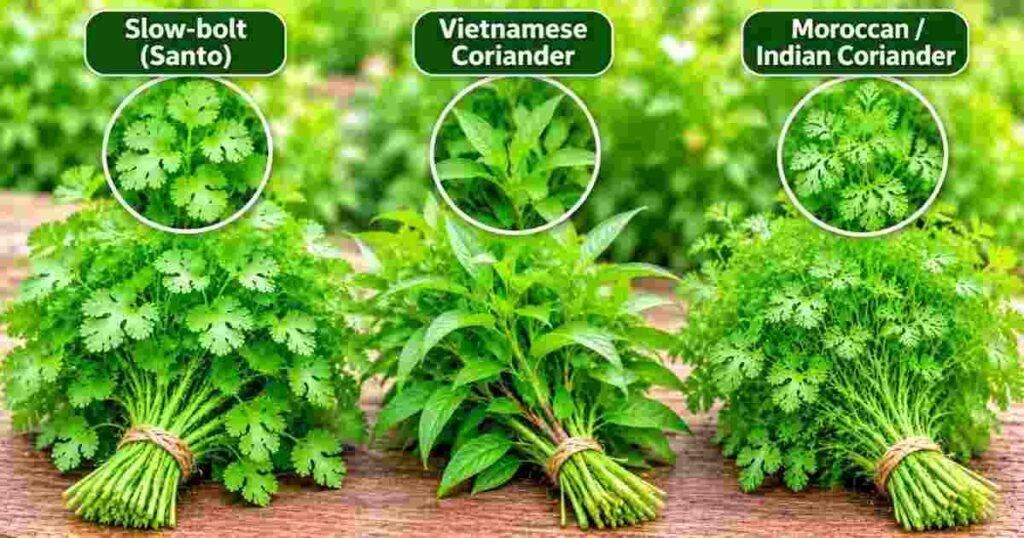
Not all coriander seed packets are created equal, and if you’ve only ever grown whatever was on the shelf at a local garden center, it’s worth knowing there are actual named varieties bred for different purposes. Choosing the right one for what you want out of the plant can save you a lot of the frustration covered earlier in this guide.
Slow-bolt or ‘Santo’ types are bred specifically to resist bolting longer than standard coriander, which makes them a solid choice if you’re mainly after leaves and live somewhere with warm springs or summers. They won’t stop bolting entirely, but they buy you extra weeks of harvestable foliage compared to older heirloom types.
Vietnamese coriander (Persicaria odorata) isn’t actually the same species as true coriander, despite the name and a similar flavor profile. It’s worth mentioning here because gardeners in hot, humid climates who struggle to keep true coriander from bolting sometimes switch to this instead, since it tolerates heat far better and is propagated from cuttings rather than seed.
Moroccan and Indian coriander varieties are often grown specifically for seed production rather than leaf harvest. They tend to bolt faster and put more energy into flowering and seed set, which is exactly what you want if your goal is a big seed harvest rather than a long season of fresh leaves.
If you’re not sure which to pick, a general-purpose variety is a perfectly reasonable place to start. You can always experiment with more specialized types once you’ve got a season or two of growing experience behind you and know which part of the plant you actually use more of in your cooking.
Coriander in Kitchens Around the World
Part of what makes coriander worth the garden space is just how far its reach extends across global cuisine. Very few herbs show up in as many completely different culinary traditions, often used in ways that have almost nothing in common with each other.
In Mexican and broader Latin American cooking, fresh cilantro is everywhere — stirred through salsas, scattered over tacos, blended into green sauces alongside jalapeños and lime. It’s typically used raw and added right at the end of cooking, since heat quickly dulls its bright, citrusy character.
Indian cuisine leans on coriander in both forms. The seeds, usually toasted and ground, form part of the backbone of many spice blends, while the fresh leaves get scattered over finished curries, dals, and chutneys as a garnish, often blended into a fresh green chutney with mint and chili.
In Thai and broader Southeast Asian cooking, all three parts of the plant get used — leaves for garnish, stems chopped into stir-fries and soups, and the roots pounded into curry pastes for a deeper, more savory undertone that the leaves alone can’t provide.
Middle Eastern cooking uses ground coriander seed as a warm, earthy background note in spice blends and slow-cooked dishes, often paired with cumin. And across parts of Eastern Europe and Scandinavia, coriander seed shows up in pickling brines and rye bread, valued for that same warm, slightly citrusy quality it brings when whole seeds are used rather than ground.
Knowing how differently a single plant gets used across these cuisines is a good reminder that growing your own coriander isn’t just about one dish or one flavor profile — it’s a genuinely versatile ingredient once you’ve got a steady supply of it.
Troubleshooting Common Growing Problems
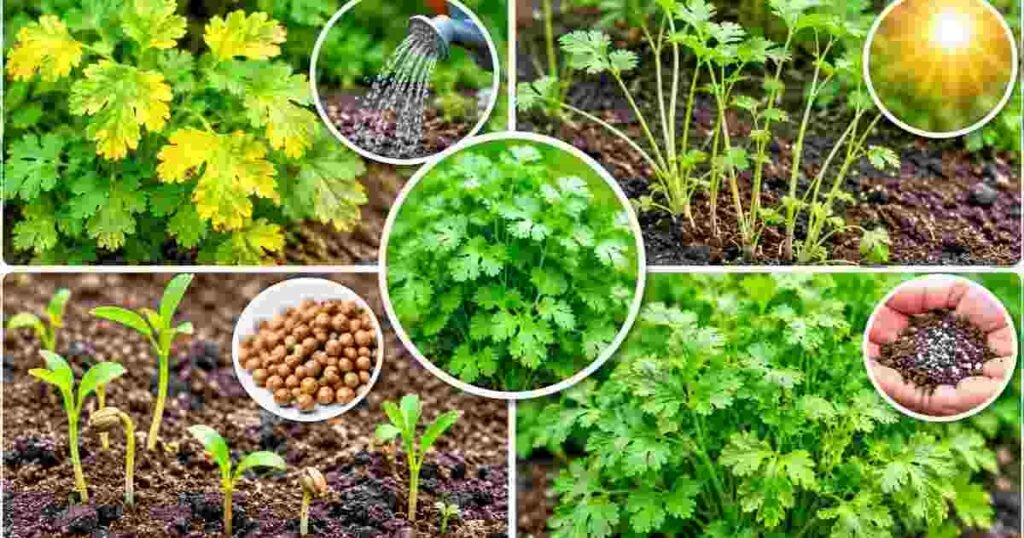
Even with good technique, coriander sometimes does things that leave gardeners scratching their heads. A few of the most common issues, and what’s usually behind them, are worth covering separately from the general mistakes already mentioned.
Yellowing leaves are most often a sign of overwatering and poor drainage, though in some cases they can also point to a nitrogen deficiency in older, more depleted soil. Check that the pot or bed drains well before assuming it needs feeding.
Leggy, sparse growth usually means the plant isn’t getting enough light. Coriander grown in too much shade stretches upward looking for sun instead of filling out, producing thin stems and fewer usable leaves.
Seeds that fail to germinate are often old seed that’s lost viability, or seed that was planted too deep and couldn’t push through to the surface. Fresh seed, soaked beforehand and planted at the right shallow depth, solves this in most cases.
Weak flavor in harvested leaves can result from over-fertilizing, as mentioned earlier, but it’s also common in plants that are stressed from heat or grown in overly rich, fast-draining soil that doesn’t hold onto nutrients long enough for the plant to develop full flavor.
Most coriander problems trace back to just a handful of root causes — too much heat, too much or too little water, or crowded, poor-draining soil. Once you’ve grown it through a full season and gotten a feel for how it responds to your specific climate and setup, most of these issues become much easier to head off before they start.
Common Mistakes Worth Avoiding
A handful of recurring mistakes account for most of the frustration people run into with this herb, and knowing them ahead of time can save you a season of trial and error.
Overwatering is probably the most common one, leading to root rot fairly quickly given how sensitive coriander’s roots are to sitting in soggy conditions. Planting during peak summer heat, without accounting for how fast the plant bolts in warm weather, is another frequent misstep — plenty of new gardeners plant in June or July and are confused when their coriander flowers within two weeks. Attempting to transplant seedlings instead of sowing seeds directly disturbs that sensitive taproot and often stunts or kills the plant outright. Harvesting too early or too aggressively, before the plant has built up enough leaf growth to sustain itself, slows its overall development. And skipping succession planting — sowing everything in a single batch rather than staggering plantings every couple of weeks — tends to leave gardeners with a short burst of fresh coriander followed by a long stretch with none at all.
Wrapping Up
Coriander rewards a bit of patience and the right timing more than it demands any real technical gardening skill. Get the season right, keep the soil consistently moist without drowning the roots, avoid letting it bake under peak summer heat, and harvest regularly rather than letting it sit — and you’ll end up with a steady, reliable supply of fresh leaves for salsas, curries, and garnishes, plus a stash of homegrown dried seeds for your spice rack, all from little more than a packet of seeds and a modest patch of garden space or a single container on a sunny windowsill.
If this is your first time growing it, don’t be discouraged if your first attempt bolts faster than you expected or the germination is patchy. Almost every gardener who’s grown coriander for any length of time has a story about an early batch that went sideways. The plant is forgiving enough, and cheap enough to keep re-sowing, that a rough first attempt is rarely the end of the story. It’s usually just the thing that teaches you exactly what your particular garden, climate, and growing setup actually need.
Frequently Asked Questions
How long does coriander take to grow from seed to harvest?
Leaves are typically ready for light harvesting around 3 to 4 weeks after sowing, while seeds take considerably longer, generally 90 to 120 days from planting to fully mature, dried seed heads.
Can coriander be grown indoors year-round?
Yes, to an extent. A sunny windowsill with several hours of indirect light, combined with cooler indoor temperatures, can support coriander growth indoors, though indoor plants often don’t get quite as robust as ones grown outdoors in ideal conditions.
Why does my cilantro taste soapy?
This comes down to genetics rather than anything wrong with the plant itself. A specific gene affects how certain people perceive the aldehyde compounds in coriander leaves, making the flavor read as soapy or unpleasant to some, while tasting bright and citrusy to everyone else.
Is cilantro the same plant as coriander?
Yes. Cilantro and coriander come from the same plant, Coriandrum sativum. In American English, cilantro typically refers to the fresh leaves, while coriander refers to the dried seeds. In most other English-speaking countries, the whole plant, including the leaves, is called coriander.