
Introduction
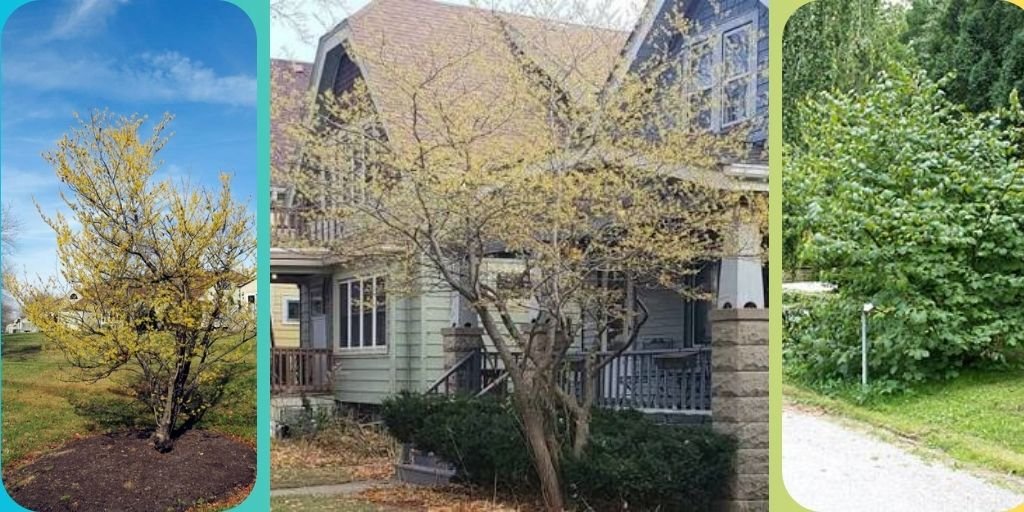
Planting shrubs in the garden is admired by most homeowners. But some plants are not just for aesthetics but are also beneficial for health. The name “Witch Hazel” is one of them. In dull seasons when all of the flowers in your garden’s trees have fallen, this tree’s flowers bloom and keep the garden beautiful. Not just that, its bark, leaves, and fruits are also useful for medicinal and herbal uses.
What is witch hazel?
Witch hazel is a deciduous shrub or small tree in the Hamamelidaceae family. The various species of hazel plants are found around the world, with Hamamelis virginiana native to eastern North America. Another species of hazel is found in Asia (Japan, China, Korea) and in Europe (Germany, the UK, etc.). It is a small tree, generally 3 to 6 m tall, and can even reach more than 12 m. Leaves are four slender shapes in an asymmetrical pattern that turn pale-dark, yellow, orange, red, etc., seasonally.
Scientific Classification
If you want to use it in research or for medical purposes exactly, you need to identify the proper origin of the plant. The classification is:
- Kingdom: Plantae
- Clade: (Embryophytes, Tracheophytes, Spermatophytes, Angiosperms, Eudicots)
- Order: Saxifragales
- Family: Hamamelidaceae — the witch hazel family
- Sub-family: Hamamelidoideae
- Tribe: Hamamelideae (A. DC.)
- Genus: Hamamelis
- Species:
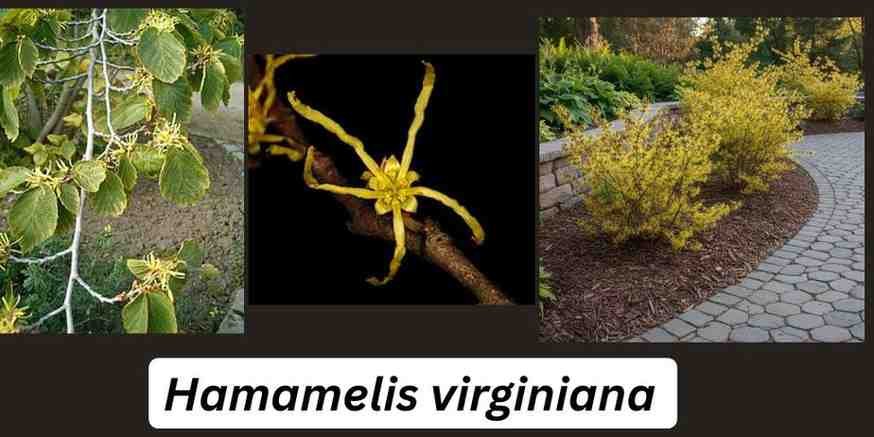
- Hamamelis virginiana, also called common witch hazel, American witch hazel, witch hazel, or beadwood; found in the USA—Nova Scotia to Minnesota and Florida to Texas. Bark is dark brown to reddish purple in the inner part. Young leaves’ color is rusty brown and turns dark green when fully grown.
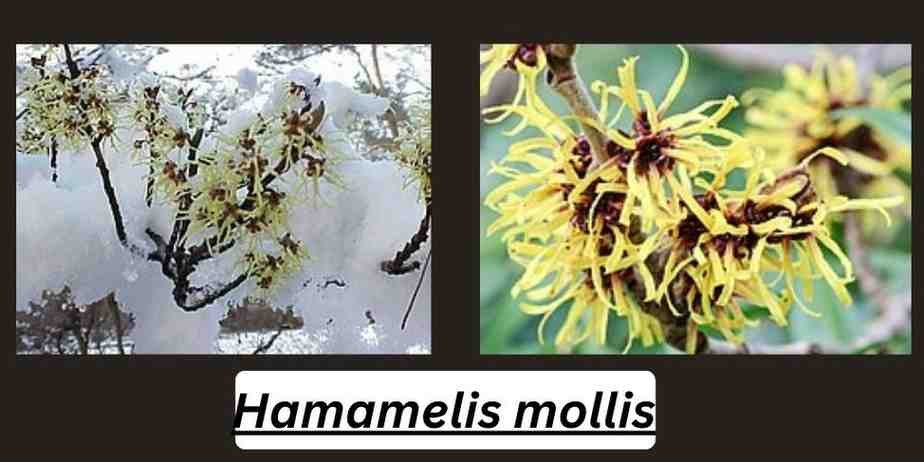
- Hamamelis mollis. Commonly called Chinese witch hazel, or ornamental witch, it is found in Central to East China. Flowers are in bunches of hairs, with a yellow to red base. Leaves are bright yellow before the pre-flowering stage. Bark is smooth in appearance and slightly dark brown in color.
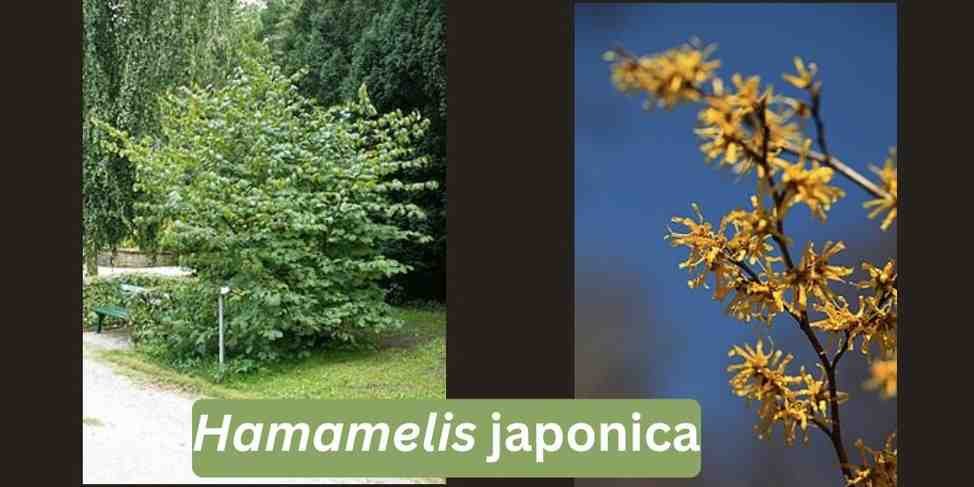
- Hamamelis japonica. It is called Japanese witch hazel, though it is now found in Europe and the USA as an ornamental and slightly medicinal plant. Flowers bloom in the last stage of the winter season (January to March). Flower color is golden-yellow and dark red to violet at the base and looks shrinkage of paper. Leaves are dark green in summer and bright yellow to red in autumn.
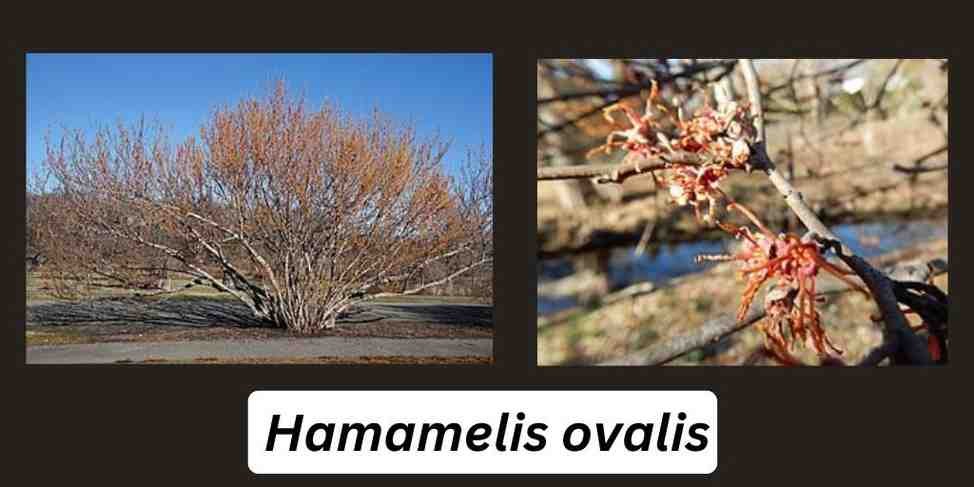
- Hamamelis ovalis. Called big-leaf witch-hazel, it is native to the state of Mississippi, North America. The flowers’ colour is bright red or pinkish red and are seen from December to February. Leaves are rough, big, and oval, turning orange to yellow in autumn.
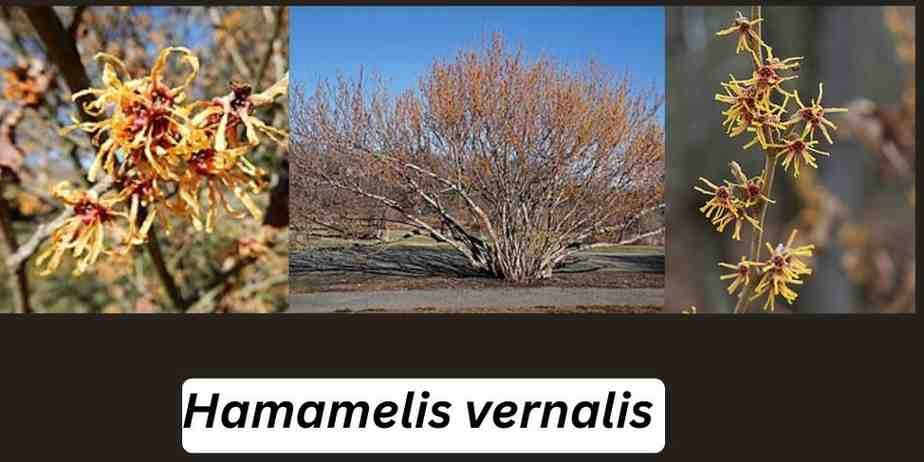
- Hamamelis vernalis. Commonly known as Ozark witch-hazel or vernal witch-hazel, an ancient plant in North America. Flowers are small, bloom from January to April, and are copper red to yellow in color. Leaves are ellipsoidal and attractive in autumn, when golden-yellow in color.
Aesthetic Purpose: Where to Plant in House Lawn
If you want to plant it just as a medicinal plant, you can grow it anywhere. But for both purposes, you have to plant it in a definite area that looks attractive. So, as a lawn owner, you must try the best way to make your lawn special. So, let’s try to reveal some landscaping ideas of planting the witch-hazel shrubs.
1. Specimen Plant near Windows
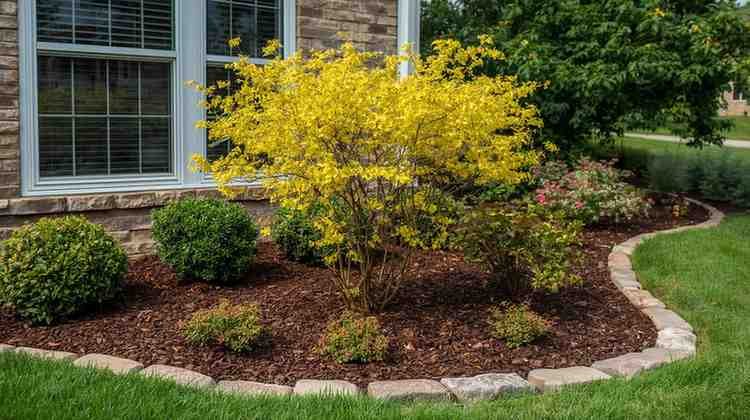
It is planted in a pointed zone near your window because when you open the window, its sweet and intense fragrance gives your mind positive vibes all the time, as well as gives a natural look that makes a picturesque view of the house.
2. Focal Point at Entrances
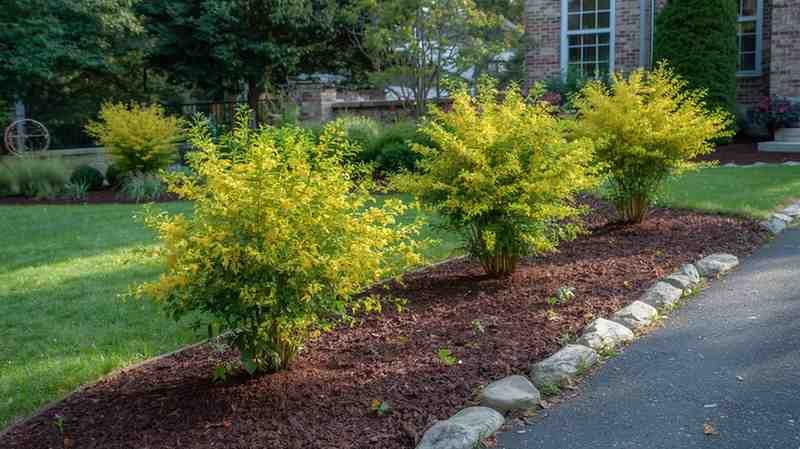
From the main gate to the house door or beside the driveway, you can plant. For this, when you or anyone enters the house, it’s natural, and the beauty must change anyone’s mind if depressed.
3. Mixed Borders or Privacy Screens
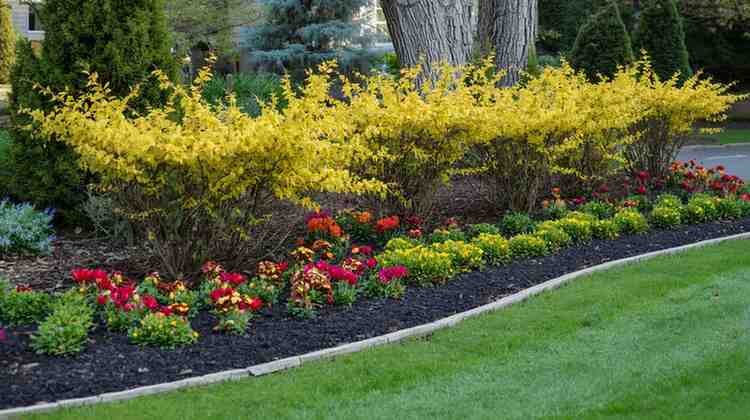
Plant the edge of the border of the lawn area that looks awesome. Most of the people try it in front of small colorful flowering shrubs (chrysanthemums, tulips, etc.), which makes the lawn area so elegant. If done this way, in autumn the overall background seems to be good when leaves and flowers turn golden-yellow or red in color.
4. Contrast Planting
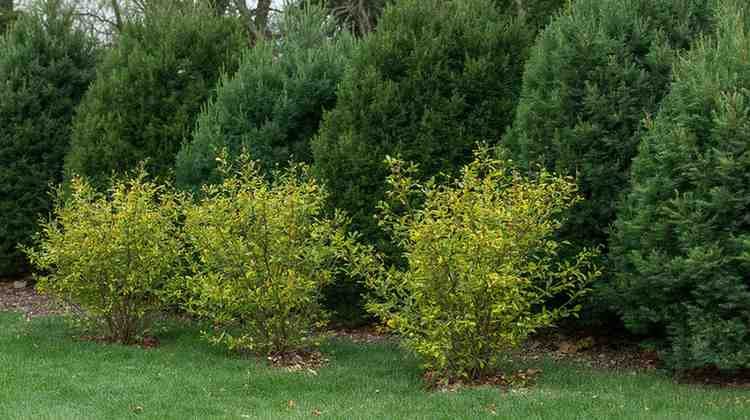
Winter flowers of witch hazel look yellow, red, or copper-colored on a green background. If there are evergreen trees (such as pine, thuja, or Christmas tree-like varieties), plant witch hazel directly in front of them or at a slight angle. In front of a green background, the bright flowers and leaves of witch hazel make a fine colorful contrast.
Lawn Size-Wise Recommended Planting Plan
| Lawn Size | Recommended Species | Best Placement | Landscape Purpose |
| Small | Hamamelis vernalis (Ozark Witch Hazel) | In lawn corners or tight against perimeter fences/walls. | Saves precious center space while acting as a beautiful backdrop. |
| Medium | Hamamelis mollis (Chinese Witch Hazel) | Near the patio, main walkway, or directly outside a living room window. | Serves as a stunning “focal point” to maximize viewing and enjoy the sweet winter fragrance. |
| Large | Hamamelis japonica or Hamamelis ovalis | Planted in groups/rows along borders or beneath taller canopy trees. | Creates natural privacy screens, mass winter blooms, and vibrant autumn color contrasts. |
Cultivation and Care
This type of tree takes minimal care from planting to growth. But some care and treatment are needed to better classify them before collecting and planting. Some tips are given here:
Soil Type: Slightly acidic soil is better. This type of tree soil pH should be 5.5 to 6.5. Alkaline soil inhibits growth, and leaves turn yellow. The surface should be well-draining; humus-rich, moist & loamy soil works best. Avoid heavy clay with compost before planting.
Sunlight: Full sun to partial shade. At least 4 to 6 hours of sunlight is needed. Afternoon shade helps to prevent leaf scorch in the summer season.
Size and Distance: Gives 6 to 12 m. of height room for expansion, and from one tree to another needs 8 to 12 m. of distance.
Witch Hazel Planting and Spacing Specifications
| Planting Metric | Ideal Measurement | Why It Matters |
| Hole Width | 2 to 3 feet (2–3x the width of the root-ball) | Allows the fibrous roots to spread out easily into the loosened soil. |
| Hole Depth | 1 to 1.5 feet (Exactly equal to the root-ball depth) | Prevents the stem/trunk from being buried too deep, which causes rot. |
| Commercial Spacing | 8′ x 10′ or 10′ x 12′ apart | Ensures proper airflow and leaves enough room for machinery and harvesting. |
| Space Per Plant (Sq. Ft.) | 80 to 100 sq. ft. (Minimum for rows) 100 to 150 sq. ft. (For isolated lawn specimens) | Accommodates the mature canopy spread of the shrub without crowding. |
Time and Land Preparation: Before planting, take some steps. The best time for planting is in autumn and early spring. Make a hole 2 times as wide and deep as the root ball or roots (width 2-3 feet and depth 1-1.5 feet). Then, 15 days before, mix the soil with natural compost and manure and settle down to prepare. For every tree, keep 80 to 100 square feet for mass planting.
Planting steps:
- Dig a hole roughly twice as wide as the root ball and the same depth.
- Loosen the roots gently and set the plant so the root collar sits level with the soil surface. Never exceed the stem level because it has a chance to spoil and will die later.
- Backfill with native soil mixed with compost.
- Water deeply immediately after planting.
- After planting, mulch 5–7 cm around the base, keeping it clear of the stem.
Watering: Keep soil consistently moist for the first two seasons. Proper care of the land ensures the soil doesn’t dry out. A fully mature tree becomes drought-tolerant, but in intense summer or El Niño, water deeply once weekly at least. Always drain out stagnant water so that waterlogging doesn’t occur at the base of the tree.
Pruning: Prune right after flowering, not in summer or just after leaves sprout. Always cut dry, diseased, or adherent sprigs and, of less importance, sucker parts so that other freshened parts get nutrients better.
Disease and Pest Control: Japanese beetles can attract the tree to grab the leaves. Usually neem oil or a mixture of baking soda, water, and non-detergent liquid soap can be used organically to reduce beetle damage. Some diseases and solutions are given here:
| Threat | Key Symptoms | Organic / Cultural Fix | Chemical Fix |
| Powdery Mildew (Fungus) | White, dusty coating on leaves; curling foliage. | Prune for airflow, avoid overhead watering, and spray neem oil. | Apply sulfur-based fungicides. |
| Leaf Spot (Fungus) | Small brown/red spots with dark borders. | Rake and burn fallen autumn leaves; keep mulch off the stem. | Apply copper fungicide in early spring. |
| Gall Aphids (Insect) | Nipple-like bumps (galls) on upper leaves. | Hand-pick affected leaves; they are mostly cosmetic and harmless to mature trees. | Spray insecticidal soap before galls form. |
| Japanese Beetles (Insect) | Skeletonized leaves (only leaf veins left intact). | Hand-pick beetles into soapy water; apply neem oil. | Spray Pyrethrin-based insecticides. |
| Root Rot (Soil Fungus) | Leaf yellowing and wilting in soggy soil. | Prevention: Ensure proper soil drainage; stop overwatering. | Not effective; relocate the plant to well-drained soil. |
Medicinal and Herbal Importance
Polyphenols are the phytochemicals that come from its bark and leaf extraction. Phytochemicals have 3-10% tannins and flavonoids and up to 0.5% essential oil. Hamamelis water made from the barks and leaves of the tree has ethanol and essential oil but no tannin by the stem distillation process. This water is called “witch hazel water” and is used in minor skin problems as a topical ointment application.
Topical Ointment:
A semi-solid ointment, cream, gel, or salve is extracted from the tree and sold in the market. People use it for medicinal purposes due to its astringent and antiseptic properties. It is used as:
- Acne removal.
- Postpartum vaginal sores and hemorrhoids.
- Infant diaper rash
- Reduce minor skin inflammation
- Skin injuries
- Cooling agent during childbirth to relieve pain
Never use orally; can cause pain in the abdomen, constipation, nausea, vomiting, etc.
Simple home preparation:
- Compress: Soak a clean cloth in cooled witch hazel water and apply for 10–15 minutes to soothe irritation.
- Infusion for gargling: Steep 2–4 grams of cut leaves or bark in 250 ml boiling water for 10 minutes, then strain and use as a gargle or skin rinse.
FAQs
- Is witch hazel easy to grow?
Yes. Low-maintenance once established, and tolerant of varied soil types.
- How long before it flowers after planting?
Usually 2–3 years for first blooms and fuller flowering by years 5–7.
- Can I apply raw leaves directly to skin?
It’s safer to use a properly prepared distillate rather than raw leaves, since home concentrations aren’t standardized.
- Is it safe to take internally?
Only under professional guidance; evidence for internal use is limited.
- Does it need full sun?
It handles both full sun and partial shade well, with afternoon shade helpful in hot climates.
- Best planting season?
Early spring or fall, while temperatures are mild