
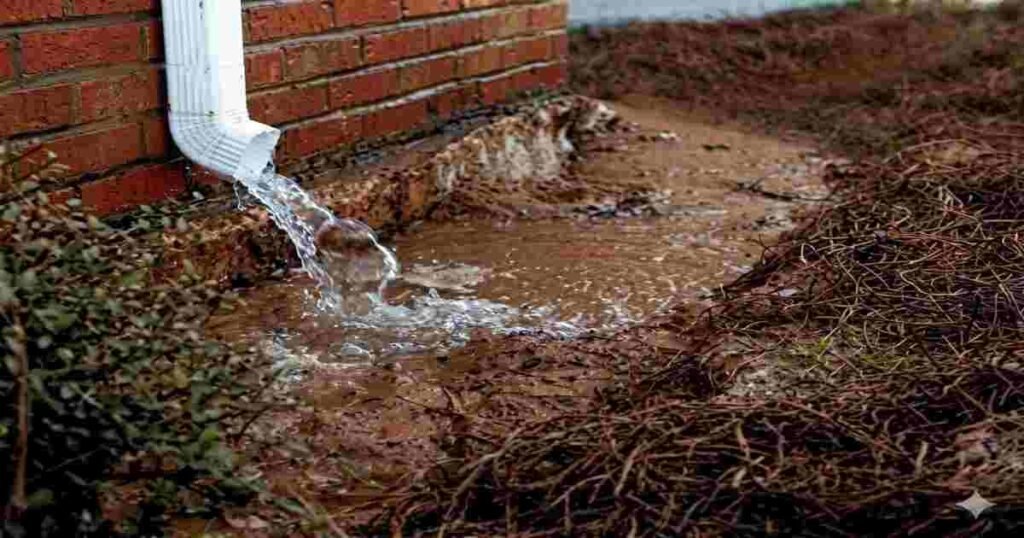
You may clean up the garden bed after a storm, replace the mulch, and figure out if the problem is fixed. Then the next heavy rain comes along and washes half of it back out again. Frustrating, right?
Thank you for reading this post, don't forget to subscribe!Before you blame the mulch, look up. If water keeps hitting that one spot, odds are good it’s coming off the roof. A gutter that can’t keep up, or a downspout aimed at the wrong place, dumps a huge amount of water on a few square feet of yard. That patch never stood a chance against all that roof runoff.
So don’t buy more mulch just yet. Trace the water first. Once you know where it starts and where it ends up, you can stop fixing the same garden patch every few months.
What Overflowing Gutters Can Do to Your Yard
The damage to the yard may not be immediately apparent. You may first see that the mulch is becoming thinner below a certain portion of gutter, or that the soil is always pooling at the lowest point of the flower bed. Or perhaps there is this one patch of grass next to the house that is always damp and muddy even after the rest of the lawn has dried up. These small signs are all worth investigating.
Wherever the roof runoff concentrates, the moving water can carry away loose soil and mulch. This can cause shallow channels or expose plant roots, or even lead to depressions that hold water. The repeated saturation of the soil can also stress plants that have preferred a drier environment.
To check whether overflowing gutters are contributing to the damage, observe them from a safe ground-level location during rain, or inspect the area shortly afterward. Freshly displaced mulch, sediment trails, and watermarks can help show where runoff has traveled.
Trace the Water Before You Start Digging
It is tempting to fix the problem spot in the yard that you can see. If the bed has lost soil, then you add soil. You replace mulch that has been washed away with more mulch. But in the long term, you are only treating the symptoms, not the problem. You need to first find out why the portion of the yard always gets damaged.
Go to the gutter directly above it. A buildup of leaves, pine needles, sticks, and other debris may have blocked the channel, so water that can’t reach the downspout simply goes over the lip. Clear out any clogs you find, and take a look at the top of the downspout while you’re there.
With a lot of trees around, this gets more important. Controlling roof runoff in a leafy yard means checking the gutters more than once, especially through the weeks when the leaves are coming down.
Gutter guards can help prevent debris-related clogs, but maintenance needs vary by product. Gutter protection does not correct improper grading or a poorly located downspout outlet.
When the Gutter Itself Is Part of the Problem
At times, the gutter channel isn’t blocked, but the same spot still gets drenched. So what’s the issue? The gutter or downspout becomes the next suspect.
Gutters that have pulled away from the fascia, droop between fasteners, or leak at a seam all cause trouble, because none of them move water where it’s supposed to go. The downspout connection can fail too. The easiest way to find out which it is? Wait for a storm and watch from a safe spot. Try to see where exactly the water is overflowing from.
After you identify the problem source, don’t just jump to replacing everything. One leak or a loose connection can usually be fixed. But if a section continues to sag or leak despite repairs, replacing the damaged or undersized gutters may be the long-term roof drainage solution to help resolve recurring landscape damage caused by roof runoff.
Send the Runoff Somewhere Your Yard Can Handle
Having made sure that the gutter is fine, take a closer look at the downspout outlet. You don’t want to solve a problem of overflowing gutters if you happen to create a different type of erosion a few feet away.
You can use a downspout extension to move the outlet away from a vulnerable garden bed or lawn. Where conditions allow, you may be able to guide the runoff to a stable, vegetated portion of the yard where the water can spread out evenly and penetrate the soil. Depending on your soil and yard layout, a properly designed rain garden can temporarily collect runoff, while a vegetated swale can slow and direct it toward a suitable discharge area.
But every yard is different, after all. The conditions of the soil, slope, available space, rainfall, and the placement of the house are all things to consider. But whatever you do, do not redirect concentrated water to your foundation, a steep slope, or other areas where concentrated runoff could cause erosion or drainage issues.
Once you have redirected a downspout, check the area during the next rainfall and after several heavier storms. If you see a new channel forming or the mulch being shifted around, the outlet still needs to be redirected.
Put the Garden Back Together After the Water Is Under Control
Only after you have solved the water runoff problem can you start putting the landscape back together. The repair will depend on the damage your garden or lawn has suffered.
So, if runoff has carved shallow channels, restore the eroded portions of soil when the ground is workable. Replace the displaced mulch and seed any thin portions of lawn. If erosion has exposed roots slightly, restore the surrounding soil, but take care not to bury up tree trunks, root flares, or large sections of tree roots. But if a tree’s roots have been exposed extensively, an arborist can help advise you as to the safest way to repair the area. And if a planting bed is still holding water longer than it used to even after the gutter issues have been repaired, the bed itself may have a drainage or grading problem that needs a different kind of attention.
Some plants are more tolerant of the conditions than others, so selecting what goes where can also help you in making the area easier to maintain in the future.
Conclusion
A washed-out flower bed or a strip of muddy lawn can be frustrating, especially if you’re constantly fixing the same spot over and over. But before tackling the landscaping problem, figure out what is causing it.
Examine the gutter system, and consider where the water is coming from. Do that, and you may find that the quickest solution to protecting a garden bed may start several feet above it. Once you find the issue and repair it, wait for the next heavy storm. Then take a few minutes to walk around the yard and trace the water, just to be sure you don’t have to worry about roof runoff again.