
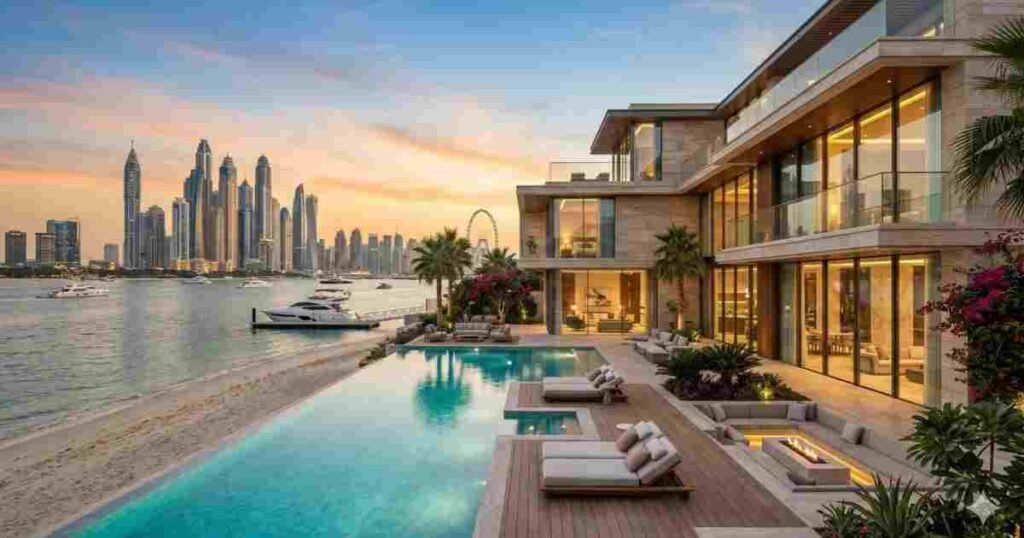
If you’ve watched Dubai’s skyline shift over the past few years, you’ve probably noticed something: the luxury segment isn’t just growing, it’s evolving. Palm Jumeirah villas are changing hands at record prices, Emirates Hills has quietly become one of the most exclusive addresses on the planet, and entire waterfront communities are being built for buyers who want more than a nice place to live — they want an asset that actually performs. For anyone exploring Dubai property investment at the top end of the market, there’s a lot of genuine opportunity here. But there’s also plenty of room to make an expensive mistake if you move too quickly.
Thank you for reading this post, don't forget to subscribe!Whether you’re browsing luxury villas for sale in Dubai for the very first time or you’ve already got a portfolio and you’re looking to add to it, understanding what actually makes a villa “high-value” — beyond the glossy brochure language — is what separates a smart buy from a regret you’ll be sitting with for years.
So let’s get into it.
What Defines a High-Value Luxury Villa in Dubai Today?
Here’s something worth saying upfront: a villa isn’t automatically luxury just because it comes with a hefty price tag. That’s a trap a lot of buyers fall into. In today’s market, the properties that genuinely hold their value share a few things in common—a developer with a real track record, land that sits somewhere it actually matters (waterfront, golf-course frontage, a gated community people are clamoring to get into), finishes that won’t look dated in five years, and steady demand from both people who want to live there and people who want to invest.
A lot of buyers searching for luxury homes in Dubai get hung up on square footage. More space, bigger number, better deal—right? Not necessarily. Size without the right location, without solid construction, and without a credible name behind it rarely holds up the way a smaller, better-positioned property will. So when you’re sizing up luxury properties in Dubai, try to look past the marble floors and the infinity pool for a second and ask yourself: who actually built this, where does it sit, and is this still a place people will want in five years? That one question tends to filter out more “luxury” listings than you’d expect.
Prime Villa Communities: Where Serious Investors Should Look First
Not every neighborhood carries the same weight—and this is really where local knowledge starts to matter. Palm Jumeirah is still the gold standard for beachfront exclusivity, and demand for luxury villas in Dubai here has held up remarkably well even when the broader market has had its ups and downs. Emirates Hills, meanwhile, keeps pulling in ultra-high-net-worth buyers who want golf-course views and total privacy. People compare it to Beverly Hills all the time, and honestly, the comparison isn’t far off.
If you want space without giving up accessibility, Dubai Hills Estate and Jumeirah Golf Estates offer a bit of a different value proposition—newer infrastructure, family-friendly layouts, and real appreciation potential as everything around them continues to build out. And if you’re drawn to off-plan properties in Dubai, District One and Tilal Al Ghaf are worth a close look. They give you the chance to get in before a community fully matures, and prices catch up to what everyone already suspects it’ll become.
Where should you actually buy property in Dubai? Honestly, it depends on what you’re after. Buyers chasing lifestyle tend to gravitate toward the established, prestigious names. Investors chasing yield often find better numbers in the newer communities that haven’t been fully “discovered” yet.
Rental Yield, Capital Growth, and the Real Exit Strategy
Here’s the part a lot of first-time investors skip over: a beautiful villa is not automatically a good investment. The numbers still have to add up, no matter how stunning the property is.
Luxury villas in Dubai generally bring in lower rental yields than apartments — think 4-6%, compared to 6-8% for a well-located apartment — mostly because the price you’re paying up front is so much higher relative to what you can realistically charge in rent. What villas tend to offer instead is stronger capital growth, especially in established or fast-maturing communities where land is limited, and demand just keeps climbing.
Before you commit, it’s genuinely worth sitting down and mapping out your exit strategy—not after you buy, but before. Are you holding for five-plus years and riding the appreciation? Buying with the intention to eventually live there yourself, with rental income covering you in the meantime? Or are you after something shorter-term, betting on a specific community taking off? Each answer changes which property, which community, and even which payment plan actually makes sense for you. And here’s the good news—Dubai’s regulatory environment, overseen by the Dubai Land Department, gives investors real, usable data to work with, including historical transaction prices through the DLD’s own portal. It’s a resource surprisingly few buyers actually check before making an offer, and it can save you a lot of guesswork.
Consultant’s Checklist: How to Avoid Overpaying for a Luxury Villa
Overpaying is, without question, the most common mistake in this segment — and it’s also one of the most avoidable if you know what to look for.
- Look at comparable sales, not asking prices. DLD transaction data tells you what buyers actually paid, not what a seller is hoping someone will pay.
- Dig into the developer’s track record. Delayed handovers and cut corners tend to show up far more often with newer or less-established developers.
- Get an independent valuation. Don’t lean solely on the number the seller or their agent gives you—this matters even more when you buy off-plan property in Dubai.
- Read the full payment plan carefully. Post-handover plans can make a property look more affordable than it really is once you account for every installment.
- Ask about service charges. Ultra-luxury communities often come with premium maintenance fees that quietly eat into your net return.
- Confirm the title deed and escrow status. This one’s non-negotiable for off-plan purchases—your funds should sit in a DLD-regulated escrow account until construction actually hits its milestones.
Skip even one of these, and you could end up overpaying by 10-15%, or worse, locked into a project that never quite delivers what was promised.
Final Thoughts
Luxury villa investment in Dubai is still one of the most compelling opportunities in global real estate right now—transparent regulation, real long-term demand, and genuinely diverse communities to choose from depending on what you’re after. But like any high-value asset, it rewards the buyers who do their homework, and it has a way of humbling the ones who don’t.
This is exactly the kind of decision where having an experienced, DLD-licensed advisor in your corner makes a real difference—someone who can pull the comparable data, check out the developer, and actually walk you through what the numbers mean before you sign anything. If you’re ready to explore Dubai’s luxury villa market with guidance built around what you actually want to achieve, Professor Property is here to help you take that next step with confidence.