
- The Role of Visual Assessment in Multifamily Underwriting
- Design Elements That Drive Multifamily Value
- Technology Integration in Deal Analysis Workflows
- Building Diligence Processes That Capture Aesthetic Risk
- Market Positioning Through Strategic Capital Deployment
- Integrating Visual and Financial Analysis
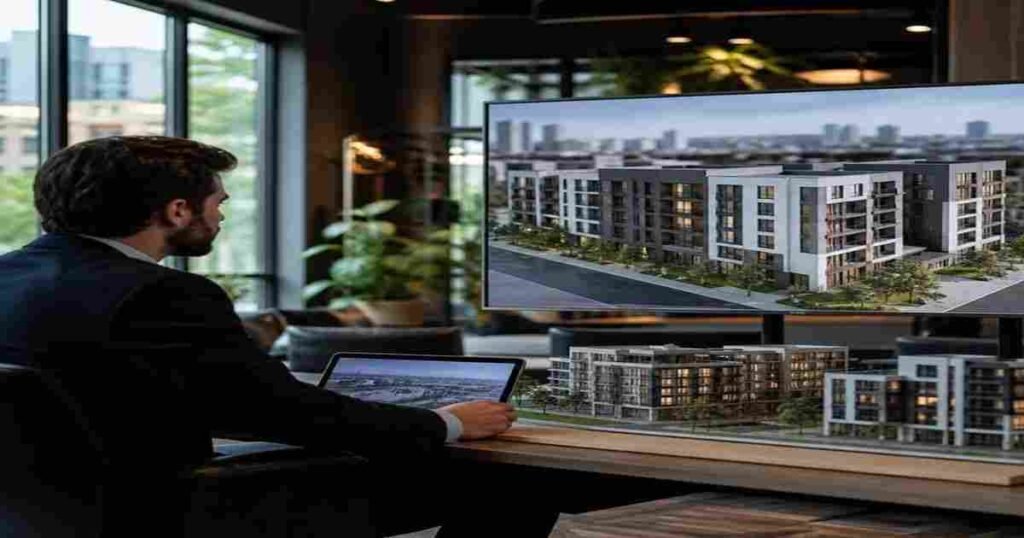
The visual appeal of a multifamily property has always influenced acquisition decisions, but the relationship between presentation quality and underwriting accuracy is evolving rapidly. As institutional investors deploy capital into competitive markets, the ability to assess both physical condition and aesthetic positioning has become critical to deal analysis. Technology now allows acquisition teams to evaluate properties through multiple lenses simultaneously—structural integrity, market positioning, and renovation potential—creating a more complete picture of investment risk and upside.
Thank you for reading this post, don't forget to subscribe!- The Role of Visual Assessment in Multifamily Underwriting
- Design Elements That Drive Multifamily Value
- Technology Integration in Deal Analysis Workflows
- Building Diligence Processes That Capture Aesthetic Risk
- Market Positioning Through Strategic Capital Deployment
- Integrating Visual and Financial Analysis
The Role of Visual Assessment in Multifamily Underwriting
Traditional commercial real estate underwriting begins with rent rolls, operating statements, and comparable sales data. Physical inspections follow, capturing deferred maintenance, unit conditions, and capital needs. However, the aesthetic dimension—how a property presents to current and prospective tenants—often receives less systematic analysis despite its direct impact on rental velocity and achievable rents.
Exterior presentation drives initial perception. Landscaping quality, facade condition, entryway design, and common area appeal all influence a prospect’s willingness to tour and ultimately lease. Properties with dated or poorly maintained exteriors face longer lease-up periods and require higher concessions, even when interior units meet market standards. Acquisition teams that fail to quantify these presentation gaps may underestimate stabilization timelines or renovation budgets.
The challenge lies in translating subjective visual assessment into objective underwriting inputs. How much incremental rent can improved landscaping command? What is the payback period for facade upgrades versus interior renovations? These questions require both market knowledge and systematic evaluation methods that many teams still handle through intuition rather than data.
Design Elements That Drive Multifamily Value
Certain exterior improvements deliver measurable returns in multifamily assets. Professional landscaping with native plantings reduces maintenance costs while enhancing curb appeal. Covered entry sequences protect residents from weather and create defined arrival experiences. Outdoor amenity spaces—grilling areas, fire pits, dog parks—have shifted from nice-to-have features to expected amenities in Class A and B properties.
Lighting strategy affects both safety perception and evening aesthetics. Well-lit parking areas, pathways, and building entries reduce insurance liability while improving resident satisfaction scores. Paint selection and building trim details communicate maintenance standards at a glance. Strategic attention to exterior finishing details can reposition a property within its submarket without full-scale reconstruction.
The sophistication of these interventions varies by property class and target demographic. Luxury properties require cohesive design narratives that extend from streetscape through unit interiors. Workforce housing prioritizes durability and maintenance efficiency over high-design flourishes. Understanding where capital deployed for aesthetic improvement generates return versus where it simply increases basis requires market-specific knowledge and disciplined analysis.
Quantifying Renovation Impact on Pro Forma Performance
Successful value-add underwriting models renovation costs against specific rent premiums and occupancy improvements. A $15,000 per-unit interior renovation might support a $150 monthly rent increase in one market while generating only $75 in another. Exterior improvements follow similar logic but with benefits distributed across all units rather than captured unit-by-unit.
Operators typically allocate 15 to 25 percent of total renovation budgets to exterior and common area improvements. This capital improves first impressions and supports higher rents across the entire property, but the return timeline differs from interior upgrades. A renovated unit generates immediate incremental income upon turnover. Exterior improvements affect rental velocity and tenant retention—benefits that materialize gradually across lease cycles.
Technology Integration in Deal Analysis Workflows
Modern acquisition teams manage multiple data streams during due diligence: property inspections, environmental reports, rent comparables, market surveys, and financial projections. The volume of documentation and the speed required to move from initial screening to letter of intent has compressed dramatically. Deals that once took 90 days to underwrite now close in 30 to 45 days in competitive situations.
This acceleration has driven adoption of platforms that automate repetitive underwriting tasks. Tools that extract data from rent rolls, parse operating statements, and generate pro forma projections reduce manual entry errors and allow analysts to focus on market assumptions and strategic decisions rather than spreadsheet mechanics. Artificial intelligence applications in design and property analysis are expanding beyond residential interiors into commercial real estate workflows, helping teams process visual information alongside financial data.
For groups running high transaction volumes, underwriting automation becomes essential infrastructure. Platforms like Noal.ai allow acquisition teams to convert deal documents into complete investment models within minutes, incorporating capital stack scenarios and loan program structures that previously required hours of manual configuration. This speed creates capacity to evaluate more opportunities while maintaining analytical rigor, particularly important when assessing properties that require both financial restructuring and physical repositioning.
Building Diligence Processes That Capture Aesthetic Risk
Establishing systematic methods for evaluating property presentation requires cross-functional collaboration between acquisitions, asset management, and property operations teams. Site visits should include structured photography protocols that document not just deficiencies but also competitive positioning. Touring comparable properties provides context for where the target asset sits within its aesthetic peer group.
Creating scoring rubrics for exterior conditions—landscaping, hardscaping, building envelope, common areas, amenities—generates consistent assessment criteria across portfolio evaluations. Some institutional groups use weighted matrices that translate physical observations into numeric scores, which then inform renovation budget allocations and underwriting assumptions about achievable rent growth.
Engaging architects or designers early in diligence for value-add deals provides renovation cost validation and identifies opportunities that financial analysts might overlook. A small reconfiguration of outdoor space can create leasable amenity value without significant structural work. Facade refresh strategies using paint, lighting, and signage deliver visual impact at lower cost than full material replacement.
Market Positioning Through Strategic Capital Deployment
The most effective renovation strategies align physical improvements with target demographic expectations and submarket positioning goals. Attempting to deliver luxury finishes in a workforce housing location misallocates capital and may not achieve projected rents. Conversely, minimal cosmetic work in a gentrifying neighborhood leaves upside on the table.
Successful operators develop renovation playbooks that codify design standards, material specifications, and cost benchmarks by property class and market. These playbooks accelerate execution during the business plan implementation phase and ensure consistency across portfolio assets. They also create feedback loops where realized performance informs future underwriting assumptions about renovation returns.
Tracking key performance indicators throughout the renovation and lease-up process validates initial assumptions. Metrics include time-to-lease for renovated versus unrenovated units, concession levels, resident satisfaction scores, and renewal rates. Properties that achieve faster stabilization and higher retention reduce operational drag and accelerate cash flow to investors.
Integrating Visual and Financial Analysis
The convergence of design technology and financial modeling creates opportunities for more sophisticated acquisition analysis. Rather than treating aesthetics as a qualitative overlay to quantitative underwriting, leading groups are developing integrated frameworks that price visual positioning risk and opportunity alongside traditional metrics like debt yield and cash-on-cash returns.
This integration requires discipline. The temptation to over-improve properties or chase design trends that exceed market willingness to pay remains a persistent risk. Effective underwriting balances aspiration with market reality, deploying capital where measurable returns justify the investment and exercising restraint where improvements offer minimal financial benefit regardless of aesthetic merit.
As commercial real estate continues to professionalize and institutional capital demands higher analytical standards, the teams that develop rigorous methods for evaluating all dimensions of property value—including presentation quality—will identify opportunities that others overlook and execute business plans with greater precision. Technology serves this evolution by handling computational complexity and freeing human judgment for strategic decisions where experience and market knowledge create competitive advantage.