
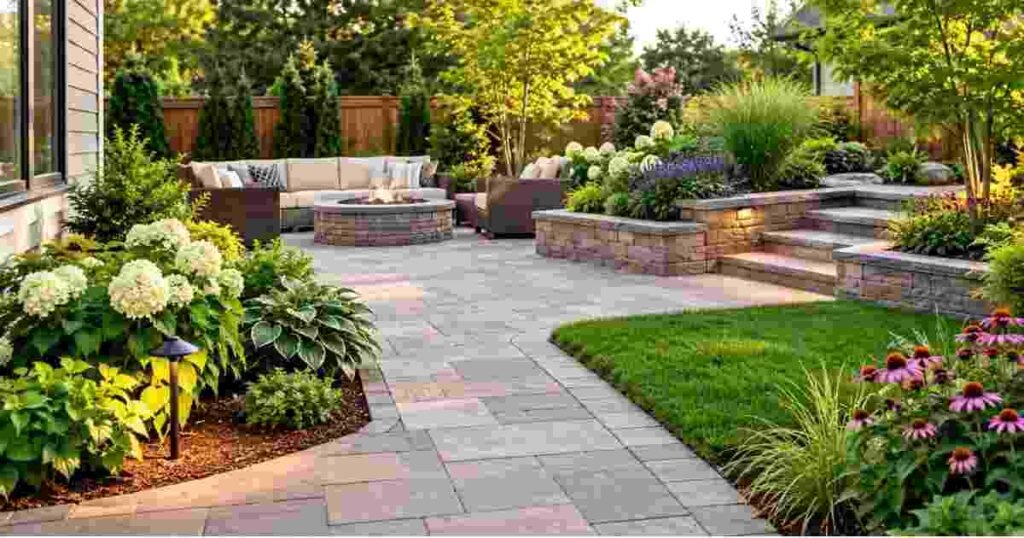
A well-planned yard usually feels settled rather than crowded. Paths lead somewhere useful, patios fit the scale of the property, planting beds soften hard edges, and open lawn gives the eye a place to rest. Problems start when each part is planned separately. Too much paving leaves the space feeling harsh, while too many plants without structure often create a messy, high-maintenance result.
Thank you for reading this post, don't forget to subscribe!A balanced outdoor layout, as seen in projects by Classy Grass, Sullivan, IL, treats hard surfaces and planting as parts of the same plan. Their proportions, placement, materials, and future growth all need to work together.
Start With How the Yard Will Be Used
Before choosing pavers or plants, it helps to decide what the yard actually needs to do. A family that eats outdoors regularly needs different priorities than someone who mainly wants a quiet garden or a large open lawn.
Patios, walkways, retaining walls, steps, and seating areas create the framework. Their position should follow daily movement through the property rather than arbitrary shapes on a plan. A walkway should connect places people genuinely travel between. A patio should sit where furniture fits comfortably without blocking doors or circulation.
Once these fixed areas are placed, the remaining space becomes easier to organize. Planting beds then fill gaps, soften boundaries, frame views, or separate one activity area from another.
Give Hard Surfaces Room to Breathe
A patio surrounded immediately by paving, fencing, and walls often feels tighter than its measurements suggest. Planting around the edges breaks up those hard lines and makes the area feel more relaxed.
Low-growing plants work well near paths because they keep sightlines open. Taller shrubs or ornamental grasses fit better along property edges or behind seating areas. Trees need enough distance from paving for roots and mature branches, rather than being squeezed into a narrow bed simply because the space is empty.
Retaining walls also look more natural when planting is worked into the surrounding grade. Groundcovers near the top edge or shrubs placed nearby soften the transition between masonry and soil.
Choose Plants for the Space They Will Become
Young plants are easy to underestimate. A small shrub in a nursery container may eventually spread several feet, while a young tree that looks harmless beside a patio may become far too large for that position.
Plant choice should start with mature size, sunlight, drainage, soil conditions, and the amount of maintenance the homeowner actually wants. Perennials work well where seasonal color is desirable, while shrubs give beds more permanent structure. Trees create shade and height, but they need careful placement around foundations, pavement, overhead lines, and neighboring properties. Plant selections offered by Village Garden – Plant Nursery & Home Decor also show how much variety there is in growth habits, mature size, and seasonal interest.
Mixing plant types also prevents a yard from looking flat. A bed filled with plants of exactly the same height often lacks depth. Varying height and texture makes the planting feel established without stuffing every open patch with greenery.
Fun fact: Many newly planted beds look sparse during their first season because plants are spaced according to mature size rather than their appearance on planting day. Proper spacing usually produces a fuller, healthier bed later without constant pruning.
Let Lawn Act as Negative Space
Lawn often works best as open space between more detailed areas. A simple stretch of grass beside a patio or planting bed gives visual relief and keeps the yard usable.
Irregular scraps of turf are harder to mow and often look accidental. Clean edges and broader shapes make maintenance easier. Where grass struggles because of deep shade, steep slopes, or constant foot traffic, another surface usually makes more sense than repeatedly replacing thin turf.
That replacement does not always mean more paving. Groundcovers, mulch beds, stepping stones, or low-maintenance planting often fit the area better.
Keep Materials and Planting in the Same Visual Family
Hardscape materials already bring color and texture into the yard. Warm-toned stone, dark pavers, brick, gravel, concrete, and timber each create a different backdrop.
Planting should respond to that backdrop rather than compete with it. Strong foliage works well beside simple paving, while heavily patterned stone often looks better with calmer planting nearby. Repeating a small number of plant types across several beds also ties separate parts of the yard together.
The same restraint applies to hard materials. Using too many finishes in one small space makes each area feel disconnected.
Leave Space for the Yard to Mature
A finished outdoor space should not look packed on installation day. Plants spread, trees develop broader crowns, and homeowners often add furniture, containers, lighting, or other details over time.
Leaving some breathing room gives those changes somewhere to happen. It also makes maintenance simpler and keeps pathways, patios, and planting beds distinct as the yard ages.
The best balance usually comes from giving every part a clear purpose. Hard surfaces handle movement and everyday use, plants bring softness and seasonal change, and open areas keep everything from competing for attention.