
- 1. Are you licensed and insured?
- 2. How will you identify the pest before recommending treatment?
- 3. What is your treatment plan, and why are you recommending it?
- 4. What products will you use, and what precautions should I follow?
- 5. What is included in the price?
- 6. What happens if the pests come back?
- 7. What do I need to do before and after treatment?
- Choose based on the plan, not just the price
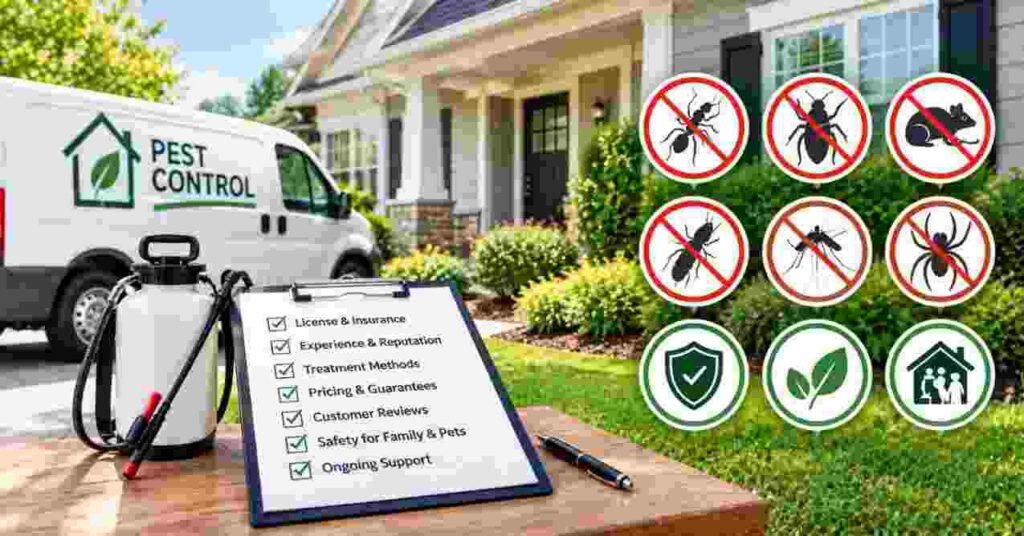
Finding ants in the kitchen or hearing something moving in the attic can make you want the fastest available fix. But choosing a pest control company deserves more thought than simply calling the first name you find. The right questions can help you understand what you’re paying for, how the treatment will work, and what happens if the pests return.
Thank you for reading this post, don't forget to subscribe!- 1. Are you licensed and insured?
- 2. How will you identify the pest before recommending treatment?
- 3. What is your treatment plan, and why are you recommending it?
- 4. What products will you use, and what precautions should I follow?
- 5. What is included in the price?
- 6. What happens if the pests come back?
- 7. What do I need to do before and after treatment?
- Choose based on the plan, not just the price
1. Are you licensed and insured?
Start with the basics. Ask whether the company holds the licenses required to provide pest control services in your state and whether it carries appropriate insurance.
Don’t be uncomfortable asking for proof. A reputable company should be able to explain its licensing and what type of coverage it carries. This matters because pest control can involve pesticide application, ladders, crawl spaces, attics, and other work around your property.
You can also check licensing requirements with your state’s pesticide regulatory agency if you’re unsure what credentials a contractor should have.
2. How will you identify the pest before recommending treatment?
Effective pest control starts with correct identification. A trail of small insects near a window, for example, doesn’t automatically tell you which species is present or where the colony is located.
Ask what the inspection involves and how the technician confirms what they’re dealing with. A good assessment may include checking entry points, moisture sources, droppings, nests, damage, harborage areas, or other pest-specific signs.
Be cautious if a company recommends an extensive treatment before inspecting the property or establishing what pest is actually causing the problem.
When an inspection reveals signs of wildlife in an attic, crawl space, or other part of the property, homeowners may need specialized help beyond routine pest treatments. Working with a professional wildlife removal company can help identify entry points, address the source of the problem, and determine the appropriate next steps to prevent animals from returning.
3. What is your treatment plan, and why are you recommending it?
You should understand more than the name of the service you’re buying. Ask what will be treated, which methods will be used, and why those methods fit your particular problem.
Some companies follow principles associated with integrated pest management, which considers identification, monitoring, prevention, exclusion, sanitation, and targeted treatment rather than relying on routine pesticide application alone.
For example, treating ants without addressing a gap around plumbing or an accessible food source may deal with visible activity without addressing the conditions attracting them. The strongest answer to this question should connect the proposed treatment to what the technician actually found during the inspection.
4. What products will you use, and what precautions should I follow?
If pesticides are part of the treatment, ask which products will be applied and where. You should also know whether people or pets need to leave an area, whether food or belongings must be moved, and how long you should wait before returning to a treated space.
The U.S. Environmental Protection Agency’s guidance on pest control advises consumers to follow pesticide label directions and notes that professional pest control companies should meet state licensing requirements.
Don’t rely on vague descriptions such as “safe chemicals.” Ask for practical instructions that apply to the actual product and treatment being used in your home.
5. What is included in the price?
A quote is much easier to compare when you know exactly what it covers.
Ask whether the price includes the inspection, initial treatment, follow-up visits, monitoring, exclusion work, or additional applications. Find out whether you’re paying for a one-time service or entering an ongoing agreement.
This becomes especially important when comparing estimates. One company may appear cheaper because its quote covers only the first visit, while another may include scheduled follow-ups and corrective treatment if activity continues.
Ask about possible additional charges before agreeing to the work. Pest control pricing should be clear enough that you understand what could change the final cost.
6. What happens if the pests come back?
Even a well-planned treatment may require follow-up. Eggs can hatch after an initial visit, pests may be entering through several locations, or an established infestation may need monitoring before the company can determine whether activity has stopped.
Ask specifically what the company does if you see pests again. Does the service include another inspection? Is retreatment covered for a defined period? Are there conditions that could void the guarantee?
Pay attention to the wording. A service guarantee isn’t necessarily a promise that you’ll never see another pest. What matters is knowing what response the company commits to if the original problem continues.
7. What do I need to do before and after treatment?
Pest management often works better when the homeowner and technician are working toward the same goal.
Depending on the pest, you might need to store exposed food, clear access to baseboards, reduce clutter, repair a leak, wash bedding, remove standing water, or keep pets away from a treatment area. Other services may require very little preparation.
Ask for these instructions before the appointment rather than after the technician arrives. You should also know what to monitor afterward and when continued pest activity would justify another visit.
Clear instructions are especially useful because they show whether the company is looking beyond the immediate treatment. If pests still have easy access to food, water, shelter, or entry points, chemical treatment alone may not address the conditions supporting the problem.
Choose based on the plan, not just the price
Knowing how to choose a pest control company comes down to asking enough questions to understand what you’re buying. Licensing and price matter, but so do inspection quality, pest identification, treatment reasoning, safety instructions, and follow-up procedures.
Before agreeing to service, make sure you can explain what pest is being treated, what the company plans to do, what you need to do, and what happens if the problem continues. A clear answer to those questions makes it much easier to compare pest control companies on more than the lowest quote.