
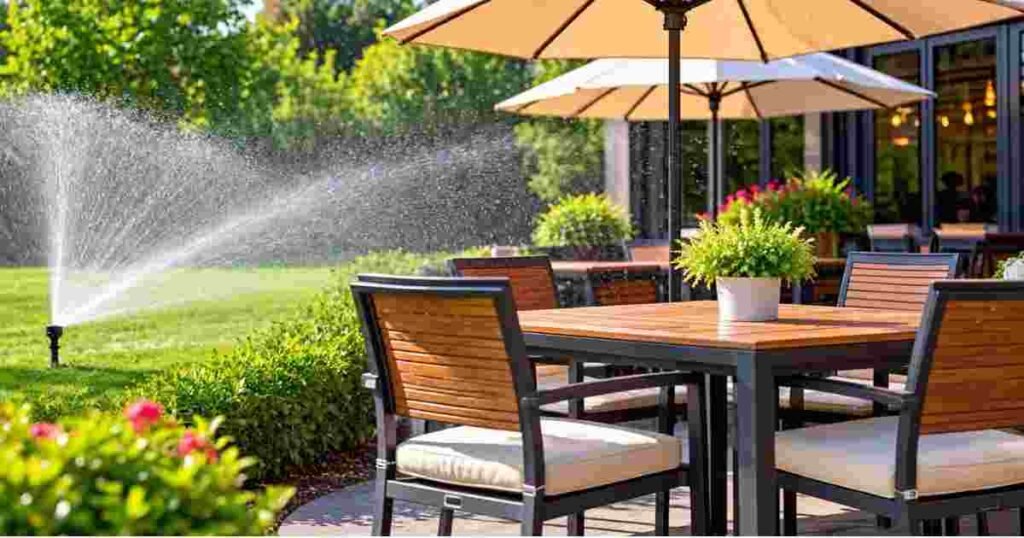
Wet seats before lunch are a reason to check the irrigation system. Employees can dry the furniture, but the same chore returns if a sprinkler keeps spraying water across the dining area. The useful question is where the water should land and why it is reaching the patio. Watching the system run often reveals more than another adjustment to the timer.
Thank you for reading this post, don't forget to subscribe!Protecting outdoor furniture for restaurant patios from sprinkler spray begins with the landscape plan, not a stack of towels. Arrange the furniture and planting so staff can water the beds without moving every chair. Identify the source of the spray, ask the irrigation contractor to correct it, and coordinate the schedule with the restaurant’s use of the patio.
Watch the full watering cycle
Observe the system in operation with the patio set up as it would be during service. When water reaches the furniture, note which irrigation zone is running. The source might be a nearby head, drifting mist, or runoff from a planted area above the patio.
Look at the entire spray pattern before changing anything. A head that appears well aimed may reach the seats as it rotates. A newly installed screen or planter can interrupt the spray and redirect water. Photograph the condition for the contractor and mark the affected seating area on a simple plan.
Include the opening and closing teams in this observation. They may see wet surfaces at different times and can help establish when the problem started. Ask what they noticed before requesting a diagnosis. A recent furniture move or landscape change may help narrow the investigation.
Correct the spray before changing the duration
Reducing watering time may cut down on how much water hits a chair, but it does not fix the direction. It may also leave the planting inadequately watered. The contractor should inspect the head’s condition and settings and check whether the nozzle suits that location.
Ask whether water pressure or damaged components contribute to misting or an uneven pattern. Those are system questions, and the correct response depends on the equipment. Avoid changing a component simply because it fits the visible connection.
EPA water-efficiency guidance estimates that as much as 50 percent of outdoor water use is lost through evaporation, wind, or runoff associated with inefficient irrigation. That broad estimate is not a measurement of the restaurant’s losses. Correcting misdirected spray may also reduce wasted water.
Consider the planting beside the seats
The edge between planting and dining deserves particular attention. Narrow beds can be difficult to water with a broad spray pattern, especially if chairs sit close to the border. Discuss whether a different irrigation approach would suit the planting and the site.
Drip irrigation may be worth considering for a suitable bed, but it cannot replace every irrigation zone. The landscape professional needs to consider plant needs and the existing system. A change that keeps water off a chair must still deliver it where the roots need it.
Inspect planters individually. Water may overflow a container or escape through a drainage opening beside a table. Moving the sprinkler will not solve that problem. Watch how the container drains and check whether its position sends water into the dining route.
Schedule watering around actual use
Early watering can reduce conflict with guests, but the schedule should reflect the local climate, restrictions, and the restaurant’s opening routine. Account for staff who set tables or clean the patio before the advertised opening time.
University extension watering advice supports early-morning irrigation to reduce losses associated with heat and wind. Apply that principle with local guidance rather than copying a schedule from another region. Rainfall and soil conditions also affect the need to irrigate.
Coordinate changes with whoever controls the timer. A manager may assume the contractor has adjusted it while the contractor expects the owner to do so. Record the agreed setting and the reason for it. Include special events and changes to opening hours in that conversation so the patio is not watered during an early private booking.
Check drainage where guests walk
Spray can stop while a drainage problem remains. Water may collect under a table or cross the route between the restaurant door and the seating. Inspect the patio after irrigation as well as during it.
Report persistent ponding to the appropriate property or landscape professional. Do not hide it with the chair layout. Moving seats away from a wet spot may provide temporary separation, but it should not block an approved route or leave guests facing another hazard.
The daily patio check can stay simple:
- Look for wet seats and tabletops before seating guests.
- Inspect walking routes for standing water.
- Report the active irrigation zone when overspray is observed.
- Keep affected places out of use until staff can prepare them properly.
These checks help staff respond consistently while the underlying problem is being corrected.
Follow the furniture’s care instructions
Outdoor suitability does not mean that every material tolerates every water condition or cleaning treatment. Keep the manufacturer’s care instructions for the specific furniture, including cushions and hardware. Ask the supplier how routine irrigation exposure should be managed.
If sprinkler spray leaves residue, find an approved cleaning method instead of reaching for an abrasive pad or stronger chemical. Test only as the manufacturer directs. Marks appearing on several pieces at the same time may help the contractor trace where the water is landing.
Dry removable cushions according to their instructions and store them as advised when they are not in use. Do not cover damp furniture in a way the supplier warns against. The restaurant’s care routine should support the irrigation repair, rather than become a permanent workaround for it.
Recheck after every layout change
A successful adjustment can be undone when someone relocates a planter or adds seating. Include irrigation in the review whenever the patio arrangement changes. The new layout should be checked under watering conditions before it becomes the regular setup.
Professional discussion of water distribution includes overspray and uniformity because the whole pattern matters. A contractor may need to adjust the zone rather than a single head. Ask them to explain what has changed and what the restaurant should watch for afterward.
Record the affected irrigation zone and the approved furniture positions. The record does not need to become a complex maintenance system. A clear photograph and a dated note can help the next manager see that a moved table now occupies an area intended for planting.
Coordinate a morning watering schedule with the opening team rather than leaving irrigation on a separate calendar. The person setting out the patio furniture should know when watering has finished and whom to contact if spray still reaches the dining area. Seasonal schedule changes belong in that same conversation.
Let the Patio Open Dry
After the contractor finishes the work, run the relevant watering cycle and inspect the patio again. Check that the furniture stays clear of the spray and that the planting receives appropriate irrigation. Ask staff to report any recurrence while the conditions are still easy to identify and investigate.
A dry patio at opening depends on coordination between landscape care and restaurant operations. Towels still have a place in routine cleaning and after ordinary weather, but they should not be the daily answer to a misdirected sprinkler. Correct the source, keep the schedule current, and have the patio ready when guests arrive.