
Introduction
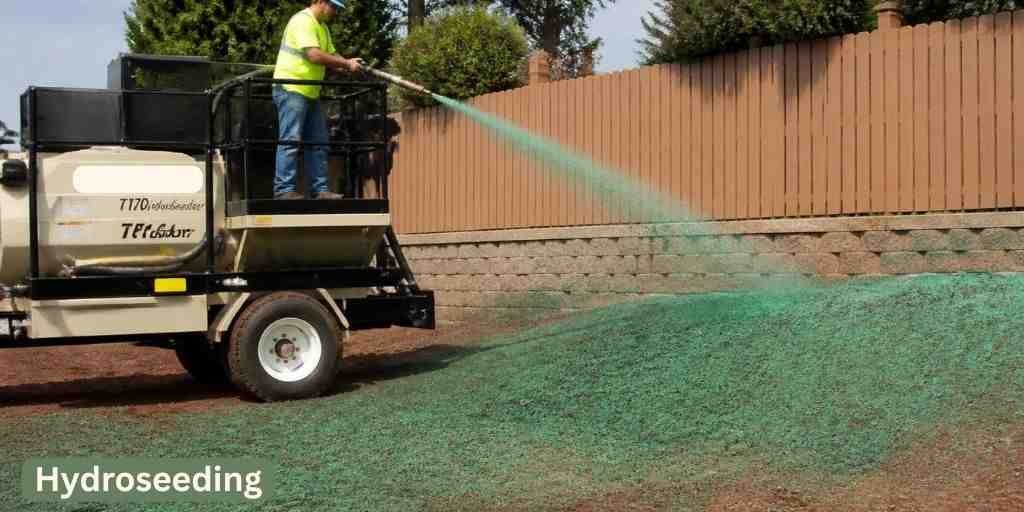
Hydroseeding is a planting method that uses a slurry to grow plants or grasses in different types of landscaping areas, such as sloping land, high-lying land, deep forest areas, and dangerous or isolated areas, including burned wilderness where direct human access is prohibited. It applies to lands that are very hard to grow in and times that need preparation of long-term drought soil. If the target is to grow in a large region, then it’s applied by Govt or organization level, but at home, small practices by the farm or house owner regain their yard’s green back. Here, the discussion is mainly for the home-based purpose of the topic. Let’s try to cover it.
Thank you for reading this post, don't forget to subscribe!Main Purposes of Hydroseeding
The main purposes are the following:
- To recover the lawn with plants and make the toughest land green always
- To control soil erosion in mountain land, small sloping areas, backyard soil, and burned wild areas again.
- Less time-consuming than traditional methods and more seedlings and greening output
Hydroseeding Elements
To make hydroseeding, you mainly need these components:
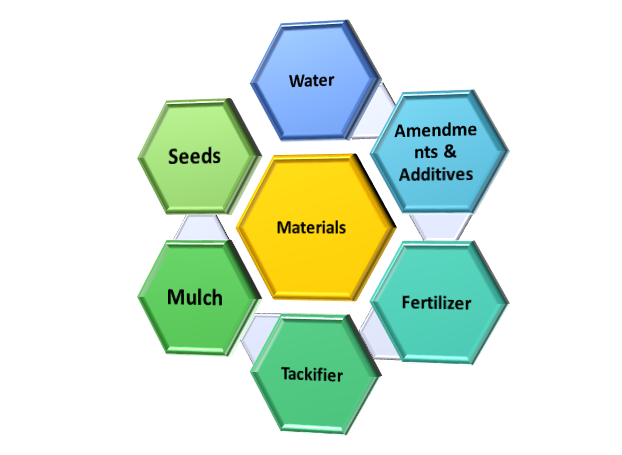
- Water: Most usable material in the solution. It acts as a carrier of the total preparation and helps to disseminate the seeds and other materials. It hydrates the seeds in the early stage and maintains the germination capacity of seeds.
- Seed: In case of seed selection, one must know about the perfect match of the proper plant’s seeds. At first, raise a question in mind: which plant’s seed is needed and which one is better? In this study, many criteria are considered: soil condition, climate, seasons, etc., that is directly involved to properly grow of plants. It also involves your purpose of planting, such as resisting soil erosion, beautiful views, and drought tolerance.
- Mulch: It protects seeds by keeping moisture in the soil, over heating that enhances growth. Mulch is made from wood, paper, leaves, or straw-based fiber.
- Tackifier (binder): Binds the mulch materials and helps them stick together, helping to protect the covering of seeds in slopping surface. It holds the seeds in soil and protects mulches and seeds until they establish roots.
- Fertilizer: Fertilizer is used on surfaces to give nutrients such as phosphorus (P), nitrogen (N₂), and potassium (K), which are needed for better growth. How much fertilizers need depends on soil nutrition, plant quality, and lawn care.
- Other Nutrients & Additives: To keep soil pH and structure, sometimes lime or gypsum is needed before seeding. Other bioactive agents are used to protect growth. Weed-control agents are used to suppress non-valuable plants in the ground.
Slurry Preparation, Land Preparation and Seeding Procedures
1. Slurry Preparation
→ Take a tank and fill ⅓ or ½ of it with water.
→ Add fiber mulch gradually and agitate continuously so it disperses instead of binding.
→ Add seed and starter fertilizer next, then add the tackifiers.
→ Mix sometimes so that it is properly uniform in quality.
→ Keep mulch at roughly 50–70% of dry weight, increasing it on steeper ground for stronger hold.
2. Land Preparation Before Seeding
→ Clear debris, rock, and dead vegetation so the slurry reaches bare soil.
→ Grade the surface to remove pooling spots; on slopes, rough the surface by tracking so the slurry keys in rather than sliding off.
→ Test soil pH and nutrients, correcting with lime or gypsum where required.
→ Till compacted ground to 2–4 inches so roots and slurry can bond properly.
3. During Seeding Procedure
→ Spray in overlapping passes at the rate matched to the seed-and-mulch blend; under-application weakens both germination and erosion resistance.
→ Keep nozzle pattern and tank pressure steady for even coverage across the whole area.
→ On steeper slopes, published erosion-control comparisons show plain hydro-mulch alone performs less reliably than mulch combined with a binder or a supplementary erosion mat, so heavier tackifier loading or added netting is used on steep ground.
→ Avoid spraying right before heavy rain, since the slurry needs time to set before it can resist runoff.
Types and Selection of Sustainable Seeds
It is crucial to select seeds before planting. Which seeds or plants are suitable for the land is very important. So, it keeps in mind that annuals, perineal or drought tolerant or very cool season grass which are beneficial must be known according to your land quality needs. Below, some examples of them are shown:
| Name | Sub-types | Examples |
| Grass Seeds | • Cool-Season Grasses | Tall Fescue, Kentucky Bluegrass |
| • Warm-Season Grasses | Bermudagrass, Zoysia Grass | |
| Native Plants and Grasses | • Native Prairie Grasses | Switchgrass, Little Bluestem |
| • Native Perennials | Black-Eyed Susan, Coneflower | |
| Wildflower Seeds | • Annual Wildflowers | California Poppy, Cornflower |
| • Perennial Wildflowers | Milkweed, Lupine | |
| Cover Crop Seeds | • Legumes (Nitrogen Fixers) | Hairy Vetch, Crimson Clover |
| • Non-Legumes & Brassicas | Daikon Radish, Cereal Rye, Oats | |
| Reclamation and Restoration Seeds | • Erosion Control Seeds | Creeping Red Fescue, Perennial Ryegrass |
| • Wetland & Riparian Mixes | Cordgrass, Tussock Sedge, Soft Rush |
Include Advanced Mulch Materials
Basically, wood fiber, straw, or leaves are used as mulch due to availability and the protective ability for the land and seeds. Some mulch types have recently been developed and used.
- Paper-Based Mulch: Made from old/recycled paper that has water retention capacity and decomposes quickly to provide organic matter. In fact, it is made with paper as well as other organic materials, which, if destroyed, would be beneficial for the land.
- Biodegradable Mulch: It is made from fibers, which is why these types of mulch materials sustain and protect for a long time. It is made from straw, grass, or wood-based polymers.
- Organic Materials of Mulch: Environmentally friendly and suitable for soils and seeds, made from organic matter such as various types of waste, green waste, and plant-decomposed compounds.
- Hydrogel Mulch: Water absorption capacity is high and used mostly in drought-prone soils where water conservation is needed.
Fertilization and Irrigation
Two other important elements need to be considered for successful hydroseeding after planting: fertilization and irrigation. In the case of fertilization, mainly slow-release fertilizer is beneficial here.
- Fertilization: Try to maintain follow-up rules. A mixtures of nitrogen, phosphorus, and potassium are made and then mixed with slurry solution during spreading. After 4 weeks of seeding, when germination started then used these fertilizer again.
Phosphorus (P): Helps to foster fast growth of roots and improves strong attachment to the land.
Nitrogen (N₂): Helps to foster rapid leaf and stem development.
Potassium (K): Makes the plant stronger and more disease-resistant.
- Irrigation:
- Days 1 to 14: Water 2 to 3 times daily with light spraying for just 5 to 10 minutes each.
- Day 15 to 28: Moderate to deep spraying once daily to every other day.
- Day 30 and over: 2 to 3 times per week and standard watering.
Advantages of Hydroseeding
- Control soil erosion and make the house, lawn, or slopes on other high land protected.
- In hard areas where plants growing is so tough helps to grow easily.
- Easy to spread in highland areas by using “helicopter” or “drone” technology.
- In the forest, what’s already burned makes the area green again.
- Helps to reduce pollution and improve soil health as well.
- Helps in family garden development through which provide vegetation for the family’s nutrition.
- Ensure it by using the unused area.
FAQs
How long does hydroseeding take to grow into a full lawn?
Germination starts within 2-3 days, full germination after 4-6 weeks, and it takes 2-3 months to establish.
Is it better than sod for a home lawn?
For a long-term, sustainable, and low-cost lawn, hydroseeding is better than sod.
Can hydroseeding be used on slopes and eroded land?
Yes. It is mainly invented in slopping and eroded land.
Reference:
https://www.researchgate.net/publication/389599566_Hydro-Seeding_A_Revegetation_Technique
https://www.sciencedirect.com/science/article/abs/pii/S092585741000159X